Expert Interviews
Expert Interview with Dr. med. univ. Nicolas Rickert - Modern Urology: Botulinum Toxin for Overactive Bladder

Alexandra Pfitzmann ·
Dr. med. univ. Nicolas Rickert is an outstanding urologist. As medical director of the German-French Medical Care Center (DFMVZ) in Saarbrücken, he offers a comprehensive range of modern urological diagnostic and therapeutic services. His expertise ranges from urological oncology and andrology to innovative procedures such as botulinum toxin treatment for overactive bladder. This modern treatment option enables him to effectively treat patients with functional bladder disorders.
Dr. Rickert is known for his ability to combine highly specialized medical procedures with a patient-centered approach. Minimally invasive procedures, such as the no-scalpel vasectomy, are among his areas of specialization. This gentle method of permanent male contraception is a prime example of his precise and empathetic approach to surgical procedures. His academic journey began with a degree in computer science from Saarland University. After completing his medical studies at the Medical University of Vienna and undergoing comprehensive specialty training at the Knappschaftsklinikum Sulzbach, Dr. Rickert now practices urology at the highest level.
At the German-French Medical Center (MVZ), Dr. Rickert fosters interdisciplinary collaboration, which underscores his commitment to holistic and personalized patient care. By combining technical excellence with human empathy, he creates a practice environment that is both modern and compassionate. Dr. Rickert’s dedication and international focus make him a trusted point of contact for patients in the Saarland and beyond, as he strives to bring the urology of the future to life today.
The editorial team of the Leading Medicine Guide had the opportunity to speak with Dr. Rickert specifically about the topic “Modern Urology: Botulinum Toxin for Overactive Bladder” and learn more about it.

In modern urology, innovative treatment methods such as botulinum toxin therapy offer patient-friendly solutions for common urological problems. Botulinum toxin injections effectively treat overactive bladder by reducing involuntary muscle contractions, thereby improving the quality of life for those affected.
The causes of overactive bladder (OAB) are diverse and complex. They can be neurological, muscular, or local in nature. In many cases, the exact cause remains unclear, which can complicate treatment.
“The causes of an overactive bladder can generally be divided into two categories. First, there is neurogenic bladder dysfunction, in which an underlying neurological condition is the root cause of the problem. Typical causes include neurological conditions such as multiple sclerosis, stroke, Parkinson’s disease, or spinal cord injuries. With these conditions, the cause is clearly identifiable, as the nerve pathway that controls the bladder is directly affected. Long-standing, poorly controlled diabetes can also cause nerve damage, which in turn leads to an overactive bladder. The second form is known as idiopathic overactive bladder, in which the exact cause usually remains unclear. Risk factors play a significant role here: for example, women are affected twice as often as men, and being overweight also increases the risk. For women going through menopause, hormonal changes are an additional factor: Estrogen levels drop, leading to dry mucous membranes in the vaginal area. This constant state of irritation can also irritate the bladder and thus contribute to the development of an overactive bladder,” explains Dr. Rickert at the start of our conversation, adding:
“Many patients also report that, out of fear of an unplanned urge to urinate, they drink so little that they severely limit their quality of life. They avoid social interactions and hardly ever go out because they always need to know where the nearest restroom is—this is a significant limitation in everyday life. Some people affected experience only the typical symptoms of a sudden urge to urinate, similar to those of a bladder infection. Others suffer from urge incontinence, in which they can no longer control their bladder and even lose urine involuntarily. These symptoms occur with roughly equal frequency. This generally affects all age groups: While hormonal changes play a role in women going through menopause, younger patients are also affected. The psychological component is particularly important: Chronic stress, anxiety disorders, or grief can also trigger or exacerbate the symptoms. It is known that stress not only affects the stomach or intestines but can also impact the bladder. Stress is therefore a significant risk factor in the development of an overactive bladder.”
Treatment with Botox for an overactive bladder was first used around 1990 in patients with neurogenic bladder dysfunction. Since 2006, the therapy has also been approved for idiopathic overactive bladder.
A comprehensive diagnostic evaluation must be conducted beforehand.
“The first step in the diagnostic process is always a detailed medical history, during which the patient’s symptoms are discussed. This is followed by a rapid urine test using test strips to immediately detect any signs of blood in the urine or inflammation. If necessary, a urine culture is performed. This helps rule out a bladder infection as the cause of the symptoms. In addition, an ultrasound examination is conducted to assess the bladder, kidneys, and urinary tract. These examinations frequently reveal residual urine—that is, the inability to completely empty the bladder—which explains the frequent trips to the bathroom. Botox therapy is not the first step in treating an overactive bladder. First, patients receive detailed instruction on bladder training, which they can perform independently at home. The goal is to delay the urge to urinate through deliberate holding—that is, not going to the bathroom immediately, but suppressing the urge to a certain extent. If this training does not yield sufficient results, medication is usually prescribed, most commonly an antimuscarinic agent (which blocks the effect of the neurotransmitter acetylcholine at the so-called muscarinic receptors. This causes the bladder muscles to relax). These medications lead to a significant improvement in symptoms for many patients and can be discontinued after several months in some cases, allowing the patient to remain symptom-free. Whether discontinuing the medication is successful in the long term or whether symptoms recur varies greatly from person to person. For some patients, the medications are necessary on a long-term basis, as the symptoms return after discontinuation. In addition, some patients do not tolerate the medications well or do not respond adequately to the therapy. In such cases, Botox can be a viable alternative, although it is never the first line of treatment. For many patients, it is only through this medication-based treatment that they reach the point where the use of Botox becomes appropriate. In general, there are very few patients for whom Botox therapy must be ruled out. It is important to first ensure that the patient does not currently have a urinary tract infection; in which case the treatment can simply be postponed by first prescribing an antibiotic and rescheduling the procedure for a later date. Special caution is required for patients with a known bleeding disorder or those taking anticoagulants. In such cases, the medication must be temporarily discontinued before treatment to minimize the risk of bleeding. To date, there have been virtually no reports of bleeding or complications following such procedures, so the treatment can generally be performed safely provided the appropriate precautions are taken,” explains Dr. Rickert.
Botulinum toxin therapy for overactive bladder is based on the targeted use of the neurotoxin to reduce muscle activity in the bladder and thereby significantly alleviate symptoms. The botulinum toxin is injected into the smooth muscle of the bladder. This is usually done under local anesthesia or light sedation, and the injections are typically administered at several small sites along the bladder wall. The goal is to inhibit the excessive contraction of the bladder muscles, which is the cause of many symptoms such as a strong urge to urinate, nocturia, or involuntary bladder emptying.
“If a patient has already tried everything and treatment has not yet yielded the desired results, Botox therapy can be a sensible option. The procedure begins with a separate appointment at the doctor’s office. The patient is positioned on a gynecological examination chair, and a cystoscopy is performed using a cystoscope, a thin endoscopic instrument. After local anesthesia is administered, the cystoscope is inserted into the bladder to examine the mucosa. A small special needle can then be inserted through the cystoscope to administer Botox into approximately ten different areas of the bladder muscle. The Botox is injected into the muscle, a process that usually takes only 1–2 minutes. The procedure is generally not very painful. “Many patients feel almost nothing; some find it uncomfortable, but only in exceptional cases does the procedure have to be stopped due to pain,” explains Dr. Rickert.
Regarding dosage: The standard amount is 100 international units (IU), which is distributed across several areas. This amount can be adjusted on an individual basis; for example, the dose can be increased if the effect was insufficient after an initial treatment.
Dr. Rickert explains how it works: “The effects usually set in after about two weeks and typically last between 6 and 12 months. In some patients, the effect may even last longer, even though the Botox is broken down after one year at the latest. Most patients notice within this period that their symptoms subside and then schedule a new appointment when the effect wears off. There is no set interval—treatment is repeated only if symptoms recur. As long as symptoms persist, therapy continues; once symptoms return, another dose of botulinum toxin is administered.”
The effects of botulinum toxin therapy for overactive bladder are generally temporary and usually last between six months and one year. The individual duration of effectiveness depends on various factors, such as the severity of the symptoms, the patient’s age, the exact dosage, and the course of treatment.
In general, there is only a very low risk associated with the procedure, as it is administered only in a controlled medical setting by experienced physicians. Minor bleeding may occur at the injection sites, but this has been observed extremely rarely.
“In some patients, there is a possibility of a hypersensitivity reaction to the medication or its components, but such reactions are extremely rare—I have never seen them myself, even after hundreds of treatment cases. Another risk is that Botox may weaken the bladder muscles too much. This can prevent the bladder from emptying completely after urination, leading to residual urine. As a result, the bladder remains slightly full even after urination. In most cases, this so-called residual urine has no serious consequences, but it must be taken seriously. In very rare cases—which I have observed only once or twice—the bladder remains so full that, until the effects of Botox wear off, patients must either wear a urinary catheter or self-catheterize to empty the bladder regularly. There are cases in which patients remain symptom-free for years after treatment, sometimes even permanently. However, this is the exception. In most cases, the symptoms return within twelve months because the effects of Botox wear off,” Dr. Rickert explains.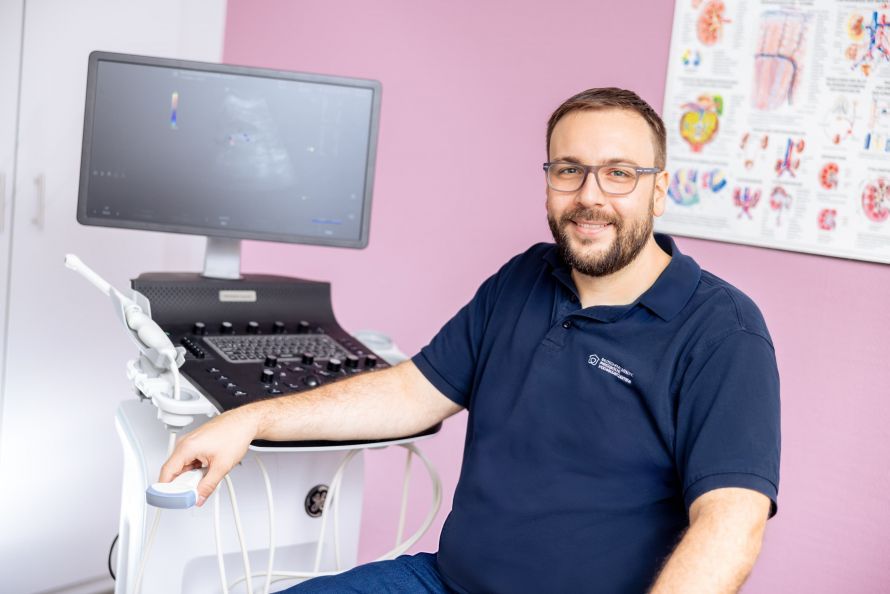
Before the introduction of Botox therapy for the treatment of overactive bladder, there were already various conventional methods that are still used today. The most common medications are antimuscarinics.
“These medications have been on the market for quite some time and are frequently used to alleviate symptoms. If necessary, they can also be combined with newer classes of medications, such as beta-3 adrenoceptor agonists, which represent a relatively recent development. In addition, there is electrical stimulation therapy, in which electrical impulses delivered via electrodes placed on the abdomen, in the vagina, or rectally near the bladder affect the bladder muscles. This therapy, which is largely covered by health insurance, is low-risk, can be performed at home, and offers a good complement to drug-based treatments. Compared to medications in tablet form, Botox therapy is considered a better-tolerated treatment option. Medications, particularly antimuscarinics, act systemically in the bloodstream and thus affect the entire body. These side effects can include dry mouth, vision problems, constipation, or, in rare cases, even impairments of cognitive functions such as dementia—especially in older patients who are already taking multiple medications. Botox acts exclusively locally within the bladder without entering the bloodstream. This significantly reduces the risk of side effects, making the treatment much better tolerated. For patients, this means above all: fewer daily or weekly medication doses, no need for long-term planning, and ease of use—simply visit the doctor once, undergo the treatment, and enjoy peace of mind for an extended period,” emphasizes Dr. Rickert.
The treatment outcomes of botulinum toxin therapy generally differ significantly between patients with neurologically caused and non-neurological overactive bladder.
“In my experience, Botox therapy works very well for both groups—both patients with neurogenic causes of overactive bladder and those with idiopathic cases. However, the medical literature reports that efficacy is often slightly better in cases of neurogenic causes, meaning the success rate tends to be higher in these cases. Nevertheless, the overall success rate is very high, though there are always individual patients for whom the treatment does not produce the desired results. For some, it has no effect at all, which is then difficult to explain. In such cases, one can attempt to optimize the treatment, for example by increasing the Botox dose or by combining it with medication. This is generally a sensible option. For patients who have already undergone treatment, it is also possible to increase the dose again to achieve greater effectiveness. When it comes to dosing, the decision is based on effectiveness: if the patient is satisfied with the current dose, it remains unchanged. However, if the effect wears off after a few months or if the patient was dissatisfied from the start, a higher dose is considered in consultation with the patient. As a rule, the dose is not increased beyond 200 units, though in individual cases it is sometimes raised to 300 units. Increasing the dose any further generally does not make sense. Instead, one should look into alternative treatments,” notes Dr. Rickert.
Treatment of overactive bladder with Botox is now quite common in Germany and is fully covered by health insurance companies, even though the therapy is costly. Numerous treatments are performed each year, and the number is rising steadily because the method has become well established in clinical practice.
Dr. Rickert concludes by commenting: “The patients who undergo this treatment are mostly women between the ages of 50 and 80, though younger patients are not excluded. The treatment is often performed by a specialist who has typically already performed several hundred such procedures. An important point is that most affected individuals only find the courage to see a doctor after years of suffering. Topics associated with particular shame, such as incontinence, are suppressed for a long time, which leads to a significant reduction in quality of life. During the consultation, we emphasize how simple and low-risk the botulinum toxin injection is. It is a brief, relatively painless procedure that usually takes only a few minutes, and patients can go home immediately afterward. Many report that they experience significantly fewer symptoms after treatment and that their quality of life has improved enormously—often, even when the condition has persisted for years, patients become more active again and resume their daily lives. Botox therapy is well-established at our treatment center. We have extensive experience and treat numerous patients with this method every year. Our goal is to offer those affected quick, straightforward, and effective relief so they can once again enjoy their lives without worry. It is particularly gratifying that many patients have remained loyal to us for a very long time, which confirms their trust in our treatment. We are grateful to be able to contribute to significantly improving these people’s quality of life.”
Dear Dr. Rickert, thank you very much for providing insight into this treatment method, which is still relatively unknown to many!
Share this article
Expert Interviews
Read next
- Expert interview
Expert interview with Professor Dr Elmar Herbst, PhD
Oct 15, 2026
Patient-centred and personalised knee surgery
Read more - Expert interview
Cardiogeriatrics: Significance and benefits in the context of hospital reform
Sep 21, 2026
Cardiogeriatrics: Significance and benefits in the context of hospital reform
Read more - Expert interview
Expert Interview with Professor Dr. Amadeus Hornemann, MPH
Sep 18, 2026
Prof. Amadeus Hornemann on Precision Medicine in Gynecology: Modern Surgery, New Techniques, Better Quality of Life
Read more