Expert Interviews
Water Vapor Therapy for the Prostate

Alexandra Pfitzmann ·
Enlargement of the prostate, medically known as benign prostatic hyperplasia (BPH), is a common condition among older men that can lead to lower urinary tract symptoms. An innovative treatment option is steam therapy, which gently and effectively reduces prostate tissue. This method offers patients a minimally invasive alternative to traditional surgical procedures and significantly improves their quality of life. The editorial team at Leading Medicine Guide learned more about this in an interview with Dr. med. univ. Nicolas Rickert.
 Benign prostatic hyperplasia (BPH) is often genetically determined and is generally an age-related process, as it progresses over time.
“In the past, people did not live to the age at which these problems typically arise, meaning there was no natural selection pressure to prevent excessive prostate growth. Patients typically notice a weakening of their urine stream, difficulty urinating, interruptions, or the sudden urge to use the restroom without being able to hold it for long. Another common symptom is having to get up several times at night, which can significantly disrupt sleep. These symptoms often lead patients to seek medical attention. When a patient comes to the office with such complaints, the diagnostic process begins with a detailed medical history. This involves discussing the patient’s symptoms, which are often quantified using questionnaires. These questionnaires help to document the symptoms and determine their severity. It is important to clarify how much the symptoms interfere with the patient’s daily life, because if the symptoms are manageable, there may be no need for treatment. The size of the prostate also plays a crucial role: “If the prostate is very small, alternative causes for the symptoms could be considered,” explains Dr. Rickert at the beginning of our conversation.
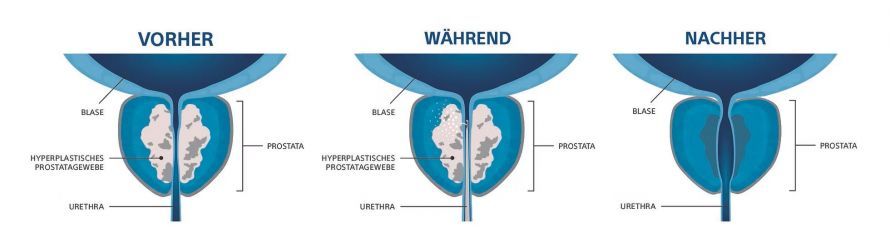
Steam therapy (Rezüm) for an enlarged prostate is a minimally invasive treatment method in which steam is precisely injected into the excess prostate tissue to ablate and reduce it. This technique aims to alleviate lower urinary tract symptoms and offers a faster recovery and fewer complications compared to traditional surgeries.
 “In cases of a very large prostate, steam therapy may not be the appropriate treatment option, and other procedures should be considered. The size of the prostate is typically estimated in milliliters using an approximation formula based on an ultrasound scan. A normal prostate typically has a volume of up to 20 milliliters. In cases of prostate enlargement, a volume of about 80 milliliters may still be suitable for steam treatment. However, if the prostate volume is significantly higher—and in practice, volumes of 200 milliliters and more are also seen—this therapy is less likely to be successful, and alternative treatment methods should be discussed. Steam therapy is a procedure for treating an enlarged prostate that offers patients various options. They can decide whether they would like to undergo the procedure under brief general anesthesia or just local anesthesia. The procedure begins with a cystoscopy. In this procedure, an instrument is inserted through the urethra into the bladder to visualize the prostate from the inside. During steam therapy, a fine needle is then inserted through this instrument into several areas of the prostate, through which hot steam is released. This steam causes changes in the tissue. The heat causes the cells to denature and die. Over the following weeks, the body then breaks these cells down. After the procedure, the patient usually needs to wear a urinary catheter for three to seven days. Although this may be uncomfortable, the duration is manageable overall. The steam treatment process itself is quick: the entire procedure takes about five minutes and usually involves four punctures, with each steam delivery taking only about ten seconds. The treatment is usually performed once, but a repeat procedure may be necessary many years later if the prostate grows again and symptoms recur. In some cases, however, patients may benefit from a permanent effect and require no further treatment,” he adds:
“If steam treatment is not available, the conventional standard method for treating an enlarged prostate is transurethral resection of the prostate (TURP). This procedure always requires general anesthesia. In TURP, a special instrument with a small metal loop through which a high-frequency current is passed is inserted through the urethra. The loop heats, cuts, and coagulates the tissue. It serves as a cutting tool for the surgeon. With this method, the prostate is “shaved” from the inside. Tissue is removed layer by layer, thereby eliminating the excess tissue. This technique is one of the most common and proven methods worldwide for treating an enlarged prostate. However, transurethral resection of the prostate is a procedure that requires longer periods of anesthesia. In addition, the side effects associated with this method are more pronounced. In some cases, incontinence may occur, meaning the patient has difficulty controlling urination, and ejaculation disorders are also very common after treatment, whereas they are virtually nonexistent with steam treatment. That said, resection offers better and more immediate results in treating an enlarged prostate. In contrast, the steam therapy method is much gentler and carries fewer risks. If the effects of steam treatment prove insufficient, TURP can still be considered. This means that the patient is not precluded from potential further treatment simply because they underwent the steam procedure beforehand. This flexibility is a major advantage of the less invasive method.”
The brand name “Rezüm” comes from NxThera, the company that developed the technology. Following the acquisition of the company, the system is now marketed worldwide by Boston Scientific. The name is often associated with the concepts of “resonance” or “renewal,” conveying the idea that the procedure helps to renew or improve patients’ quality of life by alleviating symptoms related to an enlarged prostate.
Steam therapy is particularly well-suited for patients suffering from benign prostatic hyperplasia (BPH) who experience symptoms such as frequent urination, nocturia, or difficulty urinating.
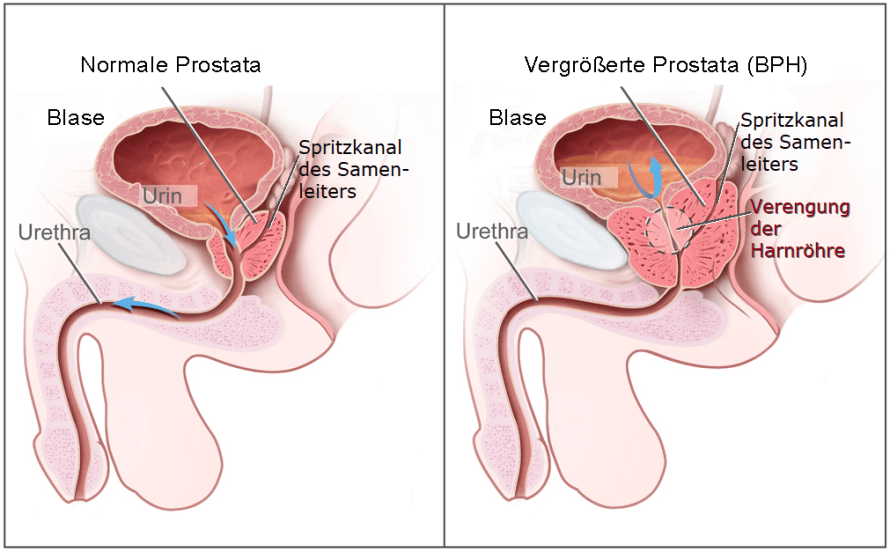 This method is ideal for men who have moderate to severe symptoms but may not be willing or suitable candidates for more invasive surgical procedures. The therapy is also beneficial for patients for whom general anesthesia would be risky due to high age-related risks or health problems, as steam therapy can also be performed under local anesthesia. However, there are specific contraindications that should be considered when determining suitability for steam therapy.
“For example, any potential acute cystitis should be treated before the procedure. Similarly, if prostate cancer is suspected, this must first be ruled out before therapy can begin. Another factor that can influence suitability for the steam therapy method is neurological symptoms. If the patient suffers from a neurological bladder emptying disorder—such as one caused by a severe herniated disc or other neurological conditions that weaken the bladder muscles —the effectiveness of steam treatment may not be sufficient to ensure adequate bladder emptying. In such cases, it is often better to perform a prostate resection, as the chances of success are higher,” says Dr. Rickert.
After steam therapy, patients can generally expect to notice an initial improvement in their symptoms within one to two weeks. The most common changes include a reduced frequency of urination, especially at night (nocturia), as well as an improved urine stream and easier urination.
Dr. Rickert comments: “After steam therapy, the patient may actually notice an initial worsening of symptoms after the catheter is removed. At this point, an inflammatory reaction in the prostate and associated swelling may initially lead to increased discomfort during urination. A few weeks after the procedure, symptoms are often comparable to the patient’s original condition, before the full benefits of treatment become apparent after about two to three months. Therefore, patience is required to experience the actual improvements. In comparison, transurethral resection of the prostate (TURP) generally provides immediate results: Most patients report an immediate improvement in their symptoms as soon as the catheter is removed, although prostate inflammation can occasionally occur here as well, which could temporarily delay the healing process. When patients are informed about the two methods, most show a clear preference for steam therapy, as it is a less invasive procedure and they are less anxious about potential complications. The less invasive approach and the faster recovery following steam therapy are often compelling arguments for patients.”
Steam therapy is generally considered a safe procedure for treating benign prostatic hyperplasia; however, as with any medical treatment, complications or side effects may occur.
“In principle, postoperative bleeding can occur after either procedure. After treatment, patients often notice a reddish discoloration of their urine, but this is usually harmless. In some cases, however, severe post-operative bleeding can occur, in which the blood in the urine clots and can block the catheter. This can lead to severe pain and, in such cases, may require treatment in the hospital. Severe post-operative bleeding occurs much more frequently after a TURP than after steam therapy. With a TURP, patients usually need to stay in the hospital for a few days so that such complications can be monitored and treated. In rare cases, it may even be necessary to perform another surgical procedure under anesthesia to stop the bleeding. After steam therapy, patients generally face significantly fewer restrictions in their daily lives. In contrast, patients who undergo TURP must take it easy physically for about six weeks, refrain from heavy lifting, and avoid sports to minimize the risk of postoperative bleeding. With the steam therapy method, on the other hand, patients can often resume all activities after just one week, which is a clear advantage of this less invasive method,” explains Dr. Rickert, adding another important detail:
“A key complication that leads many patients to prefer steam therapy over transurethral resection of the prostate (TURP) is the frequent occurrence of retrograde ejaculation following a TURP. In nearly 90% of cases, patients experience a dry orgasm after this surgery, which means that the ejaculate is not expelled outward but instead flows backward into the bladder and mixes with urine. This complication is permanent and incurable and can therefore lead to serious problems for men who wish to have children. Many men also find it unpleasant that ejaculation no longer functions after TURP, which can have a significant impact on their sexuality. The lack of a reversible option following such a procedure is a serious concern. In contrast, this type of complication almost never occurs with the steam method. For younger patients who may still wish to have children or preserve their sexual function, this is a decisive factor in choosing steam therapy. The less invasive nature of the steam method and the lower risk of such complications are important considerations that can help many patients make an informed decision about their treatment.”
Current studies and clinical data on steam therapy show that this procedure is an effective and safe treatment for benign prostatic hyperplasia (BPH), delivering compelling results in both the short and long term.
 Dr. Rickert explains: “The body of clinical data on steam therapy is not yet as comprehensive as that for established standard surgeries such as transurethral resection of the prostate (TURP). However, there is a large, high-quality study from the United States that followed 188 patients over a four-year period. The results showed that treatment with steam led to a significant improvement in urinary symptoms. These positive effects persisted until the end of the four-year follow-up period. However, there are currently no direct comparative studies that directly contrast the effectiveness of the steam therapy method with other methods such as TURP. It should be noted that experience suggests the steam therapy method is likely somewhat less effective than more invasive procedures. Long-term prognoses are therefore somewhat difficult to make, as there is less data available on the steam therapy method due to its relative novelty. However, as time goes on and further studies are conducted, it will be possible to make more precise comparisons and better understand how its long-term effectiveness compares to established procedures.”
The combination of effective symptom relief, a low risk of side effects, and a quick return to daily activities has contributed to steam therapy’s growing popularity in recent years.
It is important for men to speak openly about their health issues and to undergo regular screenings, especially when it comes to the prostate. If someone leaves an enlarged prostate untreated for an extended period, this can have serious consequences.
“Difficulty urinating can be caused by more than just benign prostatic hyperplasia. Neurological disorders or prostate cancer may also be the underlying cause. Therefore, an examination should always be considered to rule out such serious conditions. Another risk is the accumulation of residual urine in the bladder, where the bladder does not empty completely after urination. If this goes unnoticed and untreated, the bladder can be damaged over the years. Urine backup can also potentially lead to kidney damage. In the worst-case scenario, this could result in the patient requiring dialysis. Studies on benign prostatic hyperplasia also show that the earlier symptoms are treated, the better the chances of successful treatment. As a preventive measure, it is generally recommended that men aged 45 and older see a urologist regularly. If there is an increased risk—for example, if close relatives have had prostate cancer—it makes sense to schedule an initial appointment as early as age 40. If symptoms arise, a doctor should of course be consulted sooner, regardless of age. In practice, however, there is significant variation in how many men follow these recommendations. Some come right on time at age 45, while others come later—often not until age 50 or even later. Often, it is the men’s partners who encourage them to see a urologist. As for steam therapy, we currently perform about five procedures per month in our practice, and the trend is clearly on the rise. This shows that interest in and acceptance of this less invasive treatment method are growing,” emphasizes Dr. Rickert, and with that, we conclude our conversation.
Thank you very much, Dr. Rickert, for this in-depth look at the promising steam therapy for an enlarged prostate!
- Board-certified urologist and medical director of the German-French Medical Center in Saarbrücken.
- Expertise in urological oncology, andrology, botulinum toxin treatments, and general and functional urology.
- Individualized, patient-centered care with strong interdisciplinary collaboration.
- Bachelor’s degree in computer science and medical studies in Vienna; residency training in Sulzbach.
- Experience in modern, minimally invasive procedures such as Rezüm therapy and no-scalpel vasectomy.
- Commitment to high-quality, future-oriented urology.
Share this article
Expert Interviews
Read next
- Expert interview
Expert interview with Professor Dr Elmar Herbst, PhD
Oct 15, 2026
Patient-centred and personalised knee surgery
Read more - Expert interview
Cardiogeriatrics: Significance and benefits in the context of hospital reform
Sep 21, 2026
Cardiogeriatrics: Significance and benefits in the context of hospital reform
Read more - Expert interview
Expert Interview with Professor Dr. Amadeus Hornemann, MPH
Sep 18, 2026
Prof. Amadeus Hornemann on Precision Medicine in Gynecology: Modern Surgery, New Techniques, Better Quality of Life
Read more