Expert Interviews
Tracheal Surgery

Alexandra Pfitzmann ·
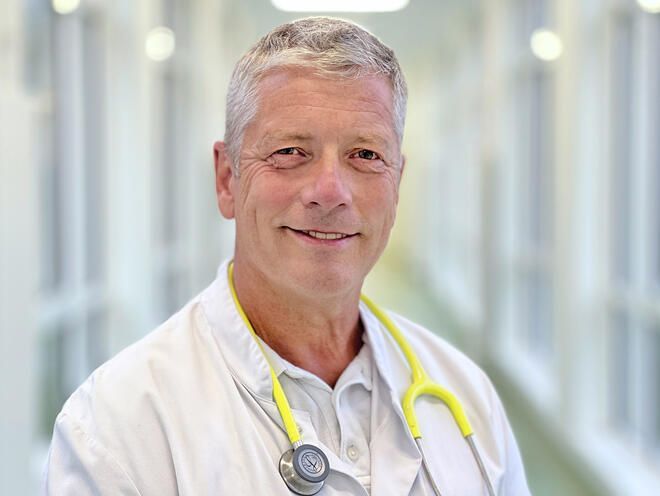
The editorial team at Leading Medicine Guide learned more about tracheal surgery—specifically the treatment of diseases and injuries of the trachea—during a conversation with Dr. Schega.
Tracheal surgery is a highly specialized field of surgery that deals with the treatment of diseases, injuries, and malformations of the trachea. Since the trachea plays a central role in the respiratory system, precise diagnosis and treatment are essential for problems such as narrowing, tumors, or injuries. Tracheal surgical procedures range from the removal of tumors to the reconstruction of tracheal stenoses and traumatic injuries. Thanks to modern, minimally invasive techniques, such surgeries can often be performed gently and with a faster recovery today.
Common reasons for tracheal surgery include narrowing of the trachea (tracheal stenosis), which can result from inflammation, previous surgeries, injuries, or long-term mechanical ventilation and can make breathing difficult. Another cause is tracheomalacia, in which the walls of the trachea collapse and narrow the airways. Tumors—both benign and malignant—as well as congenital or acquired malformations may also require surgery.
“The trachea can be affected by a wide variety of diseases and injuries that require treatment. Particularly common are the consequences of long-term mechanical ventilation: Many patients—whether young or old—receive intensive care following accidents or due to severe heart and lung diseases and are ventilated for extended periods. In such cases, not only an endotracheal tube but also a tracheostomy tube is often used, which is either inserted by anesthesiologists to dilate the trachea or surgically placed—either temporarily or permanently. Once a patient recovers, the tracheostomy tube can be removed. However, it often turns out that scarring or narrowing (stenosis) has developed, which impedes breathing. In such cases, specialized procedures are necessary: the narrowed areas are removed, and the healthy ends of the trachea are sutured back together (anastomosis). “Such narrowings most commonly occur in the neck area directly below the larynx; less frequently, they occur in deeper sections as a result of intubation,” explains Dr. Schega, adding:
“A distinctive feature of Treuenbrietzen is the multi-site weaning center (where patients relearn how to breathe normally), which is operated jointly with the Beelitz-Heilstätten Rehabilitation Clinic. There, patients are prepared following severe neurological diseases or accidents. Working in close cooperation, the teams decide when surgery is appropriate and how the trachea can be restored to a ‘breathable’ state—whether through resection, dilation, or the use of new tracheal cannulas. Such surgeries require a well-coordinated team: ear, nose, and throat specialists, thoracic surgeons, anesthesiologists, and intensive care physicians work closely together. Above all, a reliable oxygen supply during the procedure is crucial. The logistics are managed through a well-coordinated system: Patients can be referred to Treuenbrietzen from other hospitals, such as the Charité in Berlin. Often, medical findings—including CT or MRI images—are shared digitally in advance, allowing specialists to decide early on whether and how treatment is possible. “The most rewarding moments come when a patient who could barely breathe before is able to breathe freely again after a successful operation—without a cannula, without any obstruction.”
The development of minimally invasive techniques has significantly transformed tracheal surgery and offers numerous advantages for both patients and treating physicians. These modern procedures have revolutionized the way tracheal disorders are treated by focusing on smaller incisions, less physical stress, and faster healing.

Larynx, trachea, and bronchial system._Patrick J. Lynch, medical illustrator, CC BY 2.5
“In the past, tracheal procedures were performed very differently; today, many are minimally invasive or at least involve ‘small incisions.’ Of course, we always have to tailor the incisions to each individual case: If the narrowing is in the neck area, a small incision is sufficient, but sometimes the sternum must be partially or completely opened—or we operate from the side, depending on exactly where the narrowing is located. After all, the trachea is 10 to 12 centimeters long, consists of 22 to 24 cartilaginous rings, and divides into the two main bronchi behind the sternum. The major advance in recent years has been modern oxygenation during surgery. Today, we can use jet ventilation—which involves a thin catheter that is advanced through the incised trachea into the lungs and delivers oxygen at high frequencies and with controlled pressure. This allows us to ventilate both lungs or just the lower trachea. In addition, we monitor gas exchange using a transcutaneous CO₂ sensor on the skin. This gives us valuable time to calmly suture an anastomosis—that is, to rejoin the edges of the trachea—or even to reconstruct a new bifurcation if necessary. Of course, we always need a Plan B and a Plan C: If jet ventilation doesn’t work, we can insert a tube through the surgical field and thus ventilate one lung specifically until the connection is restored. Perfect preparation is crucial here: Anesthesia, surgery, and nursing must function as a well-coordinated team; every move must be precise. This “crisis resource management” ensures that no time is lost in an emergency. The major advantage of a specialized center is its routine. In Treuenbrietzen, we perform around 100 tracheobronchoplasty procedures per year, placing us at the forefront in Germany in terms of both the number and quality of care provided. In addition to complications from mechanical ventilation or injuries, we also treat rare tracheal tumors, whether benign or malignant. “This allows us to cover the entire spectrum of modern tracheal surgery,” emphasizes Dr. Schega.
Treatment for tracheal diseases depends on the cause: Mild narrowing (e.g., in cases of tracheal stenosis or tracheomalacia) can be treated minimally invasively with stents or balloon dilation. In more severe cases, open surgery is necessary, for example, to remove or reconstruct sections of the trachea. For tumors, a partial trachectomy may be considered; malformations or injuries often require reconstruction. In advanced diseases, such as lung cancer involving the trachea, a combination of surgery, radiation therapy, and chemotherapy is usually used.
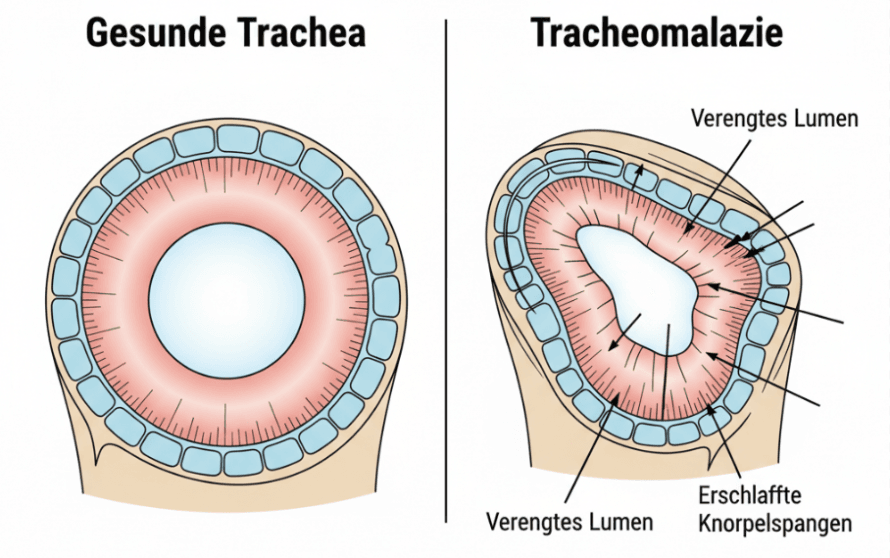
Tracheomalacia._Generated by AI
Tracheal surgery plays a crucial role in the treatment of tracheal tumors, as these tumors can both obstruct the airways and pose a potential threat to surrounding structures such as the lungs, the esophagus, and blood vessels.
Tumors of the trachea are relatively rare but can be either benign or malignant, with the latter typically requiring more aggressive and comprehensive treatment. Surgical treatment of these tumors aims to remove the tumor mass, secure the airway, and minimize complications.
“When it comes to tumors in the trachea, the question of their causes often arises. Generally speaking, there are both genetic factors and known risk factors, with smoking in particular playing a decisive role. The link between smoking and lung cancer has already been well documented, and a similar correlation is evident for tracheal cancer: Statistically speaking, about nine out of ten male cancer patients are chronic smokers. Among women, the figure is about seven out of ten, which means, however, that their risk is also significantly increased by preventable factors. Smoking is considered the most important preventive factor in avoiding the development of such a tumor. This close link also explains the high incidence of tracheal cancer among smokers. However, there are also benign tumors, such as papillomas, that can obstruct the airways. The problem is that these benign tumors are sometimes underestimated: One might think it is just chronic bronchitis, especially when there are airway narrowings that are treated with bronchodilators or antibiotics. But the actual cause may be a tumor that can rapidly obstruct the airways and thus severely impair breathing. In such cases, time is of the essence. If someone notices changes in their breathing, is coughing more frequently, and this condition persists for weeks, it is essential to see a specialist. Often, the underlying tumor is not recognized at first. Therefore, the recommendation is: If a cough persists for two to three weeks, an examination should be conducted. This usually includes imaging procedures such as X-rays or CT scans, as well as a bronchoscopy, to determine the exact cause,” says Dr. Schega.
Tumors diagnosed early have significantly better treatment outcomes, as they often have not yet spread into the surrounding tissues.
Dr. Schega comments: “In such cases, a procedure known as a sublobar resection is performed—a minimally invasive surgery in which only the affected segment of the lung is removed. The lung consists of 19 segments arranged into five lobes, so that during such a procedure, only the diseased segment can be removed. This spares the rest of the lung and preserves the patient’s respiratory function as much as possible. The surgical technique is generally the same for treating patients with lung diseases or tumors. Both procedures require careful removal of the diseased tissue from an inflammation-free, scar-free environment to prevent recurrences and narrowing. Intrinsic frozen-section microscopy is often used during the procedure to ensure that all tumor-free margins are achieved. As for the duration of such a surgery, it can take about two to three hours when performed by an experienced team. Particularly in patients who have been intubated for a long time and wear a tracheostomy tube, the anatomy is often significantly altered and scarred. This makes the surgery more complicated and requires a precise approach, especially when removing strictures below the larynx, such as at the roof of the tracheostomy tube. In this procedure, the narrowed area is carefully removed, an end-to-end anastomosis is performed, and oxygen supply is ensured. A current trend is the use of neuromonitoring during surgery to precisely monitor nerve function, particularly that of the recurrent laryngeal nerve. This protects the voice and prevents nerve damage. To ensure nerve stability and the best possible postoperative function, this technique is also used during complex procedures in the trachea or thoracic region. During the procedure, the nerves are continuously monitored using special electrodes and sensors to ensure that they remain well-perfused even during surgery—a measure that significantly improves long-term outcomes.”
If a patient already has carotid stenosis (narrowing of the carotid artery)—for example, if they have been treated with a stent—this generally does not fundamentally affect the performance of airway surgeries.
“Experienced surgeons have several options for selecting the optimal approach. If blood flow in the neck has been adequately restored—for example, through interventional or surgical procedures—there is usually nothing to prevent the surgery from proceeding. However, thorough preparation is essential, particularly regarding the functionality of the vocal cords and the airways, to avoid complications. Existing swallowing disorders or dietary habits should also be taken into account before surgery. Many patients on long-term mechanical ventilation with a tracheostomy tube are fed via gastrostomy, which necessitates speech therapy and swallowing training. A comprehensive assessment of these factors is essential to ensure that the patient can breathe and swallow independently again after the procedure and to prevent aspiration. This is important because aspiration impairs lung function and, in the worst case, may necessitate a re-tracheotomy—which we want to avoid as much as possible. The importance of interdisciplinary collaboration in specialized centers is particularly evident in young injured patients who require long periods of rehabilitation. In addition to the surgeon, anesthesiologists, thoracic surgeons, and other specialists are involved. This collaboration under one roof is crucial for success, much like in society and family: better results can be achieved by working together. In tracheal and laryngeal surgery, it is essential to coordinate the various specialties optimally in order to consistently achieve the best possible outcome. Close coordination between the anesthesiologist and thoracic surgeons is particularly important, since the trachea extends into the chest cavity and connects to the lungs. Careful preparation is half the battle, as well-planned anastomoses heal better. If respiratory function is impaired before surgery, there is a risk that the patient will need to undergo a repeat tracheotomy after the procedure. “That is why a comprehensive assessment should be conducted in advance—similar to the planning of tumor surgery, where the medical record is reviewed together with the anesthesiologist to minimize all risks and ensure the success of the treatment,” explains Dr. Schega.
The step-by-step approach to weaning (the gradual withdrawal of mechanical ventilation) at the Treatment Center for Economy, Education, and Health (BWB) is well-structured. It offers interdisciplinary care for patients who require specialized medical attention. It combines medical treatment, rehabilitation, and educational programs to optimally prepare patients for a return to everyday life.
“Cases are regularly discussed via video or telephone conferences. During these discussions, the participating specialists assess how preparations for removing the tracheal cannula are progressing and whether the conditions for weaning are met. During the process—for example, when withdrawing the tube or placing a spacer—the team checks for any narrowing of the airways or collapse of the soft tissues. These local issues are identified during the conference, as are the patient’s existing comorbidities, such as renal insufficiency, circulatory disorders, or heart problems like coronary artery disease or valvular defects. If all factors align, it is possible to successfully wean the patient and remove the tracheostomy tube. This collaborative approach is then implemented as planned. Subsequently, if rehabilitation is necessary, further treatment takes place while the patient is in improved condition. Patients are optimally prepared for independent living, supported by an interdisciplinary team. The time frame from planning to implementation is typically one to two weeks. The team receives inquiries from other facilities, such as outpatient or inpatient ventilatory care centers, and maintains ongoing communication with them. Even in advance—for example, through bronchoscopic examinations—there are often indications of relevant issues such as tracheal stenosis, which plays an important role in the subsequent course of action. “A key challenge remains the essential function of air supply, as breathing is vital. Therefore, careful planning and preparation are crucial to minimizing risks and ensuring the success of the weaning process,” explains Dr. Schega.
In addition to the usual surgical risks, there are several specific risks and complications associated with such procedures that must be taken into account.
Dr. Schega explains: “The risk of vocal cord weakness, particularly bilateral vocal cord weakness, must be kept to a minimum—a condition we have observed only once in the past 20 years. Such risks can be minimized through a very subtle surgical technique, often supported by the use of neuromonitoring to safeguard nerve function during surgery. Nevertheless, a certain degree of aggressiveness is sometimes necessary during the procedure, for example, to remove scar tissue. Particularly in cases of complex changes in the trachea—such as extensive narrowings—mobilization or transposition of parts of the trachea is necessary to create sufficient airway diameter and restore a functioning airway. The trachea itself is an organ that, to date, can hardly be completely replaced by plastics or other substitute materials. Research is exploring approaches such as tissue engineering, in which the body’s own cells are cultured to replicate the functions of the tracheal mucosa. However, these procedures are still experimental, as functional innervation and blood supply are necessary,” he explains, elaborating on the goal of restoring normal breathing in patients:
“For patients with chronic respiratory problems that are not caused by accidents or intubation, the question arises as to whether they can benefit from such surgery in the long term. If a mechanical narrowing in the trachea is the cause of shortness of breath, removing this narrowing can significantly improve breathing. However, this requires that the lungs themselves are still functioning properly. For this reason, a thorough evaluation of respiratory and cardiac function is conducted prior to such procedures. The goal is to restore the normal airway configuration, but a purely mechanical improvement does not always lead to spontaneous breathing; in some cases, support via a mask or a ventilator remains necessary, for example, in cases of sleep apnea or respiratory insufficiency.”
Beelitz-Heilstätten – From Health Resort to New City
On the outskirts of the Brandenburg Fläming region, yet always with a direct train connection to Berlin, the Beelitz-Heilstätten—one of Europe’s largest sanatoriums for lung diseases—was established over 100 years ago. In the 1920s and 1930s, more than 2,000 tuberculosis patients were treated here at the same time. The facility was state-of-the-art for its time: sprawling buildings, its own combined heat and power plant, wings with basements, and spacious green areas provided ideal conditions for the fresh-air therapy common at the time. After 1945, the Soviet Army used the site until its withdrawal in the 1990s. Following its closure, the buildings fell into disrepair, and vandalism and vacancy came to define the landscape. It was only through the dedication of historian Irene Krause—who collected and documented the history of the site and offered guided tours—that renewed interest was sparked. Today, the site is one of the largest construction projects in Berlin-Brandenburg: Historic buildings have been extensively renovated and converted into apartments, complemented by a new neighborhood featuring a school, a kindergarten, and a medical center. In this way, a place that once stood for healing is reinventing itself and has now become a vibrant residential and community space.
The Johanniter Hospital in Treuenbrietzen has been certified by the German Society for Thoracic Surgery (DGT) as a center of excellence in the state of Brandenburg and is also recognized as a lung cancer center by the German Cancer Society. State-of-the-art operating rooms, specialized techniques, and a 14-bed intensive care unit enable high-performance thoracic surgery. Thanks to the close integration of specialized pulmonological and thoracic surgical diagnostics and therapy, the clinic is regarded as a leading center of excellence in thoracic surgery and pulmonology in the state of Brandenburg and beyond.

The goal is for patients to be able to breathe freely again_AI-generated
“In Treuenbrietzen, we want to drive the development of new technologies, particularly the introduction of robotic surgery, similar to what several other centers in Germany are already doing. We are pursuing this goal with a clear patient-centered focus. In doing so, we are increasingly relying on minimally invasive procedures that can be performed without intubation or general anesthesia. This means that, for suitable patients—such as those with benign findings or other indications—we can now perform lung surgeries under analgosedation without a tube (sedation using tranquilizers and pain relievers). In doing so, we can selectively anesthetize nerve structures, such as the vagus nerve, to facilitate breathing and minimize the risk of injury to the central airways. With this technique, we can perform both minor and major lung surgeries in the same safe environment, which is a distinctive feature of Treuenbrietzen. Thoracic surgery has been practiced in Treuenbrietzen for 22 years. Formerly a specialized, conservative clinic, it moved from Beelitz-Heilstätten to Treuenbrietzen and was established there with me—an experienced thoracic surgeon and a native of Treuenbrietzen—along with a dedicated team. Our range of services is broad—from septic surgery for pleurisy, to metastasis surgery using state-of-the-art laser and photothermal energy, to sublobar anatomical resection for early-stage lung tumors requiring segmental resection. We also treat thoracic trauma using modern titanium systems to stabilize the chest, enabling patients to quickly resume their normal work and leisure activities. Another strength is our network extending beyond Brandenburg. We support patients from neighboring hospitals in Brandenburg, Frankfurt, and other locations. If acute thoracic conditions arise there that require immediate care and transfer to Treuenbrietzen is not possible, we provide on-site assistance. This fosters close collaboration within Brandenburg and aligns with the modern approach of working in a more team-oriented and interdisciplinary manner in Germany. In addition, we value exchange with international colleagues and regularly participate in global symposia to actively incorporate and implement the latest developments in thoracic surgery,” said Dr. Schega, and with that, we conclude our conversation.
Thank you very much, Dr. Schega, for this almost historic insight into thoracic surgery—and tracheal surgery in particular!
- Head of the Department of Thoracic Surgery at Johanniter Hospital in Treuenbrietzen; a recognized specialist in diseases of the chest and lungs.
- A highly trained surgeon with extensive experience in open, minimally invasive, and video-assisted thoracic surgery.
- Special expertise in minimally invasive, modern procedures such as video-assisted thoracoscopic surgery, laser metastasis surgery, and plastic reconstructive surgery.
- Broad range of treatments: from inflammatory diseases and chest wall deformities to complex lung cancers and pulmonary emphysema.
- Closely integrated into a certified lung cancer and thoracic center; works in an interdisciplinary manner to develop individually tailored, state-of-the-art treatment plans.
Share this article
Expert Interviews
Read next
- Expert interview
Expert interview with Professor Dr Elmar Herbst, PhD
Oct 15, 2026
Patient-centred and personalised knee surgery
Read more - Expert interview
Cardiogeriatrics: Significance and benefits in the context of hospital reform
Sep 21, 2026
Cardiogeriatrics: Significance and benefits in the context of hospital reform
Read more - Expert interview
Expert Interview with Professor Dr. Amadeus Hornemann, MPH
Sep 18, 2026
Prof. Amadeus Hornemann on Precision Medicine in Gynecology: Modern Surgery, New Techniques, Better Quality of Life
Read more