Expert Interviews
Dr. Sebastian Lamm on da Vinci Surgery and Complex Robotic Abdominal Wall Surgery

Alexandra Pfitzmann ·
Dr. Sebastian Lamm, M.D., is an experienced and dedicated specialist in minimally invasive and robot-assisted visceral surgery at the Baselland Cantonal Hospital, where he serves as coordinator of the hospital’s reference center for hernia surgery and director of the daVinci surgical program. With his expertise in state-of-the-art surgical methods, particularly the daVinci surgical robot, he sets new standards in the gentle and precise treatment of hernias and ensures first-class care for his patients.
His treatment approach is based on minimally invasive procedures that enable gentle mesh placement in the abdominal wall through the use of robot-assisted techniques such as eTEP and rTAPP. The reduced surgical trauma leads to less pain, fewer side effects, and, ultimately, a shorter recovery time. Dr. Lamm leverages the advantages of robotic surgery—particularly in complex hernia surgeries and the treatment of rectus diastasis—to achieve optimal results with minimal stress on the patient.
In addition to his clinical work, Dr. Lamm places great emphasis on the training and continuing education of young surgeons in the field of robot-assisted visceral surgery. Through regular workshops and training sessions, he promotes the transfer of knowledge and plays a key role in further establishing state-of-the-art surgical procedures in Switzerland. With his innovative approach and deep expertise, Dr. Sebastian Lamm offers his patients state-of-the-art, personalized care that combines the best possible therapeutic outcomes with the greatest possible patient well-being.
To learn more about complex abdominal wall surgery using the daVinci robot, the editorial team of the Leading Medicine Guide spoke with the renowned visceral surgeon Dr. Sebastian Lamm, who has been working with robotic technology at the Cantonal Hospital of Baselland for nearly ten years.

daVinci surgery has revolutionized minimally invasive surgery and opened up entirely new possibilities, particularly in complex abdominal wall surgery. The use of this high-precision surgical robot allows procedures such as hernia repairs and abdominal wall reconstructions to be performed with the utmost precision and minimal tissue trauma. This innovative technology provides a better view, finer movements, and gentler treatment, leading to faster recovery times and a significant improvement in the patient experience. Especially in complex cases, robot-assisted abdominal wall surgery offers a significant advance over conventional procedures.
Thanks to three-dimensional, high-resolution imaging, the surgeon gains an enlarged, three-dimensional field of view that far exceeds the capabilities of conventional laparoscopy. This allows for significantly better orientation within the surgical site and makes it easier to identify tissue structures, nerves, and blood vessels.
“Given the advantages of the robot-assisted procedure—particularly in cases of complex abdominal wall hernias—the technology enables surgeries that would not be feasible using conventional keyhole techniques. The camera and the robotic arm can be inserted through three small incisions. The instruments are highly maneuverable and transmit the surgeon’s movements all the way to the elbow joint. This enables precise and technically demanding procedures that were previously impossible or very difficult to perform using minimally invasive techniques. For the surgeon, the system offers the major advantage of allowing comprehensive preparation on a simulator. In contrast to earlier keyhole techniques, where much of the learning was “on the job,” today’s surgeons can complete full training programs on specialized simulators—including simple operations—to perfect their handling of instruments and camera control. “This training opportunity ensures that the surgeon approaches the patient very well prepared—similar to a pilot who has undergone intensive training in a simulator during their training,” explains Dr. Lamm, adding further details about the necessary training measures for the robotic system:
“The training is structured: There are simulations specified by the manufacturer that must be completed with a certain score. In addition, training takes place on models or in specialized training centers. A lengthy learning process is therefore required before the first procedure on a patient. This includes various courses that gradually prepare surgeons for more challenging procedures—starting with simpler operations and progressing to more complex abdominal hernias. Furthermore, close supervision by experienced trainers is mandatory. The process begins with an observation phase at an experienced center, followed by hands-on guidance at the trainee’s own hospital. During this phase, the trainer can intervene directly in the procedure or provide instructions via a second console. This ensures a safe and structured introduction to robot-assisted surgery.” 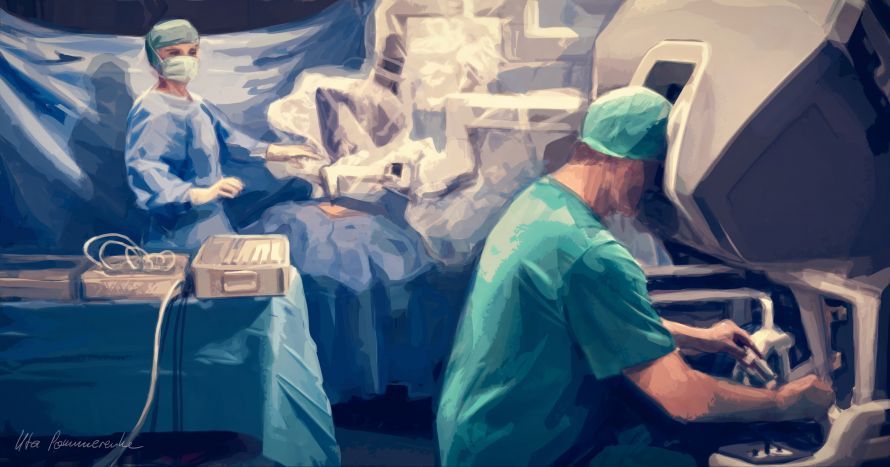
Robot-assisted technology significantly improves precision and safety in hernia surgery, particularly in complex procedures such as inguinal, umbilical, and incisional hernias, as well as the treatment of rectus diastasis.
“First, it is important to clarify that the term ‘robot’ is somewhat misleading in this context. Contrary to popular belief, the robot does not possess artificial intelligence and does not perform surgeries independently. Instead, it is a supportive technology that is fully controlled by the surgeon. The surgeon operates from a console from which he or she controls the instruments. These instruments are so articulated and maneuverable that they can replicate all the movements possible during open surgery, even in a minimally invasive and robotic manner. Another major advantage is the three-dimensional view the surgeon obtains through two cameras. He sees the surgical field as if through a microscope with significant magnification. At the same time, camera stabilization ensures a steady image that the surgeon controls himself. This allows the surgeon to adjust the image precisely to his needs and maintain optimal visibility at all times. In contrast to conventional keyhole surgery—where an assistant often holds the camera, resulting in a less stable and less individually adjusted image—the surgeon here controls both the camera and the instruments entirely on his own. “This allows him to work largely on his own with a very stable and optimal image, which significantly improves precision during the operation,” Dr. Lamm explains.
This minimally invasive method, which uses smaller incisions, reduces tissue trauma, postoperative pain, and inflammation, and promotes a faster recovery. In cases of rectus diastasis, the robot ensures a gentle correction through precise incisions and sutures, resulting in improved functional and aesthetic outcomes.
The use of da Vinci technology in abdominal wall surgery is particularly recommended and often necessary in complex cases where conventional minimally invasive procedures reach their limits. This applies above all to large, recurrent, or complicated incisional hernias. 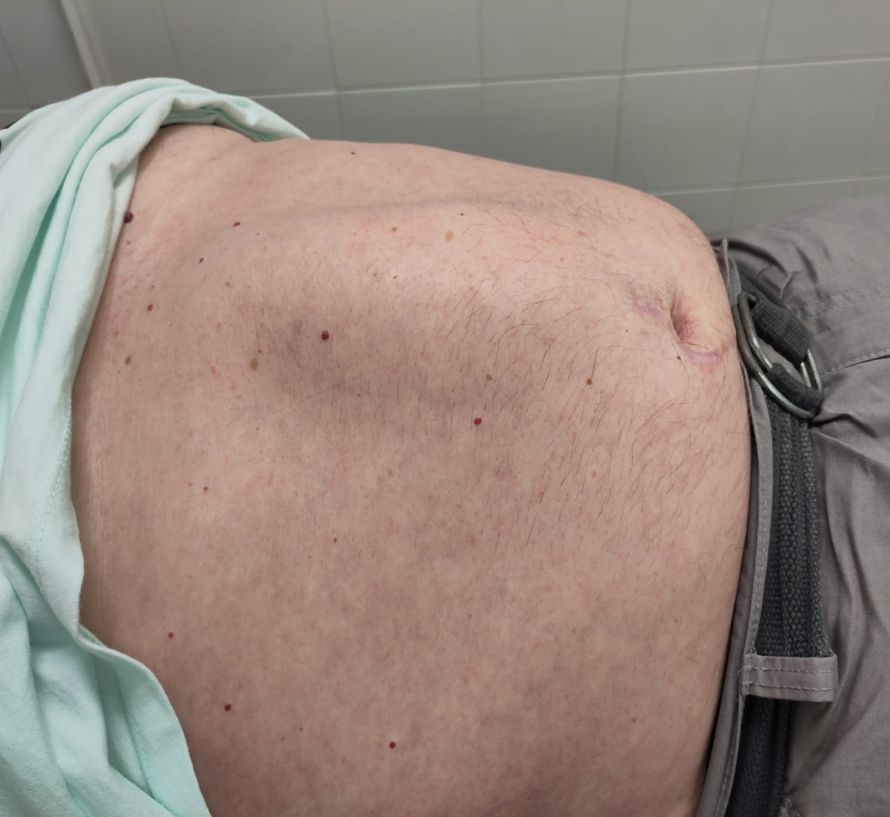
Dr. Lamm emphasizes at this point: “In my opinion, complex, modern surgical techniques that involve accessing the area behind the muscle or between the peritoneum and the muscular sheath can practically only be performed robotically. While there are experienced surgeons who sometimes perform such procedures using minimally invasive keyhole techniques, this is extremely challenging, requires a great deal of experience and concentration, and significantly prolongs the duration of the surgery. That is why these complex techniques are particularly well-suited for robotic use—not because they would be impossible with the keyhole technique, but because they can be performed significantly better with a robot. And as far as the duration of the surgery is concerned, the robot is particularly efficient, for example, when suturing the abdominal wall, where many stitches are required. Although it is often assumed that robotic procedures take longer, the opposite is true in established centers: Complex abdominal wall surgeries now typically take one and a half to two hours, whereas they used to take five to six hours. Thanks to the exchange of experience within the small community of robotic surgeons, the technology has improved significantly, so that robotic procedures are now faster than conventional minimally invasive surgeries. The brief time required to set up the robot at the start of the operation—just a few minutes—is now hardly a factor. For the patient, the use of the robot means a less invasive procedure. Instead of a large abdominal incision involving muscle dissection and extensive mesh implantation, only a few small incisions are needed, which cuts the hospital stay in half and significantly reduces complications such as postoperative bleeding and infections. Pain is also generally less severe; while this is still being investigated more closely in scientific studies, it is subjectively confirmed by surgeons and patients alike. This is because the robot’s instruments operate with precision and stability, without placing unnecessary strain on the abdominal wall. Furthermore, many modern procedures can only be technically performed using the robot, which in itself is a major advantage. Overall, robot-assisted surgery is at least as gentle—and often even better—than conventional procedures.” 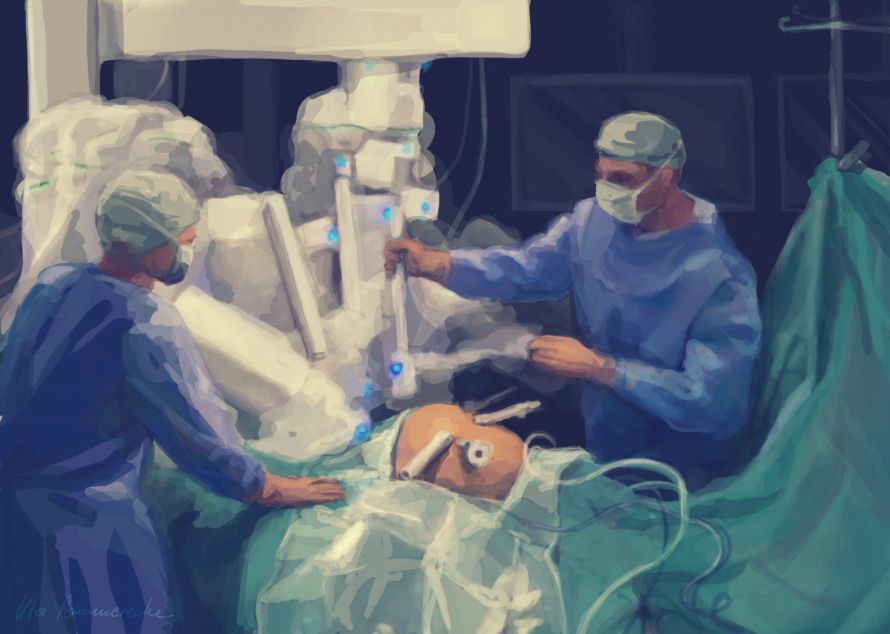
Robotic abdominal wall surgery employs specialized techniques such as eTEP (Extended Totally Extraperitoneal Repair) and rTAPP (robotic transabdominal preperitoneal patch repair), both of which represent innovative approaches to hernia treatment.
The eTEP technique repairs abdominal wall hernias without opening the abdominal cavity by creating an extraperitoneal space and reinforcing the hernia with a mesh. Robotic assistance ensures high precision and protects internal organs, thereby reducing pain and complications. The rTAPP technique combines transabdominal preperitoneal repair with precise robotic control, which enables accurate placement and fixation of the mesh.
“The eTEP and rTAPP techniques refer to specialized robot-assisted procedures for reinforcing abdominal wall hernias, particularly along the entire length of the rectus abdominis muscles. A typical example is an incisional hernia, which can develop after open surgery, such as following an intestinal obstruction or vascular surgery on the aorta. In this case, the muscle layer tears, and the intestine protrudes beneath the skin—this is called an incisional hernia. To repair it, the midline is closed, and a mesh is inserted along the entire length of the affected muscle for stabilization. In the past, this procedure required an abdominal incision; today, the mesh can be inserted minimally invasively and with great precision using a robot. The mesh is inserted into the body finely rolled up and then unfolded there—sizes of 30 x 20 centimeters or larger are possible. The suturing technique is similar to that of the open method. The major advantage is that the patient does not require an abdominal incision, resulting in significantly less surgical trauma. Access is gained from the back without major incisions, which shortens recovery time. The standard synthetic meshes used in open or minimally invasive procedures are typically employed. For younger patients, such as women with rectus diastasis, bioresorbable meshes are increasingly being used. These meshes dissolve in the body over time and are ideally replaced by the body’s own collagen, ultimately forming a natural mesh. The data so far are promising, but it remains unclear in the long term whether they offer the same stability as conventional polypropylene meshes. Another advantage of bioresorbable meshes is that they do not leave behind a permanent plastic foreign body. Given the ongoing discussion about microplastics, this is an important consideration for some patients. “If this technique continues to gain acceptance, plastic meshes may be used less frequently in the future,” explains Dr. Lamm.
The integration of da Vinci surgery plays a crucial role in preventing long-term complications and recurrences in complex hernias by enabling exceptionally precise and minimally invasive surgical procedures.
“Modern robot-assisted procedures yield results that are technically at least as good as those of open surgery. Whether they actually deliver even better results in the long term has not yet been conclusively determined. While open surgeries are very precise, they cause greater tissue trauma because the muscle must be opened wide. It is important to understand that every surgical procedure constitutes a certain degree of bodily injury, which should be kept to a minimum. A direct comparison clearly shows that patients often have difficulty getting out of bed after open surgery, while patients who undergo robot-assisted procedures are significantly more mobile on the same day and have only small incisions, about eight millimeters in size. “This difference not only affects pain levels but also significantly reduces the risk of wound infections and postoperative bleeding,” emphasizes Dr. Lamm. 
Photo: Patients regain mobility faster_AI-generated
In cases of very large incisional hernias with so-called “loss of domain”—in which a large portion of organs such as the intestine, stomach, or pancreas protrude through the abdominal wall, leaving only 50 to 60 percent of the organs within the abdominal cavity, open surgery is often unavoidable.
Dr. Lamm explains: “In such cases, there are volume-related challenges that require specific combinations of surgical techniques. However, the trend is clearly moving toward minimally invasive procedures, in which, for example, the lateral muscles are detached or Botox is used to improve muscle elasticity in order to better close the abdominal cavity. The majority of cases—about 90 percent—can now be treated using minimally invasive techniques, while complex exceptions usually require open surgery. Obese patients benefit particularly from robot-assisted procedures, since the thick subcutaneous fat tissue does not need to be cut through, as is the case with open surgery. Instead, the procedure is performed minimally invasively behind the muscles, allowing for a gentler approach. However, since severely obese patients generally have a higher risk of complications, weight loss prior to surgery is ideal, even if this is often difficult to achieve in practice. While there are modern medications, such as weight-loss injections, that can facilitate weight loss within a reasonable timeframe, their availability and integration into daily life are still limited. The importance of weight loss is also evident in the fact that the risk of a hernia recurring (recurrence) is significantly higher in obese patients, as increased abdominal pressure—especially in men with a high percentage of abdominal fat—places greater strain on the repair site. Therefore, optimizing body weight remains a key factor for the long-term success of hernia surgery.”
At the Baselland Cantonal Hospital, an increasing number of hernia surgeries are being performed using the daVinci robotic system. Already, more than half of all incisional hernias are treated robotically, with the goal of further increasing this proportion. Patients do not incur any additional costs for the use of the robot, even though the system is expensive.
“Last year, we performed more than 200 robotic hernia surgeries, with an annual growth rate of about 15 percent. We have a very experienced and well-coordinated team. Even for simple procedures such as inguinal hernias, robotic technology clearly enables a much more precise operation. While the conventional keyhole technique often requires compromises due to its technical limitations, the robot allows for a minimally invasive approach that comes very close to open surgery in terms of precision and technique. For example, we can fix meshes using absorbable sutures, even though this is not strictly required by the guidelines. These details improve the long-term outcome because precise fixation enhances stability, and the precise surgical technique helps prevent complications such as nerve damage or postoperative bleeding. Our experience is also reflected in the HerniaMed Registry, a German quality registry of certified centers: Compared to open procedures, we report fewer complications. “This is less due to the quality of open surgeries and more because minimally invasive, robot-assisted procedures are gentler and safer—a trend that is confirmed not only here but nationwide,” states Dr. Lamm, and at the end of our conversation, he focuses on the future development of robotics:
“Robotic surgical systems will certainly become significantly more affordable in the coming years as competing products gradually enter the market. Currently, the daVinci robot is the undisputed market leader and the only system that has been in routine clinical use for 20 years now. New systems from other manufacturers are not yet on par with the daVinci, but as with any break in a monopoly, competition will lead to a surge in innovation and significant cost reductions in the long term. Although a robot-assisted surgery currently costs about 1,000 euros more in material costs and, depending on the system’s utilization rate, 1,000 euros more for usage (purchase, maintenance) than a standard surgery —a sum that depends on the device’s utilization rate and may seem high at first glance. In the long term, however, this additional expense is significantly offset: If more precise and less invasive procedures prevent follow-up surgeries, postoperative bleeding, or longer hospital stays, this also saves costs for the healthcare system and spares patients unpleasant experiences and complications. Compared to other medical innovations, such as the ongoing costs of expensive medications, the one-time additional costs of robotic surgery are likely negligible from a socioeconomic perspective. After all, surgical progress always arises from the introduction of new techniques. For example, gallbladder surgery used to be performed as open surgery; then came the keyhole technique, which initially caused more complications and drew a lot of criticism at first. However, it ushered in the era of minimally invasive surgery, and patients continue to benefit from it to this day. These initial difficulties were never present with the introduction of robotics, since the surgeons were already experienced minimally invasive surgeons and not inexperienced novices. While robotic surgery is a new technique that must be learned, and switching quickly between laparoscopic and robotic techniques involves a certain learning curve, the underlying technology remains fundamentally similar. “If the implementation is therefore combined with the training and coaching described above, it can be seamlessly integrated into daily practice without complications.”
Thank you very much, Dr. Lamm, for this informative journey into the world of robotic surgery!
Share this article
Expert Interviews
Read next
- Expert interview
Expert interview with Professor Dr Elmar Herbst, PhD
Oct 15, 2026
Patient-centred and personalised knee surgery
Read more - Expert interview
Cardiogeriatrics: Significance and benefits in the context of hospital reform
Sep 21, 2026
Cardiogeriatrics: Significance and benefits in the context of hospital reform
Read more - Expert interview
Expert Interview with Professor Dr. Amadeus Hornemann, MPH
Sep 18, 2026
Prof. Amadeus Hornemann on Precision Medicine in Gynecology: Modern Surgery, New Techniques, Better Quality of Life
Read more