Expert Interviews
Expert Interview with Dr. Alfred Tylla, M.D.: Innovative Cartilage Replacement Therapy: New Approaches to Sustainable Joint Healing

Alexandra Pfitzmann ·
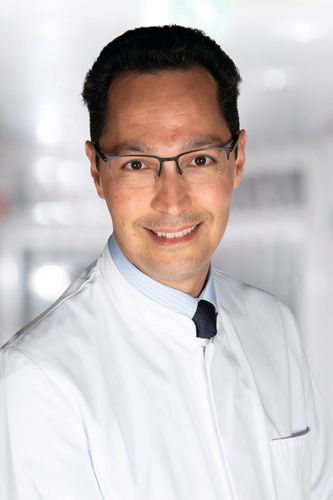
Dr. Alfred Tylla, M.D., is a respected and highly qualified specialist in knee surgery, known for his outstanding expertise in joint preservation, sports orthopedics, and complex reconstructive procedures. As director of the knee center certified by Rummelsberg Hospital, he has been working for many years to provide the best possible care to patients in the greater Nuremberg area. He places particular emphasis on preserving natural cartilage and gently treating meniscus, ligament, and cartilage damage to keep the knee joint healthy for the long term.
His expertise is evident not only in his modern and scientifically sound care but also in his specialized experience with minimally invasive procedures such as arthroscopy. Using minimally invasive keyhole surgery, he diagnoses and treats cartilage, meniscus, and cruciate ligament injuries at an international level. Thanks to his extensive qualifications in trauma surgery, visceral surgery, and innovative surgical methods, he is a sought-after expert in the treatment of both acute injuries and chronic conditions.
The Knee Center at Rummelsberg Hospital, which has been certified by the German Knee Society since 2019, enjoys an excellent reputation in the region. Here, patients benefit from care that performs over 900 highly complex procedures annually and adheres to the highest quality standards. Dr. Tylla is not only active in day-to-day clinical practice but is also involved in international research and science.
As a member of renowned professional societies, he regularly publishes innovative research findings and stays at the forefront of the latest developments in knee surgery. In addition to his work in the operating room, Dr. Tylla also serves as an emergency specialist and works in traumatology. His rapid diagnosis and precise treatment decisions in emergency situations ensure that injuries are treated quickly and professionally. For many patients with knee problems, modern cartilage replacement therapy is a good option. The editorial team at Leading Medicine Guide spoke with Dr. Tylla to learn more about this.
Cartilage replacement therapy offers modern and innovative approaches to restore or replace the natural cartilage in the joint. Thanks to advanced procedures, it is now possible to sustainably regenerate damaged or worn-out cartilage, alleviate pain, and maintain mobility in the long term. These treatment options are particularly suitable for patients who are already showing early signs of osteoarthritis and wish to preserve their joint function.
Cartilage loss occurs in some people for various reasons, and several factors can play a role.
“Cartilage wear is essentially caused by various factors. In many cases, it results from traumatic events—such as accidents or injuries—that lead to an acute change in the cartilage surface. Such damage is often caused by pressure or an impact that directly damages the cartilage. Degenerative processes also play an important role—that is, age-related wear and tear, which is exacerbated, for example, by misalignment of the joints or by previous surgeries, such as those for meniscus damage.
Another important factor is so-called functional instability, which can also damage the cartilage. This affects patients who have often experienced muscle atrophy—whether due to a lack of exercise, aging, or wear-and-tear processes—which makes the joint less stable. This reduced stability causes the joint to allow small micro-movements, similar to sandpaper, which in turn can wear down the cartilage. Too much movement can also damage the cartilage. However, this depends heavily on the stability of the joint.
If the joint is well supported by strong muscles and stable ligaments, movement generally causes no damage, especially if the cartilage is well-conditioned and healthy. It becomes more problematic when a person suddenly allows a great deal of movement, for example, after an injury or in the case of an unstable joint. “If stability is lacking, even a lot of movement can lead to cartilage damage because the dysfunction can cause microtears or wear and tear,” explains Dr. Tylla regarding the causes of cartilage damage.
Various procedures are now available for cartilage replacement therapy, each tailored individually to the type, size, and location of the cartilage damage, as well as to the patient’s specific characteristics. These procedures differ in their mechanism of action, the materials used, and their respective applications, though the goal is always to restore the natural cartilage in the joint as permanently as possible and to improve patients’ mobility and quality of life.
“There are now many different procedures for cartilage replacement therapy, which are applied differently depending on the size and location of the defect. One of the best-known is the so-called OATS procedure (OATS = osteochondral autologous transplantation), in which cartilage and bone cells are harvested from non-weight-bearing areas of the patient’s own joint and transplanted into the defect site. This procedure is particularly well-suited for small defects, as it allows the use of the patient’s own cartilage-bone tissue through surgery without the need for foreign material.
Regenerative approaches are also used in younger patients. In this method, small holes are drilled into the defect to mobilize stem cells from deep within the tissue, which can then differentiate into cartilage cells or cartilage-like cell structures. To keep the stem cells in place, a membrane is sometimes applied, as is done in the AMIC procedure—autologous matrix-induced chondrogenesis. This keeps blood and stem cells that diffuse to the site within the region so that they can form cartilage there. Similarly, biological collagen—a gel-like substance—can be injected directly into the cleaned defect, although this method is only suitable for smaller defects,” explains Dr. Tylla, adding:
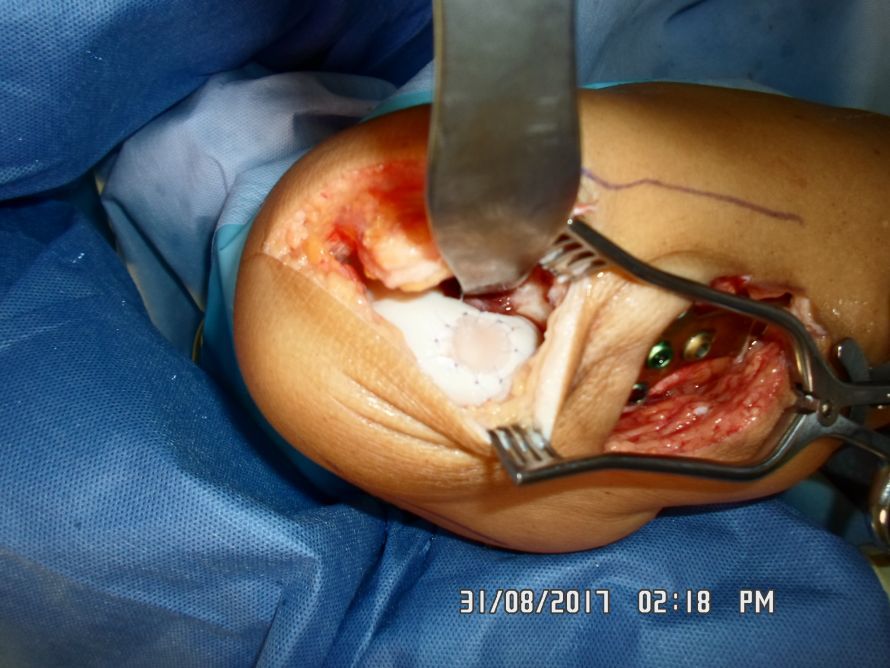
“For larger defects, procedures such as autologous matrix-induced chondrocyte transplantation—MACT for short—are used. In this procedure, cartilage fragments are harvested from the patient, the cells are cultured in the laboratory, and they can be reimplanted into the defect after about three weeks. This procedure is usually a two-stage process, meaning it is performed in two surgeries. For smaller defects, cell fragments can also be minced directly and reimplanted in a single session, a technique known as minced cartilage.
The procedure typically begins with an arthroscopy to assess the defect. After a detailed consultation with the surgeon, the surgeon and the patient determine together which procedure is appropriate. The decision depends primarily on the location and size of the defect. The actual transplantation is then performed during a second surgery three weeks later. This procedure usually takes only 30 to 45 minutes. After the procedure, the patient can usually move around freely right away, although for defects in certain locations, partial weight-bearing of about 25 kilograms is usually still necessary for the first four to six weeks. During this time, crutches support mobility and recovery.”

In practice, the choice of the optimal procedure always depends on the patient’s individual situation. Factors such as age, activity level, defect size and location, joint health, and prior treatments play a decisive role. The goal is to create durable, resilient cartilage that largely restores the joint’s natural function and significantly reduces symptoms caused by osteoarthritis. Advances in materials research, cell technology, and minimally invasive procedures promise continuous improvement in treatment outcomes and offer patients new long-term prospects for a pain-free and active life.
Although there is currently no perfect artificial cartilage on the market, scientists are conducting intensive research into innovative solutions.
“There is actually no genuine, market-ready artificial cartilage currently available that is identical to the original. Various approaches are available, such as collagen membranes or collagen-containing liquids—for example, the AMIC procedure, which uses collagen derived from porcine material. However, these materials do not constitute a true 1:1 cartilage replacement but rather serve as supportive substances. There are also approaches in which cartilage is grown from the patient’s own cartilage—for example, from nasal cartilage or other tissue sources—and then reimplanted.
Numerous studies are currently underway in which such cultured cartilage is already being used in patients, but long-term data are not yet available. It is unclear whether these methods will truly provide lasting benefits in the long term—that is, after 15 or 20 years. “The problem is that we don’t want to subject patients to procedures where it’s unclear what will happen in the years to come. However, the studies hope to provide meaningful results in the future regarding how these approaches hold up in the long term,” states Dr. Tylla.
Sometimes patients delay seeking treatment for the condition and only come in for treatment at an advanced stage, at which point cartilage replacement therapy is no longer a viable option.
“During our consultation, we first conduct a specialized deformity analysis, during which we discuss the risks in detail. A thorough medical history is particularly important to determine whether the patient is even a candidate for this procedure. This is because successful treatment depends heavily on the patient’s cooperation—that is, on their consistent adherence to rehabilitation measures, activity guidelines, and follow-up care. If a patient cannot ensure the necessary cooperation, the therapy is less likely to succeed, which is why we have a strict selection process.
Before surgery, we always inform patients that it may become clear during the procedure whether they are truly suitable candidates for the treatment. If we determine during the procedure that the osteoarthritis is already too advanced or that the cartilage defect is larger than previously assumed—which MRI findings sometimes do not accurately reflect— we may adjust the procedure during surgery or switch to alternative treatment methods as necessary. This ensures that we treat only those patients for whom the chances of success are truly high.”
Cartilage replacement therapy is particularly suitable for patients suffering from localized, stable cartilage damage that impairs normal joint function and has so far not been adequately resolved through conservative treatment measures. This primarily includes younger and middle-aged patients who do not yet have advanced osteoarthritis in the affected joint, as their joints retain good residual function and still have sufficient regenerative capacity. In particular, individuals whose cartilage-related symptoms are attributable to a clearly defined defect in the articular cartilage benefit from targeted reconstruction.
Dr. Tylla comments on this: “Borderline cases in cartilage replacement therapies are primarily seen when there are multiple defects in the joint that touch one another, which are referred to as ‘kissing lesions.’ In such cases, the damaged surfaces on the thigh (femur) and lower leg come into contact with one another, especially when both areas exhibit severe defects. In such cases, patients are generally not suitable candidates for cartilage replacement therapy, such as MACT (Matrix-Activated Chondrocyte Transplantation).
Likewise, this treatment is not an option in cases of advanced osteoarthritis where the entire joint is severely affected. For successful therapy, the size of the defects should generally not exceed 10 to a maximum of 11 square centimeters. For patients who have taken their first steps, the first noticeable improvements usually begin after a few weeks. The pain initially caused by the surgery should subside over the long term as a result of the treatment.
The problem, however, is that postoperative pain during weight-bearing is often still present because access to the joint is still painful. The first signs of improvement are particularly noticeable during passive mobilization, for which patients are often discharged home with a motorized splint. “The ultimate goal is for the patient to completely overcome the postoperative pain, be able to bear full weight pain-free again, and move the joint freely,” says Dr. Tylla, who also describes specific considerations for particularly active individuals:
“For young, athletically active patients—such as those who play tennis—the so-called ‘return to sports’ usually occurs between three and six months after surgery. During this period, caution is advised, as localized pressure, rapid changes in direction, and sports involving repeated stop-and-go movements—such as tennis or squash—can put strain on the newly formed cartilage zone. Especially if the original damage was caused by leg misalignments—such as bowlegs or knock-knees—or by instability, these underlying conditions must be treated first. Only when the biomechanical conditions are right can cartilage surgery be successful in the long term. “The actual cartilage therapy is therefore more like the ‘icing on the cake’—it should be used in addition to optimizing the underlying biomechanics in order to achieve lasting results.”
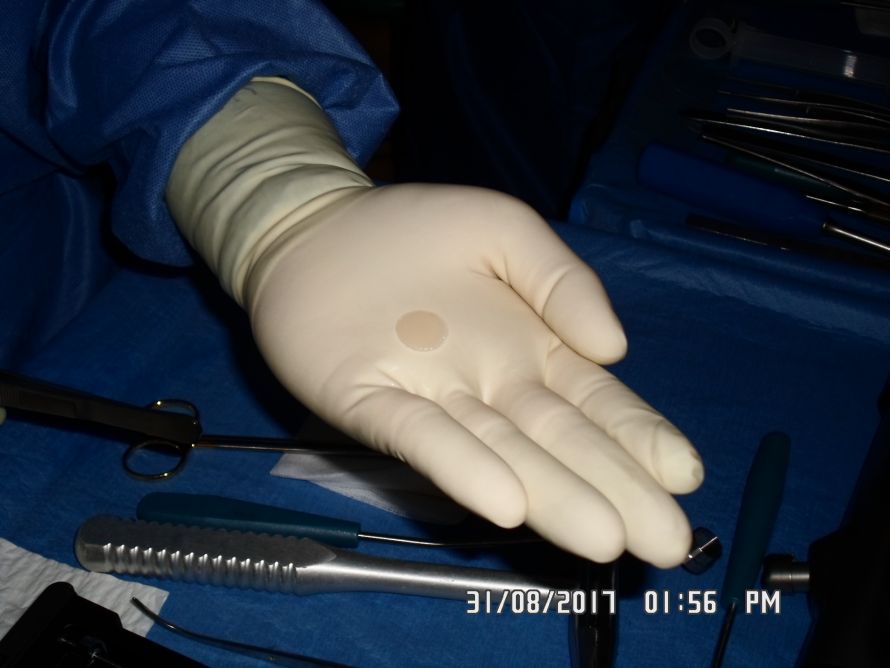
The long-term results of cartilage replacement therapy are promising overall, with many patients experiencing stable improvements in joint function and a significant reduction in pain over a period of at least five to ten years. In optimally selected patients and with procedures performed by experts, the reparative cartilage cells or replacement materials can be permanently preserved, allowing the joint to largely retain its function and significantly reducing symptoms. There are examples in which the positive effects were still evident more than ten years after treatment, indicating the high durability of modern procedures.
Nevertheless, the sustainability of the results varies from person to person and depends on a variety of factors. One of the most important is patient selection: The prognosis for long-term stabilization and preservation of function is particularly good for younger, active patients up to their mid-50s who do not yet have severe osteoarthritis or extensive joint destruction.
“An important piece of advice is to always consult doctors who take a holistic approach and have experience in this treatment. There are certainly specialized physicians whom you should scrutinize more closely, because the challenges associated with such therapies are very high. A crucial criterion is that the doctor considers the entire knee joint as well as the patient’s overall condition, rather than viewing cartilage replacement therapy in isolation. It is essential that the treatment keeps in mind that there is always a person behind the knee.
This means not just looking at images such as X-rays or MRIs, but treating the patient as a whole. The doctor should be able to provide comprehensive advice to the patient and explain that successful treatment depends above all on the patient’s cooperation. This means that building and strengthening muscles plays a central role—regardless of whether the goal is a cartilage transplant, ligament reconstruction, or a prosthesis. My advice to patients and colleagues is this: If you want to do something for your knee, the priority should always be on the muscles. Stable, strong muscles create the best conditions for long-term success and ensure that the joint remains healthy even after treatment,” explains Dr. Tylla, adding:
“As far as demand is concerned, I’ve noticed that an increasing number of patients are coming to us because we’ve built up a high level of expertise in cartilage replacement therapy. The number of people affected has risen, especially in recent years. At the same time, I’ve observed that muscle strength is deteriorating in many patients. Many view surgery as a panacea and believe that it will solve all their problems. However, this is a fallacy. Success depends largely on the patient’s cooperation and willingness to actively participate in rehabilitation and muscle-building exercises.
Without targeted training, physical therapy, and consistent care of the joint, even the best surgery will not yield lasting success. Ultimately, it is the patient’s commitment that determines success—not just the doctor’s technique. For example, if an older patient still has strong muscles and no other health limitations, they may well be a candidate for the treatment. My “oldest” patient to undergo cartilage replacement therapy was 64 years old.

Currently, cartilage replacement therapy is covered by health insurance in many cases; since 2007, such procedures have generally been covered by insurance. Especially for more complex techniques such as MACT, coverage by health insurance has been the norm so far, but how long this will remain the case depends heavily on the current state of health policy.
Cartilage replacement therapy is a relatively safe treatment option; nevertheless, as with all surgical and regenerative procedures, certain risks and potential complications must be taken into account.
“Cartilage replacement therapy generally carries the usual surgical risks, such as infections, pain, postoperative bleeding, or hematomas. In addition, inflammatory changes may occur in the joint. However, there is a specific risk associated with cartilage that should be mentioned: In the worst-case scenario, the graft fails to take because the body rejects the transplanted cartilage tissue. This can happen if biological integration is unsuccessful, particularly at the interface between cartilage and bone. If the biological conditions are not optimal or if surrounding structures in the joint have not been properly addressed, there is a higher risk of failure. Fortunately, the chances of success are very high when the indication is carefully assessed and all factors are taken into account,” says Dr. Tylla.
The Knee Center at Rummelsberg Hospital has been successfully recertified and holds a recognized quality certification. The certification confirms the center’s high level of expertise and excellent treatment options in the field of reconstructive and arthroplasty knee surgery. Regular recertifications ensure that standards remain up to date and are continuously improved.
“Our team is now very well positioned, as we have been recertified as a German Knee Center and have four certified knee surgeons on staff. This is quite exceptional, as most clinics have only one such specialist. As our expertise has grown, we have also increased the number of surgical procedures we perform: Today, we perform nearly 900 reconstructive knee surgeries annually. The team’s professional quality and experience are therefore very high.
As far as development and technology are concerned, I feel that progress is less urgent today. In the early years, we had higher hopes for innovative medications or injections that might improve processes within the knee. Today, my main concern is rather that colleagues should once again place greater emphasis on the patient as a whole. It often happens that patients who come to the clinic are immediately recommended a knee replacement without exploring other options. This is also due to how the system is structured within the diagnostic process: The financial reimbursement for reconstructive procedures is low compared to that for high-cost knee replacements, which means that a knee replacement often remains the first choice. Yet many patients could keep their own knees for years longer with good reconstructive knee surgery, without needing a knee replacement.
This issue is now addressed far too rarely because it appears that prostheses—which are significantly more financially lucrative—dominate treatment. The current political framework and healthcare financing make planning difficult. Many hospitals currently have little idea how things will proceed because final decisions are still pending. The postponement and delay of important issues create uncertainty in cost estimates, which complicates planning for the coming years. Nevertheless, I see a major problem in the fact that, ultimately, the patient ends up losing out,” Dr. Tylla makes clear, and concludes our conversation by stating:
“Despite all the pressures and uncertainties in the system, we must not forget: it is the patient who suffers when economic or political decisions are played out at their expense. Certainly, many colleagues and patients report that it’s hard to get appointments. It’s a challenge to even get timely access to specialists and treatments, which makes providing care considerably more difficult. My focus, however, is on putting people first. Treatments should primarily serve the patient’s individual goals, rather than pursuing exclusively economic interests.”
Dr. Tylla—thank you very much for your insights!
Share this article
Expert Interviews
Read next
- Expert interview
Expert interview with Professor Dr Elmar Herbst, PhD
Oct 15, 2026
Patient-centred and personalised knee surgery
Read more - Expert interview
Cardiogeriatrics: Significance and benefits in the context of hospital reform
Sep 21, 2026
Cardiogeriatrics: Significance and benefits in the context of hospital reform
Read more - Expert interview
Expert Interview with Professor Dr. Amadeus Hornemann, MPH
Sep 18, 2026
Prof. Amadeus Hornemann on Precision Medicine in Gynecology: Modern Surgery, New Techniques, Better Quality of Life
Read more