Expert Interviews
Dr. Sylvia Weiner on her work as the future patron of the Gesunde Neugier e.V. association

Alexandra Pfitzmann · May 7, 2025
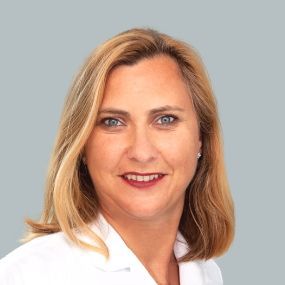
Dr. med. Sylvia Weiner is an experienced specialist in general and visceral surgery and one of the leading experts in the field of bariatric and metabolic surgery. Since October 1, 2022, she has headed the Department of Bariatric and Metabolic Surgery at Sana Klinikum Offenbach. With extensive training in minimally invasive surgery and a clear focus on bariatric surgery, Dr. Weiner has specialized not only in the surgical treatment of obesity but also in conservative therapeutic approaches and endoscopic procedures.
After completing her studies at the University of Würzburg and receiving her medical license from the University of Giessen, Dr. Weiner began her medical career at one of Germany’s first centers of expertise for obesity treatment at Sachsenhausen Hospital in Frankfurt. There, she gained in-depth knowledge of the holistic treatment of obesity. Her professional career then took her to the Main-Taunus Clinics in Bad Soden and finally, in 2014, to Krankenhaus Nordwest, where, in her role as chief physician, she placed a special emphasis on obesity, visceral, and reflux surgery. Another highlight of her career was the founding of the Obesity Academy together with Dr. Anne Freund. The facility in Kelkheim offers comprehensive programs for combating and treating obesity and has quickly established itself as a leading institution in the Frankfurt-Rhine-Main metropolitan region.
Dr. Weiner is not only recognized as a physician and leader but is also actively committed to raising awareness about the risks of morbid obesity. By serving as patron of the association “Gesunde Neugier e.V.,” Dr. Weiner is also committed to educating and supporting those affected by obesity and their families. Her motto, “Obesity is not a fate, but a disease!” reflects her passion for helping people sustainably improve their health and quality of life.
In an interview with Dr. Weiner, the editorial team of the Leading Medicine Guide learned more about her work as the future patron of the association “Gesunde Neugier e.V.” and about obesity, a condition that is becoming increasingly prevalent.
Obesity, often referred to as morbid obesity, is one of the greatest health challenges facing modern society. It is not merely an aesthetic issue but is associated with numerous serious health risks, including cardiovascular disease, type 2 diabetes, and joint problems. Despite growing attention to this issue, obesity is often still underestimated and not adequately treated. Early diagnosis and comprehensive treatment are crucial for improving the quality of life for those affected and preventing long-term health complications. Therefore, it is of great importance to raise even more awareness and offer targeted help to those affected—whether through medical treatment, psychological support, or preventive measures.
To reduce the stigma surrounding obesity and foster greater acceptance of it as a serious chronic disease, several measures are necessary.
“Obesity is a serious metabolic disease—this needs to be brought much more into the public consciousness. Why this understanding is so hard to establish is actually difficult to explain. It seems as though society is actively resisting the idea of recognizing obesity as a disease. Deeply ingrained beliefs and social conditioning play a major role here, as do economic interests. Many companies benefit from the fact that the focus remains on self-discipline, diets, and fitness programs—rather than on the medical causes. To bring about a lasting change in society’s perception, comprehensive educational efforts are needed, especially on the part of doctors. The goal is to deepen understanding of the pathophysiological mechanisms involved. Unfortunately, even when working directly with those affected, it is often a challenge to help them understand that their condition has nothing to do with personal failure, but rather with a chronic metabolic change. Many still believe they are to blame for their situation—and that is precisely where a central problem lies. For this reason, I am deeply involved in public outreach, give lectures, train colleagues, and try to make the topic more prominent in the context of medical education as well. “This topic needs to be addressed in much greater depth and with greater nuance at universities—but this change will still take time,” Dr. Weiner explains at the start of our conversation, adding:
“As far as social acceptance is concerned, we see a form of stigmatization surrounding obesity that is largely tolerated—it’s, in a sense, socially acceptable. And that’s highly problematic. There is a lack of political interest, public discussion, and, above all, a lobby for those affected. Obesity is a taboo subject—much like queer identities were for a long time. Here, too, it took decades for society to become more open and accept diversity. The big difference: When it comes to gender identity, it is now widely recognized that no one is to blame for their identity. With obesity, however, it’s not just outsiders who believe this—those affected often mistakenly take the blame for their condition themselves. This shows just how deep societal stigmatization runs. As long as there is no public debate and people with obesity are not given a voice in politics and the media, this perception will change only slowly. That is precisely why a platform like Gesunde Neugier e.V. is so important—to foster discussion, share knowledge, and, above all, to foster empathy.”
The nonprofit organization Gesunde Neugier e.V. advocates for people with obesity by raising awareness, connecting those affected, and offering concrete support.
Through events, lectures, and its own platforms, the organization provides information on the causes, consequences, and treatment options for the condition and promotes understanding of obesity as a chronic metabolic disorder. At the same time, it supports self-help groups, facilitates contacts with specialized clinics and consultants, and promotes health-related projects to sustainably improve medical care and social acceptance for patients with obesity.
“The initiative was started by a former patient who—inspired by his own experiences—set out to break the taboo surrounding obesity and create nationwide structures that connect self-help groups and those affected. What began as a personal initiative was soon supported by medical experts such as Professor Dr. Meier, a pioneer of obesity surgery in Germany. With the generational transition and Professor Dr. Meier’s retirement, the patronage was passed on to new leaders—with the goal of advancing the cause and providing new impetus. The vision: to create a neutral platform for exchange, education, and networking—independent of hospital operators or industry interests. After all, especially in a field where pharmaceutical and medical technology companies are increasingly establishing their own platforms, it is particularly important to offer an objective and trustworthy point of contact. To further expand the reach of its content, the association relies on a combination of public relations efforts, informational events, and close collaboration with regional obesity networks. Planned events include both those for people living with obesity and formats for primary care physicians—with the goal of discussing not only prevention but also concrete access to therapies, counseling, and care. A particular focus is on dialogue with self-help groups, whose wealth of experience and commitment are often indispensable to those affected. “In this way, the association aims to help ensure that people with obesity finally receive the social advocacy they deserve,” explains Dr. Weiner, who assumed the role of patron on May 1, 2025.
To make it easier for patients with obesity to access specialized doctors and clinics, several improvements to the healthcare system are necessary.
First and foremost, it would be important to facilitate access to specialized obesity centers. These centers offer comprehensive treatment, which often requires a multidisciplinary approach, and should therefore receive greater support. “Many people affected by obesity face the problem that—figuratively speaking—they can’t see the forest for the trees. The sheer volume of information and resources makes it difficult for them to find the right path to appropriate treatment. It is particularly challenging to identify the right doctor or clinic that specializes in obesity and can provide personalized assistance. This is precisely where modern platforms come in, designed to structure and facilitate access. Through initiatives such as the Obesity Academy and the website www.adiposa.clinic.com, a way has been created to submit a simple online inquiry. This approach enables targeted, region-specific referrals—patients receive initial guidance and are then directed either to appropriate local resources or to online services. This structured referral process follows current medical guidelines, which clearly define treatment indications and thus enable targeted, needs-based care. Self-help groups play a central role in informing as many affected individuals as possible about these digital options. They serve as key advocates in direct communication with patients. In recent years, this network had become less active at times—following the death of the association’s original founder, there was a temporary lack of coordination and personal commitment. However, this commitment is now being revived, particularly through the self-help groups, to establish a strong connection with those affected and provide them with easily accessible services. In Hesse in particular, there is already a broad network of dedicated self-help groups that not only do valuable work at the local level but also advocate politically to bring the issue of obesity more into the spotlight of public debate. “This combination of digital platforms, personal counseling, and dedicated self-help groups lays the foundation for making access to effective treatment significantly easier for those affected in the future,” Dr. Weiner emphasizes.
The medical recognition of obesity as a chronic disease is an important step in combating this widespread condition.
Despite this recognition, health insurance companies in Germany generally cover bariatric surgery only if a patient’s BMI (Body Mass Index) exceeds a certain threshold. Dr. Weiner comments on this: “The issue of health insurance coverage for bariatric surgery in Germany remains a sensitive and complex topic—primarily because access to surgical procedures is tied to relatively high BMI thresholds. People often get the impression that patients with a BMI below 40 have little chance of receiving coverage. However, medical guidelines actually define the criteria for surgery quite clearly: Bariatric surgery is medically justified and can be performed for patients with a BMI of 35 or higher who have relevant comorbidities—such as type 2 diabetes or high blood pressure. According to the guidelines, the procedure is also permissible for patients with a BMI of 40 or higher, regardless of other medical conditions. Nevertheless, patients with a BMI between 30 and 40, in particular, find themselves in a therapeutic gray area. While conservative treatment approaches such as nutritional counseling, medication, or structured group programs (e.g., Optifast or programs offered by the Obesity Academy)—there is a lack of clear guidelines and comprehensive cost coverage by health insurance providers. Many of these programs are not reimbursable, which makes access difficult for those affected. While there are prevention programs offered and partially funded by central agencies, these are limited to people with a BMI between 25 and 30 and only those without comorbidities. Patients with a BMI over 30 but without an immediate indication for surgery are often left to fend for themselves. “This gap in treatment is a central problem in obesity care in Germany. This is precisely why we are relying on programs like the Obesity Academy to make concrete, quality-assured treatment options accessible to this target group as well,” he explains, adding:
“In practice, many clinics today operate without lengthy cost reimbursement applications because the legal framework allows for this—provided the medical criteria are met. The often-feared ‘application circus’ is therefore no longer a reality everywhere. Nevertheless, structural improvements are urgently needed, particularly in early-stage care, to prevent long-term damage. Another point: The body mass index (BMI), on which many of these regulations are based, is a highly simplified metric that was originally introduced by American insurance companies. It takes into account neither muscle mass nor water balance and thus often provides only a rough picture. It is now increasingly recommended to also use modern measurement methods, such as bioelectrical impedance analysis, to assess body composition. International guidelines are already more advanced in this regard—in many countries, bariatric surgery is already recommended for patients with a BMI of 30 or higher who have comorbidities. Germany is lagging significantly behind in this development. Experience shows that it can take five to ten years for national guidelines to be adjusted accordingly. However, the need to lower these thresholds is increasingly recognized—not least to take preventive action before serious complications even arise.”
Today, most health strategies for obesity focus on prevention and weight management through diet and exercise. However, in many cases, this conservative treatment is insufficient, particularly for patients who, due to genetic factors or other serious health problems, are unable to significantly reduce their weight. For these patients, bariatric surgery could be one of the most effective and sustainable solutions. Earlier access to this type of procedure could help reduce the risk of chronic diseases and break the vicious cycle of obesity and its associated conditions.
The role of the media and the food industry in the context of obesity is multifaceted and should not be underestimated. From a medical perspective, a significant problem is that the industry shows no real interest in providing transparency regarding ingredients, processing levels, or health effects.
“Policy initiatives such as a sugar tax, which have already been successfully implemented in other countries, could also be an effective tool here—but so far, there has been a lack of corresponding implementation. At the same time, increasing media consumption, especially among children and adolescents, has a massive impact on their perception of health. Constant exposure to idealized body images, promises of beauty, and supposedly health-promoting products in advertising, cooking shows, and social media contributes to a distorted view of health and nutrition. The media creates stigmatization and, at the same time, false ideals—a dangerous combination that contributes to the rise in overweight and obesity among young people. “The consumption of highly processed foods poses another major problem,” criticizes Dr. Weiner.
In a fast-paced society, many people turn to industrially produced convenience foods that are high in additives, sugar, and saturated fats. This is also a recurring topic in educational programs—a central point here is a return to foods that are as unprocessed and natural as possible. To bring about truly sustainable change in this area, significantly greater commitment at the political level would be necessary.
“Health education and nutrition education should begin as early as school, ideally with structured programs such as comprehensive school cooking programs, hands-on nutrition training, and daily physical activity opportunities. Closer collaboration with sports clubs and greater support for physical activity programs could also make a decisive contribution to prevention. In the long term, therefore, it would be necessary not only to address the issue at the individual level but also to push for structural, societal, and political changes to enable children, adolescents, and adults alike to adopt healthier lifestyles—free from false promises and commercial interests,” Dr. Weiner states critically.
One aspect of the Gesunde Neugier e.V. organization that deserves special mention is its low-threshold access to reliable information on the topic of obesity. The goal is to make it as easy as possible for those affected to access counseling and therapy—without barriers, without shame, and with an open, supportive approach.
“The platform offers the opportunity to easily access information and take the first steps toward treatment—whether through online counseling services, event announcements, or networking opportunities with experts and self-help groups. It is precisely this low-threshold approach that makes the association particularly valuable. After all, those affected often lack not the will to change, but the courage or guidance on where to begin. This is exactly where Gesunde Neugier e.V. comes in. The platform thrives on participation—from both patients and therapists. It is a nonprofit organization that grows and gains visibility through active participation, engagement, and involvement. That’s why every contribution is welcome—whether through volunteer work, sharing content, or simply using the available resources. After all, only by working together can we further establish awareness in society that obesity is a serious medical condition. “Instead of getting lost in often superficial discussions on social media, Gesunde Neugier e.V. offers a well-informed, supportive, and neutral platform for genuine education and help,” Dr. Weiner emphasizes at the conclusion of our conversation.
Thank you very much, Dr. Weiner—raising awareness about obesity is immensely important!
Share this article
About the medical author
Alexandra Pfitzmann
Editor
Alexandra Pfitzmann – medical author: expert knowledge, professional articles and medical insights in the Leading Medicine Guide.
More about the medical author →Expert Interviews
Read next
- Expert Interviews
Expert Interview with Professor Dr. Amadeus Hornemann, MPH
Sep 18, 2026
Prof. Amadeus Hornemann on Precision Medicine in Gynecology: Modern Surgery, New Techniques, Better Quality of Life
Read more - Expert Interviews
Expert Interview with Professor Dr. Konstantinos Anagnostakos
Sep 15, 2026
Prof. Anagnostakos on Painful Knee Replacements
Read more - Expert Interviews
Expert Interview with Professor Karl Philipp Kutzner, M.D.
Sep 11, 2026
Prof. Kutzner on Cutting-Edge Endoprosthetics at ENDOPROTHETICUM Mainz
Read more