Expert Interviews
ActiveTEP: A Smarter Way to a New Joint

Alexandra Pfitzmann ·
Digitalization is no longer just an added benefit, but a necessity—especially in a healthcare system where the length of hospital stays has been steadily declining for years. Patients are spending less and less time in direct contact with healthcare professionals, while at the same time the demands on personal responsibility, knowledge, and proper execution of exercises are increasing.
This is precisely where a gap in care arises that digital solutions must now address.
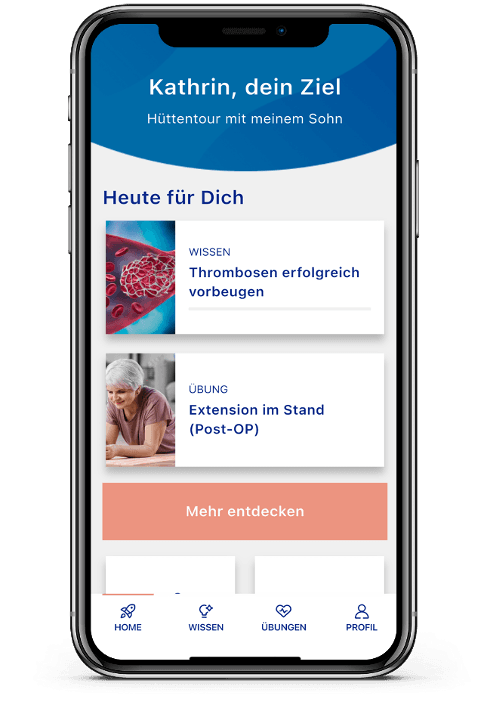
The ActiveTEP app addresses this very issue. It is innovative and designed to be easy to use, even for people with no digital experience. It breaks down complex medical processes into clear, understandable steps and guides patients through the entire prehabilitation and rehabilitation process—in a structured, safe, and always-available manner.

“ActiveTEP is a digital support program that accompanies patients from three months before to three months after joint replacement. The app—or the book—structures the entire treatment journey and ensures that people don’t experience the process as a series of isolated stages—from the preoperative consultation through surgery to physical therapy or rehabilitation—but rather as a clear, coherent treatment process.
Many patients feel uncertain, especially during transitional phases: What am I allowed to do? Which exercises are helpful? What do I need to pay attention to during this phase? This is exactly where the app comes in and provides guidance. It offers over 65 educational modules—tailored to the surgery date—and provides exercises for the pre-surgery period, early mobilization, and the post-surgery phase. It also includes practical resources such as tips from other patients and checklists that appear exactly when they’re needed.
There is a special focus on prehabilitation: People should be optimally prepared physically, logistically, and mentally, because a successful joint replacement doesn’t begin in the operating room, but many weeks before. “ActiveTEP guides patients along this journey and empowers them,” explains Emily Hickmann, CEO and founder of ActiveTEP.
ActiveTEP structures prehabilitation and rehabilitation by combining medical knowledge, digital guidance, and daily motivation into a precise, safe, and understandable path. Patients know at all times what the next logical step is—and why it’s important.
“From a medical perspective, daily structured exercise sessions following knee or hip replacement offer several major benefits. First, of course, the classic training effect plays a crucial role in building muscle and improving stability and gait. At the same time, self-confidence improves much more quickly after surgery, so that patients become more confident, trust the implanted joint sooner, and thus overcome their fears. The foundation for all of this is, of course, the comprehensive knowledge that is also provided by the app,” adds orthopedic surgeon Dr. Attila Höhne, who is part of the expert team at ActiveTEP.
During postoperative follow-up treatment or medical rehabilitation, the intensity of the exercises depends on the intensity of the rehabilitation program. If by “rehab appointments twice a week” you mean physical therapy, then the exercises are an excellent daily supplement to 30 minutes of physical therapy or manual therapy.
In practice, there are various ways for patients to access the ActiveTEP app. Some discover it on their own and can book the program as self-pay patients, while others receive access directly at the hospital.
“Some hospitals already provide the app during preoperative consultations—precisely at the stage when patients are experiencing significant distress and, at the same time, there is still enough time to prepare very well for surgery. In addition, there are partnerships with health insurance providers that cover the costs.
Some insurers even actively inform their policyholders as soon as a surgery is scheduled and offer the app as a supportive service. It’s also easy to apply for coverage through the website.
The app itself is designed to be intuitive. It was developed in collaboration with a group of seniors and is specifically aimed at people who are not tech-savvy. Clear contrasts, simple language, and a well-organized structure ensure that the content is easy to understand.
Users receive reminders when exercises are due or new educational modules are unlocked. Additionally, there is a support team that can be reached by email and will call back if needed. Webinars are held every two weeks to provide assistance with logging in, technical questions, or any uncertainties. Many patients also involve their family members.
Children or grandchildren can also log in and view the same content to better support the patient. “The app is designed to provide guidance to both the patient and their support network—step by step, throughout the entire period surrounding the surgery,” explains Emily Hickmann.
ActiveTEP helps patients perform their exercises correctly because the app provides clear, visually guided, medically precise, and technically controlled support for every step of the training. A key component consists of professionally produced video tutorials that demonstrate each exercise—including correct joint positioning, range of motion, pace, and breathing. This eliminates a common problem with many rehab programs: Patients don’t have to guess what an exercise is “supposed to look like”; instead, they see exactly how it’s performed.
Emily Hickmann explains: “As soon as a patient registers with ActiveTEP for the first time, the app asks a few basic questions to customize the entire process. The surgery date is recorded, along with personal factors such as BMI or smoking status. The program is tailored based on this information—all content appears exactly when it is relevant and necessary.
About three months before surgery, the first educational modules are unlocked so that the patient can reach the level of knowledge that is important at this stage. At the same time, an exercise program for the pre-surgery period begins, with levels of varying difficulty so that both fit and less mobile individuals can find suitable exercises. Even though pain levels are often high before surgery, the easiest levels are usually still manageable.
A key focus is on training both sides of the body to balance the load and optimally prepare the muscles. A new educational module with specific tasks is released every two to three days. Some of this content is interactive: You set a date to quit smoking, define your expectations for the surgery, plan strategies for maintaining a healthy weight, or work through checklists—from the hospital packing list to preparing for the surgery.
Important points, such as the often-overlooked dental visit, are also addressed to minimize the risk of infection. The result is a comprehensive A-to-Z package that ensures the patient has done everything they can to contribute to the success of the surgery. The app guides users step by step through the entire preparation phase and makes it clear what’s important right now, what comes next, and how to best prepare for the procedure.”
ActiveTEP keeps patients motivated, especially during the difficult phases of rehabilitation, because the app very precisely addresses the psychological and functional challenges following joint surgery.

“The ActiveTEP app uses a clear, structured system that guides patients through the entire process. While personalized feedback isn’t currently integrated, the app provides guidance and reassurance at many points. Common mistakes during exercises are identified and explained so that users know exactly what to watch out for. At the same time, new motivational features are being tested. These include an ‘OP Readiness Index,’ which shows how well a user is prepared for the procedure. A progress bar fills up step by step until the optimal level is reached. The goal is to make preparation not only effective but also enjoyable. For many people, staying active before surgery is a challenge, but the app helps them develop routines that can be continued even after the procedure. “An artificial joint benefits when the exercise program remains a permanent part of daily life—regardless of whether the app is still used later on,” emphasizes Emily Hickmann.
The app establishes a fixed routine that works regardless of rehab appointments or how you’re feeling on any given day. Every day begins with clear tasks, easy-to-understand explanations, and a clear sense of what’s important right now. This structure prevents patients from having to wonder whether they’re doing enough, doing too much, or doing something wrong. The app takes away this uncertainty and replaces it with a sense of security and commitment. Added to this is the emotional component: ActiveTEP gives patients the feeling that they’re not going through rehabilitation alone. The app guides, reminds, motivates, and explains—thereby creating a kind of digital therapeutic presence that provides enormous relief, especially during difficult phases.
“Statistically speaking, the most common complications following knee and hip replacement surgery are wound healing disorders, thrombosis, hematomas, and infections. Thanks to the very detailed and comprehensive educational modules, patients are provided with all the necessary information in every respect even before surgery.
This naturally includes information on how the exercise sessions affect the healing process. Here, I always like to talk about the three big ‘B’s’: use, move, and bear weight. This leads to improved metabolism and, consequently, better wound healing. Movement and weight-bearing increase blood flow in the operated leg, thereby reducing the risk of thrombosis. At the same time, hematomas resolve more quickly.
Early weight-bearing thus also helps reduce the risk of infection. The app also significantly reduces lack of movement and uncertainty regarding the progression of weight-bearing, since everything is explained and justified in detail, preventing uncertainties from arising in the first place. “A well-informed patient is the best prerequisite for a good surgical outcome,” emphasizes orthopedic surgeon Dr. Höhne.
ActiveTEP integrates medical guidelines and the latest scientific findings by presenting complex medical content in a way that allows patients to apply it intuitively, without having to grapple with technical jargon or theoretical background.
“All content in the ActiveTEP app is based on current scientific findings and is developed in collaboration with experienced orthopedic surgeons. This medical foundation is complemented by an interdisciplinary team consisting of physical therapists, a nutrition expert, and an anesthesiologist, ensuring that the entire treatment journey is covered from various professional perspectives.
Also particularly important is the close collaboration with the patient group, which provides valuable feedback and ensures that the content is truly relevant to everyday life. A small, systematic literature review was conducted for each knowledge module. This includes searches in medical databases such as PubMed, screening current registries, and evaluating relevant guidelines.
As a result, the app always reflects the current state of scientific knowledge. The real challenge lies in translating this complex content into language patients can understand and developing concrete, easy-to-follow recommendations for action from it. “That’s exactly what sets the app apart: it’s scientifically sound, but phrased in a way that truly helps in everyday life and guides patients safely through every phase of treatment,” Emily Hickmann explains.
ActiveTEP bridges the gap between scientific precision and practical, everyday application. Users benefit from a rehabilitation program that is medically sound, safe, and easy to understand—without having to grapple with complex technical content.
ActiveTEP offers digital added value because the app provides consistent, safe, and practical support throughout pre-rehabilitation and rehabilitation. This makes the entire recovery process more stable, structured, and successful in the long term.
Emily Hickmann emphasizes: “It’s clear that patients today need clear, reliable support.” The length of hospital stays has decreased by more than 80% over the past 20 years; healthcare professionals have less time, physical therapy appointments are scarce, and much information is lost amid the anxiety of the consultation. Studies show that 50 to 80% of the information is already forgotten by the time patients leave the room. Added to this are contradictory statements from the internet or various unreliable sources, which make it even harder to keep track of everything. The app provides structure and guidance here. It guides users through the entire process, organizes information in the correct chronological order, and empowers patients to take responsibility for their own care—an aspect that is becoming increasingly important in today’s healthcare system. For those who cannot use digital tools, the ActiveTEP book offers the same level of reliability in terms of content,” and continues:
“After surgery, the app automatically adjusts to the patient’s new condition. The exercise program immediately realigns itself and begins with early mobilization exercises that can be performed right in the hospital bed. Starting in the third week after surgery, additional exercises are added.
The educational modules also shift to focus on the postoperative phase: Topics such as safely leaving the hospital, getting into a car correctly after hip surgery, preparing for rehabilitation, and making the most of the time between discharge and rehab take center stage. In the long term, the app provides guidance on follow-up appointments, balance, resuming sexual activity, and the path back to independence.

Patients don’t have to wait until their next appointment or until a therapist is available—the app shows at any time which exercise is appropriate right now, how to perform it correctly, and how much the intensity can be safely increased. The video instructions make the exercises easy to follow, so the quality of execution doesn’t depend on external circumstances. The app adapts to users’ daily routines, not the other way around. This makes rehabilitation more flexible, more reliable, and significantly easier to integrate into everyday life.
ActiveTEP uses anonymized usage data to continuously improve the app and tailor the therapy ever more precisely to patients’ individual needs. The data is not an end in itself, but rather a medically valuable source of information that shows how real people actually go through their rehabilitation. Conclusions can be drawn from these patterns that go far beyond traditional rehabilitation experiences.
Emily Hickmann explains: “Whether the treating physician is integrated into the app depends on whether there is a partnership with the respective clinic. In the standard version, which patients can purchase themselves, there is no provision for a physician connection.
Here, the app serves as a personal tool that supports the patient’s own preparation. However, if there is a partnership with a clinic, a dashboard can be provided through which doctors can track their patients’ progress. There, shared goals can be defined, and the entire process can be monitored transparently. In this way, the app can be integrated into everyday clinical practice and support communication between the patient and the treatment team.
After surgery, the app guides users step by step back to their daily routine. The goal is not to wait three months after the procedure to resume normal activities, but to provide guidance early on: What is possible now? What else should you be mindful of? Traditional rehabilitation—whether outpatient or inpatient—proceeds as usual; some also opt for physical therapy as an alternative.
The app’s structured program ends three months after surgery but remains accessible. This allows users to review content and continue exercises over the long term to provide lasting support for the new joint. The accompanying book is intended as an alternative to the app—not as a supplement.
It is aimed at people who do not wish to use digital programs or who do not own a smartphone. Some prefer paper, and this is also covered by the partnerships with health insurance providers. Patients are free to choose whether they want to use the app or the book.”
The ActiveTEP app has already guided a significant number of patients through the entire treatment process. This has allowed the initial hurdles—which typically arise after the release of a new app—to be successfully overcome. Technical teething problems have been resolved, the processes are running smoothly, and the app is ready for wider distribution.
“The hip app was released last summer, and the knee app followed recently. These two products have now established a solid foundation, which is being marketed professionally for the first time. Until now, the focus has been on scientific development; now a sales team is being built to expand the app’s reach in a targeted manner. Currently, the apps are geared toward the German market, as all processes are tailored to the German healthcare system. Expansion into other countries is possible in the future, but it will require extensive adaptations and local expertise, since healthcare structures vary greatly from country to country.
Digital solutions like these are in tune with the spirit of the times—especially against the backdrop of hospital reform, longer travel distances, and limited appointment availability. They make everyday life easier, provide guidance, and reduce dependence on in-person appointments. At the same time, it’s becoming clear that older adults’ digital literacy is often underestimated. Many seniors use modern technologies with confidence and are well-equipped technologically. “The app itself is deliberately designed to be simple,” explains Emily Hickmann, and Dr. Atila Höhne, an orthopedic specialist, adds:
“Using the app can help improve functional outcomes following hip or knee replacement surgery, as the patient receives consistent digital guidance—both before and after surgery—regarding the necessary educational modules and exercise routines. Since this material is scientifically sound, patients feel confident about what they are allowed and expected to do.
Many patients feel left to fend for themselves after being discharged from the hospital, as there are often no follow-up medical appointments—especially with specialists—and physical therapy treatments are frequently inadequately prescribed and carried out. The resulting uncertainties are prevented from arising in the first place through the use of the app, enabling patients to achieve better outcomes more quickly and confidently.”
The knowledge modules of the ActiveTEP app are developed through a clearly structured, scientifically sound process.
“The initial impetus for the development came from experience with joint replacement surgeries and the real-world processes of everyday patient care. Working in an orthopedic practice and later in a digital health research group led to the idea of better supporting patients—especially given limited time resources and shorter hospital stays. Step by step, this evolved into the app that today helps many people feel more confident in their decisions and throughout the entire process surrounding their surgery,” Emily Hickmann notes at the conclusion of our conversation.
Coupon Code
Use the promo code “LeadingMedicineGuide15” to get 15% off!
- Founder & CEO of ActiveTEP—digital support for hip and knee surgery—
- Co-founder & Managing Director of DORA Digitale Orthopädieanwendungen GmbH (Leipzig).
- Developed ActiveTEP as part of her doctoral research—focus: patient empowerment & digital orthopedics.
- Background in healthcare management + practical experience in orthopedics.
- ActiveTEP (Hip) and ActiveTEP Knee are Class I medical devices, developed in collaboration with patients, doctors, and therapists.
- Partnership with AOK Rhineland-Palatinate/Saarland – Die Gesundheitskasse: The app is made available to their insured members.
- An active voice in the digital health sector, with a presence in the media and at industry events.
Share this article
Expert Interviews
Read next
- Expert interview
Expert interview with Professor Dr Elmar Herbst, PhD
Oct 15, 2026
Patient-centred and personalised knee surgery
Read more - Expert interview
Cardiogeriatrics: Significance and benefits in the context of hospital reform
Sep 21, 2026
Cardiogeriatrics: Significance and benefits in the context of hospital reform
Read more - Expert interview
Expert Interview with Professor Dr. Amadeus Hornemann, MPH
Sep 18, 2026
Prof. Amadeus Hornemann on Precision Medicine in Gynecology: Modern Surgery, New Techniques, Better Quality of Life
Read more