Expert Interviews
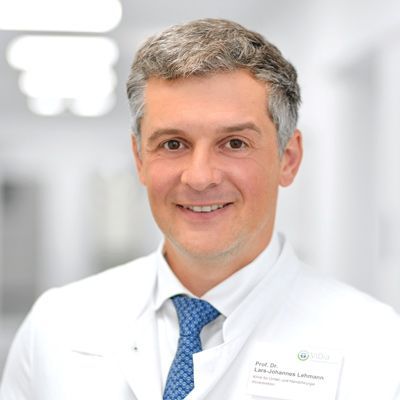
Shoulder Joint Arthroplasty and Prosthesis Replacement at the Certified German Shoulder and Elbow Center in Karlsruhe—Expert Interview with Prof. Lehmann

Alexandra Pfitzmann ·
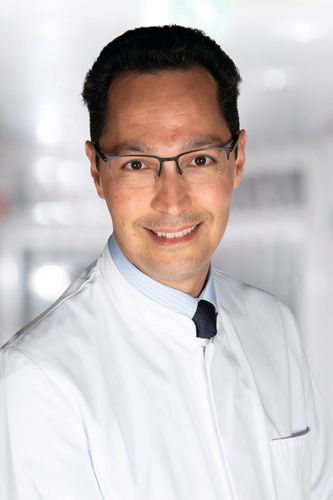
Prof. Dr. Lars-Johannes Lehmann is a recognized expert in the field of orthopedics and trauma surgery, with a special focus on shoulder, elbow, and hand surgery. As director of the Department of Trauma, Hand Surgery, and Sports Medicine at the ViDia Christian Clinics in Karlsruhe, he has earned an outstanding reputation through innovative treatment methods, precise surgical techniques, and his extensive clinical experience. Under his leadership, the clinic was recognized in 2019 as the first of only four certified German Shoulder and Elbow Centers (DSEZ) to date.
This certification underscores the department’s high level of professional expertise as well as its excellent structural and personnel resources for treating patients with shoulder and elbow conditions and injuries. Prof. Dr. Lehmann and his team perform over 5,000 surgical procedures on the musculoskeletal system each year, including well over 1,500 procedures specifically on the shoulder and elbow. In addition to surgical treatment of severe injuries or degenerative conditions, Prof. Dr. Lehmann emphasizes comprehensive diagnostics and individually tailored therapy. Minimally invasive procedures and shoulder joint replacement are among his areas of expertise.
Prof. Dr. Lehmann is active not only in clinical practice but also in scientific research. He is a member of professional societies, served on the board of the DVSE for many years—most recently as president—contributes to the development of medical guidelines, and acts as a reviewer for journals specializing in orthopedics and trauma surgery. He also passes on his experience to the next generation of medical professionals. His holistic approach is also evident in the close interdisciplinary collaboration within the ViDia Clinics. From standardized diagnostics to perioperative pain management and physiotherapeutic follow-up care, patients benefit from a seamless and optimally coordinated treatment plan.
The editorial team of the Leading Medicine Guide spoke with Prof. Dr. Lehmann about highly specialized joint replacement and prosthesis replacement of the shoulder joint at the certified Shoulder and Elbow Joint Center.
Shoulder and elbow joint arthroplasty is a highly specialized field of orthopedic surgery and is becoming increasingly important in light of rising rates of degenerative joint diseases. Particularly in cases of advanced joint wear, inflammatory rheumatic diseases, or following complex fractures, the implantation of an artificial joint can improve mobility, alleviate pain, and significantly enhance quality of life. However, since these procedures are technically demanding surgeries, it is of paramount importance that they be performed exclusively in certified joint replacement centers by experienced specialists. Only in this way can the highest medical standards be guaranteed, individual patient needs be addressed, and the risk of complications be minimized in the long term. The surgeon’s experience, the team’s specialization, and structured follow-up care play a decisive role in the long-term success of the treatment.
The ViDia Christliche Klinik Karlsruhe was the first of four German shoulder and elbow centers to date to be certified in 2019.
“Six certified shoulder and elbow surgeons work at our facility and perform more than 1,500 shoulder and elbow procedures each year. In addition to these staffing requirements and the necessary case volume (over 660 procedures of varying degrees of difficulty), location-specific factors such as 24-hour availability of the emergency department, specialized outpatient clinics, rehabilitation, etc., are also required. Added to this are teaching activities, the training of doctoral candidates, and scientific work involving publications and the submission of scientific data to the German Shoulder and Elbow Prosthesis Registry. The certification system of the German Shoulder and Elbow Association (DVSE) allows for an accurate representation of the reality of care provision in Germany. At the same time, the goal is to promote the structural and procedural quality of shoulder and elbow surgery. This system also—and in particular—offers the opportunity to transparently demonstrate the quality of care. The concept is based on a three-tiered structure and reflects the clinical and scientific priorities present in the various institutions. In addition to individual requirements, the tiered concept is divided into three categories: patient care, research, and continuing education/teaching. For accreditation, the institution must meet various requirements in the respective categories. “The Shoulder and Elbow Centers (SEZ) cover these three pillars to a particularly high degree,” explains Prof. Dr. Lehmann at the beginning of our conversation.
Despite the enormous surgical workload—with over 5,000 procedures annually, including more than 1,500 on the shoulder and elbow—Prof. Dr. Lehmann manages to remain actively involved in research, participate in clinical trials, and author scientific publications.
This scientific exchange is of great importance to his clinical work, as it not only contributes to the constant reflection on and further development of his own treatment methods but also provides access to the latest findings and innovative techniques. This close connection between clinical practice and research is essential to ensuring that patients receive care at the highest medical standard at all times. “Scientific activity also plays an important role in clinical care settings: It leads to sustainable professional development and personal growth and is an essential aspect of patient safety. Beyond structure and process quality, the quality of outcomes is ultimately the decisive criterion for patients. And this must be constantly scrutinized and reviewed. For me, this combination of clinical practice and research is essential, as both areas enrich one another. Our many years of experience and high volume of surgical cases allow us to specifically address questions arising from clinical practice and investigate them scientifically. “We therefore integrate research into our daily clinical practice by systematically analyzing data, participating in studies, and incorporating new findings directly into patient care,” emphasizes Prof. Dr. Lehmann, adding:
“Scientific exchange—including with colleagues in professional societies—plays a central role in clinical work and the further development of modern treatment methods. Through the close integration of research and practice, new findings can be rapidly translated into clinical application, and existing treatment strategies can be continuously improved. Ultimately, patients benefit most of all, as they gain access to the best possible, evidence-based therapies. Scientific discourse thus contributes significantly to quality assurance and the advancement of modern medicine.”
In recent years, shoulder joint arthroplasty has made significant progress, particularly in the areas of implant design, surgical techniques, and personalized patient care.
“For example, improved implants and materials have been developed. New materials such as vitamin E-containing polyethylene or pyrocarbon improve wear resistance and increase the longevity of the prostheses. Refined bone substitute materials and coated implants promote osseointegration and reduce the risk of loosening. Anatomical and inverse shoulder prostheses have been further optimized to better mimic the biomechanics of the natural joint. The modularity of the implants allows for increasingly precise adaptation to the patient’s individual anatomy. A major advancement is the planning and navigation of the procedure. 3D planning and patient-specific instruments (PSI) enable more accurate implantation based on preoperative CT data. Intraoperative navigation and robotics also contribute to greater precision in implant placement. Less invasive surgical techniques and significantly shorter operating times reduce soft tissue damage and lead to shorter rehabilitation periods. In addition, nearly all procedures can be performed under regional anesthesia without general anesthesia, which is extremely beneficial, especially for older patients,” explains Prof. Dr. Lehmann.
Shoulder prosthesis replacement presents a particularly demanding surgical challenge, as it often involves complex changes to anatomical structures, bone loss, or soft tissue damage.
The decision to perform revision surgery depends on various factors, including the cause of the initial prosthesis’s failure—such as loosening, infection, or instability—the patient’s overall health, and the quality of the remaining bone and musculature. Careful preoperative planning, comprehensive diagnostics, and the selection of the appropriate implants are crucial for achieving the best possible functional outcomes and a stable joint in such a procedure.
“The main causes of prosthesis failure today are infection, prosthesis instability, and what is known as a periprosthetic fracture—that is, a fracture of the humerus in the area of the implanted prosthesis. The primary focus is on determining what led to the prosthesis failure and what the underlying causes were. There is no one-size-fits-all solution, and the strategy for restoring arm function is typically individualized, complex, and requires interdisciplinary collaboration. Revision surgery is necessary when the patient’s suffering warrants it or when further destruction of the joint is foreseeable if treatment is delayed any longer. As a general rule, all necessary equipment for every conceivable scenario must be available for revision surgeries. “This includes specific planning options, custom prostheses, bone augmentation options, various removal instruments, and, of course, expertise in anesthesia and intensive care,” explains Prof. Dr. Lehmann.
When selecting the appropriate shoulder prosthesis, both the patient’s individual anatomical conditions and their lifestyle and functional requirements are carefully considered.
Key factors include the condition of the bone and soft tissue structures—particularly the rotator cuff—as well as any previous surgeries or existing comorbidities. The patient’s activity level, age, and daily physical demands are also factored into the decision-making process. The goal is to find a prosthetic solution that is optimally tailored to the patient’s specific situation and ensures the best possible functionality and long-term stability.
Prof. Dr. Lehmann explains: “A detailed medical history and examination using X-rays, CT, and MRI are essential for planning. The questions that must be answered are: Is the rotator cuff intact or irreparably damaged? Is there osteoporosis or a defect in the glenoid cavity? What is the cause of the condition: Osteoarthritis, rheumatic diseases, fractures, or revision surgeries all influence the choice of prosthesis, as described above. What are the functional requirements: Physical demands from sports or work also influence the choice of prosthesis type. Age may, but does not necessarily, play a role here, as it often correlates with factors such as bone mass, healing potential, and lifestyle. Age alone is not the decisive criterion, but it does influence the choice of shoulder prosthesis. Younger patients require durable, bone-preserving solutions, while older patients often benefit from an inverse prosthesis, particularly in cases of rotator cuff damage. An individualized, patient-specific decision that takes into account function, lifestyle, and comorbidities is crucial for long-term success.”
Postoperative rehabilitation following shoulder joint replacement has advanced significantly in recent years.
“Today, the focus is on early functional approaches, individually tailored treatment plans, and patient-centered care. In the past, the shoulder was often immobilized for several weeks after surgery. Today, passive and active physical therapy often begins as early as the first postoperative day. Modern approaches also rely on multimodal pain management. However, the primary goal—especially in the first few days after surgery—is to achieve pain relief through the use of a so-called interscalene catheter. Rehabilitation is tailored more closely to the patient—depending on the type of prosthesis, muscle condition, bone density, and functional goals. Patient education remains important: providing information on movement limits and self-exercises, as well as setting realistic goals. “In a recent study we conducted, for example, we were able to demonstrate that, following the implantation of a shoulder prosthesis for a humerus fracture, immobilizing the arm offers no advantages whatsoever compared to allowing immediate movement,” states Prof. Dr. Lehmann, and with that, we conclude our conversation.
Thank you very much, Professor Dr. Lehmann, for the information!
Share this article
Expert Interviews
Read next
- Expert interview
Expert interview with Professor Dr Elmar Herbst, PhD
Oct 15, 2026
Patient-centred and personalised knee surgery
Read more - Expert interview
Cardiogeriatrics: Significance and benefits in the context of hospital reform
Sep 21, 2026
Cardiogeriatrics: Significance and benefits in the context of hospital reform
Read more - Expert interview
Expert Interview with Professor Dr. Amadeus Hornemann, MPH
Sep 18, 2026
Prof. Amadeus Hornemann on Precision Medicine in Gynecology: Modern Surgery, New Techniques, Better Quality of Life
Read more