Expert Interviews
Effective Solutions for Shoulder Pain: A Focus on Innovative Treatment Approaches—Expert Interview with Dr. Bohnert and Dr. Gathmann

Alexandra Pfitzmann ·
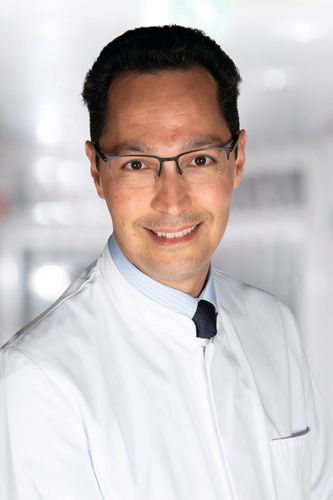
Dr. Laurent Bohnert and Dr. Sebastian Gathmann are experienced orthopedic surgeons and traumatologists who practice at the Ortho Cham Zug Center of Excellence. The clinic specializes in joint and bone treatments and works closely with the renowned Hirslanden AndreasKlinik Cham Zug. Using state-of-the-art treatment methods, the team provides comprehensive orthopedic care for patients with all types of insurance coverage. The specialists respond to the growing demands on medical care and guarantee precise diagnoses and targeted therapies at the highest international standards. They specialize in shoulder and elbow surgery as well as sports orthopedics and provide first-class care for injuries and trauma to the upper extremities.
The editorial team at Leading Medicine Guide was able to learn more about the options for individualized treatment of shoulder pain.

Shoulder pain has various causes, and treatment approaches vary accordingly. “First, one must determine whether the pain is acute—resulting from an accident or injury—or whether it stems from a chronic shoulder condition. In cases of pain resulting from an acute injury, symptoms typically appear suddenly. Movements of the shoulder joint are often painful and severely restricted. In contrast, shoulder pain resulting from overuse or degenerative shoulder conditions tends to develop gradually. The symptoms can worsen over time and are often accompanied by limitations in range of motion or strength. The pain may intensify with specific movements or exertion and may be accompanied by local inflammation or swelling,” explains Dr. Bohnert at the start of our conversation.
Dr. Gathmann adds: “Shoulder pain is very common—one in ten people is affected by it at some point. Many patients come to us with a preliminary diagnosis, but this does not always correspond to the actual problem. During the patient’s initial examination, the first step is to precisely locate the source of the pain. To do this, it’s important to take plenty of time during the initial consultation. The patient’s age plays a role in that older people are more likely to have wear-and-tear-related conditions, such as osteoarthritis or spontaneous rotator cuff tears. People exposed to certain risk factors—such as repetitive overhead movements or heavy lifting, whether at work or during sports—have an increased risk of certain overuse injuries. In younger patients, however, sports-related conditions are usually the primary concern. Among the most common is impingement syndrome, in which tendons or bursae become pinched, particularly during overhead movements. This impingement syndrome occurs in approximately one in three patients. Furthermore, labral tears are common, in which the ring-shaped cartilage surrounding the shoulder socket is injured. Instability syndromes occur when the shoulder joint becomes hypermobile, often due to repetitive movements or sudden impacts to the shoulder.”
The rotator cuff is a group of muscles and tendons in the shoulder joint that work together to stabilize the shoulder joint and enable arm movement. The main function of the rotator cuff is to hold the head of the humerus firmly in the shoulder joint while allowing for a wide range of movements, particularly rotational movements and lateral raising of the arm.
Physical therapy methods and medication-based therapies both play important roles in the treatment of shoulder pain, though with different approaches and goals.
“Specific physical therapy is usually the first approach chosen. It uses specialized treatment methods as well as targeted exercises and therapies to restore shoulder function and reduce pain in the long term. These methods aim to correct muscular imbalances, restricted movement, and biomechanical issues that can lead to pain. Many patients have a muscular imbalance, which can cause impingement, also known as “impingement syndrome.” Poor posture and improper loading of the shoulder then often lead to inflammation and irritation of the bursa, as well as muscle tension. Physical therapy can help rebalance the muscles and realign the shoulder. A treatment duration of 3–4 months is often necessary to resolve the symptoms. Sometimes, accompanying injections of corticosteroids or autologous blood can further support physical therapy by providing relief from existing pain,” explain Drs. Bohnert and Gathmann.
For rotator cuff tears, the most appropriate treatment is determined based on various factors.
Dr. Bohnert explains: “The treatment approach must be tailored to the individual. The patient’s age plays a relatively minor role here compared to their functional needs. A larger tear caused by an accident, with good muscle quality as seen on magnetic resonance imaging (MRI) and significant limitation of shoulder function, should be surgically repaired promptly. Smaller degenerative tears without significant functional limitation, on the other hand, can often be treated without surgery.” Dr. Gathmann adds: “In addition to traditional physical therapy, ‘dry needling’ is often helpful; it is particularly well-suited for treating trigger points—localized areas of severe tension in stiff muscles. The treatment is performed using very thin acupuncture needles. However, this requires special additional training for the treating physical therapist. Patients do occasionally ask about alternative treatment methods. Upon request, such methods can be integrated into the treatment plan as a supplement to traditional therapy.”
In modern medicine, there are continuous advances in the treatment of shoulder pain, encompassing a wide range of new techniques and innovations.
“For several years now, arthroscopic procedures have enabled us to operate through small incisions using a special camera in what is known as the ‘keyhole technique,’ and we are now able to perform even complex procedures with great precision. This reduces the risk of tissue damage and postoperative pain, while also enabling a faster recovery. Another promising area is biological therapies such as autologous blood therapy, which we have been offering at Ortho Cham Zug for several years and which often represents a good alternative to cortisone therapy. In this procedure, blood is drawn from the patient and then centrifuged to isolate platelet-rich plasma (PRP). This plasma, which is also rich in growth factors, is then injected into the affected tissue to support its regeneration and repair. We repeat this procedure three times, with ten-day intervals between each session. “This biological therapy, which has long been established for wear-and-tear-related tendon disorders (tennis elbow, chronic Achilles tendinitis), offers a promising alternative to conventional treatments for a growing number of conditions and can accelerate recovery,” explains Dr. Bohnert regarding the latest treatment methods.
Another important advancement lies in improved imaging technology. Advanced imaging techniques such as magnetic resonance imaging (MRI) enable more precise diagnosis and treatment planning for shoulder conditions. These technologies help identify smaller lesions or abnormalities that may not be detectable with conventional imaging techniques.
Tailored treatment for shoulder conditions, which aims to ensure long-term pain relief and improved function, is a complex process that requires a thorough analysis of the patient’s individual medical history and daily activities.
When developing a personalized treatment plan, it is important to take the patient’s daily activities into account, including occupational demands, sports activities, hobbies, and other lifestyle habits. Dr. Gathmann emphasizes: “It is very important to us to tailor our treatment to the individual needs and requirements of our patients. Increased functional demands, as well as the desire to engage in physically demanding activities well into old age, have led to treatment today being based less on chronological age and more on biological age. All the doctors in our practice are highly specialized. We have years of experience treating joint-specific injuries and conditions. This enables us to offer our patients the best individually tailored treatment using the most modern procedures and in accordance with the current state of the art.”
Hope for the Future
“Individualized surgical planning is currently evolving rapidly. For example, we already plan each shoulder prosthesis individually based on 3D reconstructions of the bony anatomy using preoperative computed tomography (CT) scans. In the near future, it will also be possible to use ‘augmented reality’ to virtually project this plan directly onto the surgical field during the operation, ensuring the prosthesis is implanted with the highest possible precision. This also allows for better localization of important structures, which reduces the risk of complications during the procedure,” say Drs. Bohnert and Gathmann, who conclude our conversation with some general advice on preventing shoulder problems:
“Nowadays, many people have exclusively sedentary jobs and consequently develop poor posture—that is, the habit of hunching their shoulders too far forward. This is often the root cause of shoulder problems. To avoid this, even a small, regular exercise routine is sufficient to improve posture in everyday life. However, if you’re already experiencing shoulder pain, it’s advisable to have it evaluated early on.”
Dear Drs. Bohnert and Gathmann, thank you very much for the helpful information on shoulder pain and the various treatment options!
Share this article
About the medical author
Alexandra Pfitzmann
Editor
Alexandra Pfitzmann – medical author: expert knowledge, professional articles and medical insights in the Leading Medicine Guide.
More about the medical author →Ortho Cham Zug – Center of Excellence for the Musculoskeletal System
ProfileExpert Interviews
Read next
- Expert interview
Cardiogeriatrics: Significance and benefits in the context of hospital reform
Sep 21, 2026
Cardiogeriatrics: Significance and benefits in the context of hospital reform
Read more - Expert interview
Expert Interview with Professor Dr. Amadeus Hornemann, MPH
Sep 18, 2026
Prof. Amadeus Hornemann on Precision Medicine in Gynecology: Modern Surgery, New Techniques, Better Quality of Life
Read more - Expert interview
Expert Interview with Professor Dr. Konstantinos Anagnostakos
Sep 15, 2026
Prof. Anagnostakos on Painful Knee Replacements
Read more