Expert Interviews
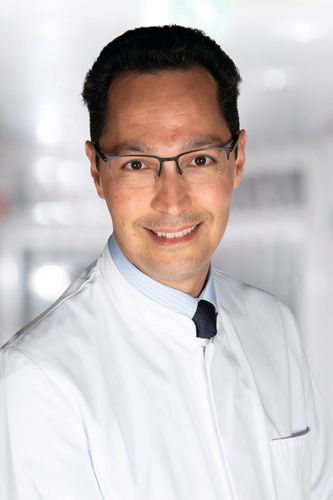
Expert Interview with Dr. Munther Sabarini, M.D., on Cervical Disc Herniation (C-spine)

Alexandra Pfitzmann ·
The cervical spine is the cranial section of the spine and is located in the neck region. It consists of seven vertebrae (C1–C7), which are connected to one another by intervertebral discs (except for C1/2) and joints. The cervical spine is the most mobile section of the spine; it allows the head to rotate and tilt and primarily serves to stabilize the skull. In addition, important nerve pathways and blood vessels run through it, which are responsible, among other things, for supplying the brain. Between the individual vertebral bodies of the cervical spine are the intervertebral discs. Over the course of a person’s life, these discs gradually wear down, and a herniated disc in the cervical spine may occur. This occurs when the soft center of a disc breaks through the outer fibrous ring and presses on the surrounding nerves. Depending on the location of the herniated disc, this can lead to neck or arm pain, numbness, or weakness in the affected areas of the body. The editorial team at Leading Medicine wanted to learn more about this topic and spoke with Dr. Munther Sabarini, a neurosurgeon and specialist in herniated discs, spinal stenosis, and spondylolisthesis at the Internationale Avicenna Klinik in Berlin, of which he is the founder and director.

Some of the most common causes of cervical spine disorders are degenerative changes resulting from human upright posture and the associated stresses. Constantly supporting and moving the heavy head on the cervical spine can, over time, lead to signs of wear and tear such as osteoarthritis, spondylosis, and even herniated discs. In addition, poor posture—which is often associated with our modern lifestyle, such as prolonged sitting or constantly staring at computer or television screens—can contribute to cervical spine disorders. “A herniated disc occurs when a portion of the intervertebral disc ‘slips’ into the spinal canal. These fragments exert pressure on the neural structures. Here in the cervical spine, important structures such as the spinal cord are located, which makes choosing the right treatment a challenge,” Dr. Sabarini begins our conversation. Typically, people over the age of 30 are affected.
Treatment Options for a Herniated Disc in the Spine
Symptoms originating in the cervical spine can be treated conservatively. Conservative treatment usually involves a combination of pain medication, physical therapy, and injections. In some cases, a cervical collar may be used to support the cervical spine, especially in the first few days after the herniation.
If the symptoms persist or if there are already signs of nerve damage (tingling, numbness, weakness, or bladder dysfunction), a diagnostic evaluation must be performed first (consultation with a specialist and an MRI). “For both herniated discs in the cervical spine and many other conditions affecting the cervical spine, we must decide whether to treat only the symptoms or the underlying cause itself. In mild cases, we use conservative therapy such as medication, physical therapy, and targeted injections. For small to medium-sized herniated discs, minimally invasive methods such as percutaneous nucleotomy or laser decompression are used. Percutaneous nucleotomy is a surgical technique that can be used for herniated discs in the cervical spine (C-spine) and the lumbar spine (L-spine). “For larger herniated discs, especially when the spinal cord is under pressure, microsurgery is the best choice,” explains Dr. Sabarini.
When a herniated disc in the cervical spine exerts significant pressure on neural structures, many patients fear permanent damage to important nerve pathways.
These nerve pathways are very sensitive and can cause pain, numbness, and limited mobility if injured or damaged. This is why the high level of expertise of a specialist like Dr. Sabarini is essential in such cases. “In microsurgery, the affected area is accessed under general anesthesia through an incision of about 4 cm on the front of the neck. Using a surgical microscope and microinstruments, we remove the herniated disc, decompress the nerves and the spinal cord, and replace the damaged disc. Surgery on the cervical spine is certainly a challenge, as this narrow access area contains important structures such as arteries supplying the brain and vital nerves, and, deeper down, the spinal cord itself. The procedure itself takes only about an hour. On the day of surgery, patients remain in bed, but they are mobilized the very next day. They initially wear a soft neck brace and should avoid neck movements for the time being. “Patients immediately begin physical therapy to restore mobility in the cervical spine,” explains Dr. Sabarini, describing the postoperative treatment process. Postoperative physical therapy following cervical disc surgery is important for promoting the healing process, reducing pain, and improving spinal mobility.
Possible physical therapy measures:
Mobilization: Physical therapy mobilization after surgery is important to improve mobility of the cervical spine and prevent stiffness. This involves gentle exercises and movements to loosen up the cervical spine.
Strengthening: The muscles surrounding the cervical spine may be weakened by the surgery. Physical therapy exercises can help rebuild and strengthen these muscles. This involves performing targeted exercises for the neck, shoulders, and upper back.
Stretching: Stretching exercises can help improve the flexibility of the cervical spine and reduce pain. These involve targeted exercises for the neck and shoulder muscles. Stretching exercises are prescribed at a later stage.
Manual therapy: Careful manual therapy can help relieve tension and blockages in the cervical spine and improve mobility. This may involve massages, mobilization techniques, and targeted manual techniques.
Electrotherapy: Electrotherapy can help reduce pain and improve muscle activity. This involves applying targeted electrical impulses to the affected area.
It is important that physical therapy measures be tailored individually to the patient in order to achieve optimal results. The treating physician and physical therapist can work together to develop a suitable treatment program.
Once the damaged nerves have been decompressed following disc surgery, the patient’s life can return to normal quite quickly. “If the nerves are decompressed after surgery, patients have a very good chance of living a normal life and resuming their professional and athletic activities. However, if patients wait too long to have surgery, if symptoms are already present, and if the spinal cord is affected, then patients will take longer than usual to recover,” explains Dr. Sabarini, describing the healing process.
Prevention is key!
Of course, it’s best to prevent a herniated disc from occurring in the first place. Everyone can take individual steps to help with this. “Parents should pay attention to their children’s posture from an early age. Children should be active, participate in sports at school, and continue to exercise regularly as they get older. As a general rule, heavy lifting should be avoided, and sitting for long periods is also not good for the intervertebral discs. Any symptoms should always be evaluated promptly. Only then can you respond early on or develop a treatment plan,” recommends cervical spine specialist Dr. Sabarini.
Preventive tips for stabilizing the intervertebral discs:
Good posture: Maintain good posture when sitting, standing, and lifting objects. Avoid carrying heavy objects in an awkward position.
Exercise: Regular exercise can help strengthen your muscles and spine. Try to walk, jog, swim, or ride a bike for at least 30 minutes a day.
Stretching exercises: Stretch your muscles and spine regularly to maintain flexibility and mobility.
Ergonomic work environment: Make sure your workspace is ergonomically designed to promote proper posture and movement.
Balanced diet: A healthy, balanced diet can help you lose weight and promote good overall health.
Stress management: Stress can lead to muscle tension and pain. Relaxation exercises such as yoga, meditation, or breathing exercises can help reduce stress.
Quit smoking: Smoking can increase the risk of herniated discs by constricting blood vessels and reducing the oxygen supply to the discs.
Early diagnosis is crucial.
A thorough diagnosis is essential to ensure that the pain is actually caused by a herniated disc and not by another condition. Magnetic resonance imaging (MRI) is a highly effective method for diagnosing disc problems in the cervical spine. “In addition to early diagnosis via MRI, it is important for the patient to consult a specialist with extensive experience in this field so that multidisciplinary treatment—involving various medical specialties and therapies—can be initiated at an early stage,” Dr. Sabarini strongly advises.
Receive the best care at the Avicenna Clinic International in Berlin!
The Avicenna International Clinic in Berlin is a neurosurgical and orthopedic hospital specializing in the treatment of spinal disorders and injuries. The clinic is named after the Arab physician and philosopher Avicenna and takes a holistic approach to patient care. “The clinic has an international team of doctors, surgeons, and therapists, all of whom are highly experienced and specialized in their respective fields. Many of them have worked at renowned institutions worldwide and have brought their expertise to the clinic. Each patient receives individualized care and a treatment plan tailored to their needs. The doctors take the time to get to know the patient and make a comprehensive diagnosis in order to develop the best treatment strategy. In addition, the Avicenna Clinic is equipped with state-of-the-art medical technology to make precise diagnoses and perform minimally invasive surgical procedures. “This minimizes the risk of complications and shortens recovery time,” explains Dr. Sabarini, who founded the clinic in Berlin in 2001, just a stone’s throw from the famous Kurfürstendamm. Patients with these conditions are therefore in excellent hands here.
Thank you very much, Dr. Sabarini, for providing greater insight into the treatment of herniated discs in the cervical spine!
Share this article
About the medical author
Alexandra Pfitzmann
Editor
Alexandra Pfitzmann – medical author: expert knowledge, professional articles and medical insights in the Leading Medicine Guide.
More about the medical author →Expert Interviews
Read next
- Expert interview
Cardiogeriatrics: Significance and benefits in the context of hospital reform
Sep 21, 2026
Cardiogeriatrics: Significance and benefits in the context of hospital reform
Read more - Expert interview
Expert Interview with Professor Dr. Amadeus Hornemann, MPH
Sep 18, 2026
Prof. Amadeus Hornemann on Precision Medicine in Gynecology: Modern Surgery, New Techniques, Better Quality of Life
Read more - Expert interview
Expert Interview with Professor Dr. Konstantinos Anagnostakos
Sep 15, 2026
Prof. Anagnostakos on Painful Knee Replacements
Read more