Expert Interviews
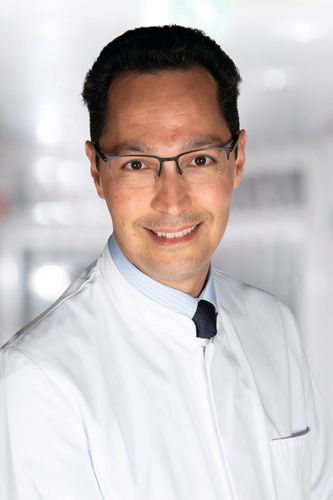
Focus on the Elbow and Shoulder - Expert Interview with PD Dr. med. univ. Patrick Vavken

Alexandra Pfitzmann ·
The ADUS Clinic in the Zurich Unterland region of Switzerland offers first-class care for the musculoskeletal system with an outstanding team of renowned specialists. At this specialized orthopedic surgery clinic, the motto “simple.good.well-cared-for” is central to providing patients from across the region with high-quality treatment for their musculoskeletal problems. One of the leading figures on this team is Priv.-Doz. Dr. med. univ. Patrick Vavken, who, as Chief of Orthopedics and Traumatology, enjoys an excellent reputation in shoulder and elbow surgery.
His extensive expertise, gained through medical studies in Austria and England as well as specialty training in various countries, has made him an outstanding expert in his field. Dr. Vavken’s practice focuses on the treatment of joint instability and hypermobility, as well as cartilage damage, particularly in the shoulder and elbow regions. He specializes in joint-preserving procedures, which are especially relevant for children and adolescents but are also of great benefit to adult patients. Thanks to his expertise in joint-preserving surgery and minimally invasive procedures, he offers individually tailored solutions for his patients.
His commitment to sports medicine for children and adolescents, along with his extensive clinical and scientific experience at the University Hospital and University Children’s Hospital of Basel, as well as at Boston Children’s Hospital/Harvard Medical School, have established him as a recognized expert. Dr. Vavken is known for his arthroscopic and open surgeries on the shoulder and elbow, as well as for minimally invasive joint replacement procedures.
His passion and expertise in treating joint instabilities have earned him international recognition, and his expertise is reflected in the outstanding care and treatment he provides to his patients. When it comes to sports injuries, both the elbow and the shoulder can be quickly affected. The editorial team at Leading Medicine Guide spoke with Dr. Vavken to learn more about typical injuries in this region and their treatment.

The elbow and shoulder—the two dynamic joints of the arm—are susceptible to strain and injury, especially during athletic activities. The intensity, repetitions, and variety of movements performed in various sports can lead to overuse, strains, tendonitis, and other conditions. These injuries can significantly impair performance and often require targeted treatment to enable a quick recovery and return to sports.
Sports injuries involving the shoulder and elbow are quite common, especially in sports that place high stress on these joints.
Basketball, tennis, weightlifting, swimming, and martial arts are among the sports that carry an increased risk of shoulder and elbow injuries. These injuries account for a significant portion of sports-related trauma. Certain factors can increase the risk of injury. “Ultimately, however, the reality is that with a sports injury, one often has to say, ‘It’s your own fault!’ After all, anyone who, so to speak, ‘runs headfirst into a wall’ (too long, too often, too much)—that is, overexerts themselves—must expect the possibility of getting injured. But of course, putting the wrong kind of strain on your body during sports can also have consequences. Then there’s the ‘oops’ accident—when you meant to turn left on your bike but end up going right and falling. Anatomically speaking, the shoulder is the drama queen. It hurts quickly, and you can’t move properly in no time. The elbow is exactly the opposite. It’s more phlegmatic and calm, and is therefore often underestimated. People walk around with shattered elbows and don’t think it’s a big deal. But when the elbow really does start to make a popping sound and hurt, there’s usually more of a commotion than when the shoulder is screaming in pain. “These are things you need to know,” explains Dr. Vavken with a good sense of humor at the start of our conversation, highlighting the unique characteristics of the shoulder and elbow.
Risk factors for sports injuries:
- Repetitive movements or excessive strain on the joints without adequate rest can lead to overuse injuries
- Inadequate warm-ups and stretching before athletic activities can impair the flexibility of muscles and tendons, thereby increasing the risk of injury.
- Incorrect technique when performing movements or throws in various sports can increase the strain on the shoulders and elbows and lead to injuries.
- Insufficient strengthening of the muscles surrounding the joints can compromise their stability and increase the risk of injury.
Individual risk factors can vary depending on the sport and a person’s physical condition. “In principle, the shoulder and elbow are at higher risk during any overhead movements. In today’s very popular sports—which, for example, were largely unknown during my childhood, such as rugby, basketball, lacrosse, football, or baseball—shoulder and elbow problems have suddenly become very common again. After all, almost every small town has its own football team these days… Unfortunately, many emergency physicians aren’t familiar with these sports—that is, they know about a broken tibia from a skiing accident, but many simply don’t know what an incorrect shooting technique in basketball can do to the shoulder,” Dr. Vavken explains the sometimes difficult-to-assess risk factors in sports and goes on to describe the most common causes of injuries: “As I said, the most common cause is overuse. Specifically in the context of sports, this means ‘I’m shooting too hard, I’m jumping too high, I’m playing too long.’ This can then lead to, for example, inflammation, cartilage damage, overuse, and instability.”
The most common sports injuries:
Rotator cuff injuries: These include tears or overuse of the muscles and tendons surrounding the shoulder. Treatment can range from conservative approaches such as physical therapy and rest to surgical procedures, depending on the severity of the injury.
Shoulder dislocations/instabilities: This occurs when the humerus slips out of the glenoid cavity. Treatment involves restoring stability, often through conservative methods such as physical therapy or, in some cases, through surgical procedures.
Impingement Syndrome: This involves the pinching of tendons or bursae within the shoulder joint. Treatment may include physical therapy, anti-inflammatory medications, and, in some cases, surgery.
Tennis elbow (lateral epicondylitis): An overuse injury of the tendons on the outer elbow. Treatment may include rest, physical therapy, pain relievers, or, in severe cases, injections or surgery.
Golfer’s elbow (medial epicondylitis): Similar to tennis elbow, but the affected tendons are located on the inner side of the elbow. Treatment is similar to that for tennis elbow.
Elbow dislocations: This involves a displacement of the bones in the elbow joint. Treatment often requires immediate realignment of the joint, sometimes under anesthesia, followed by rehabilitation exercises.
There are various exercises and training methods that can promote stability and flexibility in the shoulder and elbow to prevent injuries in athletes. “Here, my recommendation is very clear: The average person should generally focus more on balance and bodyweight exercises rather than working with heavy weights. Regular back exercises and practicing abdominal breathing are important, including for maintaining good posture. For example, I can’t breathe into my abdomen while letting my shoulders slump forward, so I automatically adopt good posture,” advises Dr. Vavken.
Rotator Cuff Strengthening: Eccentric and concentric movements using Theraband exercises or dumbbells improve rotator cuff function.
Scapular retraction: Exercises aimed at stabilizing and strengthening the shoulder blades, such as rowing and forearm plank variations.
YTWL exercises: These specific exercises focus on strengthening the muscles responsible for shoulder stability and mobility.
Strengthening the forearm muscles: Repeated flexion and extension of the forearm using weight exercises or resistance bands help strengthen the muscles and prevent overuse injuries.
Stretching exercises: Regularly stretching the forearm muscles can help improve flexibility and reduce tension.
Balance and stability exercises: Exercises designed to improve balance and coordination of the entire arm are also helpful.
Early diagnosis and treatment of shoulder and elbow injuries are extremely important to prevent long-term effects or complications.
In many cases, untreated injuries can lead to joint instability, which in turn can result in further injuries or a worsening of the condition. In the long term, this can lead to an increased risk of osteoarthritis, tendon tears, or other structural damage that might even require surgery. Until then, however, the patient often experiences pain. “Cortisone is a good interim solution here,” recommends Dr. Vavken, adding: “Cortisone, also known as corticosteroid, has anti-inflammatory properties. In orthopedic medicine, cortisone can be used for shoulder and elbow injuries to reduce inflammation and relieve pain. It is a very potent hormone that can drastically relieve pain and inhibit inflammation, but it also has side effects. The use of cortisone must be carefully considered and is a temporary measure. If the patient needs to ‘function,’ then cortisone is a great option. As long as you take it, the pain stays away; if you stop taking it, the pain usually returns,” explains Dr. Vavken.
Tennis elbow, also known as lateral epicondylitis, is a painful condition caused by overuse of the tendons on the outer elbow. But getting the right diagnosis is key here!
Although the term “tennis elbow” suggests a connection to tennis enthusiasts, this injury can also result from other repetitive arm and hand movements. “Tennis elbow is a classic example of poor terminology in diagnostics. For example, a patient might come to me saying they have lateral (Latin for ‘outer’) elbow pain—that is, pain on the outer side of the elbow. At some point, it became a linguistic convention that lateral elbow pain automatically means tennis elbow. Just as many people still believe that spinach is rich in iron… In this regard, an accurate diagnosis is absolutely crucial. Specifically when it comes to diagnosing chronic tennis elbow, statistically speaking, out of every 100 diagnoses made, only 10 are ultimately correct. Ninety patients actually have something else that also causes lateral elbow pain. There are two methods for diagnosis: First, you ask the patient what the problem is and listen to their description with an open mind. Second, you perform specific tests and observe where the patient reacts. Only then do you proceed with standard diagnostic imaging—such as CT, ultrasound, and/or MRI—to confirm the suspected diagnosis,” explains Dr. Vavken.
The term “tennis elbow” comes from the fact that this type of injury frequently occurs in sports that require repetitive wrist and forearm movements, such as tennis.
“True” tennis elbow, or lateral epicondylitis, refers to inflammation of the tendons that attach to the outer part of the elbow. More specifically, this affects the tendons that attach to the lateral epicondyle, a bony protrusion on the outer side of the elbow. The defect or damage occurs at the origins of these tendons, particularly at the origin of the muscles that extend the wrist. “Tennis elbow is often defined as inflammation of the extensor tendon, but it is actually simply a change in the tissue that causes pain. Therefore, anti-inflammatory treatment at that site is misguided and usually does not lead to lasting improvement. Physical therapy or shock wave therapy is more appropriate here, partly because the patient is motivated to take action. Autologous blood therapy has also proven effective,” explains Dr. Vavken.
Shoulder Arthroplasty
“Ultimately, performing shoulder arthroplasty is an act of giving up. As a doctor, I come to the conclusion that I can no longer repair it, so I have to replace it. Ultimately, the patient should always decide whether a prosthesis should be implanted and whether surgery is necessary. After all, patients’ needs vary greatly. For example, the shoulder might look absolutely disastrous on imaging, but the patient explains that they can do everything, sleep well, and have no pain or hardly any limitations. In other cases, however, the imaging results don’t look bad at all, but the patient may be exposed to higher levels of stress in daily life or during sports and therefore experiences more significant symptoms. As a surgeon, one should always follow the principle of achieving as much as possible for the patient with as little intervention as possible. When it comes to selecting prostheses, there’s a whole range of options. Depending on the patient’s needs, the one that’s best suited to them individually is chosen. It’s just like in a shoe store. You say you need shoes, and they ask you what for—running, hiking, and so on. For an athlete, depending on the sport, a prosthesis is certainly always discussed as a last resort,” explains Dr. Vavken.
Rehabilitation following a shoulder or elbow injury plays a crucial role in an athlete’s return to training or competition.
Rehabilitation is a crucial component of the recovery process for restoring full function and strength to the affected joint. The rehabilitation phase aims to stabilize the injured area, restore muscle strength, improve range of motion, and regain the joint’s functional capacity. It typically begins after acute treatment and may include different phases tailored to the specific injury and the athlete’s individual condition. In the early phase of rehabilitation, the focus is often on passive movements, physical therapy exercises, and measures to relieve pain and reduce inflammation. As rehabilitation progresses, active exercises are then performed to strengthen muscles, improve coordination, and enhance the joint’s functional mobility. The goal is to gradually increase the load on the affected area to restore normal function.
Customized exercises play an important role in stabilizing the joint and strengthening the surrounding muscles. A physical therapist or sports therapist often develops a specific rehabilitation program tailored to the athlete’s injury, recovery progress, and athletic goals. A full recovery requires time, patience, and commitment on the part of the athlete. Progress may vary depending on the type of injury, and the return to sports should be gradual and in accordance with medical recommendations to minimize the risk of re-injury. A return to training or competition should only occur once the joint is fully functional and the muscles are sufficiently strengthened to meet the demands of the sport.
In the Best Hands at ADUS and ALPHA KLINIK
“We simply try to do a good job here, without all the fuss. Surgery isn’t always necessary. After all, health is a complex matter. We’re the smallest hospital in the canton, but we’re the most cost-effective and rank among the top 5 in government quality assessments. Medically speaking, we’re undergoing a transformation overall and are still lagging a bit behind other countries, including when it comes to access to medical care. There will certainly—and hopefully—be a lot more developments in this area, especially as people gain easier access to medical care thanks to increasingly modern technologies and digital progress. For example, if needed, a patient could take a photo of their forearm or fill out an AI questionnaire and receive digital information about what’s wrong with them. I’d love to see that happen in my lifetime. As far as costs are concerned, the situation in Switzerland is manageable, including when it comes to the use of prosthetics. Fundamentally, however, we should be thinking about how we can do things better, not how we can do them more cheaply. “Once that idea is put into practice, the rest will probably follow on its own,” says Dr. Vavken, bringing our conversation to a close.
Dr. Vavken, thank you very much for this refreshing and informative conversation about the shoulder and elbow!
Share this article
About the medical author
Alexandra Pfitzmann
Editor
Alexandra Pfitzmann – medical author: expert knowledge, professional articles and medical insights in the Leading Medicine Guide.
More about the medical author →Expert Interviews
Read next
- Expert interview
Cardiogeriatrics: Significance and benefits in the context of hospital reform
Sep 21, 2026
Cardiogeriatrics: Significance and benefits in the context of hospital reform
Read more - Expert interview
Expert Interview with Professor Dr. Amadeus Hornemann, MPH
Sep 18, 2026
Prof. Amadeus Hornemann on Precision Medicine in Gynecology: Modern Surgery, New Techniques, Better Quality of Life
Read more - Expert interview
Expert Interview with Professor Dr. Konstantinos Anagnostakos
Sep 15, 2026
Prof. Anagnostakos on Painful Knee Replacements
Read more