Expert Interviews
Robot-Assisted Surgery - Expert Interview with Prof. Günther Winde

Alexandra Pfitzmann ·
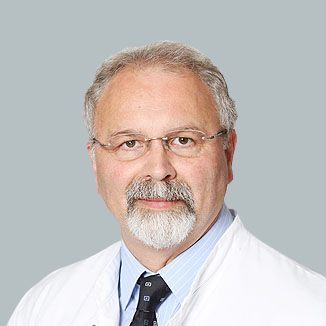
Prof. Dr. Günther Winde, a renowned specialist in visceral surgery, specialized visceral surgery, and vascular surgery, enjoys an excellent reputation for his outstanding expertise in oncological surgery, proctology, liver surgery, pancreatic surgery, gastric surgery, esophageal surgery, colorectal surgery, colorectal cancer, biliary surgery, and his work at the Center of Excellence for Coloproctology at Herford Hospital. Prof. Dr. Winde is particularly known for his extensive experience in surgeries on the esophagus, colon, and stomach, with a specialization in the treatment of abdominal cancers.
His outstanding skills in minimally invasive procedures and his contributions to research have earned him international recognition. As director of the Center of Excellence in Coloproctology, Prof. Dr. Günther Winde sets the highest standards in patient care. State-of-the-art diagnostic procedures, innovative treatment methods, and a dedicated team come together here to ensure optimal care in oncological surgery and related specialties.
In addition to his professional excellence, Prof. Dr. Winde is distinguished by his personal commitment. His dedication to prevention, early detection, and modern therapeutic approaches is reflected in his patient-centered care. In Herford and beyond, Prof. Dr. Günther Winde is a key figure in the advancement of medical care in the gastrointestinal field and an outstanding expert in oncological surgery. Many surgeries can be performed with robotic assistance. We wanted to learn more about this and had the opportunity to speak with Prof. Dr. Winde to highlight the immense benefits of robotic technology.
Robot-assisted surgeries have revolutionized the medical landscape by taking precision and accuracy to a new level. These innovative procedures integrate advanced robotic technology into surgical interventions, leading to improved recovery rates and more precise outcomes. The combination of human expertise and robotic precision promises a bright future for medical surgery.
The introduction of robot-assisted surgery has significantly expanded the scope of oncological surgery, particularly in the context of colorectal cancer, esophageal cancer, and pancreatic tumors.
Robotic surgery offers more precise instrument control, improved visibility, and greater freedom of movement for the surgeon, resulting in numerous benefits. “The greatest benefit for the patient is that robot-assisted surgeries are extremely gentle. They cause minimal trauma at the access sites, since the necessary instruments are inserted through tiny incisions, just as in minimally invasive surgery (MIS). But with the robot, the surgeon can operate under magnification of several dozen times, thereby preserving tissue much more effectively. This results in less blood loss and less postoperative pain for the patient. In terms of thoroughness, the surgery is equivalent to—or even better than—standard MIC surgery; that is, a higher number of lymph nodes are removed. Instead of cutting and severing the tissue, the surgeon carefully pulls the tissue layers apart and can perform localized hemostasis. “However, approximately 20% more time must be scheduled for robot-assisted surgery, as the preparation time is longer, and the surgery itself also takes a bit longer due to the even greater precision,” explains Prof. Dr. Winde at the beginning of our conversation, adding: “If the patient’s anatomy is completely obscured by a very large tumor or adhesions, then robot-assisted surgery is not recommended. Nor is it recommended if loops of the intestine are stuck where they shouldn’t be, or if there is inflammation that holds organs in place like concrete. All of this makes it difficult to position the instruments in such a way that they can be operated using the robot. This is where we reach the limits of robot-assisted surgery, but the same applies to any other form of minimally invasive surgery.”
Cancer cells can spread through the lymphatic system and accumulate in the lymph nodes. This happens when tumor cells detach from their original site and enter the lymphatic system. As a result, they can settle in neighboring or distant lymph nodes and affect them—a process known as metastasis.
Robotic procedures in proctology offer several advantages over conventional methods.
Precision and visibility: Robotic surgery enables more precise instrument control and improved visibility for the surgeon. This is particularly important in complex proctological procedures, as anatomically challenging areas can be visualized with great accuracy.
Minimally invasive procedures: The robot’s precise movements allow for minimally invasive procedures, resulting in minimal tissue trauma. This can reduce the intensity of postoperative pain and contribute to a faster recovery.
Smaller incisions: In general, robotic surgery requires smaller incisions compared to conventional procedures. Smaller incisions mean less tissue trauma, less blood loss, and a reduced likelihood of infection.
Faster Recovery: Thanks to the advantages mentioned above, patients who have undergone robot-assisted proctological procedures often experience a faster recovery. This can have a positive impact on the length of the hospital stay and the duration of the rehabilitation phase.
Improved control: The robot’s precise control capabilities allow the surgeon to perform exact movements, which is crucial for complex proctological surgeries. This contributes to better long-term outcomes.
“We’ve been using the da Vinci robot here at the University Hospital in Herford since 2020. Every doctor who wants to perform surgery with it must first obtain a sort of ‘license’ to operate the device properly; this is also required by the manufacturer of the da Vinci robot, Intuitive Surgical Inc. First, you take a basic course. Then there are training programs built into the device itself to practice handling the instruments on wire models. This is also done with support from the company itself—a well-trained surgeon is assigned to assist you by the company, creating a student-teacher relationship, and you perform your first surgeries alongside the teacher. At this stage, the trainee should have 10–15 years of surgical experience. Only then can one begin to learn the robotic technology and quickly put its advantages into practice. It’s not possible without surgical experience. Ultimately, about 20 surgeries are performed together to become familiar with handling the device on a patient and to avoid careless mistakes and tissue damage. Safety is always the top priority! You also have to learn what’s known as “visual haptics” with the robot. This is because, when using the instruments, you no longer feel with your own hands and must translate the haptic feedback to the instruments,” explains Prof. Dr. Winde regarding the use of the da Vinci robot.
Visual haptics in robot-assisted surgery refers to the use of visual and tactile (haptic) feedback to provide the surgeon with a better understanding of the tissue and structures during the procedure. It combines visual information provided by cameras and imaging systems with tactile feedback, which is typically transmitted via specialized instruments or sensors. This technology allows the surgeon not only to visually see what is happening during the operation but also to receive tactile feedback that conveys a sense of the tissue’s texture. This feedback can take the form of vibrations, pressure, or other tactile signals that can help the surgeon better understand the consistency of the tissue, the depth of incisions, or other important information during the procedure.
The da Vinci system is used in Herford for rectal and esophageal surgeries as well as for left pancreatic resection.
Through the integration of robotic surgery, the University Hospital in Herford can cover a broad spectrum of surgical services for the entire gastrointestinal tract, including the esophagus, intestines, and other areas. With da Vinci, minimally invasive esophageal surgery—that is, surgery on the esophagus—is easily manageable, particularly for tumors, reflux disease, or other pathological conditions. “In cases of esophageal tumors, the precise control of the robotic arms allows for more accurate removal of tumors or the entire esophagus and is significantly less traumatic, as no large incision in the chest is required. In addition, after tumor resections using the da Vinci system, a new connection between the esophagus and the stomach can be established. In rectal surgery, the use of the da Vinci system is advantageous in that it allows for the preservation of bladder and nerve functions—including the nerves that control sexual function in men—during the procedure, simply because the surgery is performed with such precision. For extremely obese patients, robot-assisted surgery is not recommended due to the complex tissue structure. The da Vinci system is very well suited for diaphragmatic hernias because the tissue is easy to manipulate and the instruments can be positioned effectively—which is why this procedure is often performed as part of the training sessions on the device described earlier,” says Prof. Dr. Winde.
Patients are rarely skeptical when it comes to robot-assisted surgery. “Some patients ask what would happen in the event of a power outage. That’s why we’ve published a separate FAQ section on robot-assisted surgery on our website. Some patients think the robot is like a washing machine—you put two euros in the front, and the gallbladder surgery comes out the back,” laughs Prof. Dr. Winde, but he makes it clear: “It’s very important to convey to the patient that the robot doesn’t do anything the surgeon doesn’t want it to. Some believe the chief surgeon is sitting at home in his living room controlling the robot. That’s quite curious. That’s why we’ve published sufficient information on our website.”
The medical outlook is good. In surgery, AI (artificial intelligence) will play a major role in surgical planning.
“Robotic surgery will certainly continue to advance here at Herford University Hospital, particularly in the field of liver surgery, mainly due to improved surgical planning. During a liver conference, we discuss where the lesion is located in the patient and how much liver will remain after the surgery (because if too little were left, the patient would not be able to survive). The entire planning process is carried out using 3D liver volumetry. This allows us to work with an interventional radiologist to visualize the anatomy in three dimensions, and the entire procedure will certainly soon be supported by AI. “This allows for very precise planning to determine whether preoperative interventional radiology or nuclear medicine treatments are appropriate, and how the liver will regenerate,” explains Prof. Dr. Winde, describing the possibilities at the Herford Center of Excellence, and concludes: “We will likely be able to perform surgeries that preserve even more of the organ.”
Effective Communication: The Key to Successful Teamwork
Surgeons, oncologists, gastroenterologists, radiation oncologists, and radiologists meet regularly to discuss the clinical presentations of patients with cancer. The main goal of this meeting, known as a tumor conference or tumor board, is to develop personalized treatment plans before or after surgery in accordance with guidelines and the latest therapies. In doing so, the patients’ individual physical condition and wishes are taken into account. This tumor conference brings together the doctors’ extensive expertise and serves as a central element of the Colorectal and Pancreatic Center, where collective knowledge is pooled to develop optimal treatment approaches.
“We’ve been conducting student teaching here at the University Hospital since 2016. What really helped us make progress here was that we had complete freedom in how we structured the curriculum for students. Professors and physicians were able to incorporate into the curriculum the areas they themselves had found lacking as students. The lectures are tailored to clinical practice and vice versa. We currently have 74 students who are right here with us and work closely with us. “Establishing teaching and research at a large hospital that had previously been solely a specialized care provider was a challenge, but it worked out,” Prof. Dr. Winde says in retrospect, bringing our conversation to a close.
Thank you very much, Professor Dr. Winde, for your assessment of robot-assisted surgery and the insight into the excellent collaboration at the University Hospital in Herford!
Share this article
Expert Interviews
Read next
- Expert interview
Expert interview with Professor Dr Elmar Herbst, PhD
Oct 15, 2026
Patient-centred and personalised knee surgery
Read more - Expert interview
Cardiogeriatrics: Significance and benefits in the context of hospital reform
Sep 21, 2026
Cardiogeriatrics: Significance and benefits in the context of hospital reform
Read more - Expert interview
Expert Interview with Professor Dr. Amadeus Hornemann, MPH
Sep 18, 2026
Prof. Amadeus Hornemann on Precision Medicine in Gynecology: Modern Surgery, New Techniques, Better Quality of Life
Read more