Expert Interviews
Treatment of Age-Related Degenerative Deformities—An Expert Interview with Prof. Kröber

Alexandra Pfitzmann ·
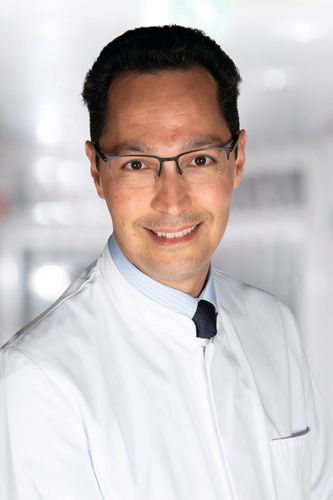
Prof. Dr. Markus Kröber is an expert in the field of spinal surgery and a specialist who helps people rediscover the joy of movement. As a spine specialist, he understands the challenges patients face after an accident or due to wear and tear. He has earned his national reputation not only through his outstanding achievements in the treatment of spinal disorders but also through his expertise in treating tumors of the nervous system.
As Chief Physician of the Department of Orthopedics, Trauma, and Spinal Surgery at Helios Clinic Rottweil, Prof. Dr. Kröber leads a team of experts, and his expertise as one of Germany’s leading specialists in the field of the spine is internationally recognized. The Helios Clinic Rottweil is a spine center certified by the German Spine Society, and Prof. Dr. Markus Kröber has been awarded the Master’s Certificate by the German Spine Society (DWG), which underscores his outstanding achievements and extensive scientific expertise in spinal surgery. This certification offers patients the assurance that they will be treated according to the most modern standards, and all levels of severity in spinal surgery can be treated at the Helios Clinic Rottweil.
Prof. Dr. Kröber’s appointment as Chief Physician at Helios Clinic Rottweil in January 2018 was a boon for the entire region. The spine specialist embodies a modern approach to medicine, in which healthcare is delivered at the highest level through specialization and interdisciplinary collaboration. His focus on spinal surgery enables him to think beyond traditional treatment methods and offer comprehensive care that encompasses orthopedics, conservative pain management, and surgery.
The editorial team of the Leading Medicine Guide spoke with spine expert Prof. Dr. Kröber and, in particular, learned more about age-related degenerative deformities.
As people age, degenerative age-related deformities of the spine are common. These changes can affect various structures of the spine, including the intervertebral discs, vertebral bodies, facet joints, and the surrounding soft tissue. Typical degenerative changes include intervertebral disc degeneration, vertebral osteoporosis, spondylolisthesis, facet joint osteoarthritis, and vertebral fractures.
“To provide a clear definition, we refer to spinal deformities in old age as those occurring after growth has been fully completed. These deformities become clinically significant starting in the fourth decade of life. As for the causes, there are three types: The first type is the primary age-related deformity, which results from degeneration—primarily of the intervertebral discs—leading to an uneven distribution of load across the individual spinal segments, which is radiologically detectable as a deformity. The second type is the secondary age-related deformity, which arises primarily from structural bone changes, such as those caused by osteoporosis or other diffuse bone diseases. However, they can also result from a previous neurosurgical spinal decompression procedure, which can lead to asymmetries and instabilities and ultimately to a deformity. The third type is progressive idiopathic deformity, which originates in adolescence. The exact cause is not yet known; a genetic component is suspected, though this has not yet been definitively established by scientific research. The deformity, which thus began in adolescence, stabilizes for a time, progresses further in old age, and eventually leads to an age-related deformity. Overall, an increasing incidence can be observed, though this is also simply due to increased life expectancy in the Western world. Cases of osteoporosis are also on the rise in industrialized nations, a trend linked to an unhealthy diet, insufficient exercise, excessive alcohol consumption, and the use of medications such as steroids, all of which contribute to secondary age-related deformities. “This occurs, for example, due to improper healing of osteopathic fractures in the spine, which then becomes ‘curved,’” explains Professor Dr. Kröber regarding the various types of deformities.
Intervertebral disc degeneration is a common condition in which the discs between the vertebrae lose their natural height and elasticity due to wear and tear and the breakdown of cartilage tissue. This can lead to pain, stiffness, and limited mobility. Vertebral osteoporosis is an age-related bone disease that leads to a reduction in bone density and increases the risk of vertebral fractures. Spinal slippage occurs when a vertebral body slips forward or backward relative to the one below it, caused by instability of the spine. Facet joint osteoarthritis is a form of joint wear and tear that can lead to inflammation, pain, and limited mobility. Vertebral fractures are breaks in the vertebral bodies that can occur due to osteoporosis or traumatic injuries and cause severe pain and reduced spinal stability.
Age-related spinal deformities manifest through a variety of specific symptoms that differ from other back problems.
Prof. Dr. Kröber explains the noticeable symptoms of age-related spinal deformities, which can vary in severity: “The development of age-related deformities is, of course, a long and gradual process that unfolds over many years. The most obvious symptom is pain, which is often described as dull or sharp and can extend along the spine or into the surrounding muscles and tissues, particularly in the lumbar region. 100% of patients with age-related spinal deformities experience pain. This pain can intensify throughout the day and be exacerbated by certain activities such as prolonged sitting or standing, heavy lifting, or bending the spine. It is clearly exertion-related pain that subsides at rest. As the deformity progresses further, nerve pain may also develop; this pain is not localized to the spine but radiates, most often into the legs. The pain results from nerves being pinched within the spinal canal. This can lead to tingling in the legs and may result in nerve-related deficits, which manifest as occasional weakness in the legs—symptoms that ultimately indicate paralysis and occur in cases of advanced deformity. In these cases, the nerves no longer provide the necessary signals to the muscles. A third symptom is postural distortion resulting from a pronounced deformity. This manifests as the formation of a hump, or the patient may lean to one side—a condition known as scoliosis. This progression ultimately leads to the affected individuals needing a walking aid because they can no longer maintain an upright posture otherwise. It can take years for such a pronounced deformity to develop. If an acute vertebral body fracture occurs, it immediately leads to a deformity.”
Non-surgical treatment options for older patients with age-related degenerative deformities are often the first choice, especially when symptoms are mild to moderate or when surgical procedures pose a higher risk.
“First and foremost, it is very important to analyze the exact cause of the deformity. This requires a professional evaluation, and various diagnostic tools, such as imaging tests, are used to determine the specific type of degenerative condition involved. As for conservative treatment options, we have a wide range available. We can start with strengthening physical therapy to stabilize the core muscles. We can offer medication for pain management, which is initially administered orally but can also be given systemically, and there is infiltration therapy, in which injections of local anesthetics are administered into the spine. In addition, there is bracing therapy to halt the progression of the deformity. “If the patient sees a doctor early on with their symptoms, conservative treatment is usually 100% effective. If the deformity is advanced, however, these measures are no longer sufficient. In that case, surgery is the only remaining option,” says Prof. Dr. Kröber regarding conservative treatment options.
Some patients find relief from back pain through alternative therapies such as acupuncture, chiropractic care, osteopathy, or massage. These can help relieve muscle tension, improve blood circulation, and enhance overall well-being. Lifestyle changes such as weight management, regular exercise, proper posture, and ergonomic adjustments at work or at home can help reduce strain on the spine and improve symptoms. However, all of this is only effective if the deformity is not very advanced.
Planning for surgery to treat age-related degenerative deformities involves close collaboration between the patient and the treating surgeon.
The planned surgery is discussed individually with the patient, and the patient is informed about all steps involved. As with any surgical procedure, spinal surgery also carries risks and complications. The surgeon will discuss these risks in detail with the patient and explore possible measures to mitigate them. “Patients who come to see me have usually already had several doctor’s visits, and conservative treatments have been exhausted without any improvement in their condition. The option of surgery is therefore viewed quite positively. In conversation with the patient, I can then largely allay the fears that most people have regarding spinal surgery. These fears are understandable—after all, important nerve pathways run along the spine. But over the past 10–15 years, surgical techniques and options have changed dramatically. This is particularly evident in the fact that we now have much better implants available—ones that can be inserted even into osteoporotic bone, for example, and provide excellent stability. Anesthesia has also advanced, making it possible to safely perform even lengthy surgeries on older patients, including those with pre-existing conditions. Chronological age is no longer a factor in this regard, so that in some cases we can safely operate on 80- or 90-year-old patients without significant risks,” says Prof. Dr. Kröber, explaining the current state of surgical safety.
“Patients who have exhausted conservative treatment options and have been referred come in for two consultations before surgery—once for diagnosis and once for an individualized surgical assessment. And one to two days before the procedure, the patient returns for a preoperative consultation, which also involves the anesthesiology team. The surgery itself consists of four main steps, each presenting its own challenges. In the first step, the deformity must be corrected—that is, a curved spine must be straightened. If the deformity has already fused, which is often the case, the vertebrae must be loosened. The second step involves decompressing the nerves, which means relieving nerve compression. The third step involves attaching implants to the bone to stabilize the correction, and the fourth step involves performing a bone graft. For this purpose, bone is harvested from another site and grafted to the spine to achieve good bone integration and ensure the corrective result is maintained over the long term. We can use navigation systems to assist with some of these steps, particularly to place screws with exceptional precision. We also use intraoperative neuromonitoring so that we can take immediate corrective action if indications arise that nerves are at risk,” says Prof. Dr. Kröber, describing the surgical procedure and providing some additional information on potential risks associated with all four steps of the operation:
“During correction of the deformity and decompression of the nerves, the spinal cord could theoretically be injured. When placing the implants, the greatest challenge lies in securing them, especially when the bones are osteoporotic. And during bone grafting in the fourth step, it is crucial that the bone heals properly—biology has to do its job here! In approximately 70% of cases, the surgical outcome is optimal, meaning the implants hold well and the patient’s spine is stable again. In 30% of cases, however, a second or even third surgery is required, due to the specific risks mentioned earlier, as well as general surgical risks such as impaired wound healing, postoperative bleeding, or infections. These risks increase in older patients and are also related to the duration of the surgery, which typically lasts 5–8 hours. Postoperatively, the patient always spends 2–3 days in the intensive care unit for monitoring and remains in the hospital for approximately 10 days. The patient begins moving around as early as the second day after surgery. After being discharged from the hospital, the patient must take it easy at home for about 6 weeks and then undergoes a three-week rehabilitation program.”
Physical activity plays a crucial role in maintaining spinal health as we age.
Regular exercise can help improve the flexibility, strength, and endurance of the muscles surrounding the spine. This increases spinal stability and reduces the risk of degenerative changes. Targeted exercises to strengthen the core muscles—such as planks, back extensions, or side planks—can help stabilize the spine and reduce pressure on the intervertebral discs. Regular stretching can also relieve tension and improve the flexibility of the spine. It is especially important for young people to adopt an active lifestyle early on and incorporate regular exercise into their daily routine.
“As a general rule, it’s important to avoid overexertion to protect the spine. Attention should also be paid to body weight and a diet that supports bone health. Calcium is a top priority here, and it can also be taken as a dietary supplement. Smoking always has a negative effect on bones and can contribute to osteoporosis, and alcohol should only be consumed in moderation. Regular core muscle training is also beneficial to protect against degenerative changes,” advises Prof. Dr. Kröber regarding prevention.
Recommended activities include sports such as swimming, yoga, or Pilates, which strengthen the spine and keep it flexible. Endurance training such as running, cycling, or dancing also contributes to overall fitness and reduces the risk of being overweight, which in turn reduces the strain on the spine. By taking a proactive approach to their spinal health and engaging in regular physical activity, young people can help maintain a healthy and strong spine in the long term, which will protect them from degenerative changes and back pain as they age.
Significant advances have been made in modern medicine to offer older patients with age-related degenerative deformities an improved quality of life.
“The most groundbreaking changes lie in the surgical options available to us today and the fact that we can now operate on older people with these deformities. In the past, to put it somewhat disrespectfully, people used to refer to the ‘old woman’s hump,’ but that’s simply no longer the case today because you don’t see it that way anymore—thanks to medical advances, older people can maintain a more stable quality of life. And this, of course, has a secondary impact on life expectancy because people remain mobile for longer. In the past, when people were bedridden due to untreated deformities, the mortality rate also rose significantly. And we can prevent that today. “My hope for the future is that, through more educational efforts, people will lose their fear of back surgery. The myth that back surgeries are bad still persists,” says Prof. Dr. Kröber, bringing our interesting conversation to a close.
Share this article
About the medical author
Alexandra Pfitzmann
Editor
Alexandra Pfitzmann – medical author: expert knowledge, professional articles and medical insights in the Leading Medicine Guide.
More about the medical author →Expert Interviews
Read next
- Expert interview
Cardiogeriatrics: Significance and benefits in the context of hospital reform
Sep 21, 2026
Cardiogeriatrics: Significance and benefits in the context of hospital reform
Read more - Expert interview
Expert Interview with Professor Dr. Amadeus Hornemann, MPH
Sep 18, 2026
Prof. Amadeus Hornemann on Precision Medicine in Gynecology: Modern Surgery, New Techniques, Better Quality of Life
Read more - Expert interview
Expert Interview with Professor Dr. Konstantinos Anagnostakos
Sep 15, 2026
Prof. Anagnostakos on Painful Knee Replacements
Read more