Expert Interviews
Colon Cancer—We're on the Right Track!—An Expert Interview with Prof. Lutz Mirow

Alexandra Pfitzmann ·
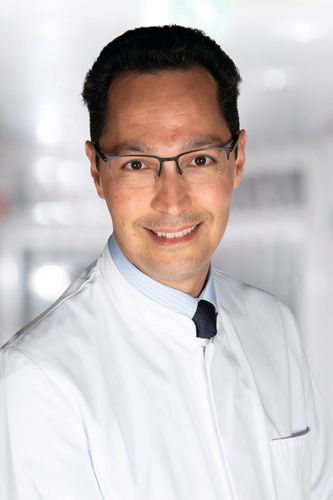
Prof. Dr. med. habil. Lutz Mirow, a specialist in visceral surgery, has made a name for himself as a leading expert in complex abdominal surgical procedures. With a broad range of specializations, including pancreatic surgery, esophageal surgery, gastric surgery, colorectal surgery, liver surgery, and oncological surgery, Prof. Dr. Mirow is known for his exceptional expertise and his commitment to outstanding patient care.
As clinical director of the Department of General and Visceral Surgery at Chemnitz Hospital in Saxony, Prof. Dr. Mirow has transformed the facility into a renowned institution in the region and beyond. Under his leadership, the hospital has become a premier destination for patients with complex surgical needs and has established itself as a center for innovative treatment methods.
Prof. Dr. Mirow is particularly well-known for his pioneering work in robot-assisted surgery. His expertise spans a wide range of procedures, from gallbladder removal to complex tumor resection of the pancreas, and his use of state-of-the-art surgical robots, such as the Versius system, has made him an internationally recognized expert in this field.
In addition to his work as clinic director, Prof. Dr. Mirow is also active in clinical research and continuing education. He has published numerous scientific papers and is a sought-after speaker at national and international conferences. His commitment to training the next generation of surgeons and his efforts to set new standards in patient care make him an influential figure in the medical community.
Prof. Dr. Mirow is not only an expert in his field but also a dedicated advocate for his patients. He places great emphasis on individualized care and a holistic treatment approach that focuses on the needs and wishes of patients.
The editorial team at Leading Medicine Guide spoke with Prof. Dr. Mirow and was able to gather important information on the topic of colorectal cancer.

Colorectal cancer is one of the most common types of cancer worldwide and poses a significant health challenge. In Germany, approximately 60,000 people are newly diagnosed with this disease each year, which can affect both the colon and the rectum. Despite these alarming figures, there is hope: Through regular screenings and early detection, colorectal cancer can be successfully treated in many cases.
Genetic factors play a key role in the development of colorectal cancer. There are several genetic mutations and predispositions that can significantly increase the risk of colorectal cancer.
“In any case, the risk of developing colorectal cancer is much higher if members of one’s own family have already had the disease, regardless of whether they had syndromes such as Lynch syndrome or polyposis. If ancestors have had colorectal cancer, first-degree relatives face a risk that is up to 10 times higher. For this reason, descendants of colorectal cancer patients must undergo screening as a matter of urgency—and do so before the recommended age of 50. We know that waiting until age 50 can be significantly too late. Those with a family history of hereditary colorectal diseases must be monitored very closely and, in some cases, undergo prophylactic surgery. Screening saves lives! We are likely succeeding in this regard, as there is a slight decline in the incidence of colorectal cancer. However, the reason for this decline cannot yet be clearly identified,” explains Prof. Dr. Mirow.
In the case of hereditary bowel diseases, it is clear that nearly 100% of descendants will also develop colorectal cancer. A prominent example is familial adenomatous polyposis (FAP), which is caused by a mutation in the APC gene. “This condition leads to the development of numerous polyps in the colon, often as early as adolescence, and carries a nearly 100% risk of developing colorectal cancer if left untreated. In such cases, multiple screenings per year are important. Often, the colon is removed using a minimally invasive procedure and can be reconstructed via a procedure known as pouch formation, thereby preserving quality of life,” states Prof. Dr. Mirow.
Another important hereditary syndrome is Lynch syndrome, also known as hereditary nonpolyposis colorectal cancer (HNPCC), which is caused by mutations in DNA repair genes such as MLH1, MSH2, MSH6, and PMS2. Lynch syndrome is characterized by a lower number of polyps but is associated with a high risk of colorectal cancer and other types of cancer, with the risk of developing colorectal cancer ranging from 70–80%. Genetic testing plays a key role in identifying high-risk individuals. These tests include DNA sequencing and testing for specific gene mutations, such as those in the APC or MLH1 genes. Individuals with a high genetic risk should undergo regular screening, particularly colonoscopies. The frequency of these screenings depends on individual risk and can vary from annually to every two to five years.
In recent years, significant progress has been made in the treatment of advanced colorectal cancer, particularly in the area of targeted therapies.
Prof. Dr. Mirow is optimistic: “We’ve really made progress in recent years. For example, the field of neoadjuvant therapies has advanced enormously, especially for rectal cancer. Then there’s also the total neoadjuvant approach, in which both radiation therapy and a full course of chemotherapy are administered before surgery. Furthermore, we have patients who respond so well to these therapies that we transition to a ‘watch and wait’ approach. In some cases, these patients are also monitored in clinical trials to determine if and when, in cases of uncertainty, the cancer might recur. “Watch and Wait” has the major advantage of preserving the rectum and significantly improving patients’ quality of life. In addition, we have the broad field of targeted tumor therapy—such as immunotherapy and antibody therapy—which has advanced considerably. There has been tremendous progress in this area, and every year new drugs come onto the market that are achieving astonishing success even in cases of advanced cancer. For example, a colostomy has become the exception rather than the rule. It now applies only to people who have truly deep-seated cancers in which the sphincter muscle itself is involved, and to those who responded poorly to pre-treatment with chemoradiotherapy—a maximum of 5% of patients.”
Various surgical options are available for the treatment of colorectal cancer, which are selected based on the tumor stage, location, and the patient’s overall health.
“The treatment of choice for tumor removal is always surgical resection. Complete tumor removal, including lymph nodes, is of course ideally performed using a minimally invasive approach—that is, via keyhole surgery—which is becoming increasingly common. Unfortunately, in Germany, only about 40% of these procedures are performed using minimally invasive techniques. Other countries in Europe are much further ahead in this regard. Greater centralization of cancer surgery in Germany would be desirable here, so that patients can benefit from the best possible expertise provided by surgeons who perform many operations each year and thus have a wealth of experience. Robotic surgery is becoming increasingly common, which provides another positive boost. “We work with the Versius system and have a comprehensive robotic program,” explains Prof. Dr. Mirow.
The Versius system is a robot-assisted surgical system developed by CMR Surgical that makes minimally invasive procedures more precise and flexible. It is characterized by its modular and compact design, which allows for flexible positioning of the robotic arms. The system features an ergonomic control console that allows for seated operation, as well as instruments with 360-degree rotation for comprehensive freedom of movement.
A commonly used surgical procedure is colectomy, in which the portion of the colon containing the tumor is removed, along with a section of adjacent healthy tissue. Depending on which section of the colon is affected, the procedure may be a partial colectomy, in which only a portion of the colon is removed, or a hemicolectomy, in which either the right or left half of the colon is removed. In cases where the tumor affects the entire colon or when extensive removal is necessary, a total colectomy may be required; however, as Prof. Dr. Mirow explained, this is very rarely the case.
Certain dietary and lifestyle habits can increase the risk of developing colorectal cancer.
“Diet is an important factor in maintaining a healthy colon. A diet rich in red and processed meats, such as beef, sausages, and ham, has been linked to an increased risk of colorectal cancer. These foods often contain carcinogenic substances that result from processing and preparation methods such as smoking or grilling. Similarly, a diet low in fiber and lacking in fruits and vegetables can increase the risk, as fiber promotes gut health and shortens the transit time of food residues through the gut, leaving less time for potentially harmful substances to act on the intestinal wall. “Fiber promotes bowel function, binds water, and encourages regular bowel movements,” explains Prof. Dr. Mirow, adding: “Being overweight is also a significant risk factor, which often stems from a lack of physical activity. In addition, heavy alcohol consumption and smoking can increase the risk of colorectal cancer, as these substances contain carcinogens and can promote inflammation in the body.”
It is advisable to regularly consume fruits, vegetables, whole grains, and legumes, as these foods contain important nutrients and antioxidants that help maintain a healthy gut. Regular physical activity, such as at least 30 minutes of moderate exercise on most days of the week, can also reduce the risk.
Research and Development – Comprehensive Oncology Care in Chemnitz!
“Technical developments will advance rapidly in the coming years. For example, in robotics, we’ll have systems that automatically recognize tissue, perform surgeries even more gently, and identify nerve structures even more accurately to better protect organ function. Imaging will also continue to improve; we’ll even have virtual imaging and be able to ‘float’ through the intestines using 3D technology. One exciting development is taking place in the U.S., where the first genetic stool test is available to screen for tumor DNA, so early detection is sure to see some changes in the coming years,” says Prof. Dr. Mirow regarding progress and technology, adding: “My hope for Klinikum Chemnitz gGmbH is that, as a maximum-care provider, we can further expand our role as a center of excellence so that even more patients can benefit from receiving comprehensive cancer care under one roof!” With that, we conclude our conversation.
Thank you very much, Prof. Dr. Mirow, for these optimistic insights into the treatment of colorectal cancer!
Share this article
About the medical author
Alexandra Pfitzmann
Editor
Alexandra Pfitzmann – medical author: expert knowledge, professional articles and medical insights in the Leading Medicine Guide.
More about the medical author →Expert Interviews
Read next
- Expert interview
Cardiogeriatrics: Significance and benefits in the context of hospital reform
Sep 21, 2026
Cardiogeriatrics: Significance and benefits in the context of hospital reform
Read more - Expert interview
Expert Interview with Professor Dr. Amadeus Hornemann, MPH
Sep 18, 2026
Prof. Amadeus Hornemann on Precision Medicine in Gynecology: Modern Surgery, New Techniques, Better Quality of Life
Read more - Expert interview
Expert Interview with Professor Dr. Konstantinos Anagnostakos
Sep 15, 2026
Prof. Anagnostakos on Painful Knee Replacements
Read more