Expert Interviews
Weight Gain After Bariatric Surgery? What Can Be Done? — Expert Interview with Prof. Zehetner

Alexandra Pfitzmann ·
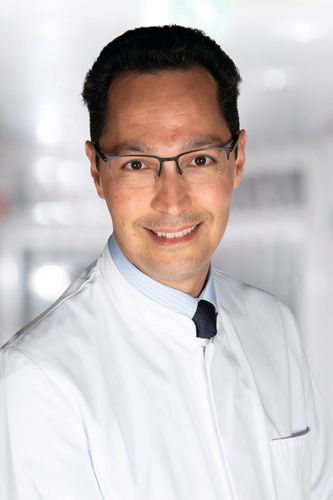
Professor (USC) Dr. med. Jörg Zehetner, a specialist in visceral surgery—upper GI and bariatric and obesity surgery—has made a name for himself as an outstanding expert in the field of upper abdominal surgery. His expertise and experience span the full range of diseases affecting the esophagus and stomach, from cancer to reflux. Prof. Dr. Zehetner is particularly distinguished by his outstanding expertise in the treatment of complex hiatal and abdominal wall hernias.
His medical career took him from Switzerland to Austria and on to the United States, where he served as a professor at the renowned University of Southern California (USC). There, he received multiple awards for his outstanding teaching and is now an honorary member of the Society of Graduate Surgeons at USC in Los Angeles. Since his return to Switzerland in 2015, Prof. Dr. Zehetner has been practicing as a specialist in surgery with a focus on visceral surgery at various clinics, including the renowned Beau-Site Clinic in Bern. As the founder of Swiss1Chirurgie AG, Prof. Dr. Zehetner has established a leading center for bariatric and reflux surgery, which ranks among the largest private practices in this field in Switzerland.
His expertise in laparoscopy and modern techniques such as robotic surgery makes him a leading specialist in Europe, particularly for revision surgeries and complex cases. A key focus of his work is the treatment of gastroesophageal reflux disease (GERD), for which Prof. Dr. Zehetner employs the latest techniques. He is also an expert in the field of bariatric surgery. But what happens when patients regain weight despite having undergone surgery? The editorial team at Leading Medicine Guide wanted to learn more about this and spoke with Prof. Dr. Zehetner.
Bariatric surgeries, also known as obesity surgery or gastric reduction surgery, are procedures designed to help severely obese individuals lose weight and minimize associated health risks. These surgeries work by reducing the size of the stomach or rerouting the digestive tract, which leads to a reduction in food intake or decreased nutrient absorption. Typical procedures include gastric bypass, sleeve gastrectomy, and gastric banding. Bariatric surgery is generally considered a last resort for people with a body mass index (BMI) over 40 or a BMI over 35 combined with serious health problems caused by obesity. It can be an effective solution for weight loss, especially when conventional methods such as diet and exercise have not been successful. However, it also happens that patients regain weight despite bariatric procedures such as gastric bypass or sleeve gastrectomy.
“First and foremost, it’s important to note that patients typically lose about 75% of their excess weight approximately 1.5 years after bariatric surgery. Take, for example, a man who is 1.80 m tall and weighs 150 Kilo. He is 75 Kilo overweight, and with a 75% weight loss, his target weight would be 90–100 Kilo. Most people do not reach their ideal weight, but they come close and typically achieve this about 12–18 months after surgery. Over time, it is quite normal to regain 3–10 kilograms. If the weight gain is greater than that, one must consider whether to take further action in the form of revision surgery or medication. It can be said that severely obese patients (150–200 kilograms) are at a higher risk of regaining weight. “That’s why these patients often require a second surgery involving malabsorptive procedures, which allow parts of the small intestine to be bypassed by food, so that fewer nutrients enter the body,” explains Prof. Dr. Zehetner at the beginning of our conversation, and goes on to describe measures that should be taken before surgery:
“It’s always a good idea to lose a little weight (between 5–10 kilograms, depending on the initial weight) before bariatric surgery, because it makes the procedure safer and because patients are then more motivated to achieve better results after the surgery. Normally, about three months pass between the initial consultation and the surgery. This is also recommended by the Swiss Society for the Study of Morbid Obesity (SMOB; the leading Swiss society for research on obesity and metabolic disorders). During this period, the necessary diagnostic tests are performed, such as gastroscopy and colonoscopy, an abdominal ultrasound, heart and lung function tests, and a psychological evaluation; nutritional counseling is provided; and a ketogenic diet (low in carbohydrates and high in protein) is prescribed three weeks before surgery. Follow-up examinations are scheduled two weeks after surgery, then at six weeks, three months, and annually thereafter. Every two years, we perform a gastroscopy, and after 2–3 years, an abdominal ultrasound to check that everything is in order. Patients take vitamin supplements after surgery (primarily vitamins D and B, iron, calcium, and magnesium).”
“If the patient gains significant weight after surgery, in addition to ongoing nutritional counseling, medication therapy can be initiated, such as the GLP-1 weight-loss injection (which is available to self-paying patients). Another option that I also offer here in Bern is a so-called ‘pouch revision,’ also known as the Apollo procedure. In this procedure, the opening from the small stomach into the small intestine is narrowed endoscopically (this creates a pouch). This allows the patient’s weight to be corrected again. This pouch can also be reduced in size—for example, ten years after the surgery, if the small stomach pouch has expanded again. For this purpose, a so-called Fobi ring (named after Dr. Mal Fobi of the Center for Bariatric and Obesity Surgery in Carson, California), a small silicone ring, is placed slightly above the new junction between the gastric pouch and the intestine, preventing it from expanding so that the patient can once again develop a healthy sense of fullness. The Fobi ring, a “minimizer,” remains in place permanently and exerts only very slight pressure when the patient wants to eat, resulting in a faster feeling of fullness. The procedure is performed laparoscopically and takes only about 30 minutes. “Here in Bern, we use the Fobi Ring during the initial surgery for patients who are accustomed to snacking frequently and need a greater sense of fullness,” explains Prof. Dr. Zehetner.
Changes in eating behavior and lifestyle habits play a crucial role in the long-term success of bariatric surgery and in preventing weight regain.
After surgery, patients often experience changes in their appetite, feelings of fullness, and sense of taste. This can lead to increased sensitivity to certain foods and raise the risk of overeating. To maintain healthy eating habits, it is important for patients to learn to pay attention to their body’s signals and focus on a balanced diet. This includes sticking to appropriate portion sizes, prioritizing protein-rich foods such as lean meat, fish, eggs, and legumes, and avoiding foods high in sugar and fat as well as liquid sources of calories like sodas and juices.
Prof. Dr. Zehetner explains: “Over a period of about 1.5 years, patients experience what is known as a ‘honeymoon phase’ because they feel less hungry and eat less, but do not suffer as a result. A small amount of food also remains in the stomach and does not immediately pass into the small intestine. But because some of it goes directly into the small intestine and doesn’t stay in the stomach for long, GLP-1 hormones are released, which work just like weight-loss medications and trigger a feeling of fullness in the brain. This effect may diminish over time as the body gets used to it, which can cause old eating patterns to return. If the patient then starts eating larger portions again, the Fobi Ring described earlier can help. However, if the patient is among those who have an increased craving for sweets, it becomes a bit more difficult to manage this, because sugar “slips through.” In such cases, supplemental nutritional counseling can be helpful. Some patients require psychological support—particularly if they have experienced trauma related to overeating or view food as a reward. Some patients compensate for their eating by consuming excessive amounts of alcohol or cigarettes. It would be ideal if there were more psychologists available in this area—there are simply too few in this field. Of course, we assess the patient’s habits before surgery. If a patient uses drugs, for example, we cannot operate on them—it’s simply too dangerous, as the drug addiction could be exacerbated after surgery. And in the case of alcohol consumption, the amount must be limited, since you’re no longer allowed to drink much alcohol after bariatric surgery—it’s absorbed more quickly and efficiently because it goes straight into the small intestine. This can quickly lead to liver damage. Smokers should generally not undergo surgery—we only perform sleeve gastrectomy on smokers. If a gastric bypass were performed, there would be too great a risk of developing a stomach ulcer.”
After bariatric surgery, hormone levels in the body can change, which can affect metabolism, feelings of hunger, and feelings of fullness.
Hormonal changes can cause patients to regain weight after surgery, even if they adhere to dietary and behavioral guidelines. One hormone particularly associated with the regulation of appetite and body weight is ghrelin, also known as the hunger hormone. Ghrelin is produced mainly in the stomach and sends signals to the brain to indicate hunger. After bariatric surgery, ghrelin levels in the body may decrease, causing patients to feel less hungry. This initially contributes to weight loss. However, ghrelin levels may return to normal or even increase over time, which can lead to an increased feeling of hunger and raise the risk of regaining weight. Another hormonal change that can occur after bariatric surgery involves peptide YY (PYY) and GLP-1 (glucagon-like peptide 1). These hormones are released in the intestines after a meal and play a role in satiety and appetite regulation.
“There are essentially two groups of people who are at risk. On the one hand, there are smokers who gain weight when they quit smoking. And on the other hand, there are women going through menopause. This is particularly stressful because these people gain weight even though they eat much less after bariatric surgery—yet they still gain weight. In such cases, nutritional counseling or medication can help. However, we find that 80% of our patients are satisfied and lose weight successfully. For about 10–20% of patients, we perform multiple surgeries, always keeping the patient’s health in mind. It’s also essential to ensure that the patient truly wants to lose weight. “If they do not want to lose weight or do not fully cooperate, the need for reoperation must be reconsidered, because ultimately, the patient can ‘outwit’ even a gastric bypass with a Fobi ring and still gain weight (for example, by eating salad dressings, ice cream, etc.),” notes Prof. Dr. Zehetner.
Those who are only slightly overweight can do a lot on their own!
Prof. Dr. Zehetner outlines the benefits of a ketogenic diet here: “If someone is 5–10 kilograms overweight, they can effectively manage this through proper nutrition, motivation, and exercise. The ketogenic diet is a good option here, as it largely eliminates carbohydrates and sugar. It focuses on a high-protein diet consisting of fish, meat, and eggs. Fructose—found in juices, for example—is very counterproductive because the liver immediately converts fructose into fat. In any case, people who are only slightly overweight (BMI between 25 and 35) can achieve a lot through exercise and diet. Medications and GLP-1 weight-loss injections can provide additional help. Today’s very high consumption of extremely sugary iced teas or energy drinks is particularly harmful. Unfortunately, consumption of these is high among young people. The many processed foods on the market also typically contain cheap—and therefore poor-quality—ingredients. I can only urge you to avoid these. If an overweight person already has a BMI of 35, conservative success is achieved in only about 2% of those affected. The other 98% will definitely need surgery.”
Aesthetics play a crucial role for many patients after bariatric surgery.
After significant weight loss achieved through bariatric surgery, excess skin may remain, particularly in areas such as the abdomen, thighs, arms, and chest. This excess skin can not only be aesthetically bothersome but also lead to functional impairments, such as skin irritation, infections, or limited mobility. The prospect of skin flap removal can be a strong motivator for many patients to achieve their weight loss goals and maintain healthy behaviors. The possibility of having excess skin removed can serve as a reward for their efforts and help boost their self-esteem and body satisfaction.
Prof. Dr. Zehetner comments on this: “Unfortunately, cosmetic surgeries generally have to be paid for by the patients themselves. In Switzerland, this is very expensive and therefore a major problem for patients. However, if a flap of skin or an apron of fat is very large and can cause inflammation or skin irritation, then a health insurance provider may cover the costs in such cases. There is a lot of medical tourism here, but it is quite risky. This is because it is often the case that while the surgery itself goes well, the postoperative care is not adequate. In young patients whose skin isn’t sagging to begin with, the skin sometimes retracts on its own. Bariatric surgery itself isn’t cosmetic surgery, but rather a metabolic procedure that leads to better health for the patient.”
In good hands at the Beau-Site Clinic in Bern!
The Beau-Site Clinic stands out for its highly specialized medical expertise and is home to the two largest non-university centers in the Swiss Plateau: the Bern Heart Center and the Beau-Site Visceral Surgery Center, along with the Swiss1Chirurgie practice. Thanks to renowned specialists, state-of-the-art technology, and personalized care, professional support is guaranteed. “Our clinic performs the most reoperations in all of Switzerland and has the most experience in this area. We’ve already treated over 1,000 patients with anastomotic strictures. We also have the highest level of expertise in Switzerland regarding the Minimizer Ring and the Fobi Ring. We perform a total of approximately 400 bariatric surgeries per year,” notes Prof. Dr. Zehetner, and with that, we conclude our conversation.
Thank you very much, Professor Dr. Zehetner, for the helpful information!
Share this article
About the medical author
Alexandra Pfitzmann
Editor
Alexandra Pfitzmann – medical author: expert knowledge, professional articles and medical insights in the Leading Medicine Guide.
More about the medical author →Expert Interviews
Read next
- Expert interview
Cardiogeriatrics: Significance and benefits in the context of hospital reform
Sep 21, 2026
Cardiogeriatrics: Significance and benefits in the context of hospital reform
Read more - Expert interview
Expert Interview with Professor Dr. Amadeus Hornemann, MPH
Sep 18, 2026
Prof. Amadeus Hornemann on Precision Medicine in Gynecology: Modern Surgery, New Techniques, Better Quality of Life
Read more - Expert interview
Expert Interview with Professor Dr. Konstantinos Anagnostakos
Sep 15, 2026
Prof. Anagnostakos on Painful Knee Replacements
Read more