Expert Interviews
Sleep—the Body’s Seismograph: An Expert Interview with Prof. Schöbel

Alexandra Pfitzmann ·
Professor Christoph Schöbel, M.D., is a leading figure in the field of sleep medicine, both nationally and internationally. He holds Germany’s first professorship in sleep and telemedicine and is known for his innovative approaches to treating sleep disorders using digital methods. The Sleep Medicine Center at the Ruhrlandklinik, where Prof. Schöbel works, is highly specialized in the diagnosis and treatment of all types of sleep disorders. The center offers a wide range of diagnostic and therapeutic methods. These include the treatment of obstructive and central sleep apnea, difficulty falling and staying asleep, nocturnal leg movements, restless legs syndrome, and narcolepsy.
The interdisciplinary team at the Sleep Medicine Center consists of specialists in internal medicine, pulmonology, cardiology, neurology, psychiatry, radiology, and dentistry. They work closely together to provide patients with the best possible care. Outpatient sleep studies allow patients to take diagnostic equipment home to monitor various aspects of their sleep disorder. Inpatient studies take place in specially equipped sleep rooms fitted with state-of-the-art technology.
The Ruhrlandklinik’s sleep laboratory has been certified by the German Society for Sleep Research and Sleep Medicine, which attests to the outstanding quality of the services offered. Prof. Schöbel and his team are continuously committed to improving sleep medicine and enhancing patients’ quality of life. In addition to his work at the Sleep Medicine Center, he is also involved with the Outpatient Lung Center in Essen, an important partner of the Ruhrlandklinik. The editorial team of the Leading Medicine Guide wanted to learn more about sleep quality and sleep disorders and spoke with Prof. Dr. Schöbel on this topic.
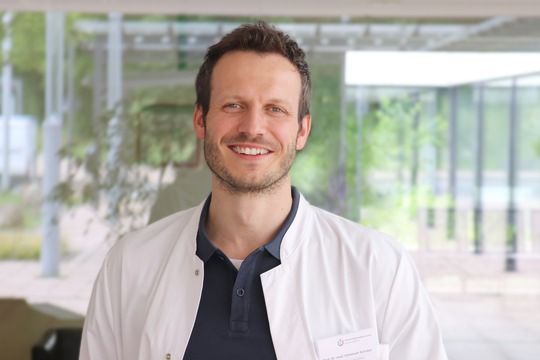
Sleep disorders can have serious effects on physical and mental health. One of the most obvious effects is persistent tiredness and exhaustion during the day. “Short-term sleep disturbances can certainly be normal. Everyone has experienced waking up in the middle of the night and being unable to fall back asleep for a while. Sleep can be described as the body’s seismograph. At the very latest when sleep disorders become chronic—that is, when they last longer than 1 to 3 months—medical treatment is indicated,” Prof. Dr. Schöbel begins our conversation. People with sleep problems are often less productive and have difficulties in their daily lives. This leads to reduced cognitive abilities, affecting concentration, memory, and decision-making. Emotional stability also suffers as a result of sleep disorders. Irritability, mood swings, anxiety, and even depression can occur. “In the long term, sleep problems increase the risk of mental health issues. Physical health is also affected. Lack of sleep can weaken the immune system, which increases susceptibility to infections,” emphasizes Prof. Dr. Schöbel. In addition, chronic sleep deprivation is associated with an increased risk of high blood pressure, diabetes, and other cardiovascular diseases. Weight gain is another possible consequence, as sleep disturbances can affect feelings of hunger and fullness. People who don’t get enough sleep tend to eat more and are at higher risk of becoming overweight.
“Sleep is essential for our bodies to survive. People with sleep disorders also often have difficulty enjoying everyday activities and maintaining social relationships. Sleep is crucial for the body’s regeneration and the consolidation of memories. Therefore, chronic sleep disorders should not be underestimated and generally require medical treatment and care. Identifying the causes of sleep disorders is crucial to minimizing their impact on health through appropriate therapy,” explains Prof. Dr. Schöbel.
The risk of chronic diseases such as type 2 diabetes, heart disease, stroke, and even cancer increases in people with sleep problems.
The quality of sleep has a significant influence on cognitive performance and learning ability.
Deep and restful sleep, especially during deep sleep and REM phases, is crucial for brain function. “We sleep best during our biological night. External factors such as light play a role here. When less light reaches the retina, the pineal gland in the brain produces melatonin, which plays a central role in regulating the sleep-wake cycle and promotes drowsiness and the readiness to sleep. A regular day-night rhythm is also important for healthy sleep. Every person has a genetically determined optimal sleep duration. On average, people sleep 7–9 hours per night. There are some exceptions who are satisfied with less than 6 hours, and others who need more than 9 hours of sleep to feel well-rested. The so-called chronotype—owl or lark—is genetically determined, though it can also change over the course of a person’s life,” explains Prof. Dr. Schöbel.
REM stands for “Rapid Eye Movement.” The REM phase is an important phase of the sleep cycle in humans and other mammals. During sleep, the body goes through various sleep phases, including the non-REM (NREM) phases and the REM phase.
- During the REM phase, the eyes move rapidly back and forth beneath closed eyelids. This is a characteristic feature of this sleep phase.
- The brain is very active during the REM phase. The brain’s electrical activity during this phase resembles that of the waking state. It is during the REM phase that dreams most frequently occur.
- During the REM phase, the body’s muscles are largely paralyzed, a condition known as REM atonia. This muscle atonia prevents dreams from being acted out, serving as a protective mechanism to prevent uncontrolled movements during sleep.
- During the REM phase, heart and respiratory rates may increase. These are physiological responses to the intense brain activity during this sleep phase.
- As the night progresses, the REM phases become longer, while the deep sleep phases (NREM) become shorter. This is one of the reasons why dreams are often experienced in the early morning hours.
Sleep plays a crucial role in regulating emotions and mental well-being.
During sleep, the brain processes emotional experiences and helps to cope with them. It allows for emotional detachment from stressful or traumatic events, thereby reducing their emotional impact. Good sleep promotes mood stability by protecting against irritability, nervousness, and heightened stress responses. It helps reduce the risk of depression and anxiety disorders. Furthermore, sleep is crucial for coping with stress. During sleep, stress hormones are broken down, and the brain is better able to handle stressors.
Modern lifestyle factors, particularly the use of electronic devices before bedtime, can have a significant impact on sleep. “The modern world is more intense because we’re exposed to so many more stimuli and influences. Also, many people are still very active right before going to bed—checking emails or working out late at night. This is counterproductive to the quality of sleep. You should turn the time before bed into a ritual—for example, by taking an evening walk, enjoying a warm (non-alcoholic!) drink, or reading a book. “This helps you ease into a state of rest and relaxation,” recommends sleep specialist Prof. Dr. Schöbel, adding: “If you wake up briefly during the night, you’ll usually fall back asleep quickly. You only notice these brief awakenings if they last longer than 3–5 minutes. The other brief periods of wakefulness—which occur, for example, when we roll over in bed—are often not even remembered the next morning. So if you wake up intentionally, you should stay in bed for a moment and please don’t get frustrated—that just increases your stress levels! And stress is the natural enemy of sleep. In this situation, relaxation is the right approach—anything that helps you relax is allowed: whether it’s an audiobook, a mental journey, or specific relaxation techniques. If you can’t manage this within 20 to 30 minutes, you should get up and, for example, read a boring book on the sofa until you start to feel sleepy again.”
Sleep is also of great importance for the long-term health of our brain, as chronic sleep deprivation is associated with an increased risk of neurodegenerative diseases such as dementia.
Different types of sleep disorders vary considerably in terms of causes, symptoms, and necessary treatment approaches.
Insomnia, the most common sleep disorder, is characterized by difficulty falling asleep or staying asleep. Therapeutic approaches such as cognitive behavioral therapy (CBT-I) or medication may be used to treat it. Sleep apnea, on the other hand, is characterized by pauses in breathing during sleep, which are associated with snoring and daytime sleepiness. Parasomnias such as sleepwalking, nightmares, and nighttime teeth grinding can have a variety of causes and require specific treatment approaches, including medication, behavioral therapy, or psychotherapy. Restless Legs Syndrome (RLS) causes unpleasant sensations in the legs and an urge to move them. This sometimes includes involuntary leg movements during sleep, which in turn can disrupt sleep.
“There are over 80 defined types of sleep disorders. You don’t need to go to a sleep lab for every disorder. A sleep lab evaluation is only necessary to rule out or confirm a physical sleep disorder. In the sleep lab, approximately 20 cables are attached to the body, and the patient sleeps in a single room equipped with an infrared camera. Since most people initially sleep worse in unfamiliar surroundings, patients in the sleep lab usually need a night to adjust. However, there are also cases where the opposite is true—namely, when the patient has developed a fundamentally negative attitude toward their sleeping environment at home—meaning they automatically associate their bed with sleep disorders and can therefore often sleep better in an unfamiliar environment,” explains Prof. Dr. Schöbel, adding: “Snoring is not, in principle, a medical concern. Only when it involves pathological snoring accompanied by breathing pauses should a doctor be consulted, who can then examine the person further.”
Special Case: Narcolepsy—a neurological sleep disorder characterized by excessive daytime sleepiness and impaired regulation of the sleep-wake cycle.
The condition affects the body’s ability to regulate sleep according to a normal rhythm. “People with narcolepsy can suddenly and uncontrollably fall asleep, even during active times of the day, such as while eating, speaking, or driving. The body produces too little of the wakefulness-promoting hormone orexin. The symptoms of narcolepsy can vary widely, with excessive daytime sleepiness and sleep attacks being the most prominent. Those affected report non-restorative sleep and severe daytime sleepiness. In addition, narcolepsy may also be associated with cataplexy, a sudden loss of muscle control often triggered by strong emotions such as laughter or anger. Other symptoms may include hallucinations upon falling asleep or waking up, as well as sleep paralysis—the temporary inability to move or speak shortly after waking up. Narcolepsy is diagnosed in a sleep laboratory, where daytime tests are also conducted. Sometimes, tests are also performed to determine whether there is a deficiency of orexin in the cerebrospinal fluid. Today, well-tolerated medications can help alleviate the symptoms of narcolepsy,” says Prof. Dr. Schöbel, commenting on the phenomenon of narcolepsy.
Narcolepsy is a chronic condition that often begins in adolescence or early adulthood and lasts a lifetime. The exact cause is not fully understood, but it is believed to have a genetic component.
The digital treatment of sleep disorders via telemedicine offers innovative approaches to effectively support people with sleep problems.
It enables patients to monitor their sleep patterns and symptoms from home using special sensors and apps to record sleep data. This information can then be sent to sleep specialists, who can make a preliminary diagnosis without the patient having to be physically present. “For example, we offer what we call a ‘smartwatch consultation’—this involves a sleep medicine consultation when sleep trackers or apps indicate abnormal sleep findings. If patients have been treated here at the University Hospital in Essen, follow-up therapy check-ins can also take place remotely. With the help of telemedicine, teleconsultations with sleep specialists can take place via video calls, which is particularly helpful for discussing symptoms, monitoring progress, and adjusting treatment plans. This gives patients the opportunity to access the expertise of sleep medicine specialists from home. Digital sleep therapy programs are also part of telemedicine, utilizing behavioral therapy and relaxation techniques to treat sleep disorders. “These programs can be personalized and guide patients step by step through the process,” says Prof. Dr. Schöbel regarding the additional services, thus concluding our conversation.
Professor Dr. Schöbel, thank you very much for talking with us about the fascinating aspects of sleep!
Share this article
Expert Interviews
Read next
- Expert interview
Expert interview with Professor Dr Elmar Herbst, PhD
Oct 15, 2026
Patient-centred and personalised knee surgery
Read more - Expert interview
Cardiogeriatrics: Significance and benefits in the context of hospital reform
Sep 21, 2026
Cardiogeriatrics: Significance and benefits in the context of hospital reform
Read more - Expert interview
Expert Interview with Professor Dr. Amadeus Hornemann, MPH
Sep 18, 2026
Prof. Amadeus Hornemann on Precision Medicine in Gynecology: Modern Surgery, New Techniques, Better Quality of Life
Read more