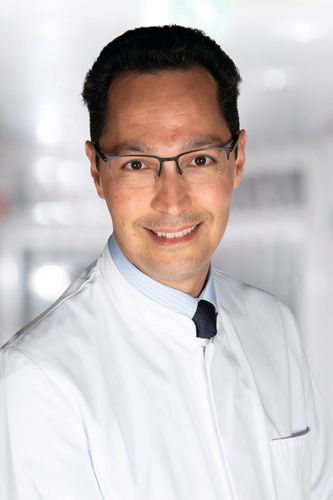
Expert Interviews
Expert Interview with Professor Scholz—Expert in Neurosurgery
Leading Medicine Guide Editors ·
Prof. Dr. med. Martin Scholz possesses a particularly high level of expertise in neurosurgery. As the head of one of Germany’s largest neurosurgery departments, this renowned specialist in both brain and spinal surgery has earned an outstanding international reputation. He places special emphasis on pediatric neurosurgery: a specialty that only a few specialists master with confidence. For example, he treats tumors in both children and adults—and also specializes in vascular neurosurgery, skull base surgery, endoscopic craniosynostosis surgery, and spinal microsurgery, to name just a few areas.
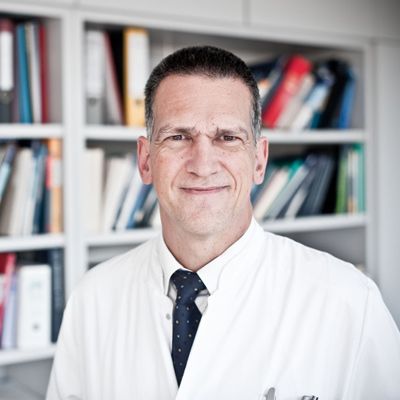
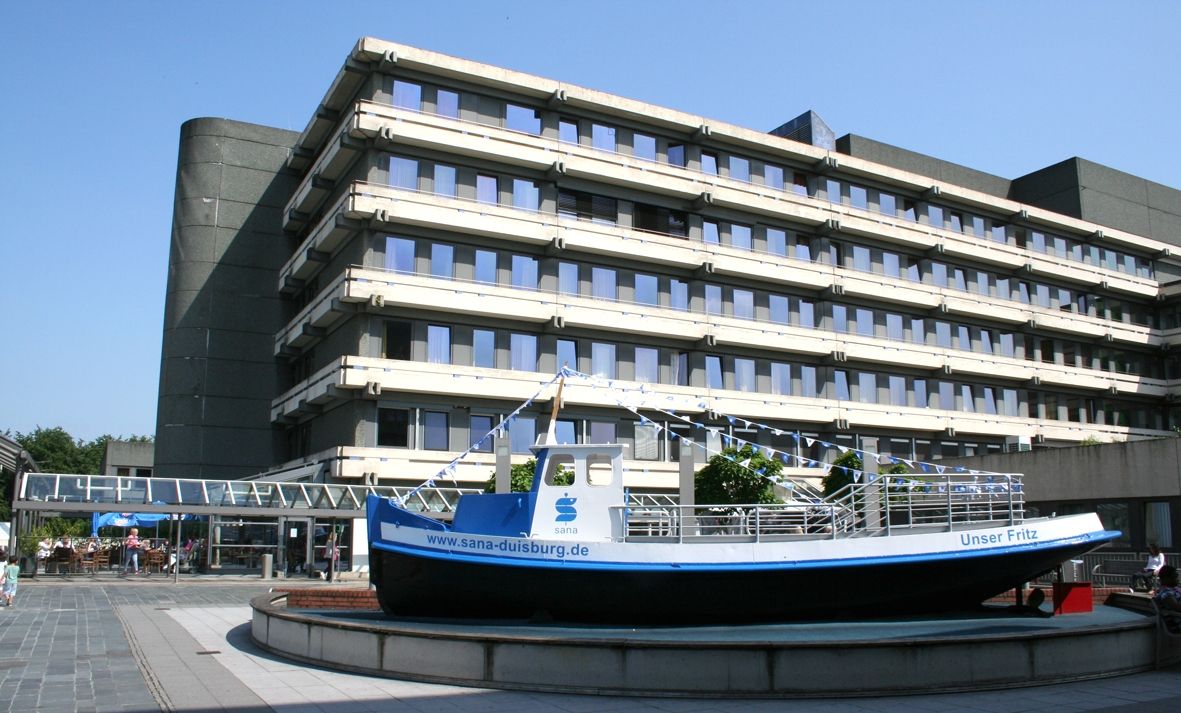
Professor Scholz, Chief of the Department of Neurosurgery, is a specialist in neurosurgery and specialized neurosurgical intensive care medicine at the Sana Clinics in Duisburg. In this interview, we had the opportunity to get to know this outstanding medical expert and his work better.
Professor Scholz, you offer high-quality “microsurgery” at the Department of Neurosurgery at Sana Kliniken Duisburg. What exactly does that entail?
For me, microsurgery isn’t just about operating under a microscope or looking through one. Microsurgery means handling tissues of various origins with extreme care—that is, nerves, blood vessels, the brain, etc., must not be damaged but may need to be carefully repositioned. It’s clear that applying heat or cutting through structures can tend to damage the tissue. Careful repositioning can counteract this. The technical skills required for microsurgery are best developed at a young age, much like practicing a technically demanding sport. One must constantly improve, practice throughout one’s life, and, of course, maintain a healthy sense of self-criticism. That’s what we strive to convey to our staff and students.
Your clinic is one of the largest neurosurgery clinics in Germany. Many patients from abroad travel long distances to be treated by you. What experiences have you had with international patients?
It’s truly amazing that patients come from so far away—for example, from Novosibirsk or Thailand! And of course, we see this as a major challenge. These people are placing all their hope in us, and we don’t want to let them down.
“Our goal is to do everything perfectly, right from the very first minute.”
It’s incredibly exciting to communicate and interact with people of different nationalities. Language is a very important part of everyday life at the clinic!Our team includes doctors who speak a total of 13 different languages, such as Russian, Arabic, Turkish, Dutch, Greek, French, English, of course, and many more. We also use modern technologies here, such as language apps, and we naturally rely on external interpreters.
Since you mentioned innovative medicine—specifically eHealth and Medicine 4.0—what technological innovations have you introduced at the Department of Neurosurgery?
Since 2009, we have introduced various innovations, and we remain committed to further modernization in the future. For example, we have introduced novel “fluorescence techniques,” such as the “ALA technique,” the “Yellow Method,” and “videoangiography.” We also perform awake brain tumor surgeries and endoscopic craniosynostosis surgeries on children. The term “craniosynostosis” refers to the premature fusion of the cranial sutures, which can lead to deformation of the facial skull. In addition, our clinic performs endoscopic disc surgeries, and we monitor various functions of the nervous system intraoperatively—such as visual function—using VEPS (VEP = visual evoked potentials).
And what exactly is “mouth control”?
It allows us neurosurgeons to control the microscope with our mouths, so we have our hands free. That saves time! Unfortunately, not all neurosurgeons use this technique, since it only works well if the microscope is precisely calibrated.
Let’s get back to your international patients. How is your clinic prepared for the high volume of patients from abroad?
We make an effort to screen cases in advance. Many people with grim diagnoses want to come to Germany at any cost because they believe they can definitely be helped here. Unfortunately, however, that’s sometimes not the case—for example, with malignant and very advanced diseases. Naturally, we have to turn down such requests in advance.
To what extent do you collaborate on an interdisciplinary basis? With which specialties or departments is neurosurgical work closely integrated?
Modern medicine is always interdisciplinary in nature. The great thing here at the Sana Clinics in Duisburg is the truly excellent relationship we have with all medical disciplines—without exception!
“I’m on a first-name basis with most of the chief physicians, and that’s a clear expression of mutual trust and friendly, collegial respect.”
For example, without the anesthesiologists, we couldn’t perform surgeries; without the neuroradiologists, MRIs or CT scans wouldn’t be possible, and so on. We also meet every week in an interdisciplinary board meeting to discuss cases and reach a consensus. Geriatrics and cardiology also assist us with complex internal medicine issues. Oncology and radiation therapy, in turn, form an important interface with neuro-oncology.
Thank you very much for this interview, Professor Scholz!
Would you like to learn more about the doctor, his range of services, and his specific treatment areas of focus? Would you like to contact Professor Scholz directly? Then visit the Leading Medicine Guide medical portal.
Share this article
Sana Kliniken Duisburg GmbH
ProfileExpert Interviews
Read next
- Expert interview
Cardiogeriatrics: Significance and benefits in the context of hospital reform
Sep 21, 2026
Cardiogeriatrics: Significance and benefits in the context of hospital reform
Read more - Expert interview
Expert Interview with Professor Dr. Amadeus Hornemann, MPH
Sep 18, 2026
Prof. Amadeus Hornemann on Precision Medicine in Gynecology: Modern Surgery, New Techniques, Better Quality of Life
Read more - Expert interview
Expert Interview with Professor Dr. Konstantinos Anagnostakos
Sep 15, 2026
Prof. Anagnostakos on Painful Knee Replacements
Read more