Expert Interviews
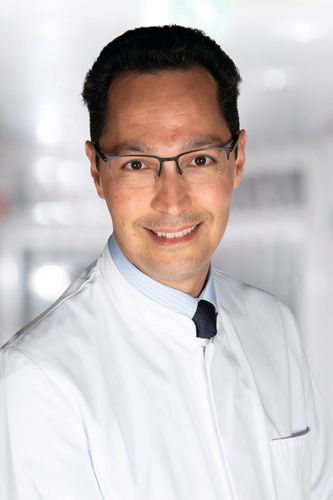
Complications Following Hip Replacement: A Focus on Infections—Expert Interview with Visiting Professor (Buenos Aires/Santiago de Chile) Dr. med. Thorsten Gehrke

Alexandra Pfitzmann ·
Dr. Thorsten Gehrke, M.D., is a renowned specialist and author who has established himself as an expert in the field of joint surgery far beyond Hamburg. Since 2005, he has served as Medical Director and Chief of Orthopedics/Surgery at the ENDO-Klinik Hamburg. His particular area of expertise lies in the implantation and replacement of hip and knee prostheses, in both aseptic and septic cases. In addition, the ENDO Clinic in Hamburg also offers realignment osteotomies, arthroscopies, and ligament reconstructions. The ENDO Clinic’s range of orthopedic surgeries also includes shoulder and elbow prostheses as well as complex procedures on the foot and spine, including decompression, spinal fusion, and disc surgeries.
As a professor in Buenos Aires and Santiago de Chile, Dr. Gehrke has also made a significant contribution to international education, demonstrating his commitment to the advancement of joint surgery worldwide. Dr. Thorsten Gehrke has contributed to more than 300 international publications and approximately 30 book chapters. He has performed complex surgeries in 35 countries and delivered more than 2,000 lectures around the world.
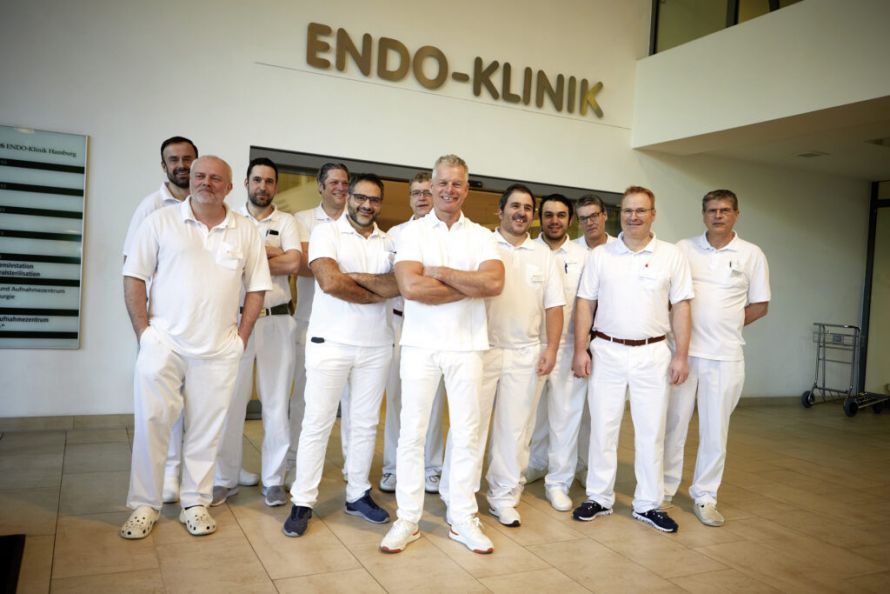
The ENDO Clinic in Hamburg enjoys an outstanding reputation as a specialty clinic for bone, joint, sports, and spinal surgery. Since its founding in 1976, the clinic has implanted more than 165,000 joint prostheses and is visited annually by more than 9,000 patients from Germany and abroad. With approximately 8,000 joint replacement surgeries performed each year, the ENDO Clinic ranks among the world’s leading specialty clinics in this field.
The ENDO Clinic team consists of highly qualified specialists, nurses, and physical therapists who work together to help patients regain their freedom of movement and independence. Dr. Gehrke places great emphasis on putting patients’ well-being at the center of his efforts and continuously strives for improvement and advancement in joint surgery. Although hip replacement is currently one of the most successful surgical procedures, complications can occasionally arise. The editorial team of the Leading Medicine Guide spoke with Dr. Gehrke about this, placing particular emphasis on the risk of infection.
Hip replacement has become a crucial surgical procedure that has enabled many people worldwide to lead pain-free and active lives. In Germany alone, over one million people have received an artificial hip joint, and this number is growing steadily. The field of hip replacement surgery has seen extremely positive developments in recent decades, leading to a significant improvement in the quality of life and mobility of patients with hip joint disorders.
As with any surgical procedure, hip surgery carries a risk of complications that can occur both in the short and long term.
“An artificial hip joint is implanted when hip osteoarthritis develops—that is, when the cartilage that acts as a protective layer for the hip joint is worn away. This can be hereditary, which is very often the case, or it can result from overuse or an accident. Hip replacement surgery is, in and of itself, a very successful procedure, and approximately 98% of patients are satisfied with the results. The surgeries typically last less than an hour, and patients are mobilized early, experience little pain, and are fully mobile again within a few weeks, able to resume their daily activities. In the early 2000s, the World Health Organization (WHO) designated hip replacement as the “surgery of the century” because the results are so good, patients regain their former quality of life, and the prostheses now last up to 25 years. Nevertheless, complications can occur in 2–5% of cases. These may include dislocations, fractures, leg-length discrepancies, or, in rare cases, nerve damage. The most serious complication, however, is infection. A so-called periprosthetic infection—that is, an infection around the prosthesis—can lead to significant functional impairment in about 1% of cases within the first one to two years after surgery, and may even result in the loss of the leg or death. “In the vast majority of cases, however, an infection is manageable, though this always depends somewhat on the hygiene standards of the respective hospital and its expertise,” Dr. Gehrke makes clear at the beginning of our conversation.
Infections around a hip replacement can not only lead to pain and functional impairment but can also be life-threatening, especially if they spread to adjacent tissues or organs.
“Bacteria or fungi enter the prosthesis or attach to it in a variety of ways. This can happen during surgery, which is the case with almost all early infections. Then there is the possibility of a late-onset infection, which can occur months or years later—sometimes even after ten or twenty years. This occurs via the bloodstream—for example, if a patient has undergone dental treatment for an abscessed tooth and bacteria on the tooth find their way to the prosthesis, where they trigger an infection. Theoretically, this can happen with any bacterial infection in the body—including a bladder or lung infection, or even if someone has an open leg wound—in other words, anywhere there are entry points for bacteria. As far as prosthesis infections are concerned, they differ from all other infections in that they are what is known as a foreign-body infection. This is because the prosthesis is a foreign body, and bacteria love to colonize foreign bodies since the body’s own defenses do not act against them. The same thing can happen with heart valves or urinary catheters. The bacteria can settle on these foreign bodies undisturbed, cling tightly to them, attract other bacteria, and form colonies. They then immediately form a moist slime—a biofilm—that surrounds them and acts as a barrier against the body’s own defenses, allowing the bacteria to multiply undisturbed. And the crucial point is that this also applies to antibiotics, because they simply cannot penetrate the biofilm that has formed. Ultimately, the bacterial infection leads to pain and bone destruction. At some point, the bacteria can burst out of the biofilm, enter the bloodstream, and produce toxins that, in the worst case, can lead to fatal sepsis,” Dr. Gehrke describes the course of a bacterial infection that is fortunately rare but nonetheless possible, and which most often has life-threatening consequences for older and immunocompromised patients.
“For the past 30–35 years, attempts have been made to coat the prosthesis itself with an antibiotic to ward off bacteria, but this has repeatedly failed for various reasons. Another option would be to coat prostheses with silver, since silver is toxic to bacteria—but unfortunately also to the surrounding tissue. Gold prostheses would be ideal, since, interestingly, bacteria do not colonize them; however, they are unfortunately too heavy and would be too expensive. “Unfortunately, no method has been able to establish itself, because all methods also have drawbacks. There are always new attempts being made here, including in various international working groups,” says Dr. Gehrke, explaining the ongoing effort to keep bacteria away from the prosthesis, and adds:
“If an infection is detected on the prosthesis, unfortunately it cannot be treated with antibiotics; instead, surgery is necessary. Surgical intervention is the only way to control the infection. This usually requires the complete removal of the prosthesis. All foreign material must be removed, as it is usually colonized by bacteria. The surrounding tissue around the prosthesis—such as tendons, ligaments, and fatty tissue—that is infected with bacteria, as well as infected bone and muscle, must also be surgically removed. The infections in the tissue are also the cause of the patient’s pain, as infectious cavities—sometimes filled with pus—can form within the tissue. “This must be radically removed—as thoroughly as in tumor surgery—otherwise some of the bacteria will remain, and the infection will start all over again,” explains Dr. Gehrke, noting one exception: “An exception here is early- or immediate-onset infection, which can occur in the first two to three weeks after prosthesis implantation. During this period, the bacterial biofilm has not yet established itself, and it is actually possible to treat the infection with antibiotics.”
The ENDO Clinic in Hamburg is a global leader in the treatment of hip prosthesis infections.
“If surgery is necessary, I believe it is absolutely essential that the procedure be performed by specialists—that is, by surgeons who perform this operation frequently. Anything else makes no sense. Here at the ENDO Clinic, we’re actually world-renowned for treating these infections because we’ve been doing this for nearly 60 years; we’re leaders in this field and even serve as a model for the U.S. Our success rates are extremely high, in part because we perform a large number of procedures—up to about 500 per year. By comparison, consider that a large university hospital might treat 50 patients with periprosthetic infections—on average, perhaps 10,” says Dr. Gehrke, illustrating the need for specialization.
In the postoperative phase, mobilization plays a crucial role in preventing infection. Early mobilization after surgery improves blood flow and reduces the risk of blood clots, which in turn can lower the risk of infection. Patients are encouraged to move around early on and gradually increase their activity levels to promote recovery and minimize the risk of complications. In addition, proper wound care is crucial for preventing infection.
The particular challenge posed by revision surgery due to infection.
Hip revision surgeries present a particular challenge, as they are more complex and carry higher risks than primary implantations. These procedures require precise surgical techniques and comprehensive preoperative planning to safely remove the existing implants and replace them with new ones. One of the greatest challenges is managing bone loss and defects, which frequently occur in patients with long-standing prostheses. Therefore, close interdisciplinary collaboration is essential to optimize the healing process and restore patients’ mobility as effectively as possible.
“Most clinics worldwide—about 80%—use what is known as a ‘two-stage’ revision procedure. This means the patient undergoes two surgeries. In the first surgery, the infected prosthesis is surgically removed and the tissue is debrided. The incision site is closed, and the patient lives for 2–3 months without a joint and without a prosthesis. Once it is certain that the infection has been eliminated from the body, the new prosthesis is implanted in a second surgery. And what the ENDO Clinic is so famous for is the single-stage replacement procedure. In a single operation, the infected prosthesis is removed and the new prosthesis is immediately implanted. We have extremely experienced surgeons who are highly skilled at removing an infected prosthesis and immediately implanting a new one. At the ENDO Clinic, this is done with a small additional twist: the new prosthesis is implanted using bone cement powder mixed with antibiotics. To do this, we need to know in advance exactly which bacterium is present in the body, as this allows us to identify the bacterium’s specific resistances and sensitivities. This allows us to add the correct antibiotic to the bone cement powder; the cement hardens around the prosthesis and, as the antibiotic is released, forms the necessary protective barrier against the bacteria to prevent further infection. “Although we are promoting this procedure worldwide, it is gaining acceptance only slowly, as it requires highly specialized logistics and highly experienced surgeons,” emphasizes Dr. Gehrke, adding:
“One must distinguish between so-called ‘low-grade’ and ‘high-grade’ infections. I would say that about 95% of infections smolder slowly and develop over months, sometimes even years. These are the low-grade infections. If you suspect that a patient has such an infection, there is no time pressure. The patient undergoes a joint aspiration—a needle is inserted into the affected joint and fluid is withdrawn. This fluid is then cultured in the lab to determine whether bacteria are present and what type they are. This means that the timeframe between diagnosis and surgery is approximately 4–6 weeks. And this timeframe is completely unproblematic in the case of a low-grade infection. 5% of infections are high-grade infections. In these cases, aggressive bacteria are at work that immediately form pus. “In this scenario, a single-stage surgery is not possible because there isn’t enough time to identify the specific bacterium, and immediate action is required,” says Dr. Gehrke regarding the specific characteristics of the infection stage.
A study involving randomly selected patients was conducted in the U.S.
“In this randomized study in the U.S., which has just been published, 250 patients who underwent a single-stage procedure were compared with 250 patients who underwent a two-stage procedure. In every respect, the single-stage replacement yielded significantly better results, with a success rate of 98% and significantly fewer complications, while the two-stage replacement surgery had a success rate of 92%. The British have conducted a very similar study and reached exactly the same conclusion, and they, too, are increasingly opting for single-stage hip replacement surgery. The tide is slowly turning,” explains Dr. Gehrke, emphasizing the role of the ENDO Clinic in Hamburg:
“There is no clinic in the entire world that performs as many hip replacement surgeries as we do. We perform well over 1,000 replacements a year—a figure even the very largest clinics in the U.S. cannot match. In addition, here in Hamburg we have a team of extremely experienced surgeons who are highly specialized in the revision of infected prostheses. This simply requires even more specialized skills, which we have in a team of 4–5 colleagues, each of whom performs over 100 septic revisions a year. “The particular challenge with infected prostheses is that, even though they are infected, they are still firmly embedded in the bone, which makes them much more difficult to remove than prostheses that have already become loose.”
The establishment of specialized centers in Germany would be desirable.
“We receive many referrals from colleagues at other hospitals. Unfortunately, however, many infected prostheses are also operated on by colleagues with much less experience, which often results in failure on the first attempt or complete failure.” The ENDO Clinic is a referral center for this type of complication, and almost all patients we operate on here are referred to us. Unfortunately, there are still far too many surgeons who are not well-versed in this subject matter, yet attempt it anyway and frequently fail. That is why I strongly advocate for the establishment of specialized centers. France, Spain, and England have already implemented this. Germany has not yet fully implemented this, but is in the process of structuring it in this way,” states Dr. Gehrke. Due to the freedom of hospital choice, every patient in Germany can, of course, contact the ENDO Clinic in Hamburg directly to have an infected prosthesis replaced.
“We hold a daily septic consultation during which each case is discussed. As a rule, the patient then undergoes another puncture at our clinic, because we’re also leaders in diagnostics,” emphasizes Dr. Gehrke, advising affected patients: “There’s only one key criterion patients should consider, regardless of whether it’s a primary surgery or a revision surgery—when choosing a hospital, you should always base your decision on the frequency of procedures performed, because the underlying principle is ‘The more procedures performed, the better the outcome.’ For this reason, I would like to see a policy-driven approach to patient care that establishes designated centers for complications such as those associated with an infected prosthesis, perhaps even as state-recognized septic centers, in order to improve the quality of care through the frequency of surgeries, which would then also be adequately reimbursed,” and with that, we conclude our conversation.
Thank you very much, Dr. Gehrke, for this highly interesting insight into the treatment of complicated revision surgeries for infected hip prostheses!
Share this article
About the medical author
Alexandra Pfitzmann
Editor
Alexandra Pfitzmann – medical author: expert knowledge, professional articles and medical insights in the Leading Medicine Guide.
More about the medical author →Expert Interviews
Read next
- Expert interview
Cardiogeriatrics: Significance and benefits in the context of hospital reform
Sep 21, 2026
Cardiogeriatrics: Significance and benefits in the context of hospital reform
Read more - Expert interview
Expert Interview with Professor Dr. Amadeus Hornemann, MPH
Sep 18, 2026
Prof. Amadeus Hornemann on Precision Medicine in Gynecology: Modern Surgery, New Techniques, Better Quality of Life
Read more - Expert interview
Expert Interview with Professor Dr. Konstantinos Anagnostakos
Sep 15, 2026
Prof. Anagnostakos on Painful Knee Replacements
Read more