Expert Interviews
Complex Regional Pain Syndrome (CRPS) — Expert Interview with Dr. Kügelgen, M.D.

Alexandra Pfitzmann ·
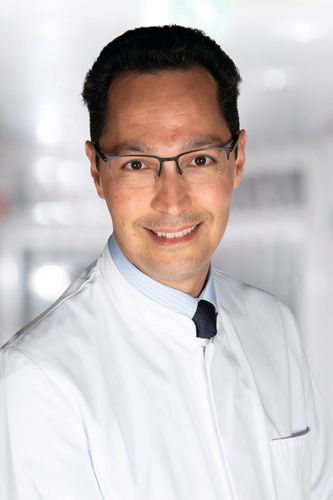
Dr. Bernhard Kügelgen, a renowned expert in the field of pain medicine and pain therapy, is at the heart of the highly specialized facilities at the Koblenz Therapy Center and the MVZ Koblenz. Together with his wife, physical therapist Cecilija Kügelgen, he leads these two medical institutions in close collaboration. Their practice focuses on treating patients with chronic pain conditions such as back pain, headaches, neuropathic pain, and neurological disorders, including the aftereffects of stroke, dementia, and Parkinson’s disease.
The Koblenz Therapy Center and the MVZ Koblenz offer patients with pain conditions a comprehensive and seamless range of treatments that combines outpatient care and semi-inpatient rehabilitation. As a Regional Pain Center of the German Society for Pain Therapy (DGS), the MVZ Koblenz offers a wide range of pain management services across five practices. Dr. Kügelgen leads a multidisciplinary team of fifty staff members who specialize in the medical and therapeutic care of patients with pain.
Pain therapy aims to promote patients’ self-management skills and develop holistic treatment approaches. It charts a path toward a life that is as self-determined and meaningful as possible. The pain conditions primarily treated at Dr. Kügelgen’s facilities include back pain, headaches, chronic whiplash, neuropathic pain, and post-traumatic pain, including complex regional pain syndrome (CRPS), also known as Sudeck’s disease. On this last topic, the editorial team at Leading Medicine Guide took the opportunity to speak with Dr. Kügelgen.

Complex regional pain syndrome (CRPS), formerly known as Sudeck’s disease or reflex dystrophy, is a painful syndrome that typically occurs in a limb. Key characteristics include pain that is often persistent and intense, but frequently disproportionate to the original injury or illness. This pain can be burning, stabbing, or throbbing. The skin in the affected area may change and exhibit symptoms such as redness, swelling, or discoloration. The skin may also be hypersensitive to touch or changes in temperature. CRPS can significantly limit the range of motion in the affected limb, making it stiff and difficult to control. Temperature changes are another symptom, in which the affected area may feel unusually warm or cold, often fluctuating between overheating and hypothermia. Edema or swelling can make the affected limb appear thicker. In some people, hair and nail growth slows down or changes. In severe cases, muscle atrophy may occur because the affected limb is used less.
“Pain management is a problem overall. That’s because in the past, we only dealt with acute pain. But CPRS is a different matter. For example, when I go to the dentist, I don’t worry about what will happen in three weeks. That’s because pain can be largely avoided there with anesthesia. With chronic pain, however, identifying the cause is more difficult. The patient naturally has expectations of the doctor and wants to get rid of the pain. Right now, we could help the patient by simply numbing the pain. But what about tomorrow? Of course, everyone wants less pain, but for patients with chronic pain, the underlying question is how life will go on; in rehabilitation, we talk about participation. They’ve been thrown out of normal life and can’t find their way back. The overarching goal is therefore to regain participation—that is, to return to a life that is as self-determined as possible and perceived as meaningful. In this context, strong painkillers are not only of little help but often pose an additional obstacle. Therefore, numbing the pain generally proves to be ineffective. In reality, however, many patients are prescribed strong painkillers. Fentanyl, for example, is many times stronger than heroin. In most cases, a patient has already taken a whole range of medications that no longer work because the body has become accustomed to the numbing effect (development of tolerance). And so the desire for more and more—and increasingly stronger—medications sets in, just to be able to endure the pain. “This development of tolerance, which sets in after 2–3 months—especially with opioids—is dangerous, and in the end, the pain returns anyway,” Dr. Kügelgen notes at the beginning of our conversation.
Diagnosis and treatment require a multidisciplinary approach in which pain specialists, neurologists, physical therapists, occupational therapists, and psychologists work together. Early intervention and avoiding inactivity are crucial for alleviating symptoms and preserving function in the affected limb. “Why people suffer from CRPS is still not fully understood. In 60% of those affected, no specific cause can be identified. The international literature on this topic cites accidents and surgeries as causes, but ultimately this question has remained completely unclear,” states Dr. Kügelgen.
An important insight gained from experience is that prolonged immobilization of a limb—often for as little as about three weeks—plays a decisive role in the development of CRPS. “We have a very good working relationship with the Bundeswehr Hospital in Koblenz. Many casualties from the war in Afghanistan were treated there. War veterans from Syria and Africa were also admitted to this hospital. The curious thing is that CRPS is practically nonexistent among these people, which underscores that reduced use is the cause of CRPS. After all, on a battlefield, you can’t take it easy—you have to keep going to protect yourself and basically have no rest,” says Dr. Kügelgen, illustrating the causality of CRPS.
Regardless of the original traumatic injury or surgery, immobilization has been shown to have negative effects. The human brain is highly adaptable, particularly with regard to motor skills. This means that prolonged immobilization of a limb triggers various adverse learning processes in the brain. These include autonomic changes, pain, and motor and sensory alterations. These findings underscore the importance of early mobilization and rehabilitation following injuries or surgeries to minimize the risk of developing CRPS.
“It began in the 1970s with efforts to shorten the duration of prescribed bed rest for patients in order to accelerate the healing process. Astronauts, for example, all experienced severe back pain after 3–4 days in space, which was simply due to the fact that they were unable to move for several days. Today, the problem has been solved because the duration of prolonged inactivity has been reduced. Changes have also been made for stroke patients. In accordance with the ‘Bobath principle’—which remains valid to this day—the patient must engage with the affected side. In bed, the healthy side is positioned against the wall, so to speak, to prevent underuse of the affected side. At the Koblenz Therapy Center, we were able to observe and determine in over 1,000 cases that CRPS can only be prevented through mobility. “So, to make this clear once again, the door handle must be opened with the affected hand, not the healthy one; otherwise, the patient will become unaccustomed to using that hand,” explains Dr. Kügelgen.
In 1943, Berta Bobath, a physical therapist, and her husband, Dr. Karl Bobath, developed the Bobath approach. This therapeutic approach is specifically aimed at people with impairments of the central nervous system. However, it is not intended to be a fixed method or technique, but rather a problem-solving approach. The goal of Bobath therapy is to foster collaboration between patients and therapists that is integrated into daily life, with the aim of improving motor limitations, spasticity, and balance disorders. The concept is based on the understanding that the nervous system has the capacity for lifelong adaptation and learning. When certain areas of the brain are damaged, this does not necessarily mean the loss of their functions. Instead, intact regions of the brain can be trained to take over these tasks.
CRPS is a complex condition, and diagnosis can be challenging.
“CRPS is a life-altering disease. Due to persistent pain, patients often experience sleep disturbances, suffer side effects from prescribed medications, and ultimately are no longer able to participate fully in life. They frequently experience feelings of frustration, despair, and anxiety due to the pain and uncertainty about the future course of the disease. The experience of chronic pain can lead to depression, as the constant impairment of quality of life negatively affects mood. The mobility limitations experienced by many CRPS patients can lead to social isolation. Difficulties in managing daily tasks can result in a loss of self-reliance and independence. This can discourage patients and increase the risk of social isolation and depression. The pain and the severity of the condition can also impair a person’s ability to work. Many people with CRPS are unable to work or must reduce their hours, which causes financial strain and stress,” says Dr. Kügelgen, commenting on the severity of the condition.
To distinguish CRPS from other pain syndromes, various diagnostic procedures and clinical criteria are used. The doctor will take a detailed medical history and ask the patient about symptoms and risk factors. The physical examination focuses on the affected body part to identify changes in the skin, muscles, mobility, and sensation. These may include so-called autonomic changes. These include swelling, increased sweating, discoloration, a temperature difference compared to the healthy side, and changes in hair and/or nail growth.
“It is important to follow the so-called Budapest Criteria, which serve as an important diagnostic guideline for CRPS and were published by the World Pain Society in 2003 and modified in 2010. They remain the standard to this day and consist of four points,” explains Dr. Kügelgen, listing them as follows:
1) Persistent, disproportionate pain.
2) Three out of four of the following criteria must be evident from the patient’s description of symptoms during the medical history interview
The four criteria to be assessed are:
- Swelling, increased sweating
- Discoloration, temperature difference
- Altered sensation (pins and needles, including hypersensitivity)
- Altered motor function (limited active and passive range of motion, hair and nail growth)
3) The doctor must find 2 out of the 4 criteria listed above during the examination.
4) No other condition may be more likely.
By having the patient and then the physician assess the same criteria, the diagnosis takes into account the fact that these changes are not always consistent. They may worsen with overexertion or improve with appropriate physical and/or occupational therapy and moderate activity.
“The patient’s medical history must absolutely be included in the diagnosis. It is also often the case that the diagnosis in CRPS patients is not made by physicians at all, but rather by the treating occupational therapist, for example, since they see the patient more frequently than the physician,” adds Dr. Kügelgen, describing the diagnostic process.
Diagnosing CRPS generally requires ruling out other possible causes of the symptoms. Since the condition can have a wide range of symptoms and causes, a comprehensive evaluation and collaboration among various medical disciplines is necessary.
Treatment options for CRPS require a holistic approach.
The primary goals of therapy are pain relief, restoration of function in the affected limb, and improvement of the patient’s quality of life. “Physical therapy and occupational therapy play a crucial role in the rehabilitation of CRPS patients. ‘Forced use’ is the most effective approach. Although this may be painful for the patient at first, frequent, small repetitions of exercises throughout the day are helpful. CRPS can be completely cured if the therapeutic corridor is taken into account—that is, if the patient neither under- nor over-exerts themselves in terms of activity and physical strain. To achieve this, they need guidance from therapists that is continually adjusted to determine what they can reasonably expect of themselves, what they should demand of themselves, and what limits they must adhere to. For some people, it takes 6–12 weeks to get back into shape. Of course, one must always consider what “fit” means for the individual. For example, people who work in city sanitation and perform heavy physical labor take longer to return to full capacity,” says Dr. Kügelgen.
Preventing CRPS following an injury or surgery is of great importance, as the condition often has serious implications for quality of life.
“One of the key preventive measures is to encourage mobilization and use of the affected limb as early as possible after an injury or surgery. Prolonged immobilization of a limb can increase the risk of developing CRPS. Therefore, a rapid resumption of activity under the guidance of a medical professional is important. Movement is everything!” Dr. Kügelgen emphasizes emphatically, bringing our conversation to a close.
Dear Dr. Kügelgen, thank you very much for shedding light on this often-underestimated condition!
Share this article
Expert Interviews
Read next
- Expert interview
Expert interview with Professor Dr Elmar Herbst, PhD
Oct 15, 2026
Patient-centred and personalised knee surgery
Read more - Expert interview
Cardiogeriatrics: Significance and benefits in the context of hospital reform
Sep 21, 2026
Cardiogeriatrics: Significance and benefits in the context of hospital reform
Read more - Expert interview
Expert Interview with Professor Dr. Amadeus Hornemann, MPH
Sep 18, 2026
Prof. Amadeus Hornemann on Precision Medicine in Gynecology: Modern Surgery, New Techniques, Better Quality of Life
Read more