Expert Interviews
Dental Excellence: Endodontics, Cosmetic Dentistry, Implantology, and High-Quality Dental Prosthetics—An Expert Interview with Dr. med. Delschen

Alexandra Pfitzmann ·
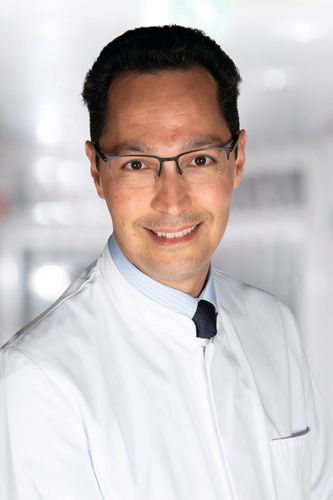
Dr. med. dent. Stephan Delschen is a highly respected dentist who plays a prominent role in the city of Troisdorf thanks to his extensive expertise and modern dental practices. At his state-of-the-art practice, DENTEINS, he offers his patients a wide range of dental care, focusing in particular on two key areas: endodontics and cosmetic dentistry. The environment at DENTEINS is designed to make patients feel comfortable, from air-conditioned rooms to a high level of empathy and trust in the care provided. Dr. Delschen always takes ample time for consultations to understand his patients’ individual wishes and needs and to develop tailored treatment plans accordingly.
The practice places great emphasis on pain-free treatments and a seamless patient experience. By using proven and state-of-the-art treatment methods as well as high-quality materials, patients’ dental health is optimally maintained. A dedicated pediatric dentist on staff cares for the practice’s younger patients. Dr. Delschen’s expertise in the fields of endodontics and cosmetic dentistry is particularly outstanding. In endodontics—the study of the tooth root and its treatment—he uses innovative technologies such as a surgical microscope and digital X-rays to perform precise procedures aimed at preserving teeth.
Dr. Delschen has an impressive educational background and is a member of various professional societies, such as the German Society for Endodontology and Dental Traumatology (DGET) and the German Society for Implantology (DGI). His ongoing continuing education in various areas of dentistry and his certification as an Invisalign provider attest to his commitment to the highest quality standards. He has been working at the DENTEINS dental practice since 2012 and has been its sole owner since 2022. The editorial team at Leading Medicine Guide wanted to learn more about cosmetic dentistry and dental prosthetics and had the opportunity to speak with Dr. Delschen.

Modern dentistry encompasses a wide range of specialties designed to maintain and restore the health, function, and aesthetics of the teeth. In this context, four key areas are of particular importance: endodontics, cosmetic dentistry, implantology, and prosthodontics. Each of these areas plays an important role in maintaining and improving dental health and beauty. Endodontics deals with the treatment of diseased dental tissue, cosmetic dentistry aims to create a radiant smile, implantology offers solutions for tooth loss, and dental prosthetics enable the restoration of missing teeth. These areas are crucial for keeping teeth healthy and maintaining a confident smile.
The signs that root canal treatment is necessary can vary, and it is important to pay attention to these symptoms.
Root canal treatment is often necessary when the inside of a tooth—known as the dental pulp—is inflamed or infected. This can result from deep cavities, trauma, or other damage to the tooth. The treatment involves removing the infected tissue, cleaning and disinfecting the root canal, and sealing it to preserve the tooth and prevent reinfection. “Severe and persistent toothache, especially when exposed to pressure or temperature changes, can be a sign of inflammation or infection inside the tooth, which may manifest as a fistula, swelling, or pus formation. Sensitivity to hot or cold drinks and foods that lasts longer than usual can also indicate a problem inside the tooth. However, if the tooth is ‘dead,’ for example, the patient may not notice any signs of inflammation for a long time. “In any case, treatment is necessary because the inflammation can spread to other parts of the body,” explains Dr. Delschen at the beginning of our interview.
The Root Canal Treatment Process:
First, the dentist conducts a thorough examination and takes X-rays to assess the condition of the affected tooth and the surrounding structures. Based on this diagnosis, a decision is made as to whether root canal treatment is necessary. Before the actual treatment begins, the affected area around the tooth is numbed with local anesthesia to prevent pain during the procedure. The dentist drills a small hole into the affected tooth to gain access to the inside of the tooth. The infected or inflamed nerve tissue located in the root canals is carefully removed. The root canals are thoroughly cleaned and disinfected to eliminate all bacteria and infection. After cleaning, the root canals are filled with a special filling material to stabilize the tooth and prevent reinfection. In most cases, the treated tooth is restored with a crown to restore its stability and function.
Root canal treatments are generally very effective and can often save the affected tooth for many years. It is important to undergo root canal treatment as early as possible to prevent the spread of infection and relieve pain. Most patients find the treatment far less painful than the toothache they experienced before the procedure.
Endodontics, the branch of dentistry that deals with root canal treatments, has made significant advances in recent years, substantially improving the success rate of root canal treatments.
Modern X-ray and imaging technologies, such as digital X-rays and 3D imaging, enable dentists to make a more accurate diagnosis and visualize the structure of the root canals more precisely. This leads to more precise treatments and a higher success rate. “We have excellent imaging techniques using high-resolution microscopes, and 3D diagnostics allow us to scroll through the tooth—much like a CT scan—to examine its anatomy. Even the finest canals and branches can be better identified and cleaned. This technology has also led to a completely different fundamental understanding of the subject. We understand the bacteria much better and know how to combat them, ranging from various disinfectant irrigation solutions to technical options such as ultrasound-activated irrigation, which enables deep disinfection. In addition, communication networks have improved. “I’m still in touch with my doctoral advisor and colleagues with whom I can exchange ideas,” says Dr. Delschen.
Compared to the past, the number of appointments required for root canal treatment has decreased. Dr. Delschen explains: “As part of root canal treatment, the patient now only needs to come to the office 1–2 times. The appointments then last a little longer, but patients no longer have to go to the dentist several times as they did in the past, only to end up spending just a few minutes there.” These advances in endodontics help significantly increase the success rate of root canal treatments and extend the lifespan of saved teeth.
Dental implants are an advanced method in dentistry for replacing missing teeth. They typically consist of three main components: the implant body, the abutment, and the crown.
For a long time, the prevailing opinion was that implants were only suitable for younger people. “Basically, you can say that implants are generally suitable for people of all ages. I recently had an 82-year-old patient who left the office happy with his implants. For someone who is in good health, anything is possible in implantology; so it depends a bit on the patient’s overall physical condition. It’s more important to consider pre-existing conditions and what medications the patient may be taking. For example, there are bisphosphonates, which people take to treat osteoporosis. In such cases, it’s best to avoid implants, as they can cause irreversible bone damage,” explains Dr. Delschen.
Implants offer several advantages over bridges and crowns. A key difference is that implants are placed in the jawbone, providing a stable foundation for replacing a missing tooth. In contrast, bridges rely on adjacent teeth, which must be ground down to support the bridge—a process that can compromise healthy tooth structure. Implants also prevent bone loss in the jaw, as they function like a natural tooth root and stimulate the bone structure. Furthermore, implants often feel more natural and offer a long-term solution for tooth replacement. “An implant is, after all, a complete replacement for the tooth root; it’s not just a replacement for the clinically visible crown. It creates a truly secure anchorage. And even at a later stage, the implant’s superstructure can be modified. Incidentally, here in our practice, implants can also be placed under general anesthesia,” says Dr. Delschen.
The implant body is a small screw made of high-quality titanium or ceramic. It is inserted into the jawbone, where it fuses with the surrounding tissue. This process is called osseointegration and forms a stable foundation for the implant. The abutment is the connecting piece between the implant body and the dental crown. It is placed on top of the implant body and serves as a support for the crown. The crown is the visible part of the dental implant and is custom-made to match natural teeth in shape and color. It is attached to the abutment and is the aesthetically visible element that restores the functionality of the missing tooth.
When it comes to materials, patients often have the option to choose between different alternatives. The implant body is typically made of titanium or ceramic, as these materials offer high biocompatibility. For the visible crown, patients can choose between various materials such as ceramic, metal-ceramic, or all-ceramic. The choice depends on aesthetic preferences, budget, and other individual factors. “I always work with the patient to find the solution that truly suits them, regardless of the costs that may arise in case of doubt. There’s always a Plan B,” Dr. Delschen clarifies.
There are various types of dental restoration options available to replace missing teeth or repair damaged teeth.
Choosing the best solution depends on individual needs, the condition of the mouth, and personal preferences. “First, you have to distinguish between fixed and removable dental prostheses. In our practice, dental prostheses are generally metal-free (except for implants; however, in special cases, these can also be made of ceramic). There are implant-supported dentures, as well as replacements supported by natural teeth or the gum tissue. Biocompatibility is important when it comes to allergies, which is why metal-free materials such as ceramic are usually chosen. As far as durability is concerned, there is no difference in the material used between fixed and removable dentures. However, removable dentures should definitely be made of plastic because they can be repaired.
Then, of course, there is the issue of aesthetics. It is easy to create attractive dental prostheses using plastic and ceramic. We still use certain metals, such as high-gold—a gold alloy that has a higher concentration of pure gold than conventional gold alloys. “Personally, I prefer the so-called telescopic solution, which means the substructure is made of gold, and the clinically visible part is made of ceramic or plastic,” explains Dr. Delschen regarding the various options.
The various materials used in dental prostheses:
Metal alloys such as chromium-cobalt and stainless steel are often used to manufacture partial dentures. They are very durable, stable, and corrosion-resistant, but less aesthetically pleasing since they may be visible.
All-ceramic is a popular choice for crowns, bridges, and implant abutments. This material is characterized by excellent aesthetics, as it is tooth-colored and offers a more natural appearance.
Zirconia is a ceramic material used for crowns and bridges. It offers high durability and aesthetic benefits. Zirconia is particularly suitable for people with allergies, as it is metal-free.
Plastics such as acrylic resin are often used for full dentures. They are a cost-effective option but do not offer the durability and aesthetics of other materials.
Titanium is frequently used in implantology for the fabrication of implants and implant abutments. It is lightweight, strong, and corrosion-resistant.
Teeth whitening (bleaching) and veneers are two popular procedures in cosmetic dentistry used to improve the appearance of teeth.
Teeth whitening can lighten the teeth and reduce discoloration caused by food, beverages, smoking, or aging. The results are usually visible immediately and can be further improved after several sessions or weeks. The longevity of the results depends on individual oral hygiene and lifestyle habits.
Teeth whitening uses special bleaching agents to remove stains and discoloration from the tooth surfaces. There are two main types of teeth whitening: in-office whitening and at-home whitening. With in-office bleaching, a dentist performs the procedure at the dental office. A stronger bleaching agent is used and is typically activated by a special light source. With at-home bleaching, the patient receives a custom-made bleaching agent and wears it at home in a special tray.
“I definitely recommend having your teeth whitened by a professional instead of buying kits from the drugstore. That’s the safe approach, and you shouldn’t necessarily try to experiment on your own. The desire for beautiful and attractive teeth is understandable, but it should be left to qualified professionals. That way, you don’t have to worry that it’s harmful. With at-home kits from the drugstore, it’s different, and the results aren’t as significant as they are in the dental office, where the correct concentration of hydrogen peroxide is used. With in-office whitening, the patient spends about 1 hour with us, and we proceed very gently. And if the patient isn’t 100% satisfied with the result, we offer free follow-up appointments to further optimize it. A full whitening treatment often lasts 1–2 years, though this also depends on lifestyle (for smokers and red wine lovers, the whitening effect certainly won’t last as long),” advises and explains Dr. Delschmann.
Veneers are thin, custom-made ceramic shells that are bonded to the front surface of the teeth.
Veneers can correct discoloration, chipped teeth, uneven tooth shapes, or gaps between the teeth. They provide immediate aesthetic improvements and a natural appearance. Veneers last longer than teeth whitening and can last for many years. “I love veneers and have a really great lab working with me—the dental technicians are independent. This results in fantastic aesthetics with minimal tooth preparation and a minimally invasive procedure, and the outcome is perfect. After all, people should enjoy seeing themselves smile in photos. And when it comes to perfection, I settle for nothing less. You only need a layer thickness of 0.5 mm on the tooth. If the teeth are set back a little, you need even less. The bonded ceramic blends visually with the tooth,” says Dr. Delschmann, adding: “Prophylaxis proceeds as normal even with veneers.”
Research and development in dentistry have seen numerous advances in recent years.
“Hopefully, the future will bring even more possibilities for digital scanning. Artificial intelligence (AI) is also becoming increasingly prevalent in dentistry. And we’ll likely be able to work in even more minimally invasive and tooth-preserving ways, including in the field of implants, which could then actually last a lifetime—something that isn’t possible yet because bone deficits often pose a problem. And bone could be grown to produce safe, lifelong dental prostheses,” says Dr. Delschmann, concluding our conversation.
Thank you very much, Dr. Delschmann, for this valuable information on dental prosthetics and cosmetic dentistry—topics that affect everyone!
Share this article
DENTEINS | Ihrer Zahnarztpraxis im Ärztehaus Plus!
ProfileExpert Interviews
Read next
- Expert interview
Expert interview with Professor Dr Elmar Herbst, PhD
Oct 15, 2026
Patient-centred and personalised knee surgery
Read more - Expert interview
Cardiogeriatrics: Significance and benefits in the context of hospital reform
Sep 21, 2026
Cardiogeriatrics: Significance and benefits in the context of hospital reform
Read more - Expert interview
Expert Interview with Professor Dr. Amadeus Hornemann, MPH
Sep 18, 2026
Prof. Amadeus Hornemann on Precision Medicine in Gynecology: Modern Surgery, New Techniques, Better Quality of Life
Read more