Expert Interviews
New Dimensions in Implantology: Innovations and Advances—An Expert Interview with Dr. Delschen

Alexandra Pfitzmann ·
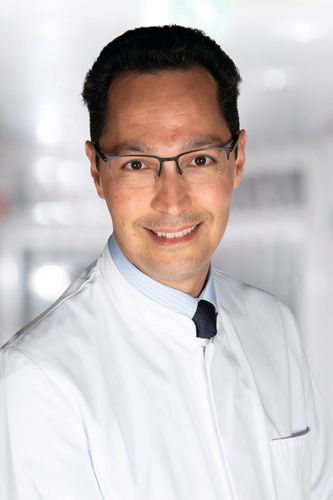
Dr. med. dent. Stephan Delschen is an outstanding dentist who runs a state-of-the-art practice in the beautiful town of Troisdorf near Bonn and provides his patients with a wide range of dental services. His particular expertise lies primarily in the fields of endodontics and cosmetic dentistry. With a solid education and many years of experience, Dr. Delschen is proficient in the entire spectrum of modern dentistry. He places great importance on ensuring that his patients feel comfortable in the practice and that their treatments are as anxiety-free and painless as possible.
Dr. Delschen always takes ample time for a comprehensive consultation and works with his patients to develop individualized treatment plans. At his practice, DENTEINS, Dr. Delschen relies on innovative technologies and high-quality materials to achieve first-class results. He demonstrates outstanding expertise particularly in endodontics—the treatment of the inside of the tooth. Using state-of-the-art equipment such as a surgical microscope and digital X-ray technology, he performs precise root canal treatments, thereby ensuring the preservation of his patients’ teeth.
Dr. Delschen is also a sought-after expert in the field of cosmetic dentistry. He offers cosmetic dental services aimed at improving the appearance of teeth and preserving or restoring their natural beauty. His treatments include professional teeth cleanings, clear aligners, and impression-free all-ceramic dental restorations. Dr. Delschen is a member of various renowned professional associations and engages in continuous professional development to stay at the cutting edge of dentistry.
Thanks to his high level of professional expertise and empathetic care, patients can feel completely at ease in his practice and know their dental health is in the best hands.
The editorial team at Leading Medicine Guide spoke with Dr. Delschen about implantology—an increasingly important topic in dentistry.

Implants are artificial tooth roots that are placed in the jawbone and serve as a stable foundation for crowns, bridges, or dentures. These modern techniques make it possible to replace lost teeth in a way that is both functional and aesthetically pleasing, thereby contributing significantly to improving patients’ quality of life and self-confidence. Implantology has made considerable progress in recent years and now offers a wide range of solutions for a variety of clinical situations.
Implants represent a modern and effective solution for tooth replacement, offering several advantages over conventional alternatives such as bridges or dentures.
One of the key advantages lies in their stability and strength. Implants are placed directly into the jawbone, which allows for firm anchoring and ensures stability during chewing and speaking similar to that of natural teeth. Another important aspect is the preservation of the jawbone.
“Implants act like natural tooth roots and stimulate the jawbone, which helps slow bone loss and preserve bone structure. Bridges and dentures are surface-mounted dental restoration options. With implants, you are, so to speak, closer to nature, which is why they also offer greater longevity. In addition, implant-supported dental solutions offer a natural look and feel. Since implants are firmly anchored in the jaw, they also feel more natural than conventional solutions and provide greater comfort,” said Dr. Delschen at the start of our conversation.
With proper care and regular dental checkups, implants can last for many years. In comparison, conventional dental restoration solutions may need to be replaced or adjusted more frequently. Another advantage of implants is the preservation of the surrounding teeth. Unlike bridges, implants do not require the adjacent teeth to be ground down or adjusted. As a result, the surrounding teeth remain intact and their natural structure is preserved.
Bone quality and bone quantity play a crucial role in the planning and implementation of implant treatments.
Bone quality refers to the structural properties of the bone, such as its density and strength, while bone quantity describes the amount of available bone material in the implant site. Sufficient bone quality and quantity are essential to ensure the stability and success of implant integration. Strong and sufficiently thick bone provides a solid foundation for implant anchorage and supports the long-term stability of the implant.
“Unfortunately, many patients still assume that there are age restrictions when it comes to using implants. That’s not actually the case, though the patient’s overall health does, of course, play a role. For example, I have 80-year-olds here who are mobile and stable and who are asking about implants. In addition to the patient’s physical condition, potential medical conditions also play a role. Diabetes, for instance, can be a factor due to impaired wound healing. Blood sugar levels can also fluctuate if the diabetic’s condition is not yet well-controlled. Then there are patients who take certain medications, such as bisphosphonates (for osteoporosis), which specifically interfere with bone metabolism, which can make it difficult to place implants due to insufficient bone mass. The basic prerequisite for successful implant placement is adequate bone volume, with bone height and width being particularly important factors. If the bone volume is insufficient, we must discuss possible bone augmentation procedures. In the upper jaw, it is often the case that when we need to perform a procedure in the lateral region, the bone height is insufficient. In such cases, a procedure known as a sinus lift is performed, which serves to raise and thicken the jawbone in the area of the maxillary sinus. During the procedure, the sinus floor is elevated and bone graft material is inserted, which integrates with the existing bone over time. This process then creates a stable foundation for the implant. In other areas, bone width tends to be the more critical factor. For example, if an implant is placed and part of the screw protrudes due to insufficient width, this can be addressed by covering it with the patient’s own bone and bone graft material. Both procedures require a recovery period of 2–6 months,” he adds:
“As far as bone quality is concerned, it is possible to densify the bone. However, it doesn’t really matter to me whether the bone is particularly hard or soft, since the total amount of available bone is the decisive factor. Generally speaking, there is a 98% success rate with implants, and the patient’s conditions do not always have to be perfect.”
When planning implant treatments, dentists and implantologists assess bone quality and quantity using imaging techniques such as X-rays or DVT scans (digital volume tomography). Based on these examinations, they can assess the condition of the bone and determine whether additional measures, such as bone grafting, are necessary. “Good planning is the key to successful implants—such as thorough 3D planning, or perhaps even virtual implantation, which can be simulated on a computer so that the dental technician can create navigation templates that ultimately enable precise implant placement. Good oral hygiene and healthy gums are crucial for the long-term success of implants, as infections in the implant area can lead to inflammation and implant loss,” explains Dr. Delschen.
Choosing the right implant system and material is also crucial. High-quality implants with a proven track record of success should be preferred to reduce the likelihood of complications. “Traditionally, implants have been made of titanium for many years and have proven effective. Ceramic implants are also an option, which we offer as well. This sometimes makes sense from an aesthetic standpoint, for example, if a patient has very thin gums through which titanium might show through slightly. Titanium is definitely more durable, and the healing process with ceramic can sometimes be problematic. To further minimize potential risks, regular follow-up care and close collaboration between patients and their dentists are essential. Ultimately, good communication, sound expertise, and a personalized treatment plan can help maximize the success of implant treatment,” says Dr. Delschen.
The implantation process begins with a thorough diagnosis and treatment planning, during which the patient’s oral and bone health is assessed.
“Given the complexity of the planning, we first create planning models, take X-rays, and, of course, prepare a cost estimate that is thoroughly discussed with the patient. Once everything is in order, virtual planning takes place, a drilling template is created, and the appropriate appointments are scheduled. At this stage, it must still be clarified with the patient whether the procedures should be performed with or without general anesthesia. For example, four implants under general anesthesia require approximately 2–2.5 hours of treatment time. However, we often have more complex cases or even full-mouth restorations. “For these cases, it is a particular advantage that our in-house lab delivers extremely high quality and enables short turnaround times,” explains Dr. Delschen regarding the planning process.
One treatment method that is gaining increasing importance in implantology is the All-on-4 procedure, also known as “Fixed Teeth in a Day.”
“We also use this procedure in some cases. Here, only four implants per jaw are used to support a fixed, complete row of teeth. The precise placement of the implants in stable bone areas may allow for immediate loading and the attachment of fixed teeth that can bear immediate load. We have a special implantation concept for this procedure, sometimes involving angled abutments, since it is absolutely essential to ensure that the prosthetics will fit properly on the implants. The “All-on-4 procedure” relies on angled implants, which can definitely be used effectively. For me, however, it’s not important whether the implants are angled or not, but rather where I can place them. What we don’t do here is follow the slogan “fixed teeth in one day.” Theoretically, that’s possible, but I’m a bit more conservative, and I find this approach too risky overall. And my patients’ acceptance of a less risky procedure is relatively high. “So, the bottom line is that we’re a bit more cautious, and of course we weigh our options carefully when dealing with a public figure who wants to be socially presentable right away with aesthetically pleasing teeth,” Dr. Delschen remarks rather critically.
Patients considering implant treatment have various options for managing the financial costs, especially if these are not covered by health insurance.
Implants are certainly a more costly treatment option. For this reason, a detailed cost estimate is prepared. “Private health insurance plans generally cover the costs, though this naturally depends on the specific plan. Many patients with public health insurance have supplemental insurance, which makes sense both in principle and for the long term. A payment plan is standard practice. In most cases, an implant also pays for itself financially after a certain period of time. Let’s take an example: suppose a patient has lost a tooth and gets a bridge, which costs, say, 1,700.00–1,800.00 euros. After 10–15 years, a second bridge is needed, and the same amount is spent again. In that case, the second bridge ends up being more expensive than an implant-based restoration. That’s why it’s important to carefully consider all the options. “Our financial service provider, for example, offers financing for up to 48 months, though an interest surcharge applies after seven months,” Dr. Delschen clarifies, and concludes our conversation by explaining: “With implants, you can go for dental checkups just as you normally would. Dental cleaning requires even more care with implants. We recommend that patients come in for checkups and cleanings at least twice a year.”
Share this article
DENTEINS | Ihrer Zahnarztpraxis im Ärztehaus Plus!
ProfileExpert Interviews
Read next
- Expert interview
Expert interview with Professor Dr Elmar Herbst, PhD
Oct 15, 2026
Patient-centred and personalised knee surgery
Read more - Expert interview
Cardiogeriatrics: Significance and benefits in the context of hospital reform
Sep 21, 2026
Cardiogeriatrics: Significance and benefits in the context of hospital reform
Read more - Expert interview
Expert Interview with Professor Dr. Amadeus Hornemann, MPH
Sep 18, 2026
Prof. Amadeus Hornemann on Precision Medicine in Gynecology: Modern Surgery, New Techniques, Better Quality of Life
Read more