Expert Interviews
Cartilage Regeneration: A Path to Recovery from Injuries in Children and Adults — Expert Interview with Dr. Mumme

Alexandra Pfitzmann ·
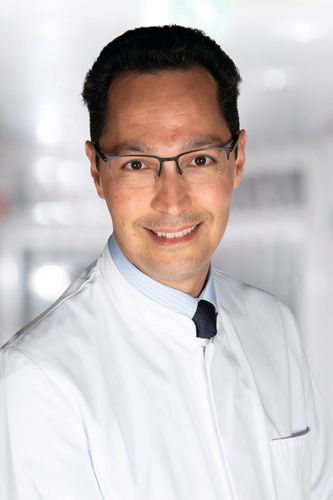
Dr. Marcus Mumme is a leading figure in orthopedics and specializes in orthopedics for children, adolescents, and adults, with a particular focus on knee and shoulder problems. As head of pediatric and adolescent sports orthopedics and knee surgery at the University Children’s Hospital of Basel (UKBB), he is recognized as an expert in his field. The UKBB is a leading university center of excellence for pediatric and adolescent medicine that meets the highest international standards.
Dr. Mumme focuses on the treatment of growth-related problems, cartilage damage, and complex knee issues. His expertise ranges from conservative treatment and joint-preserving surgery to modern cartilage cell transplants and biomaterial-based bone marrow stimulation. As an experienced orthopedic surgeon, he understands the needs of young patients and their unique medical requirements. In addition to his outstanding professional expertise, Dr. Mumme is known for his empathy and sensitivity in dealing with his patients. His broad knowledge, active research, and innovative approach make him a leading specialist in pediatric and adolescent orthopedics at the UKBB.
The UKBB is not only geared toward the specific needs of young patients but also offers a comprehensive infrastructure and state-of-the-art equipment to ensure optimal medical care. Dr. Mumme plays a crucial role in this world-class medical environment, which addresses a wide range of orthopedic challenges in children and adolescents. Dr. Mumme specializes in particular in knee surgery to help young patients with sports injuries or congenital abnormalities. From rotational corrections to patellar tracking corrections, he treats a wide range of knee-related issues. His broad spectrum of treatment options also includes innovative procedures such as arthroscopic surgery and regenerative therapies, which can help young patients who are still too young for joint replacement surgery.
In addition to his work as a practicing physician, Dr. Mumme is dedicated to intensive research and stays up to date on the latest developments in his field. Through his membership in scientific societies and academies, he maintains a strong professional network and contributes to the advancement of orthopedics for children and adolescents. His work as a highly specialized pediatric orthopedist and his contributions to research make him a key figure in the orthopedic care of young patients at the UKBB. The editorial team of the Leading Medicine Guide spoke with Dr. Mumme about cartilage regeneration, as innovative approaches are emerging in this field.

Cartilage regeneration is a fascinating field of medicine that deals with the restoration and growth of cartilage tissue. Cartilage tissue damaged by injuries, wear and tear, or degenerative diseases, for example, has a limited ability to heal itself. Therefore, innovative approaches and treatments for cartilage regeneration are of great importance for improving patients’ mobility, functionality, and quality of life. From biological therapies to surgical procedures, there are various methods aimed at repairing or replacing damaged cartilage. These advances in cartilage regeneration play a vital role in the treatment of injuries or diseases affecting cartilage tissue and offer promising prospects for the future of orthopedic medicine.
Sports injuries can lead to cartilage damage in both children and adults, although the nature of the injury and the healing process may vary between age groups.
“Generally speaking, it can be said that because children are still growing, they experience different types of injuries than adults and therefore have different treatment options. In young people, the cartilage is still developing and has a greater capacity for regeneration compared to older individuals. The body is younger and can adapt more easily. On the other hand, however, they face the challenge of having to cope with injuries or overuse damage for a very long time, given a life expectancy of still about 70–80 years. “This, of course, also has an impact on their future career paths,” explains Dr. Mumme at the start of our conversation, before discussing the primary conditions affecting children and adults: “While in adults—whether due to an accident or degenerative changes—we initially see focal cartilage damage, that is, damage in a limited area, in children there are conditions such as osteochondrosis, which leads to changes primarily in the bone tissue beneath the cartilage. Patellar instability also often first manifests during childhood and adolescence, causing, for example, the kneecap to repeatedly dislocate and resulting in cartilage damage. Then there are also children with rheumatological conditions or those who require chemotherapy, which in turn can lead to bone and cartilage disorders. “Among adults, it is often the recreational athlete who is injured while playing soccer, for example, or who has a degenerative condition without having been involved in an accident.” The choice of therapeutic approaches—based on age, the severity of the injury, and individual factors—plays a crucial role in successful cartilage regeneration in both age groups. “When it comes to cartilage therapy in children, the major challenge is always that they have a strong urge to move. Adults are, of course, generally easier to manage in this regard,” notes Dr. Mumme.
Cartilage injuries in children and adults are often the result of sports activities characterized by different dynamics.
“Generally speaking, sports involving a lot of rotational movements and contact sports such as soccer, skiing, or basketball carry an increased risk of injuries that can also affect the cartilage. Soccer is particularly dangerous for the knee due to fouls—a third of injuries result from this. These sports involve direct physical contact and associated impacts that can damage the joints and cartilage. Swimming and cycling are good activities, but ball sports like tennis and badminton are also less dangerous since there is no direct physical opponent. Jogging is actually fine, too, because it exercises the muscles and cartilage. However, it always depends on the level of strain. “Within healthy limits, the cartilage can develop well; it must not be overloaded and also needs time to regenerate,” says Dr. Mumme, commenting on the challenges posed by different sports.
Preventing cartilage injuries requires preventive measures that apply equally to both age groups. These range from choosing the right equipment and wearing protective gear to warming up before training or competition. A balanced diet, sufficient rest periods, and adequate hydration are equally important factors for the overall health of muscles and cartilage. It is crucial to choose a sport wisely and learn the correct technique to avoid improper strain. “The influence of hormones is also an interesting aspect. Here, we can observe that women and young girls are more susceptible to injuries such as cruciate ligament tears depending on their menstrual cycle,” explains Dr. Mumme. Biological age also plays a significant role. In adults, metabolism slows down and the cartilage’s ability to regenerate gradually decreases over time.
During the menstrual cycle, women experience hormonal changes, particularly fluctuations in estrogen levels. Estrogen, a female sex hormone, can affect the stability of ligaments and muscles, leading to changes in the stiffness and tension of the ligaments. Particularly during the phase of the menstrual cycle when estrogen levels are at their highest, this can lead to increased laxity in the ligaments, which could compromise the stability of the knee joint. This increased laxity could theoretically raise the risk of injuries such as cruciate ligament tears, as the knee is less stable and may become more susceptible to excessive stress or rotational movements that contribute to such injuries.
In the field of cartilage regeneration, there are a variety of innovative approaches and technologies that are relevant for both children and adults, particularly in the context of sports injuries.
“The most advanced therapy we have today is cartilage cell transplantation. The procedure begins with an arthroscopic examination of the affected joint to assess the extent and location of the cartilage damage. Next, healthy cartilage tissue is harvested from a low-stress area of the patient’s joint. This tissue is then processed in the laboratory to isolate and culture the healthy cartilage cells. The prepared cartilage cylinders are then fitted into the defective area of the cartilage during a second surgery and placed there to fill the damaged site. This is done to stimulate the growth of new cartilage and promote the regeneration of the damaged tissue.
This method can only be used in children once the so-called growth plates in the knees have closed. This typically occurs around age 14 in girls and around age 16 in boys. For children whose growth plates are still open, simple bone marrow stimulation has yielded good results. In this procedure, small holes are drilled into the bone beneath the damaged cartilage to bring in bone marrow blood, which then promotes the formation of repair tissue. “However, it is fundamentally important to first determine the cause of the cartilage damage. If the underlying cause remains, then the cartilage therapy will not be effective,” explains Dr. Mumme.
Growth plates are zones of hyaline cartilage in the bones of children and adolescents. They enable the longitudinal growth of many bones during childhood and adolescence. Once growth is complete, they slowly ossify completely and then disappear.
When the cartilage is damaged, an inflammatory response triggers the healing process. Special cartilage progenitor cells migrate to the site of injury and begin the repair process to stabilize the wound; they then form collagen fibers at the injury site to build a new structure. This phase is crucial, as a new cartilage matrix forms, consisting of various components such as collagen and proteoglycans. This matrix provides the cartilage with strength and structure, as well as elasticity and the ability to bind water. As the process continues, the newly formed matrix is restructured to restore the original cartilage structure as much as possible. This process can take weeks to months and is crucial for the joint’s long-term functionality. Over time, the newly formed cartilage matrix adapts to the specific stresses placed on the joint.
There are various therapies for cartilage regeneration
Biomaterials: New treatment approaches use biological materials such as biomembranes or bio-gels to support cartilage regeneration. These technologies promote the body’s natural healing capacity and can help repair cartilage damage.
Tissue engineering: Advances in tissue engineering enable the production of biological cartilage tissue in the laboratory, which is then implanted into the affected area. This technique aims to replace lost or damaged cartilage and promote healing.
3D Printing: 3D printing technology can be used to create custom-made implants and scaffolds that are precisely tailored to the patient’s anatomy. This precision could contribute to improved cartilage regeneration in the future.
Cartilage cell transplants: In this procedure, healthy cartilage cells are harvested from a healthy area of the patient’s own body, cultured in the laboratory, and then transplanted to the damaged site to promote regeneration.
Arthroscopic Procedures: Minimally invasive surgical methods, such as arthroscopic procedures, have proven to be gentler options for treating cartilage defects. These procedures can help shorten recovery time and improve the rehabilitation process.
Regenerative surgery: Regenerative surgery combines various treatment approaches to achieve the most natural healing of body tissue possible. This involves, among other things, treating the underlying causes of disease, regenerating damaged tissue, and halting or at least slowing down degenerative processes.
Rehabilitation following cartilage injuries caused by sports accidents is a complex process that must be approached differently for children and adults.
“With children, it’s important to involve their primary caregiver in the therapy—whether that’s the parents or siblings. Then, everything should be explained to the children in a way that makes sense for their age. Children have a strong need for physical therapy and, with good communication, are quite willing to follow the prescribed recommendations and measures,” states Dr. Mumme. In the rehabilitation of children following sports injuries, individual growth phases and the resilience of the cartilage are taken into account. This can result in a rehabilitation period that may be shorter than that for adults.
“I once had a young girl as a patient with cartilage damage who had a rheumatic condition and had to take immunosuppressive medications and receive cortisone injections, but she responded well to simple bone marrow stimulation and was pain-free and able to play sports again after a relatively short time. And another patient, to give another example, was a competitive athlete on the national soccer team who suffered from osteochondrosis dissecans (a condition in which bone tissue breaks down in an area no longer supplied with blood). “She responded very well to the therapy, immediately resumed her athletic career afterward, and was reinstated to the national girls’ team,” said Dr. Mumme, referring to two of his patients.
Rehabilitation following knee cartilage regeneration is crucial for the healing process and the restoration of function.
Rehabilitation is tailored individually to the patient and the specific procedure. As a rule, rehabilitation begins immediately after surgery and continues for several weeks or months. “The course of rehabilitation naturally varies from person to person. It depends on the extent of the cartilage damage and the chosen treatment. And often, a concomitant procedure takes place during this time. After joint surgery, patients usually use walking aids for a few weeks because they cannot manage without this support at first. How quickly a patient can return to work naturally depends on their occupation. If someone is using crutches for six weeks, they certainly can’t return quickly to jobs involving physical labor. For office work, it’s correspondingly easier,” explains Dr. Mumme.
The first few weeks often focus on passive movements to stabilize the joint and reduce swelling. This phase is followed by specific exercises to strengthen the muscles around the joint and improve mobility. Rehabilitation also includes proprioceptive exercises that promote the joint’s coordination and stability.
Looking to the Future
“The treatment of children and adults should be further optimized. If pediatric orthopedic problems cannot be fully resolved and the children grow into adulthood, certain knee problems may reappear or worsen over the course of their lives. The biggest hurdles we currently face are the development of osteoarthritis in adulthood, which should be treatable with regenerative therapies. We have promising approaches in this area of research and have successfully regenerated damaged, arthritic tissue in the first pilot patients with osteoarthritis behind the kneecap. “The disease itself is not yet curable, but we can replace the damaged cartilage. Some forms of osteoarthritis will certainly be curable in the coming years or decades,” Dr. Mumme says optimistically. “Tissue engineering studies and research into the treatment of late-stage osteoarthritis behind the kneecap are my top priorities. The studies have been ongoing for ten years—the pilot study has already been completed. In 2024, two new studies will begin on the treatment of osteoarthritis behind the kneecap through cartilage regeneration. These are all positive developments,” explains Dr. Mumme confidently, bringing our conversation to a close.
Dear Dr. Mumme, thank you very much for this informative conversation about cartilage regeneration!
Share this article
Expert Interviews
Read next
- Expert interview
Expert interview with Professor Dr Elmar Herbst, PhD
Oct 15, 2026
Patient-centred and personalised knee surgery
Read more - Expert interview
Cardiogeriatrics: Significance and benefits in the context of hospital reform
Sep 21, 2026
Cardiogeriatrics: Significance and benefits in the context of hospital reform
Read more - Expert interview
Expert Interview with Professor Dr. Amadeus Hornemann, MPH
Sep 18, 2026
Prof. Amadeus Hornemann on Precision Medicine in Gynecology: Modern Surgery, New Techniques, Better Quality of Life
Read more