Expert Interviews
Sacroiliac Joint Surgery: Stabilization and Endoscopic Ablation of Pain Fibers for Long-Term Pain Relief—Expert Interview with Prof. Werner

Alexandra Pfitzmann ·
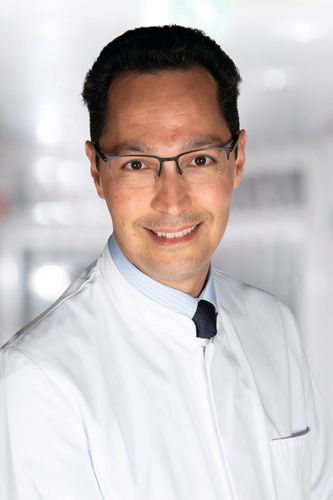
Prof. Dr. med. Clément M.L. Werner is a highly respected specialist in spinal and pelvic surgery who practices at the etzelclinic - Center for Minimally Invasive Surgery in Pfäffikon, Switzerland. With an impressive international background in training and extensive experience, he has specialized in particular in the sacroiliac joint (SIJ), the spine, and the pelvis.
Prof. Dr. med. Werner has earned a first-class reputation in research and teaching through numerous scientific publications. As a renowned orthopedic surgeon, Prof. Dr. med. Werner treats conditions and injuries of the SIJ, the spine, and the pelvis, which often severely impair the quality of life of those affected. He specializes in the treatment of chronic pain, which often occurs without a clearly identifiable cause and dominates patients’ daily lives.
His expertise in this field is based on extensive national and international training, including three fellowships in the United States and leadership positions at the Balgrist University Hospital in Zurich and the University Hospital of Zurich, where he most recently served as deputy clinical director. Due to his numerous scientific publications and book chapters, he was appointed Titular Professor in 2012.
Prof. Dr. med. Werner is not only an experienced surgeon but also a dedicated researcher. He strives to develop and optimize innovative treatment methods and surgical techniques to achieve the best possible outcomes for his patients. He has a particular interest in the sacroiliac joint, for which he has developed his own fusion implant that is inserted using a minimally invasive technique and allows for full weight-bearing immediately after surgery. Since 2005, he has successfully performed over 700 sacroiliac joint surgeries and is therefore a sought-after speaker at scientific conferences. In addition to treating the sacroiliac joint, Prof. Dr. med. Werner is also an expert in osteoporotic fractures of the vertebral bodies and the pelvis.
At the etzelclinic, which is regarded as a flagship institution for high-performance medicine, Prof. Dr. med. Werner offers his patients state-of-the-art minimally invasive treatment methods. This includes endoscopic treatment of pain fibers, which can often relieve back pain without fusion surgery or implants. This is an important option, particularly for patients whose daily lives are impaired by chronic back pain. Prof. Dr. med. Werner places great importance on passing on his extensive knowledge to the next generation of physicians and supporting young doctors. He strives to convey his enthusiasm for treating the musculoskeletal system, as he is convinced that only those who are passionate about their discipline can achieve peak performance. He regularly conducts continuing education seminars on the sacroiliac joint—in Switzerland, Germany, and internationally—and his patients’ gratitude for a life that is as pain-free as possible speaks for itself.
The editorial team at Leading Medicine Guide took the opportunity to speak with Prof. Dr. med. minimal Werner and learned more about the sacroiliac joint.
The sacroiliac joint (SIJ) is responsible for transmitting forces between the spine and the lower extremities and plays an important role in the stability of the pelvis and spine. It connects the sacrum to the two iliac bones and enables movements such as bending, twisting, and flexing the trunk, as well as walking, standing, and sitting. The sacroiliac joint is a structurally strong yet minimally flexible joint that helps absorb and distribute the pressure and stress that occur during walking, running, or lifting. It also plays an important role in transmitting forces between the upper body and the lower extremities during various movements. In addition, the sacroiliac joint acts as a shock absorber, absorbing impacts and vibrations that can occur during walking or jumping, and helps reduce the load on adjacent joints and structures. It contributes significantly to the stability, mobility, and function of the entire pelvis and spine, enabling the body to move efficiently and pain-free.
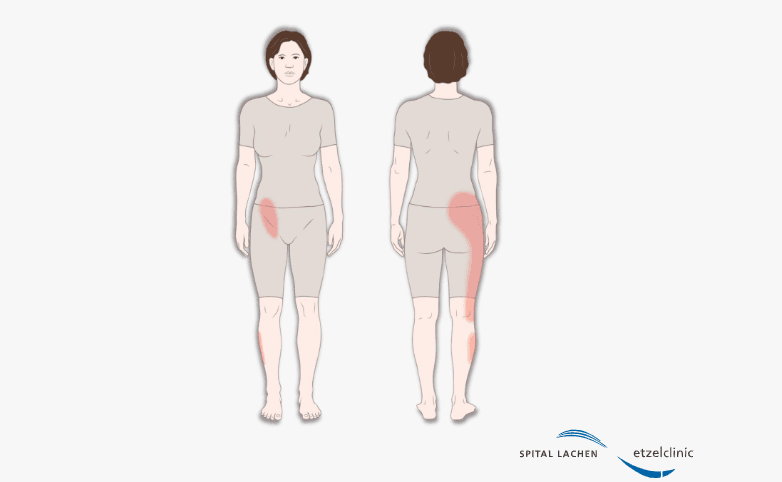
Damage to the sacroiliac joint (SIJ) can have various causes and manifests itself through a range of symptoms.
“The causes of SIJ damage are varied. In women, for example, hypermobility and extreme flexibility can lead to damage, as can, of course, giving birth to large babies or multiple births. In men, the predominant cause is an accident, sometimes ankylosing spondylitis, or fractures in the posterior pelvic ring. Then there is the large group of patients who have undergone spinal surgery and whose spine has been fused from the lumbar vertebrae to the sacrum. Most spinal surgeons are familiar with the issues that arise in the adjacent segments following fusion. This is because, after a rigid spondylodesis procedure, mobility in the fused vertebral segments is significantly restricted. This can lead to the adjacent, non-operated segments of the spine becoming overloaded over the years due to the fusion of the affected segment, causing them to wear out more quickly. The major problem, however, is that the lower end of the fusion is largely ignored. From a biomechanical perspective, this makes perfect sense, since someone with a fused spine exerts a disproportionately greater leverage on the next joint than someone with a mobile spine. Unfortunately, during training to become a spinal surgeon, one learns almost nothing about the sacroiliac joint. Trauma surgeons are more knowledgeable in this area and are also familiar with the surgical approaches, but they, in turn, do not treat SI joint patients,” explains Prof. Dr. med. Werner at the beginning of our conversation, before going on to discuss the symptoms:
“The symptoms of sacroiliac joint damage are varied. Affected individuals usually complain of pain in the lower back and buttocks—that is, in the area of the posterior pelvic ring—which can sometimes radiate to the hips, the outer thighs, or the outer calves. Patients also frequently describe nighttime calf cramps. Approximately 20–30% also experience pain in the groin region. As a result, sacroiliac joint (SIJ) injury is often mistaken for a herniated disc, a hip problem, or a hernia. Sitting, especially for extended periods, can be painful in the posterior pelvic region. Patients may also have difficulty lying on the affected side, and standing up from a sitting or lying position is difficult. Symptoms can even occur while walking or standing, often accompanied by a “feeling of instability” in the pelvic region and the legs.”
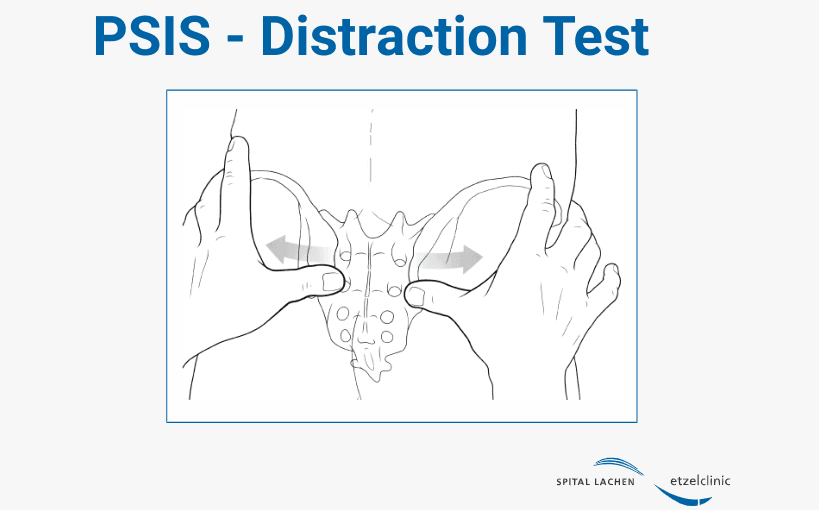
“X-rays do not provide a clear diagnostic tool for iliosacral arthropathy, but they can offer valuable clues. Common diagnostic tests have only limited diagnostic value. Based on these existing approaches, we have developed the PSIS (posterior superior iliac spine) distraction test. This screening test is simple to perform and yet provides a reliable clinical assessment. During the test, patients—whether standing or lying prone—are asked about specific localized, central, or lateral pressures that may trigger or exacerbate pain. The test is considered positive if typical pain is reproduced as a result. Compared to traditional provocation tests, the PSIS Distraction Test demonstrates superior accuracy of 94 percent,” explains Prof. Dr. med. Werner.
Sacroiliac joint (SIJ) surgery involving stabilization and endoscopic ablation of pain fibers is a surgical procedure that may be considered to treat chronic pain in the sacroiliac joint region, particularly when conservative therapies have not been sufficiently effective.
Prof. Dr. med. Werner outlines the steps that must be taken: “Before surgery can be considered, the patient first receives at least two injections at intervals, during which a mixture of anti-inflammatory and analgesic agents is injected into the ligamentous apparatus and directly into the joint space. The patient should experience a significant improvement as a result, thereby confirming that the treatment is targeting the correct area, so to speak. Patients must keep a pain log based on a pain scale of 0–10, and the injection must have resulted in at least a 75% improvement, even if this relief was only temporary. We then explain to the patient that complete relief from pain cannot be expected following surgery. The pain can only be reduced to the extent that was possible with the injection. This procedure stabilizes the joint to reduce excessive mobility and alleviate pain. If an implant has been surgically and stably placed—which we perform here approximately 100 times a year—a second surgery is performed to carry out endoscopic ablation of the pain fibers in order to interrupt the pain signals and provide long-term relief. This is an advancement of radiofrequency ablation (which is typically performed by a pain specialist or anesthesiologist using small needles to generate an electric current in the ligamentous apparatus, with the resulting heat providing some relief to the pain fibers). “Using a camera (endoscopic method), we have a much more efficient and sustainable way to precisely vaporize the fibers,” he adds,
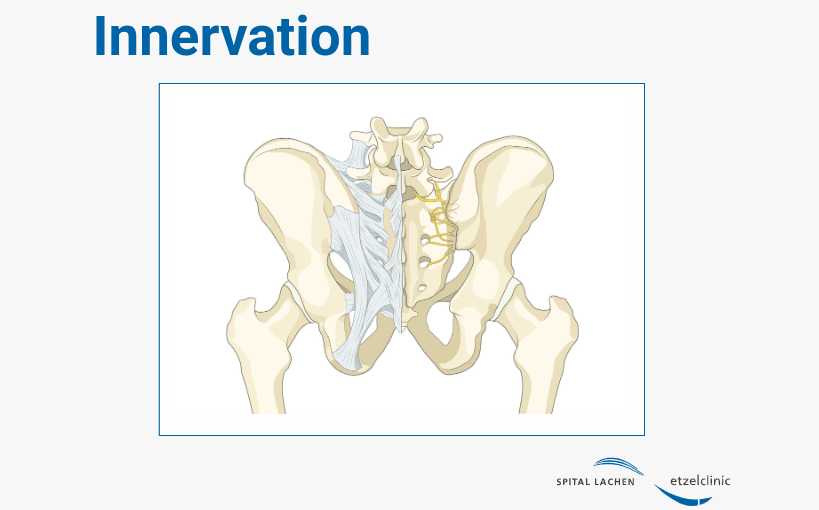
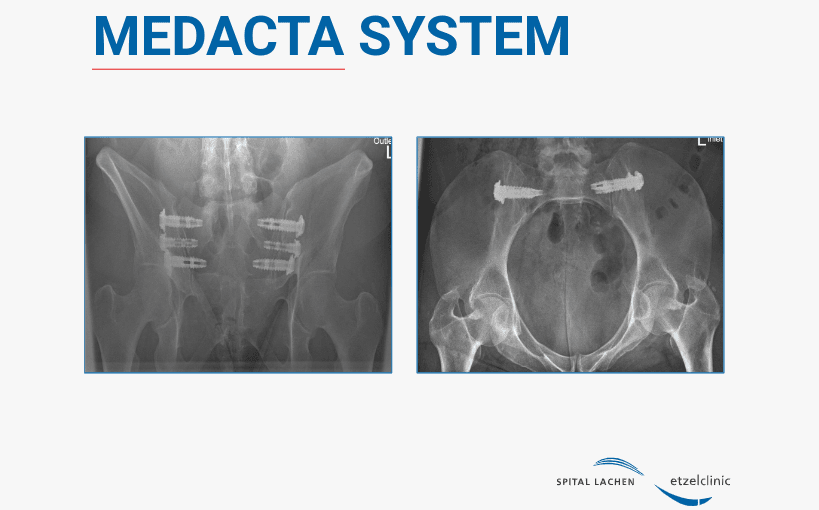
“There are various approaches for implant placement. The type of implant is determined by the approach chosen. The posterior approach is used less frequently due to a higher complication rate. We usually choose the lateral approach, as the risk of infection is lower here and the implants integrate stably. This approach also allows us to insert three implants instead of just two, as would be the case with the oblique posterior approach. It also requires only a 2-cm incision (minimally invasive). On the one hand, we use IFUSE implants, for which there are also Level 1 studies. They look like mini Toblerone pieces, have a relatively large surface area, and are also suitable for patients with osteoporosis. However, the triangular shape requires a triangular rasp to prepare the bone, which can occasionally lead to more severe bleeding. And since the implants are simply pushed through, patients must use crutches for a few weeks after the procedure, which can sometimes be difficult for older patients. On the other hand, there are implants that I helped develop (MUST SI) that look like screws and allow for compression of the joint. In these cases, walking canes aren’t needed for long afterward, and the patient can usually get up and walk right after the procedure. These implants do not have a large surface area. Therefore, we have developed an additional coating, similar to that used for dental implants. They have the advantage of causing much less bleeding during insertion, since we only need to access the bone with a 4-mm drill bit. Ultimately, however, both methods yield very good results. The procedure itself—that is, the time from incision to suturing—takes about 20 minutes. However, we spend just as much time ensuring the patient is positioned optimally. The patient can get up again the day after surgery.”
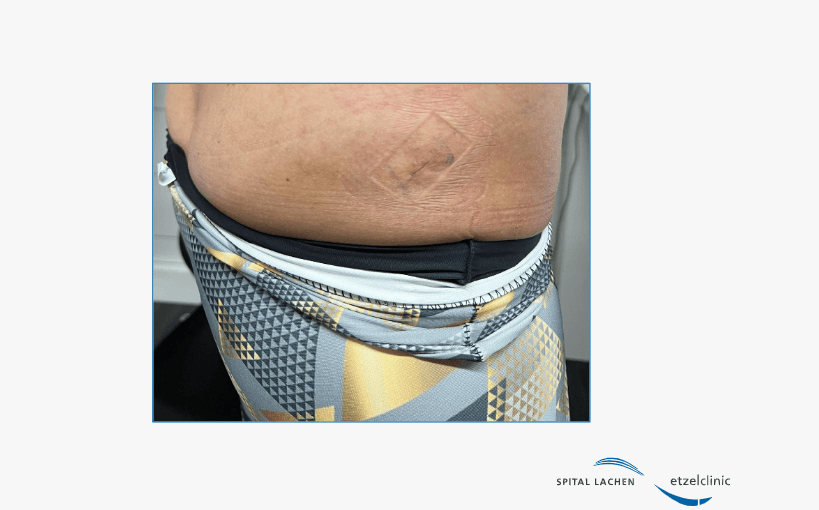
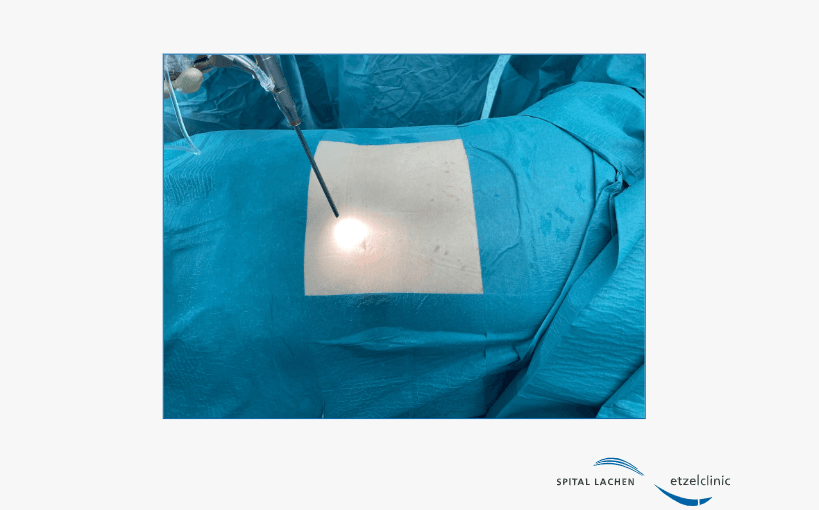
Following sacroiliac joint (SIJ) surgery involving stabilization and endoscopic denervation of pain fibers, patients may have varying expectations regarding pain relief and the restoration of pain-free joint stability.
The primary expectation is that the surgery will help alleviate the pain caused by the sacroiliac joint. Many patients experience a significant improvement in their pain symptoms immediately after the procedure. As the joint heals and stabilizes, pain relief may continue to improve. Some patients are concerned that stabilization (fusion) of the SIJ will reduce mobility. It is important to understand that this is not the case with this procedure. In a normally functioning sacroiliac joint, stability is maintained through slight movement and tension in the ligaments as soon as a person stands or sits. The loss of mobility is therefore only theoretically possible in situations where stability is not required. After stabilization, patients report that they can move more effortlessly thanks to the restored stability and pain relief. It can therefore be expected that overall mobility will improve. This improvement in function often contributes to a better quality of life. “It’s very important to thoroughly educate patients and explain that the pain won’t go away 100%. Then most patients are already happy after the first procedure. They can sit comfortably again, drive a car, and sleep well. And that’s a massive improvement in quality of life,” emphasizes Prof. Dr. Werner.
After sacroiliac joint (SIJ) surgery, comprehensive rehabilitation and postoperative care are crucial for achieving optimal recovery and long-term results.
In the initial 6-week phase following stabilization, early mobilization without overexertion is recommended. This is important to ensure that the implants heal properly without, for example, increasing the risk of thrombosis or the formation of scar tissue. This can begin with assisted walking and gradually progress to more demanding activities. Physical therapy plays a central role only in a second phase, to strengthen the muscles, improve mobility, promote coordination, and restore balance. Managing postoperative pain is also of great importance to enable successful rehabilitation. This may include the use of pain relievers, anti-inflammatory medications, or other techniques such as cold or heat therapy. A gradual return to activities is important to support recovery. It is crucial to gradually work your way back to normal activities of daily living, work, or sports.
“If a triangular implant is inserted, the patient should avoid excessive exercise for about eight weeks after surgery. Normal walking and strolling are fine, but physical therapy should be avoided initially. After these eight weeks (Phase 2), most patients then benefit from strengthening their gluteal muscles. Those who receive a screw implant may be more active. For example, they can ride a bike or go for a light jog—but playing tennis, for instance, is not yet recommended. “We slow people down a bit here to ensure the implant heals securely,” says Prof. Dr. med. Werner, describing the post-operative period, and adds: “It’s very rare for an implant to break loose. This can happen at most in the event of a severe fall or a fracture. It doesn’t happen on its own.”
We have a gap in our training regarding the SI joint.
“It’s a shame that the diagnosis and treatment of the SI joint aren’t part of our medical training. There are so many tricky aspects to this joint—from clinical examination and the assessment of radiological features to the technique of infiltration and surgical methods. In the U.S., awareness of this issue has grown significantly over the past decade, particularly among spinal surgeons. In Europe, this process is still taking a while and will likely take another generation,” states Prof. Dr. med. Werner, bringing our conversation to a close.
Thank you very much, Professor Clément M. L. Werner, M.D., for this insight into the sacroiliac joint, which is unfamiliar to many!
Book recommendation:
Prof. Dr. Werner – The Painful Sacroiliac Joint
ISBN 979-8375520353
80 pages
€29.95
Published on February 4, 2023.
Also available as an e-book on Amazon.
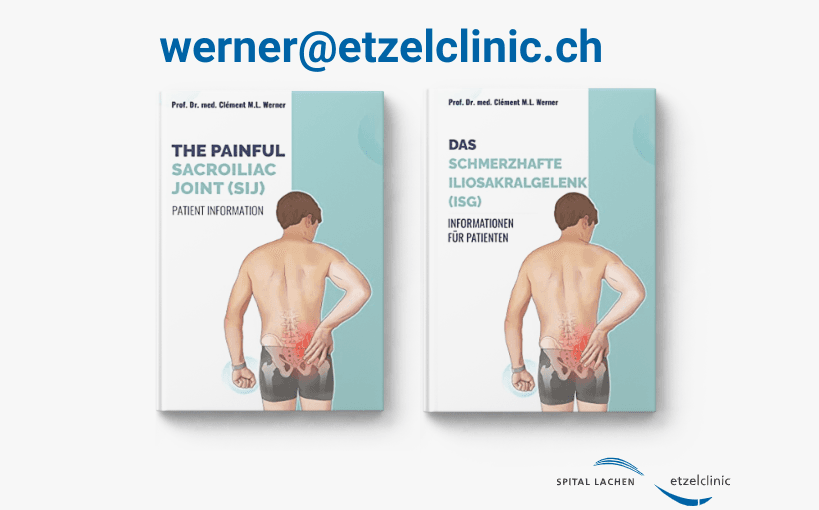 Book about the ISG.
All photos ©Prof. Dr. Clément Werner
Share this article
About the medical author
Alexandra Pfitzmann
Editor
Alexandra Pfitzmann – medical author: expert knowledge, professional articles and medical insights in the Leading Medicine Guide.
More about the medical author →Expert Interviews
Read next
- Expert interview
Cardiogeriatrics: Significance and benefits in the context of hospital reform
Sep 21, 2026
Cardiogeriatrics: Significance and benefits in the context of hospital reform
Read more - Expert interview
Expert Interview with Professor Dr. Amadeus Hornemann, MPH
Sep 18, 2026
Prof. Amadeus Hornemann on Precision Medicine in Gynecology: Modern Surgery, New Techniques, Better Quality of Life
Read more - Expert interview
Expert Interview with Professor Dr. Konstantinos Anagnostakos
Sep 15, 2026
Prof. Anagnostakos on Painful Knee Replacements
Read more