Expert Interviews
It Gets Under Your Skin! A Conversation with Dermatologist Prof. Navarini

Alexandra Pfitzmann ·
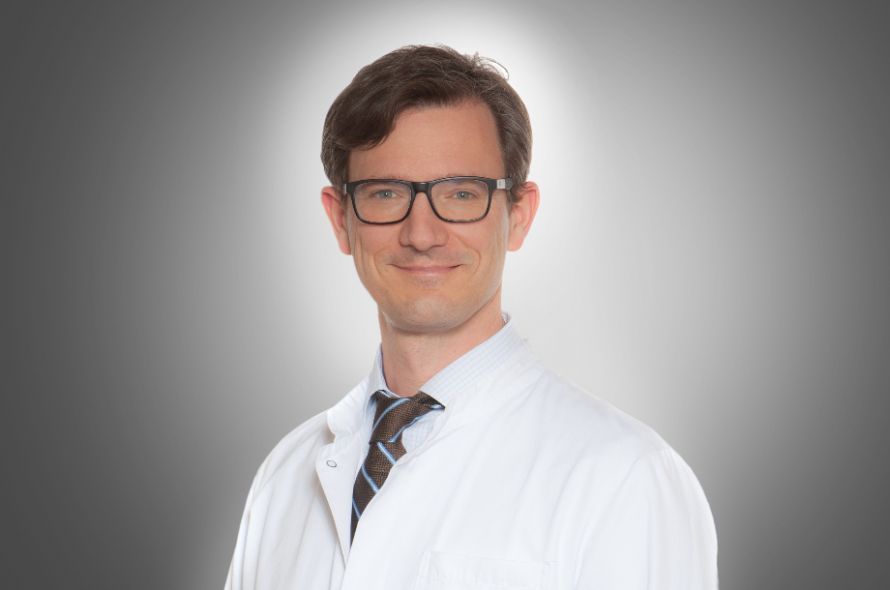
He is internationally regarded as one of the best dermatologists: Professor Dr. med., Dr. sc. nat. Alexander Navarini is not only the Chief of Dermatology at the University Hospital of Basel; he also heads the hospital’s Center for Skin Tumors and the University Center for Immunology—and, as Director of Clinical Research in Dermatology, enjoys a global reputation. The Leading Medicine Guide took the opportunity to speak with Prof. Navarini about the impressive diversity of the skin. In doing so, the specialist in dermatology and skin cancer provided us with deep insights into his fields of expertise and his extensive range of services.
Dermatology (from the Ancient Greek δέρμα dérma, meaning “skin,” and -logy, from λόγος, meaning “reason” or “study”) is a broad and fascinating field of medicine that deals with the diagnosis and treatment of skin diseases. After all, the skin is the human body’s largest organ! Every person needs about two square meters of skin to cover their body.
But did you know that the parts of the skin we actually see every day consist of cells that are already dead? We renew our skin about every thirty days. This makes it all the more important to protect our quite sensitive skin well.
Without our skin—which accounts for about three kilograms of our body weight (excluding the underlying fat layer)—every person would be defenseless against the physical and chemical stimuli of the environment. After all, we encounter cold, heat, radiation, and even impacts and friction every day. Microorganisms are actively repelled by the skin’s natural acid mantle, which also helps prevent the loss of heat and water.
The skin consists of three layers, from the outside in:
- epidermis,
- dermis (or corium), and
- subcutis.
The dermis and epidermis together form the cutis.
In all areas of dermatology, Chief Physician Professor Dr. Navarini and his team at the University Hospital of Basel are among the leading experts when it comes to skin cancer, inflammatory diseases, pruritus, acne, and aesthetic dermatology. He is in high demand internationally and in research, and also heads the Center for Skin Tumors and Clinical Research in Dermatology. The 60,000 examinations conducted each year alone underscore the high demand among the population for quality dermatological care.
Sun, beach, and sea… and the risk
Many people are affected by a wide variety of skin conditions, yet far too few take care to protect their skin. The increasing exposure to UVA radiation alone—which accounts for about 95% of UV radiation and penetrates the ozone layer—accelerates skin aging. But this, of course, poses serious risks to the skin.
“The sun’s ultraviolet rays cause a whole range of damage to the skin. The shorter-wavelength UVB radiation leads to damage to the genetic material (DNA) and thus to mutations that predispose individuals to the development of skin cancer. If you look at a small patch of skin that has been exposed to the sun for a long time from above and map out the mutations, it looks like a painting by the American artist Jason Pollock. So we are all a mosaic of mutations on our skin. You can enjoy sunbathing by first applying an effective sunscreen—there are high-quality sunscreens available—as well as wearing UV-protective clothing,” explains Professor Dr. Navarini.
Of course, excessive sunbathing also carries the risk of developing skin cancer—a phenomenon that has increased in recent years. “Skin cancer rates have indeed risen over the past few decades, partly due to increased participation in sports, but also because we’re detecting it earlier. Melanoma is significantly more dangerous than non-melanoma skin cancer; nevertheless, both can metastasize, making them extremely dangerous in advanced stages and potentially fatal. That’s why we recommend regular screening for skin cancer. In Switzerland, this is covered starting at age 35; until age 50, you should see a dermatologist every 5 years, then every 2 years until age 64, and annually thereafter. This way, we can ensure that, if any surgery is needed at all, it will be minor,” recommends the dermatologist.
Major Differences in Skin Cancer Diagnostics
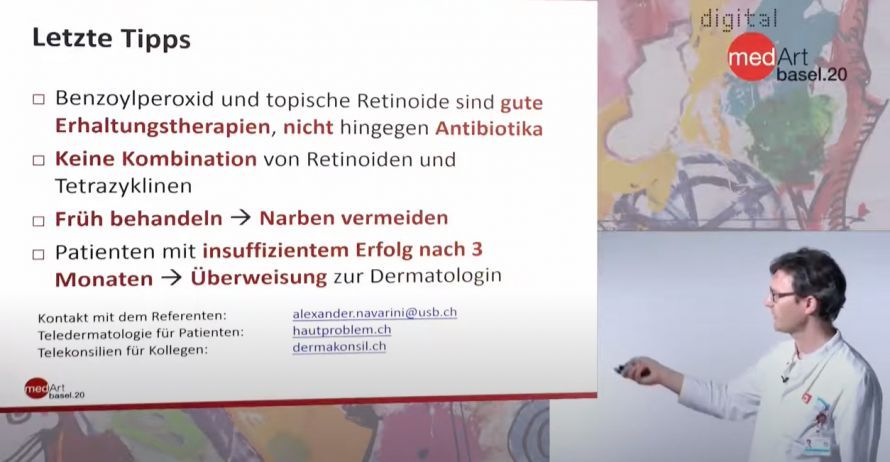
Skin cancer can develop quickly—sometimes it’s very dangerous, sometimes less so. For this reason, you should follow Professor Dr. Navarini’s recommendation and get screened regularly. However, there are significant differences in diagnostic approaches. We asked for more details. “The diagnosis of skin cancer typically involves a clinical examination. There are major differences among providers in this regard. We always examine the hairline as well and offer a full-body examination conducted using a standardized system that ensures no findings are missed. With the patients’ consent, we also identify moles in the genital area, between the toes, and on the soles of the feet—to name just a few areas that are often not examined. To provide patients with digital support as well, we offer the world’s most advanced photography technology. “Every patient receives a full-body image that allows the computer to detect changes when the patient returns for a follow-up visit a few months later,” explains Professor Dr. Navarini, outlining the next steps.
The range of treatment options available at the university hospital is vast, and the hospital enjoys a first-class reputation thanks to its highly specialized medical staff in both clinical practice and research. “When it comes to skin cancer treatments, we offer the full spectrum—ranging from simple cryotherapy with liquid nitrogen to lasers, immunomodulators, and, of course, surgery, as well as the latest immunotherapies, chemotherapies, and clinical trials for metastatic cases. We have a unique selling point in continental Europe, as we have the only Mohs surgeon on our team who is a Fellow of the American College of Mohs Surgery. “He ensures that our patients are left with only the smallest possible wound—and thus the smallest possible scar—if a tumor needs to be surgically removed,” Professor Dr. Navarini explains enthusiastically. “So anyone who comes to the University Hospital’s center with a skin tumor can count on holistic, absolutely comprehensive care—from the first contact through to individualized follow-up care,” Professor Dr. Navarini continues.
The Mohs technique allows for the smallest excision wounds and results in the least noticeable scars—while ensuring 100% complete removal. The fact that the Center for Skin Tumors has always conducted both basic and clinical research across the entire field of skin cancer was an additional incentive for Professor Dr. Navarini. This is because, as part of his patient-centered approach, he is always committed to offering his patients cutting-edge medical care based on the latest scientific advancements. As a result, interdisciplinary conferences are held weekly at the Center for Skin Tumors alone, attended not only by dermatologists but also by colleagues from fields such as aesthetic and plastic surgery, visceral surgery, oncology, radiation therapy, and nuclear medicine—as well as pathologists, geneticists, and radiologists.
The skin is the mirror of the soul
Everyone wants soft, rosy skin. However, many factors can cause the skin’s appearance to change significantly, lead to itching, or even result in troublesome psoriasis. Psoriasis is an inflammatory skin disease that, fortunately, is not contagious. It manifests as red patches that are often covered with silvery scales. The severe itching that affects those with the condition is particularly unpleasant. The causes range from a genetic predisposition to an autoimmune disorder triggered by factors such as stress or hormonal changes.
“Psoriasis and eczema are very common. The skin is a mirror of the soul, so it comes as no surprise that severe stress can regularly trigger new flare-ups of these conditions. However, dry skin can also play a role, as can preceding infectious diseases or certain medications. That’s why it’s important to be evaluated by well-trained medical professionals who can also identify rarer causes of the condition. We also have a genetics department that we frequently consult to identify and rule out genetic causes of skin diseases,” explains Professor Dr. Navarini.
Social, empathetic, communicative: Prof. Navarini on social media (Facebook)
The chances of significant relief are high
We can put your mind at ease. Anyone affected by psoriasis can breathe a little easier—because the chances of improving the appearance of the skin are high. That’s a good thing, because, after all, this condition comes with a significant psychological burden. You may feel unattractive and sometimes no longer want to participate in social life.
“Because of the impaired skin barrier in psoriasis and eczema, treatment of these conditions first and foremost involves adequately moisturizing and replenishing the skin’s natural oils. It’s important to use high-quality products that absorb quickly and leave the skin supple but not sticky. We’re also increasingly using foam formulations with great success, which are well tolerated by patients. Then there’s the very popular light therapy as well as systemic therapies. These include both oral medications and injections. Of course, the latest biologics are the most popular and have almost unbelievable response rates with the highest level of safety. A typical question from patients is: “Do I have to get these injections for the rest of my life?” Once therapy begins and the patient responds well, the question often shifts to: “Can I keep getting these injections for the rest of my life?”—a question we, of course, cannot yet answer,” Professor Dr. Navarini adds encouragingly.
Professor Dr. Navarini has helped develop biologic therapies for conditions such as psoriasis or eczema—for example, in connection with atopic dermatitis—that have already helped many patients. This also applies to his treatment for patients with chronic itching: Dr. Müller, a private lecturer on Professor Navarini’s team, has an excellent reputation in international itching research and recently discovered which colors, for example, have an itch-relieving effect.
Acne—isn’t that just a teenage thing?
Many people associate their youth with acne as an unwelcome companion. Itchy pustules, pus-filled pimples, and a face they perceive as disfigured… But acne isn’t just an unsightly phenomenon of adolescence; it also affects many people well into adulthood. This is often due to a genetic predisposition. However, there are also dietary triggers, or it may be a pronounced effect of hormonal changes. This late-onset acne (acne tarda) can be managed with the right treatment and skincare.
And what about rosacea?
Rosacea, an inflammatory skin condition, also results in an unsightly complexion. Red patches form, which can then develop into inflammatory pustules or, for example, a bulbous nose. “There is a genetic predisposition to acne, yes. We believe this is also true for rosacea, but it hasn’t been definitively proven yet. Diet is an important factor not only for acne and rosacea but for many skin conditions. After all, it’s one of the very few factors that patients can directly influence. As a result, we often see drastic changes in diet that aren’t always based on sound reasoning. We know that, particularly in acne, skim milk and products high in sugar or starch play a role. Therefore, we recommend adopting a balanced diet while avoiding these products. In the case of rosacea, key triggers include spicy foods, as well as hard liquor, wine, and beverages high in caffeine, and the transition from hot to cold ambient air and vice versa. “Armed with this knowledge, we give our patients the opportunity to make personalized adjustments to their diet in particular,” explains Professor Dr. Navarini.
The Aesthetic Aspect
Of course, many skin conditions such as psoriasis, acne, or rosacea cause changes in the skin’s appearance. Female patients in particular, especially those with weak connective tissue, are also affected by varicose veins, which visually do not meet their own standards for good looks. It’s clear that for many patients, appearance is a top priority when it comes to skin health. That’s why Professor Dr. Navarini always has one foot in the field of aesthetic dermatology. Many people who have aged prematurely or whose appearance has been disfigured by a disease consider themselves lucky when they look in the mirror after treatment and discover that their skin looks healthier and younger again.
“Aesthetic dermatology plays a very significant role in cutaneous gerontoses—age-related skin conditions. Whether or not these bother patients varies greatly. Our policy is to treat signs of aging only when they impair patients’ quality of life. In most cases, however, these treatments are not covered by health insurance. It comes as no surprise, though, that patients almost always want to undergo the treatment anyway and are willing and able to pay for it themselves. We also use aesthetic dermatology for all skin conditions that can cause scarring or pigmentation disorders, which may result in an increase or decrease in fatty tissue—leading to dilation of blood vessels ranging from the smallest (rosacea) to the largest (varicose veins) as well as skin irregularities,” explains Professor Dr. Navarini, who is deeply committed to his patients’ well-being even after treatment.

Professor Dr. Navarini—we would like to express our sincere thanks for this interview, which has clarified many questions and given us hope!
A native of Basel, Professor Dr. Navarini grew up in the cantons of Graubünden and Aargau, but returned to his hometown to pursue his studies—and also completed part of his medical training in Paris at the Université Marie-Curie. He has always been fascinated by the intersection between clinical and scientific fields, which benefits his patients above all. Under the leadership of this renowned specialist, the well-coordinated teams at the University Hospital of Basel consistently provide the best possible care.
Anyone wishing to contact Professor Dr. med. Dr. sc. nat. Alexander Navarini can do so most easily via his profile page on the Leading Medicine Guide.
Share this article
Expert Interviews
Read next
- Expert interview
Expert interview with Professor Dr Elmar Herbst, PhD
Oct 15, 2026
Patient-centred and personalised knee surgery
Read more - Expert interview
Cardiogeriatrics: Significance and benefits in the context of hospital reform
Sep 21, 2026
Cardiogeriatrics: Significance and benefits in the context of hospital reform
Read more - Expert interview
Expert Interview with Professor Dr. Amadeus Hornemann, MPH
Sep 18, 2026
Prof. Amadeus Hornemann on Precision Medicine in Gynecology: Modern Surgery, New Techniques, Better Quality of Life
Read more