Expert Interviews
Keeping Everything Flowing: Prof. Dr. Alexander Albert on Bypass Surgery

Alexandra Pfitzmann ·
In the human body, fresh blood enriched with oxygen and nutrients flows from the heart to the organs, muscles, and cells, while used and deoxygenated blood flows back to the heart. This cycle of life is driven by the heart, the engine of our body, which is itself a muscle and can only function if it is adequately supplied with oxygen- and nutrient-rich blood.
The left ventricle supplies the entire body with oxygen-rich blood; it pumps approximately 5 liters of blood and beats about 80 times per minute, throughout a person’s entire life. The oxygen-rich, bright-red blood is first ejected from the heart under high pressure into the aorta (aorta), from where this vital fluid flows through countless arteries to the body’s organs and tissues, delivering the oxygen essential for life to the cells (systemic circulation).
The blood flows back to the heart under very low pressure, almost passively, through the numerous veins; this blood is now dark red and low in oxygen; it flows back to the (right) heart via the veins. The right side of the heart pumps it on to the lungs, where it is reoxygenated, and from the lungs it flows back to the left side of the heart (pulmonary circulation).
The heart muscle itself requires particularly oxygen-rich blood to perform its function. The heart muscle is supplied with oxygen-rich blood via (heart) arteries that originate from the aorta (main artery), which is located very close to the heart, and are called coronary arteries. There are three coronary arteries—one on the right and two on the left—with the left ones originating from a common trunk. The coronary arteries form a ring around the heart, which is why they are called coronary vessels.
For this system to function properly, blood must be able to flow freely through all veins and arteries without obstruction. This is not the case when deposits and plaques—in the form of calcium, blood lipids, or connective tissue—are present in the vessels. This creates the risk that the heart muscle will no longer receive enough blood and oxygen; if one of the plaques ruptures and completely blocks one of these vessels, a heart attack occurs. To restore unimpeded blood flow, it is possible to reopen or bypass the narrowed areas using a stent or a bypass graft.
The editorial team of the Leading Medicine Guide spoke with the world’s leading expert in bypass surgery, Professor Dr. Alexander Albert of Klinikum Dortmund gGmbH, who is one of the very few surgeons worldwide who operates on his patients exclusively without a heart-lung machine (off-pump surgery) and using minimally invasive techniques, without opening the sternum.
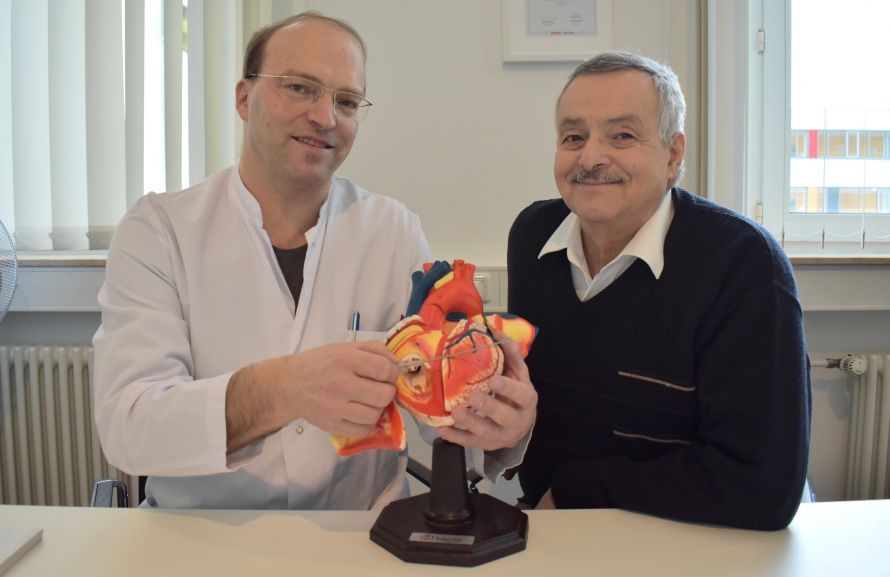
Coronary heart disease is one of the most common reasons for bypass surgery—it affects approximately one million people in Germany, with men between the ages of 50 and 60 being the most commonly affected. However, it can also affect much younger patients or the very elderly. In this condition, the coronary arteries narrow, usually due to high blood pressure, heavy smoking, or metabolic disorders. “Atherosclerosis of the coronary arteries leads to the formation of plaques, which can rupture and cause heart attacks. These can be fatal or lead to permanent heart failure with shortness of breath (dyspnea). A narrowing of the blood vessels results in an insufficient supply of oxygen and nutrients to the heart muscle, causing chest pain (angina pectoris). A properly placed bypass bypasses the diseased sections of the coronary arteries, ensures the heart’s blood supply, and helps the patient for the rest of their life. Just as a car engine needs gasoline to run, the heart functions only with sufficient blood,” Professor Dr. Albert begins our conversation. “Depending on the complexity and severity of the narrowings, we can perform bypass surgery, place a stent, or manage the patient with medication,” he adds.
When the heart muscle is no longer supplied with enough oxygen, a variety of symptoms can occur, often referred to as angina pectoris. The symptoms can vary depending on the severity of coronary heart disease but may include the following signs:
Chest pain: Angina pectoris often causes a pressing, burning, or tight sensation in the chest that frequently feels like a heavy weight or a tight belt. The pain can also radiate to the jaw, neck, back, arms, or stomach.
Shortness of breath: When the heart muscle does not receive enough oxygen, it can become difficult to breathe, or you may feel as though you are running out of air.
Fatigue: A lack of oxygen can also lead to fatigue, weakness, and dizziness.
Nausea and vomiting: In some cases, nausea and vomiting may occur, especially when accompanied by chest pain and shortness of breath.
It is important to note that not all people with coronary heart disease experience symptoms. Some people may have silent ischemia, which means they have no pain or symptoms even though their heart function is impaired. However, it is important for people at increased risk for coronary heart disease—such as those with a family history of the condition or those with high blood pressure, diabetes, or high cholesterol—to be examined regularly by a doctor to identify any potential symptoms and receive appropriate treatment.
Bypass surgery, also known as coronary artery bypass grafting (CABG), is a surgical procedure used to treat coronary heart disease.
During the procedure, the surgeon creates a new path, or “bypass,” around blocked or narrowed arteries in the heart to improve blood flow to the heart muscle. In conventional bypass surgery, the procedure is performed on an open heart, a heart-lung machine is used, and the heart is stopped. This means that the surgeon opens the chest in the middle to gain access to the heart. “The decision to perform a bypass depends on the severity of the coronary narrowing. A bypass is preferable to a stent in cases of severe plaque buildup in multiple vessels, as the long-term risk of a heart attack is significantly lower than after a stent. This is because when a stent is used, there is a greater risk that the vessel will narrow or become blocked again before, after, or within the stent. For coronary arteries affected by atherosclerosis over only short distances and in a less complex manner, a stent is also a good treatment option. In minimally invasive procedures, the surgery is performed through a small incision under the left breast, and the procedure is carried out on a beating heart. “A combination of minimally invasive bypass surgery and subsequent stent placement is often a good solution as well,” explains Professor Dr. Albert.
Prof. Albert advocates for a personalized approach to bypass surgery. This approach is guided by three priorities.
“The first priority is always for the patient to emerge from surgery unharmed—that is, for risks and side effects to be as low as possible. This is best achieved using a so-called off-pump technique, and even better when combined with the ‘Aortic No Touch’ technique—also known as aortic OPCAB. ‘Off-pump’ means that the surgery is performed on a beating heart without the use of a heart-lung machine (off-pump, OPCAB). To suture the bypass onto the beating heart by hand, a special holding arm called “Octopus” is used; it functions like the presser foot of a sewing machine and stabilizes the heart muscle at the designated site during surgery. It is called Octopus because it has several suction cups that attach themselves to the heart muscle. We use the chest wall arteries and arm arteries as blood-supplying bypass vessels, and only rarely use leg veins. In addition to the fact that arteries last significantly longer than veins, there is no need to insert them into the aorta, and the natural blood supply of the thoracic wall arteries is utilized. “This new technique of using arterial bypasses in combination with the off-pump technique allows the surgeon to perform the bypass surgery without directly touching or manipulating the aorta,” explains Professor Dr. Albert.
The aorta is sometimes also affected by atherosclerosis, and when it is manipulated, particles can break off and travel to the brain, where they can cause strokes or other neurological problems. “There are several advantages to the anortic OPCAB procedure. First, it can reduce the risk of complications during surgery; in particular, the risk of strokes—a dreaded complication of bypass surgery using a heart-lung machine—is thereby reduced to nearly zero. In any case, the anortic OPCAB procedure helps improve the safety and effectiveness of CABG surgeries and accelerate patients’ recovery,” said Professor Dr. Albert regarding the risks of the surgery. Prof. Albert has 20 years of experience with this technique and has published the world’s largest series—involving over 6,000 patients—in the most internationally renowned journal for cardiac surgery, demonstrating first-class results with this anortic OPCAB technique.
The second priority is to choose a bypass configuration that ensures the patient remains symptom-free for life—in other words, that the results of the surgery last a lifetime. To achieve this, the optimal strategy—including the number of bypasses, the type of bypass material (with few exceptions, arteries are more durable than veins), and the type of anastomosis—must be individually tailored to each patient’s unique circumstances. “Only when strategies 1 and 2 can be maintained in a specific case during minimally invasive surgery do I perform the procedure minimally invasively—that is, I place the bypasses without opening the sternum. Minimally invasive access to the heart is therefore given priority 3. Personally, I perform 90% of my surgeries without opening the sternum, which is, of course, much less invasive. Patients are then back on their feet and able to resume physical activity more quickly. The type of surgery I recommend to a particular patient depends primarily on the severity of their condition, their age, and their physical constitution, but also on their expectations and wishes. “The great thing is that we have a great deal of experience with all techniques, so everything is available in our ‘toolbox’; this allows us to tailor our recommendations to each individual. Minimally invasive surgery is always possible in principle,” encourages Professor Dr. Albert.
After surgery, the patient is usually transferred to an intensive care unit and stays there for 1–2 nights; another distinctive feature of the team in Dortmund is that nearly all patients wake up in the operating room after bypass surgery and are transferred to the intensive care unit without requiring mechanical ventilation. Recovery from bypass surgery can take anywhere from a few days to several weeks and varies considerably from patient to patient.
“There are no restrictions after bypass surgery. I’d like to share the story of one of my patients—himself a surgical nurse in cardiac surgery—who, since his bypass surgery 10 years ago, has, among other things, completed an Ironman every year (a continuous 3,862 km swim, 180.246 km of cycling, and a marathon of 42.195 km). Some patients take it too easy. I always advocate continuing with life as normal, while making sure to get regular exercise and maintain a balanced diet. I offer all my patients the opportunity to come back and see me after two months to discuss everything; during this visit, I can explain in more detail why I made certain decisions. Patients find this very helpful. “My main goal in these conversations is to encourage patients to resume their normal lives and not let anyone—no matter who—limit them,” Professor Dr. Albert emphasizes optimistically.
Stent or Bypass?
The decision between bypass surgery and a stent depends on various factors, such as the severity of coronary artery disease, the number of blocked arteries, the patient’s overall health, and other individual factors.
A stent is a small tube inserted into the affected artery to widen it and keep it open. The procedure is usually performed via catheterization, which means no major surgery is required. Stents are usually an option when only one or two arteries are affected and the blockages are not too severe. Bypass surgery is typically considered when multiple arteries are affected or the blockages are too severe to be treated with a stent. Bypass surgery may also be a better option if the patient has certain pre-existing conditions or if the coronary artery disease is particularly severe.
“The stent is placed in the diseased sections of the blood vessels and opens up the narrowings. If new plaques form in the diseased areas within the stent—either before or after placement—or if existing plaques rupture, the patient will still suffer a heart attack. The bypass bypasses the diseased areas and permanently prevents a heart attack. Large-scale studies show that, in the long term, there are fewer heart attacks following bypass surgery than following stent placement,” explains Professor Dr. Albert.
Professor Dr. Alexander Albert, a renowned cardiac surgeon, specializes in the so-called “off-pump procedure” and minimally invasive surgeries.
This method is also known as off-pump bypass surgery or OP-CABG (Off-Pump Coronary Artery Bypass Grafting). The off-pump procedure was developed to reduce some of the risks and complications associated with the use of a heart-lung machine. “When using a heart-lung machine, the patient’s blood must be circulated through the machine to oxygenate it and relieve the heart. This can lead to complications such as stroke, kidney failure, and lung problems,” explains Professor Dr. Albert.
In off-pump bypass surgery, the patient’s heart is not supported by a heart-lung machine. Instead, the bypass grafts are sutured onto the beating heart; the heart’s movements are stabilized only at the points where the surgeon is suturing; this type of surgery requires specialized training and extensive experience. Only once these techniques have been mastered should one venture into minimally invasive surgery, according to Prof. Albert.
Throughout his career, Professor Dr. Albert has performed many off-pump and minimally invasive bypass surgeries and is internationally recognized as one of the leading experts in this field.
His goal is to improve the treatment of heart disease through innovative and safe techniques, thereby optimizing outcomes for patients. “In 2004, I spent an entire year with the ‘pope’ of off-pump surgery in Leuven, Belgium—Professor Paul Sergeant—and learned from him the surgical technique, which differs greatly from the procedure using a heart-lung machine. I learned how to perform these procedures and how to advocate for them within the medical community and among colleagues, as there is certainly resistance to this approach. This is because even experienced surgeons must rethink their approach and learn anew; this is particularly difficult for cardiac surgeons with many years of experience. And you have to work very closely as a team and communicate as equals, especially with the anesthesiologist; this, too, is difficult for many to put into practice within the traditionally hierarchical system. “This is another reason why, in Germany, only about 20% of all heart surgeries are performed without a heart-lung machine,” explains heart specialist Professor Dr. Albert, adding: “Here in Dortmund, the figure is nearly 100%.”
The off-pump procedure offers several advantages over the use of a heart-lung machine.
In any case, there is a lower risk of complications. Since the heart is not supported by a machine during surgery, the risk of complications such as stroke, kidney failure, and lung problems can be reduced. In addition, the off-pump procedure helps reduce inflammation and damage to organs such as the brain and kidneys. Blood loss during surgery can also be reduced. And for the patient, the most valuable benefit is that the recovery time in the hospital is shorter. “During heart surgery, I become so closely connected to the patient’s heart that my heartbeat synchronizes with theirs. That gives me the right sense of rhythm. Precision is also crucial when it comes to the entirely different suturing techniques that must be mastered for off-pump surgery,” explains Professor Dr. Albert.
When a heart-lung machine (HLM) is used, it takes over the heart’s pumping action and lung function for a certain period of time. This procedure allows the circulatory system to be maintained. Via a tube system, the CPB machine draws blood out and returns it to the body enriched with oxygen. Meanwhile, a cardioplegic solution stops the heart’s activity.
OPCAB stands for off-pump coronary artery bypass. In this procedure, the heart-lung machine is not required. Instead, the heart’s surface is stabilized using stabilizers, allowing the procedure to be performed while the heart is still beating. OPCAB is a prerequisite for the subaortic OPCAB technique, which minimizes the risk of stroke, and for minimally invasive bypass surgery.
Minimally invasive bypass surgery. Minimally invasive bypass surgery is considered an alternative to open-heart surgery, as it does not require the chest to be opened. The bypasses are implanted through an incision—5–10 cm long, depending on the patient’s anatomy—under the left breast. A distinction is made between single-vessel minimally invasive bypass (MIDCAB) and multi-vessel bypasses. According to Prof. Albert’s nomenclature, these can be designated as MIDCAB+ (a double bypass to the anterior wall of the heart) and multivessel MIDCAB (>1 bypass to the anterior, lateral, and posterior walls of the heart).
Hybrid procedure. Here, the techniques of minimally invasive bypass surgery and stenting are combined. The most important coronary artery, the RIVA (also known as the LAD), is treated with a bypass using a minimally invasive technique to ensure lifelong protection, while the other coronary arteries—which are less critical for the prognosis—are treated with a stent.
Professor Dr. Albert heads the international training center for off-pump and minimally invasive bypass surgery in Dortmund; last year, he was at St. Bart’s Hospital in London and the Heart & Chest Hospital in Liverpool to help establish minimally invasive bypass surgery there.
“Back home” at Klinikum Dortmund, he conducts European training courses on minimally invasive off-pump heart surgery—that is, surgery on a beating heart. “My guests are carefully selected surgeons who are interested in the minimally invasive procedure. However, some find off-pump and minimally invasive procedures very challenging. That’s why I traveled to St. Bart’s Hospital in London last year to explain everything again on-site. It is a great honor for me to be able to teach such highly experienced and renowned surgeons. St. Bart’s Hospital is a leader in many other innovative methods. In Liverpool, we performed the first multivessel MIDCABs in all of England. It would be ideal if the off-pump technique were professionalized across the board, and many chief physicians are aware of their shortcoming if they do not master this technique. And if the chief physician does not master the technique, then—possibly for hierarchical reasons—the senior resident may not be given the opportunity to learn it or may not receive sufficient support when taking the first steps toward doing so. Dortmund is now regarded as a center of particular expertise in this field, and the hospital serves as a training ground for surgeons from across Europe. There are very few surgeons in Europe or worldwide who can perform multiple minimally invasive bypasses (MIDCAB+ or multivessel MIDCAB). “My training course in Dortmund is currently the only one of its kind in Europe. Mastering OPCAB is a prerequisite for these surgeries,” explains Professor Dr. Albert.
“The international interest in our methods is enormous. Medical professionals from all over Europe want to learn these techniques and ensure that they become the standard of care in their own countries. This is a tremendous compliment for our entire team,” concludes Professor Dr. Albert.
Professor Dr. Albert, thank you for these fascinating insights into cardiac surgery!
Share this article
Expert Interviews
Read next
- Expert interview
Expert interview with Professor Dr Elmar Herbst, PhD
Oct 15, 2026
Patient-centred and personalised knee surgery
Read more - Expert interview
Cardiogeriatrics: Significance and benefits in the context of hospital reform
Sep 21, 2026
Cardiogeriatrics: Significance and benefits in the context of hospital reform
Read more - Expert interview
Expert Interview with Professor Dr. Amadeus Hornemann, MPH
Sep 18, 2026
Prof. Amadeus Hornemann on Precision Medicine in Gynecology: Modern Surgery, New Techniques, Better Quality of Life
Read more