Expert Interviews
The Geriatric Cascade: Why Older Adults Fall—Targeted Diagnostics to Identify the True Causes.

Alexandra Pfitzmann ·
Falls in older adults rarely have a single cause—often, physical, neurological, and medication-related factors interact and trigger an entire “geriatric cascade.” This is precisely where a geriatrician’s specialized diagnostic approach comes into play: it reveals hidden triggers, assesses interactions, and enables targeted treatment that noticeably improves safety, mobility, and quality of life.
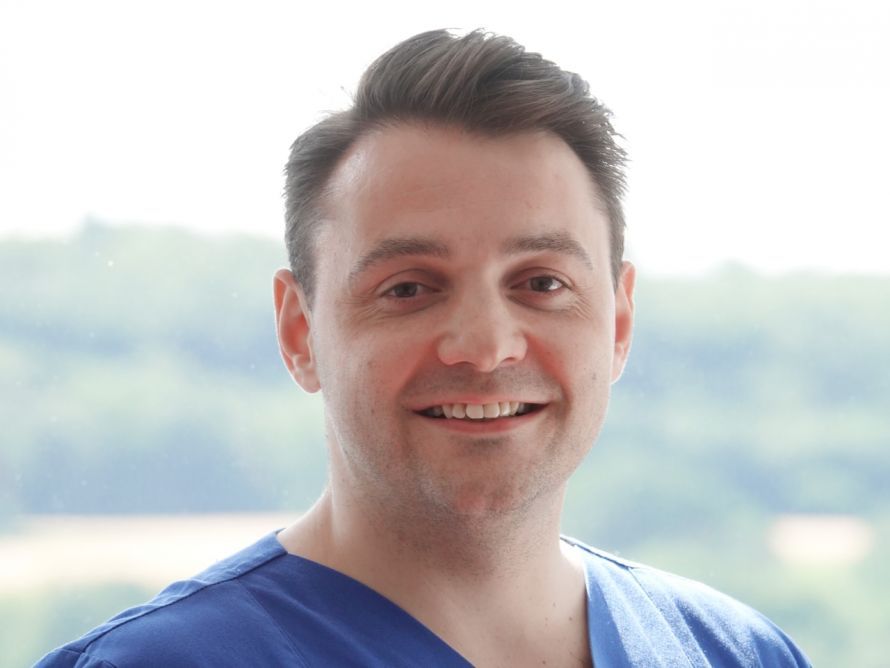
To discuss this, the editorial team of the Leading Medicine Guide spoke with Naumche Matoski, who specializes in the care of older adults.
A fall in old age is often more than a single event—it indicates that physical reserves have already been compromised. Even if outwardly “nothing seems to have happened,” the fall reveals that several systems have simultaneously reached their limits: balance, muscle strength, reaction time, circulation, vision, or even medication tolerance.
A fall therefore signals a silent downward spiral because it is often the first visible symptom of a long-standing but unnoticed instability. The body compensates for years—until its reserves are no longer sufficient. A fall then shows that these compensatory mechanisms have been exhausted. For geriatricians, such an incident is therefore a key diagnostic moment: it sheds light on hidden causes such as muscle atrophy, polypharmacy, cardiac arrhythmias, neurological changes, or incipient frailty.
And it is precisely this early detection that determines whether the downward spiral can be stopped—or even reversed.
“In older age, a fall rarely comes on suddenly—the warning signs develop gradually. Over the years, the heart, lungs, muscles, and the entire musculoskeletal system lose their reserves. What was once stable gradually becomes more fragile until this internal ‘house of cards’ begins to waver during everyday movements: when standing up, making a quick turn, or reaching for something you’ve forgotten.
The first fall is often harmless—a bruise, a contusion—but it leaves a distinct feeling of fragility. Many people don’t talk about it because it makes them uncomfortable, yet deep down they sense it: the body can no longer maintain its balance as it once did. This experience often sets off a chain reaction that extends far beyond the physical realm. Insecurity leads to a fear of falling; the fear of falling leads to a protective posture; and a protective posture leads to less movement. Although physical abilities are often still present, the mind gets in the way: confidence in one’s own ability to move safely and take care of oneself dwindles.
With each additional limitation, muscle mass continues to decline, resilience and mobility decrease, and social contacts become less frequent—leading to isolation and depressive moods. This process does not unfold over a few months, but rather over the course of years. Between the ages of 70 and 80, such a downward spiral can intensify slowly but steadily.
“That is precisely why the first fall is considered an important warning sign: It indicates that physical reserves are reaching their limits and the geriatric cascade has begun,” explains Mr. Matoski at the start of our conversation.
A fall in old age is rarely a coincidence—it is the visible culmination of a long chain of invisible stresses. A geriatrician must therefore proceed like a detective: He or she pieces together medications, pre-existing conditions, balance issues, muscle strength, cognition, and possible confusion into a comprehensive picture to identify the actual trigger.
This precise analysis is crucial, because only by identifying the true cause can the downward spiral be stopped and the risk of further falls be sustainably reduced.
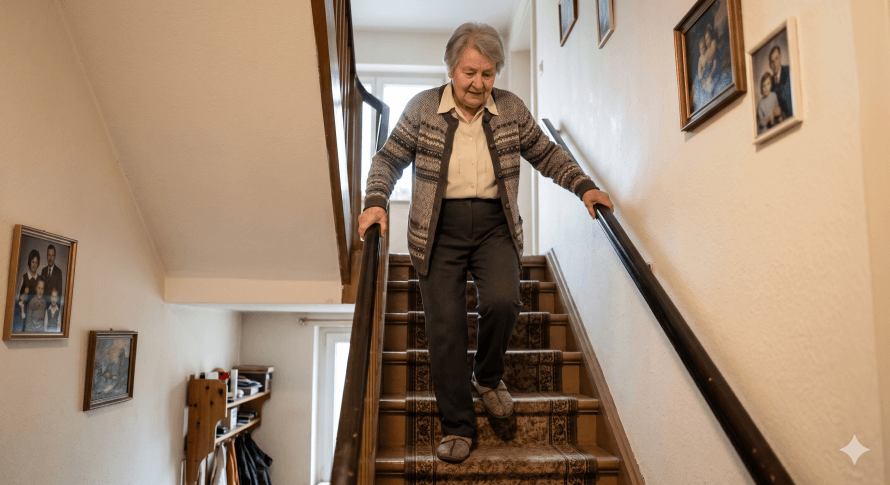
“Many older adults take blood thinners—both modern medications and older ones like Marcumar. As a result, even minor falls leave visible marks: bruises form more quickly, the skin tears more easily, and heals more slowly. For many affected individuals, this is an additional burden because it limits them not only physically but also aesthetically. Bruises or skin injuries are perceived as embarrassing; people want to hide them, and this is precisely what contributes to falls often being downplayed.
Instead of talking openly about it, the incident is downplayed—out of shame, fear of stigmatization, or concern that others might notice the physical decline. This reluctance makes medical assessment considerably more difficult. In the hospital, it is repeatedly observed that patients do not reach the geriatrics department until late in the process because falls are initially dismissed as “harmless.” Yet every fall is an important warning sign that should be evaluated early on. The process usually begins in the emergency room: Patients first undergo an orthopedic or trauma evaluation to rule out or confirm fractures. Only when it becomes clear that mobility, independence, or physical resilience are impaired is the geriatrics department consulted.
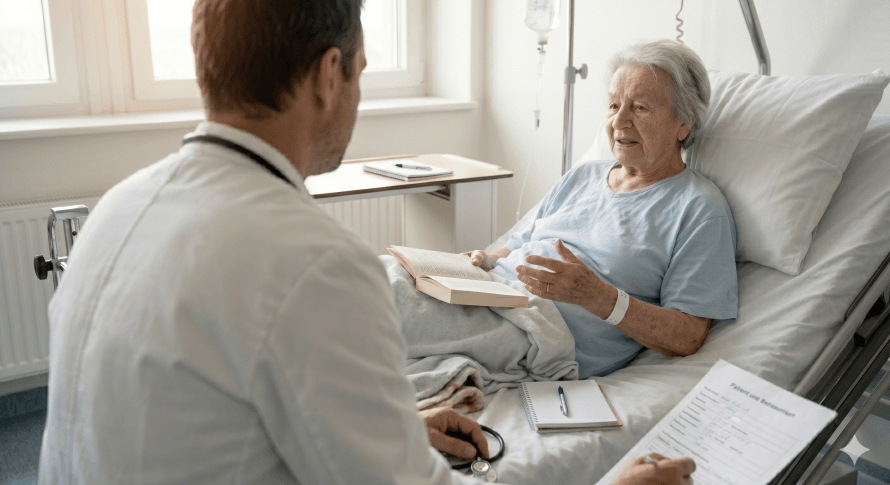
There, a comprehensive, interdisciplinary evaluation takes place. In addition to the medical assessment, physical therapy, occupational therapy, speech therapy, neuropsychology, nursing, and social medicine are all incorporated. A detailed history of falls and standardized geriatric assessments provide a holistic picture: What is the status of mobility, cognition, mood, daily living skills, and the social environment? Only this broad perspective reveals which factors led to the fall—and how a renewed downward spiral can be prevented,” says Naumche Matoski.
A hip fracture, for example, often profoundly changes the lives of older adults. It not only means a prolonged loss of mobility and independence—it is also a statistically serious event: one in three to five people die within a year of sustaining such a fracture. This figure illustrates just how severely such a fracture strains the entire body and how greatly physical reserves are already depleted at that point.
Those who recognize a fall as a warning sign and identify its causes early on can prevent a minor incident from triggering a life-altering—or life-shortening—cascade of events.
Naumche Matoski explains: “When admitting an older adult at risk of falling, we use a standardized battery of tests consisting of five key assessments. First, the nursing staff assesses the person’s ability to manage daily activities: how well they manage personal hygiene, eating, and getting dressed and undressed, and whether there are signs of incontinence—a frequently underestimated risk factor, because the urge to use the restroom can lead to hasty, unsteady movements.
This is followed by physical and occupational therapy tests to determine whether the patient can stand up, walk, and maintain balance without assistance. These also include mild provocation tests, such as a gentle nudge, to see if the patient can compensate for the loss of balance in a stable manner. Everything takes place in a controlled environment and yields an objective score that marks the starting point of treatment. Since these examinations are very personal, patients are thoroughly prepared in advance.
Many initially find the situation uncomfortable or feel as if they are being “put on display.” However, once it is explained why these tests are important—to understand cognitive processes, mobility, independence, and risks, and to plan individualized therapy—acceptance increases significantly. Tests are rarely refused, and even then, there are alternative ways to obtain the necessary information. “Patients’ autonomy is always preserved,” he adds, and continues:
“Geriatric diagnostics can be conducted both in an inpatient setting and in a day clinic. Inpatient treatment is typically indicated when a fall has already led to pain, bruises, or significant limitations, and comprehensive medical and therapeutic care is necessary. Once the patient has stabilized, they are either discharged home or—if necessary—transferred to short-term care or a nursing home. Day clinic treatment is intended for people who can still live at home but are experiencing increasing difficulties in their daily lives.
A referral can be made by the primary care physician, often at the urging of family members who have noticed changes. At the day clinic, the same assessments are conducted, combined with individually tailored therapies. Depending on the patient’s needs, 15 or 30 treatment sessions may be prescribed. These services are available to all patients with public health insurance. The prerequisite is that certain criteria are met—such as advanced age, multiple coexisting medical conditions, or typical geriatric warning signs like gait disturbances, a tendency to fall, or declining independence. This ensures that those who will benefit most receive support.”
Statistics clearly show just how serious falls are among older adults. As many as one-sixth of all people treated in the emergency room are there because of a fall—an indication of the enormous burden this issue places on the healthcare system.
“If a hip fracture occurs as a result, the mortality rate in the first year is 20 to 30 percent. These figures make it clear that such a fracture is, from a medical standpoint, at least as significant as many cardiovascular diseases that receive far more public attention. Our own analyses of the past seven years also show that the number of femoral neck fractures has nearly doubled—an annual increase of about 13 percent.
Several factors are driving this trend: the demographic shift caused by the aging baby boomer generation, the fact that people today are living longer with multiple chronic conditions, and the gradual decline in physical reserves over decades. Even minor additional stresses—heat, dehydration, loss of appetite—can then be enough to bring this internal “house of cards” crashing down. “The first fall is often the moment when all these factors become apparent and the journey to the emergency room begins,” explains Mr. Matoski.
Over the years, many older people take more and more medications—often prescribed by different specialists for various conditions, and without anyone regularly checking whether everything is still appropriate, tolerable, or necessary. This leads to polypharmacy: 15, 18, or even 20 medications a day are not uncommon. The problem is structural: Each doctor treats a specific organ, but rarely does anyone treat the whole person.
Primary care physicians have little time, hospital discharge summaries are confusing, and many medications are simply continued even though the patient’s situation has long since changed. As a result, the list grows—and with it, the risk.
“Many older people today benefit from ever-improving medical care—but this very fact also gives rise to a new problem: over-treatment. When different specialists each prescribe a medication for their respective conditions, a confusing mix of pills quickly emerges, the purpose and interactions of which are barely traceable anymore. Many patients eventually lose track themselves: the blue pill is ‘for something,’ the green one ‘for something else’—but they no longer know exactly what. One reason for this lies in the fragmented healthcare system.
There is no unified patient data system that comprehensively tracks medical history over decades. Each doctor works within their own specialty, follows their own guidelines, and often sees only a small part of the bigger picture. This creates a “blinkers system”: For every new problem, there’s a new medication, and many medications that were only needed temporarily simply remain on the prescription. This is exactly where geriatrics comes in. A comprehensive geriatric assessment first provides a 360-degree view of the entire situation: physical, cognitive, functional, and social. Next, the patient’s medical history is reconstructed, current diagnoses are reviewed, and they are compared with current guidelines.
This often reveals that multiple conditions—such as heart failure, high blood pressure, and atrial fibrillation—each have their own medication recommendations, which add up. Instead of nine different medications, however, a careful review may reveal that four modern, well-tolerated medications are sufficient—medications that have fewer side effects and are more effective. “The goal is clear: as many medications as necessary, but as few as possible—and always with the greatest possible benefit and the least possible burden for the older adult,” Matoski explains.
Delirium is an acute, sudden state of confusion that fluctuates greatly and usually resolves on its own—in contrast to slowly progressive dementia. It is often triggered by preventable factors such as infections, dehydration, pain, sleep deprivation, or a lack of assistive devices. That is why it is so important for family members to know: Delirium does not just happen out of the blue; rather, it is a treatable emergency that, when recognized early, can prevent a great deal of suffering.
Mr. Matoski explains: “In geriatrics, distinguishing between agitation, delirium, and dementia always begins with the clinical impression: How does the person respond, how do they come across in conversation, and how stable is their orientation? This is followed by a structured neuropsychological evaluation. Specially trained neuropsychologists assess short- and long-term memory, concentration, and visual and spatial orientation—for example, with tasks such as drawing a clock. The results yield scores that indicate whether everything is normal, whether an emerging disorder is present, or whether there are signs of dementia.
Depending on the findings, further steps are taken. Sometimes it becomes apparent over time that the cognitive impairment is not primarily due to a disease at all, but was exacerbated by medication. Over time, many older adults are prescribed additional medications—for pain, depressive symptoms, or restlessness—which, when taken together, can cause drowsiness, sluggishness, or apathy. In such cases, a targeted reduction or adjustment of the medication can help the person become more alert, active, and engaged again. Then symptoms that previously resembled dementia or delirium disappear, and the person can once again manage their daily life with significantly greater independence—sometimes even to the point where a planned care level or a move to assisted living is no longer necessary.”
When an older person falls, it’s worth pausing immediately to ask a few specific questions. Not to assign blame—but to find out whether the fall was truly a slip-up or a warning sign of incipient instability. It’s crucial to examine the areas that most commonly trigger falls: sensory perception, medications, mobility, safety in daily life, and overall health.
“Prevention in older age begins long before the first fall occurs—and it rests on two central pillars: strengthening physical reserves and increasing safety in daily life. It is crucial to specifically build up cardiac and pulmonary function as well as mobility. This is not achieved through ‘just any’ exercise, but through a structured combination of endurance, strength, and balance.
Many people start with short walks, which are gradually extended to improve cardiopulmonary endurance. Even more important for reducing the risk of falls are exercises that target various movement patterns: balance training, small increases in intensity, and regular repetitions. Senior groups, water aerobics, or tai chi can help—sometimes easier and sometimes harder to access depending on where you live, but proven to be effective.
Technical support can also play a role, though it is still underutilized in Germany. Telemedicine could assist older adults at home, assess living situations, and advise family members, but the infrastructure is not yet sufficiently developed and bureaucratic hurdles remain high. Wearables such as smartwatches or fall detection systems are getting better, but they are not yet precise enough for geriatric care to replace diagnostic tools.
In cardiology, on the other hand, remote monitoring is already working well. Even simple digital aids like balance games on the Nintendo Wii have proven effective because they train balance and strength in a playful way—even if the data is not yet standardized and incorporated into medical evaluations. All these measures show that prevention is possible, effective, and often easier than many people think. “The key is to start early, stick with it regularly, and view exercise not as a chore but as part of a stable, safe daily routine,” recommends Naumche Matoski.
The right time for a comprehensive geriatric assessment is always earlier than many people think. At the latest after a fall—even if it seemed harmless—a check should be done to determine whether it’s due to incipient instability, the effects of medication, or a gradual decline. But even without a fall, there are clear warning signs: increasing unsteadiness when walking, frequent stumbling, new confusion, restlessness at night, loss of appetite, noticeable exhaustion, or the feeling of “no longer being as resilient.”
“Geriatrics varies greatly across Germany because there is no uniform approach, and each federal state develops its own structures. While inpatient geriatric care is well-equipped in many places and maintains a high standard, semi-inpatient services and outpatient geriatric clinics lag significantly behind. The latter, in particular, would be important for providing older adults with early preventive counseling before a fall or an acute event even occurs.
However, regulatory approvals, jurisdictional issues, and the fragmentation of the healthcare system significantly hinder the expansion of such services. What the field lacks most is not technology or personnel—but recognition. Geriatrics is often underestimated, even though it uses modern tools, systematically assesses risks, and can intervene preventively before mobility, independence, or cognitive abilities are lost.
Many hospitals are currently undergoing a modernization process; some are already very well positioned, while others are catching up. Yet one thing is evident everywhere: the social aspect of geriatrics is underrepresented. “While there’s a lot of talk about cardiac catheters, joint replacements, or spinal surgery, few people realize that we can prevent falls, streamline medication regimens, or properly assess acute confusion,” Matoski notes.
Geriatrics requires broad, well-rounded knowledge. Anyone working in this field must be familiar with internal medicine, neurology, orthopedics, and surgical guidelines in order to provide holistic care for patients. This is challenging but necessary, because it often determines whether an older person can remain at home or loses their independence.
“For family members, this means: sharpening their own awareness. Changes creep in, are overlooked in everyday life, or are ignored out of habit. It’s helpful to keep an eye on three areas: physical condition—weight changes, gait, posture, and safety; the living environment—tidiness, structure, and potential hazards; and behavior—speech, forgetfulness, restlessness, or unusual patterns of conversation.
There are also practical questions to consider: When were their glasses or hearing aids last checked? Do they still work? Can the person even use them? Children, in particular, need to learn not to view their parents as “age-less,” but to realistically assess whether a multi-story house, many stairs, or a confusing medication schedule are still safe. “It’s often family members who are the first to notice that something isn’t right—and who therefore play a crucial role before a fall or a hospital stay fundamentally changes a person’s life,” Naumche Matoski explains, and with that, we conclude our conversation.
Thank you very much, Mr. Matoski, for this empathetic and highly informative insight into geriatrics!
- Board-certified specialist in internal medicine (Hesse State Medical Association, 2021) with a clear focus on the care of older patients.
- Additional specialty in Geriatrics (2023): in-depth expertise in multimorbidity, the consequences of falls, functional decline, and complex treatment situations in older adults.
- Subspecialty certification in Emergency Medicine: experience in acute care, including the assessment of geriatric emergencies such as delirium, falls, or acute deterioration.
- Experience as a senior physician at the Schlüchtern Medical Clinic (Main-Kinzig Clinics): leadership experience, responsibility for complex internal medicine and geriatric cases.
- ITLS Advanced Provider: Additional qualification in structured trauma and emergency management.
Share this article
Expert Interviews
Read next
- Expert interview
Expert interview with Professor Dr Elmar Herbst, PhD
Oct 15, 2026
Patient-centred and personalised knee surgery
Read more - Expert interview
Cardiogeriatrics: Significance and benefits in the context of hospital reform
Sep 21, 2026
Cardiogeriatrics: Significance and benefits in the context of hospital reform
Read more - Expert interview
Expert Interview with Professor Dr. Amadeus Hornemann, MPH
Sep 18, 2026
Prof. Amadeus Hornemann on Precision Medicine in Gynecology: Modern Surgery, New Techniques, Better Quality of Life
Read more