Expert Interviews
On Your Feet! Dr. El-Masri on Hallux Valgus

Alexandra Pfitzmann ·
Anyone in Switzerland looking for a proven specialist in ankle and foot conditions or injuries is very likely to end up seeing him: Dr. med. Isam El-Masri runs his renowned “Fuss-Paxis Bern” in the heart of Bern’s beautiful Old Town, where he offers the full range of treatments—from the latest conservative methods to innovative minimally invasive procedures—with tremendous expertise and boundless empathy. Nevertheless, he has dedicated himself with great passion to a field that affects many people: When it comes to hallux valgus, his professional judgment is sought after internationally.
The patients who place themselves in the experienced hands of Dr. Isam El-Masri by no means come only from the region surrounding Switzerland’s capital. The specialist, who grew up in Berlin and has been practicing in Switzerland since 2005, has a reputation that extends far beyond Switzerland’s borders. Some people are willing to travel long distances because they know that Dr. El-Masri has an unerring eye even during the diagnostic phase—and especially when it comes to complex foot or ankle surgery, it’s crucial to turn to a true expert: After all, the feet bear the entire body’s weight when walking, enable balance, and are thus among the body parts subjected to the greatest strain. With a total of 26 bones connected by joints and ligaments, the foot and ankle are also particularly complex. The Leading Medicine Guide spoke with Dr. El-Masri about his specialty. He also immediately dispelled a long-held myth.
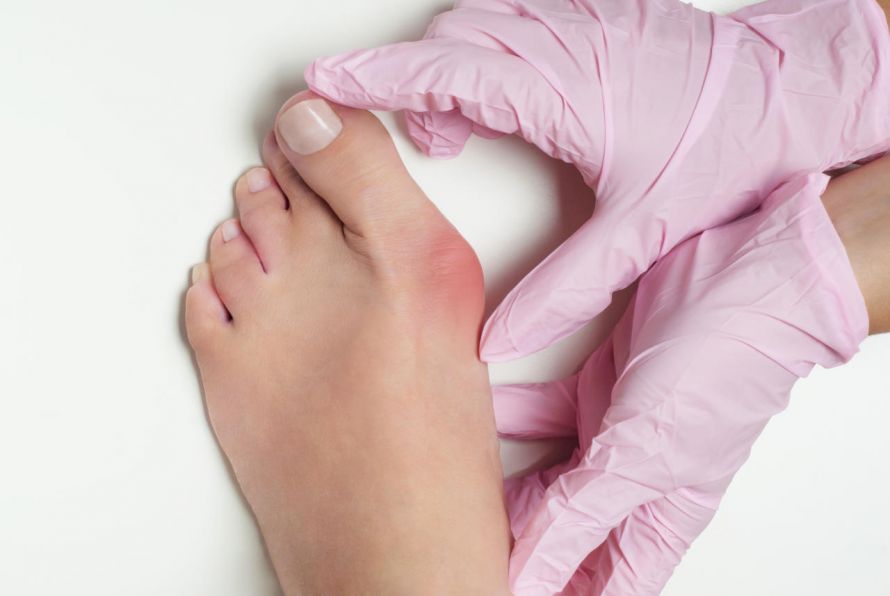
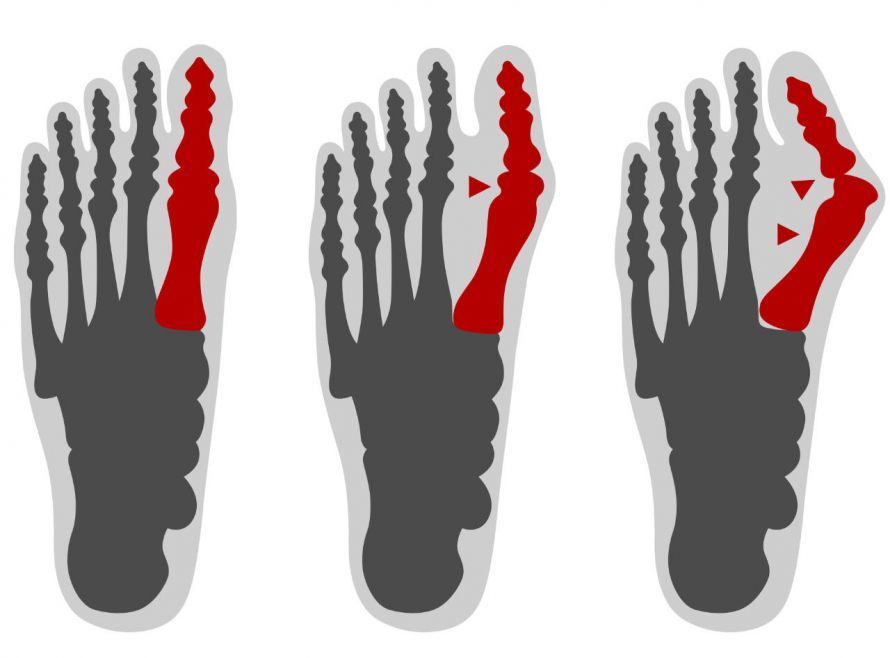
First of all: What exactly is hallux valgus? Behind this rather dynamic-sounding name lies a painful misalignment of the big toe. Well over ten million people in the German-speaking world alone suffer from this condition, also known as a bunion: In advanced cases, the big toe is noticeably crooked. This is not only a cosmetic issue for those affected but also a physical one, as this misalignment of the toe can be very painful. A common symptom of hallux valgus, in addition to the deviation of the big toe, is the gradual displacement of the second toe, which can lead to additional painful strain. It also becomes increasingly difficult for those affected to find appropriate footwear in which their foot still fits comfortably. Incidentally, more women than men suffer from hallux valgus, which is primarily due to hormonal factors.
Busting the Myth: Dr. El-Masri Sets the Record Straight
“If you search for the term ‘hallux valgus’ online, you’ll find a great many explanations containing misinformation,” Dr. El-Masri emphasizes right from the start. He continues: “It’s not true that hallux valgus is caused by wearing the wrong shoes,” he points out, “but it’s still widely believed that women are prone to hallux valgus because they often wear high heels and shoes that are too tight.” This does not mean that ill-fitting shoes have no consequences: “The development of hammertoes or claw toes can be caused by ill-fitting footwear, but hallux valgus has a purely genetic cause.” It’s clear: the renowned foot specialist is eager to dispel this myth.
The perpetuation of this myth is also linked to the status that foot specialists have long held within the field of orthopedics: “Our profession as foot surgeons was neglected for a very long time. Today, we are among the youngest group of specialists among surgeons and one of the fastest-evolving in terms of the state of research,” states Dr. El-Masri.
Consequences of Wearing the Wrong Shoes: Hammer Toes and Claw Toes
People who frequently wear shoes that are too tight or too high are more likely to develop so-called hammer toes or claw toes—that is, deformities that most commonly affect the second through fourth toes. For example, if a toe is hyperextended at the metatarsophalangeal joint but simultaneously flexed at the middle and distal joints, this is referred to as a claw toe. A hammer toe is characterized by flexion only at the middle joint. In most cases, hammer and claw toes are painless and represent merely a cosmetic issue. Over time, however, pressure points and “corns” can form, making it nearly impossible to wear normal footwear. This also contributes to misalignments of the other toes. In any case, a podiatrist should be consulted.
Hallux Valgus Surgery—Yes or No?
The key question with hallux valgus is, of course: Should the deformity be treated surgically—or can surgery be avoided? “My clear answer is that surgery is not absolutely necessary,” says Dr. El-Masri. Like many highly specialized physicians, he always prefers conservative treatment whenever possible: “The recommendation for surgery depends on the level of suffering,” he explains: “As soon as you experience significant suffering that impairs your quality of life, the hallux valgus deformity should be surgically corrected. In the early stages, symptoms can often be alleviated with foot exercises, physical therapy, and properly fitted shoes. For me, surgery is always the last resort.”
Children can also suffer from the development of hallux valgus; boys are affected later than girls due to delayed development. Surgery is only possible once the bones have fully matured, usually starting at age 14.
Minimally Invasive Surgery
“However, with hallux valgus, only the symptoms can be treated conservatively. For example, if someone comes to see me early on with a hallux valgus that isn’t yet very pronounced, I can help them with a minimally invasive procedure. To put it simply, without sawing or open surgery,” he explains. While this may sound a bit brutal, it is indeed the case with open surgery. With a minimally invasive procedure, hallux valgus can be easily corrected using a drill. “A procedure like this takes only about ten minutes,” says Dr. El-Masri, describing the operation. It goes without saying that the well-equipped “Fuss-Praxis Bern” has the full range of tools necessary for this. There are now more than a hundred surgical procedures available for treating a “bunion.” After a minimally invasive procedure, patients can walk again quickly and without difficulty—and can even resume athletic activities after about six weeks. As a rule, patients are symptom-free after a short rehabilitation phase. The hospital stay and time off work are significantly reduced thanks to this innovative surgical method.
Open Lapidus Surgery
If a patient waits too long, surgery becomes unavoidable. “In open surgery for hallux valgus—such as a Lapidus procedure—the toe bone must be cut, and a stabilizing correction must be made at the tarsus. This correction is then stabilized with screws. I usually use headless screws that can remain in the foot. Screws with heads can cause discomfort after a while and must then be surgically removed,” explains Dr. El-Masri. Of course, open surgery is always much more invasive: “With open surgery, there is an open wound, the likelihood of scar sensitivity is high, and the foot must not be rolled onto the ball for an extended period to protect it,” he clarifies.
Why Women Choose the “Shorter” Option
There is a direct link between the development of hallux valgus and the nature of the connective tissue. “Many women develop hallux valgus after pregnancy, often due to hormonal changes. This also affects women in the middle and late stages of menopause, when their hormonal balance changes completely,” says Dr. El-Masri, emphasizing: “I treat mostly women in my practice—they are affected much more frequently because the hormonal influence of estrogen usually causes a general weakness of the connective tissue.”
Complications from Untreated Foot Conditions
Anyone who ignores a hallux valgus or any toe deformity at all risks significant long-term damage. “You have to imagine that our feet bear our entire body weight. We have what’s known as a mechanical chain running from the feet through the knee and hip all the way to the back,” concludes Dr. El-Masri. So anyone who walks “crookedly” all the time due to a toe deformity—or even puts all their weight on one side while walking—must expect further consequences along this mechanical chain.

“Do something for your feet!”
And what shoes does the specialist recommend? Is walking barefoot an option? “Walking barefoot a lot is good for your feet. Wearing flip-flops in the summer is the closest thing to walking barefoot. However, your toes shouldn’t tense up when you try to hold onto the flip-flops by gripping the toe separators. Whenever you have the chance, walk barefoot!” recommends Dr. El-Masri. Regularly switching up the type of shoes you wear is also recommended. “Try to avoid wearing shoes with insoles all the time. Your foot gets used to this protected position, and the muscles of the arch of the foot become increasingly weakened,” he explains.
A Wish and a Look to the Future
During the conversation, Dr. El-Masri ventures a look into the future—and expresses a hope: “A major wish of mine would be X-ray machines that emit no or only minimal radiation, so that a practice could work with a portable device without the lead-lined walls and glass panels currently required.” He adds hopefully: “I also hope that in the future, patients will seek consultation early on to avoid potential complications. Furthermore, I aim to perform minimally invasive surgery using screws even in cases of severe foot deformities.” And finally: “Overall, foot deformities still need much more research.” Since foot surgeons are the smallest but also one of the most active groups among surgeons, we can look forward to new findings from research. It’s good to know that Dr. Isam El-Masri is also actively conducting research!
Dr. El-Masri, thank you very much for the informative conversation! Anyone wishing to contact this renowned specialist directly can easily do so via his profile page on the Leading Medicine Guide.
Share this article
About the medical author
Alexandra Pfitzmann
Editor
Alexandra Pfitzmann – medical author: expert knowledge, professional articles and medical insights in the Leading Medicine Guide.
More about the medical author →Dr. Isam El-Masri - Bern - Foot and Ankle Surgeon
ProfileExpert Interviews
Read next
- Expert interview
Cardiogeriatrics: Significance and benefits in the context of hospital reform
Sep 21, 2026
Cardiogeriatrics: Significance and benefits in the context of hospital reform
Read more - Expert interview
Expert Interview with Professor Dr. Amadeus Hornemann, MPH
Sep 18, 2026
Prof. Amadeus Hornemann on Precision Medicine in Gynecology: Modern Surgery, New Techniques, Better Quality of Life
Read more - Expert interview
Expert Interview with Professor Dr. Konstantinos Anagnostakos
Sep 15, 2026
Prof. Anagnostakos on Painful Knee Replacements
Read more