Expert Interviews
Osteoporosis—an increasingly common widespread disease: An expert interview with Dr. Schläger

Alexandra Pfitzmann ·
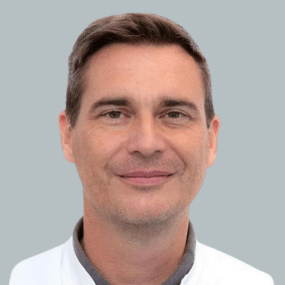
Dr. Sascha Schläger, M.D., is Chief Physician and Head of the Spine Disorders Department at Nardini Klinikum Landstuhl; as a leading authority in his field, he sets the standard for patient care. With comprehensive specialized training in orthopedics, trauma surgery, general surgery, manual medicine, osteopathic techniques, and osteology, he combines in-depth medical knowledge with practical experience to provide patients with the highest level of care.
His focus is on treating complex spinal disorders, such as herniated discs, spinal stenosis, and vertebral fractures, including osteoporotic fractures. Patients benefit from a holistic approach that integrates conservative and surgical methods to provide individually tailored solutions. Of particular note is his specialization in minimally invasive surgical techniques, which enable rapid recovery while maximizing tissue preservation.
The Nardini Clinic in Landstuhl is distinguished by state-of-the-art medical equipment and an exceptionally well-organized team. Under the leadership of Dr. Schläger, an impressive number of approximately 2,100 surgeries are performed here annually, accompanied by the care of thousands of outpatient and inpatient patients.
Dr. Schläger and his team place a special emphasis on the treatment of osteoporotic conditions. As an experienced osteologist, he is committed to the early diagnosis and sustainable treatment of bone loss. This includes innovative methods such as bone density testing and state-of-the-art imaging techniques, as well as a thorough understanding of preventive measures to maintain bone health in the long term. Patients not only receive first-class medical care but are also supported by comprehensive follow-up care that includes rehabilitation and long-term therapy.
The excellent work of Dr. Schläger and his team is backed by numerous certifications. For example, the Department of Orthopedics and Trauma Surgery has been recognized for years as a Maximal Care Endoprosthetics Center, which confirms the outstanding quality of treatment. Dr. Schläger holds certification from the German Spine Society (DWG) for surgical and conservative therapies. In addition, the center has been certified for years as a “DVO Osteology Center of Excellence,” further evidence of its high standards of medical excellence.
On the topic of osteoporosis—a condition on the rise, particularly in industrialized nations—the editorial team of the Leading Medicine Guide spoke with Dr. Schläger to learn more about the risks and, above all, the treatment options.
Osteoporosis, commonly known as bone loss, is one of the most common metabolic disorders, occurring primarily in older adults but increasingly affecting younger people as well. It leads to a gradual loss of bone mass and stability, which significantly increases the risk of fractures. Despite its widespread prevalence, osteoporosis often goes undetected for a long time because it progresses with virtually no symptoms for years. The disease is frequently not recognized until a fracture occurs—but by then, it is usually at an advanced stage.
“The body is constantly remodeling bone tissue: Old bone cells are broken down and replaced by new ones. In osteoporosis, however, bone resorption outweighs bone formation. As a result, the bones lose their stability and strength. The loss of bone mass is gradual and often occurs over many years without those affected noticing anything. The disease is therefore often not diagnosed until a bone fracture has already occurred. The large joints—such as the femoral neck, the wrists, or the upper arm—are particularly affected. In advanced stages, fractures can occur even with minimal stress or without any accident,” explains Dr. Schläger at the beginning of our conversation.
The development of osteoporosis is multifactorial and is influenced by genetic, hormonal, and environmental factors.
“The main risk factors include age, gender, and genetic predisposition. Women have a significantly higher risk of developing osteoporosis due to declining estrogen levels after menopause. The hormone estrogen has a protective effect on bones and promotes bone density. Without this hormone, bone loss accelerates. But men are also affected, especially as they age and their testosterone levels decline. Another key factor in the development of osteoporosis is lifestyle. A lack of physical activity means that bones are not subjected to sufficient stress and lose their density. Especially in modern society, which is often sedentary and where many people primarily engage in sedentary work, bone metabolism is not sufficiently stimulated. An unbalanced diet that is low in calcium and vitamin D also contributes to the disease. Calcium is essential for bone formation, and vitamin D ensures that the body can effectively absorb calcium. Other risk factors include smoking and excessive alcohol consumption, as both negatively affect bone metabolism,” says Dr. Schläger regarding the causes of osteoporosis, adding: “Secondary osteoporosis occurs when other medical conditions or medications cause bone loss. Common causes include hormonal disorders, such as hyperthyroidism or parathyroid disorders. Medications such as cortisone or proton pump inhibitors, which are used to treat stomach disorders, can also accelerate bone loss when taken long-term.”
Osteoporosis can also affect younger people if risk factors are present. Starting at age 30, the body begins to lose a small amount of bone mass each year.
“This is a natural aging process, but it can be exacerbated by unhealthy lifestyle habits such as a lack of exercise, poor nutrition, and substance abuse. Premature bone loss can occur particularly among adolescents and young adults who do not engage in regular physical activity and do not eat a balanced diet. In many cases, the cause of early bone mass loss is an unhealthy lifestyle characterized by too little physical activity and poor dietary habits. Bone formation is particularly crucial during adolescence, as bone growth in the body peaks around age 30. “If this process is disrupted by unhealthy factors, it can have a negative impact on bone structure later in life,” notes Dr. Schläger. However, early diagnosis and targeted preventive and therapeutic measures can significantly slow the progression of the disease.
Osteoporosis is primarily characterized by a progressive decrease in bone density, which is often asymptomatic in the early stages. This insidious progression makes it difficult to detect the disease early on.
“Patients often feel no pain, and it is only as the disease progresses that fractures occur, frequently without any external trauma. Classic fractures associated with osteoporosis include fractures of the femoral neck, the vertebral bodies, and the wrist. What is particularly alarming is that these fractures can often occur even with minimal impact or without any apparent accident,” explains Dr. Schläger, going on to discuss diagnosis:
“The diagnosis is usually made through a bone density test. This measures bone density to determine how much calcium and other minerals are present in the bones. This test is frequently performed on women aged 65 and older and on men aged 70 and older, especially if risk factors are present. In addition, X-rays and MRI scans can be used to detect existing fractures or changes in bone structure. Blood levels of vitamin D can also provide insight into the risk of osteoporosis, since vitamin D plays a central role in calcium absorption.”
Bone density measurement, also known as dual-energy X-ray absorptiometry (DXA), is a noninvasive, painless procedure for measuring bone density. In this procedure, X-rays of varying energy levels are passed through the body. The bones absorb some of this radiation, and the amount absorbed depends on bone density. The results are reported as a T-score or Z-score, with a T-score of -2.5 or lower indicating osteoporosis. Bone density is most commonly measured at the lumbar spine and the femoral neck on both sides, as these areas are particularly susceptible to fractures.
The treatment of osteoporosis aims to slow bone loss, reduce the risk of fractures, and improve bone health.
“Initial treatment typically involves medication to stop or slow the breakdown of bone tissue. This can be achieved with bisphosphonates or other medications such as denosumab, which inhibit bone resorption. It is also important to optimize calcium and vitamin D levels in the body. Calcium is essential for bone formation, and vitamin D ensures that the body can effectively absorb calcium. Another important component of treatment is physical activity. Exercise helps maintain bone density and stabilize bone metabolism. Sports that place a certain amount of stress on the bones are particularly beneficial. These include jogging, jumping rope, and even purposeful stair climbing. These activities stimulate the bones and promote the formation of new bone tissue. While swimming is good for endurance, it does not have a sufficient effect on bone stability. Strength training can also help with osteoporosis, as it strengthens the muscles and thus reduces the risk of falls,” recommends Dr. Schläger.
Physical therapy is another important component of treatment, especially for patients who have already suffered fractures or who are at increased risk of falls. Targeted exercises to strengthen muscles and improve balance help minimize the risk of falls. In advanced cases, when severe fractures or complications occur, surgery may be necessary. This can include the stabilization of vertebral fractures or the implantation of artificial joints.
The best prevention is an active lifestyle with regular exercise and a balanced diet.
Dr. Schläger offers the following advice on prevention: “Calcium-rich foods such as dairy products, green leafy vegetables, nuts, and certain types of mineral water are important for keeping bones healthy. Vitamin D is produced by exposure to sunlight, but especially during the winter months, sun exposure is often insufficient to produce enough vitamin D. Therefore, it is recommended to take vitamin D and calcium supplements, particularly for middle-aged and older adults and for women going through menopause.” Furthermore, it is important to avoid risk factors such as smoking and excessive alcohol consumption, as both negatively affect bone metabolism and promote bone loss. Staying in touch with your primary care physician is also important, explains Dr. Schläger: “The primary care physician is a key point of contact for patients with osteoporosis, as they typically make the initial diagnosis and oversee treatment. After a hospital stay or a specialized diagnosis, the primary care physician often takes over long-term care. This includes prescribing medications and regularly monitoring bone density levels as well as calcium and vitamin D levels. In addition, they can refer the patient to an osteologist to ensure even more precise and specialized treatment.”
If osteoporosis is left untreated, the disease progresses and leads to further fractures and bone instability.
“Especially in older patients, healing after a bone fracture is significantly slower, and the risk of suffering further fractures increases. This often results in a loss of independence and quality of life. A vicious cycle ensues, as patients often limit their physical activity out of fear of further falls, which in turn accelerates bone loss. That is why it is important to diagnose osteoporosis early and treat it actively to prevent complications,” explains Dr. Schläger, and with that, we conclude our conversation.
Dr. Schläger, thank you very much for this in-depth conversation. Your explanations provide valuable information for anyone dealing with osteoporosis.
Share this article
Expert Interviews
Read next
- Expert interview
Expert interview with Professor Dr Elmar Herbst, PhD
Oct 15, 2026
Patient-centred and personalised knee surgery
Read more - Expert interview
Cardiogeriatrics: Significance and benefits in the context of hospital reform
Sep 21, 2026
Cardiogeriatrics: Significance and benefits in the context of hospital reform
Read more - Expert interview
Expert Interview with Professor Dr. Amadeus Hornemann, MPH
Sep 18, 2026
Prof. Amadeus Hornemann on Precision Medicine in Gynecology: Modern Surgery, New Techniques, Better Quality of Life
Read more