Expert Interviews
Prof. Dr. Dr. Nowakowski on hip replacement surgery: “I see a lot of potential for development there!”

Claudia Dechamps ·
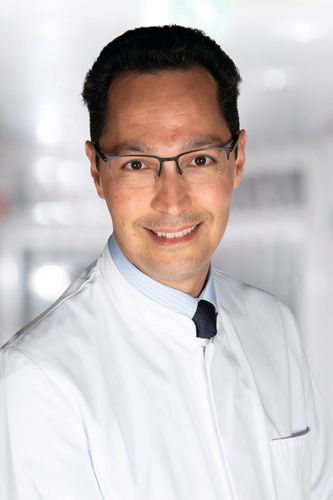
This specialist in hip surgery and hip replacement does indeed have an unusual background: Prof. Dr. med. Dr. phil. Dipl.-Ing. (FH) Andrej M. Nowakowski, who enjoys high international recognition and a corresponding level of prominence at the Baselland Cantonal Hospital in Switzerland, not only completed a degree in medicine but also a full degree in mechanical engineering—and, as a third field of study, a degree in biomedical engineering. This distinguished specialist in orthopedic surgery and traumatology of the musculoskeletal system went on to earn his doctorate not only in medicine but also in biomedical engineering. Given this background, it is almost obvious that his innovative and inventive spirit sees significant room for improvement even in long-established hip prostheses. The Leading Medicine Guide spoke with the renowned hip specialist Prof. Dr. Dr. Nowakowski about his remarkable visions for joint replacement.
Leading Medicine Guide: Artificial hip joints have been used in orthopedics for many decades. A high standard has now been achieved, and not much is changing at the moment. Why, then, do you still find the topic of hip replacement so interesting and exciting?
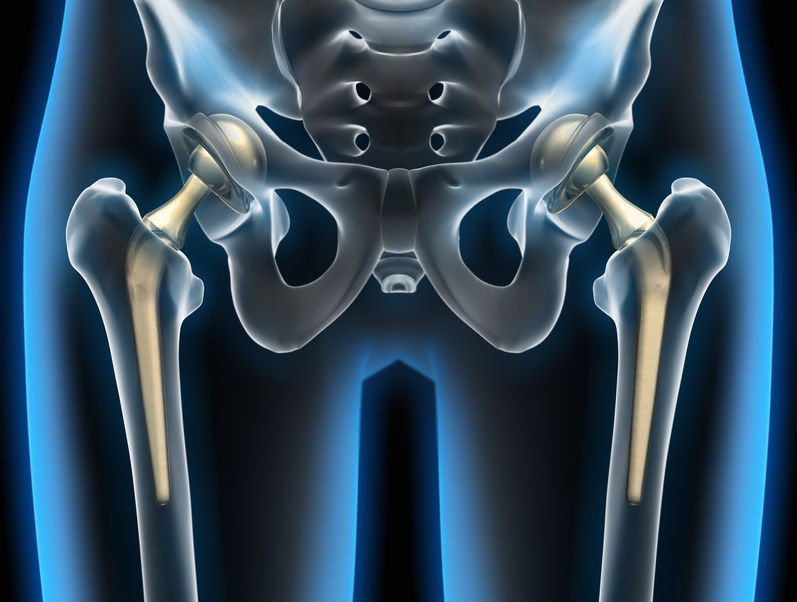
Prof. Dr. Dr. Andrej M. Nowakowski: If you look back at the history of hip replacement, the foundation for today’s technology was laid in the 1960s. Since the mid-twentieth century, significant improvements in prostheses have been achieved, particularly in terms of the available materials and wear behavior. Over the past twenty years, surgical techniques have also undergone a fundamental shift toward minimally invasive procedures; today, we perform nearly all primary surgeries using minimally invasive techniques. Consequently, the instruments used have also changed. We have now reached a high standard in hip arthroplasty, which is currently changing only marginally. Personally, however, I do not believe that the optimal level has been reached in this field. In my opinion, there is still considerable potential for further development.
Leading Medicine Guide: And where exactly do you see a need for and opportunities to improve in hip replacement surgery?
Prof. Dr. Dr. Andrej M. Nowakowski: In my field of work, I deal extensively with age-related fractures, among other things. These include, for example, the well-known femoral neck fractures, which were still a major concern decades ago and can still have a significant impact on independence and life expectancy today. Certain types or variants of these fractures are a classic indication for artificial hip joints. After surgery, patients quickly regain full weight-bearing capacity and restore their quality of life. The materials used are tried and true. But when it comes to people with age-related fractures, we are dealing with a fragile patient group that should not be subjected to long surgical procedures. And this is precisely where my line of thinking comes in: there is still room for improvement—including in the areas of prosthesis design and fixation methods—to achieve the shortest possible surgery duration and thus a reduced risk of complications.
Leading Medicine Guide: What are the key factors for achieving a shorter surgical duration for hip replacements?
Prof. Dr. Dr. Andrej M. Nowakowski: I’m particularly focusing on a new approach to cementing prostheses. Cementing a prosthetic stem is considered the preferred method for very brittle bone and severe osteoporosis to prevent further fractures around the prosthesis—which is precisely the case for this patient group. However, the cementing process—or rather, the curing time—takes quite a long time. We should be able to shorten this time or make better use of it than simply waiting for the cement to cure. I am working on a project with industry partners from Germany and Switzerland to design an implant that might be better suited specifically for this patient group. In my view, such a prosthesis design must meet different requirements. It does not need to have a service life of fifteen to twenty years or more, nor does it need to meet the mobility needs of a relatively young person who still wants to play sports and be very active. For this patient group, some parameters are different, so there’s still room for improvement, and that’s what I’m working on.
Leading Medicine Guide: Is it also possible to replace only the articular head—to implant a “half prosthesis,” so to speak—and isn’t that perhaps less invasive?
Prof. Dr. Dr. Andrej M. Nowakowski: That’s a very good question: Whether we implant a full prosthesis with a cup or a half prosthesis—just the head and stem—we decide on a case-by-case basis depending on the patient. We use a tiered model that takes into account various parameters such as biological age, level of activity and independence prior to the fracture or fall, mobility, relevant comorbidities, and bone quality—including osteoporosis, etc.
Leading Medicine Guide: What possibilities do robotics and 3-D offer in this context?
Prof. Dr. Dr. Andrej M. Nowakowski: Robotics certainly plays a role in joint replacement, but I currently view it more as a field of scientific development for the future. At present, I believe that nothing can replace the surgeon’s extensive experience in this area. Therefore, good teaching and surgical training programs are important for us surgeons. Unfortunately, many developments of this kind today are industry-driven and are more or less “marketing tools” with no real benefit for the patient, yet they involve significantly greater effort and costs. 3D printing technology, on the other hand, opens up entirely new possibilities for us. For example, we can use it to create shapes and surfaces whose structure allows for better bone integration. It has become easier to produce much more complex models—something that wasn’t really possible in the past.
Leading Medicine Guide: How can the risk of dislocation—the hip ball popping out of the socket—be prevented?
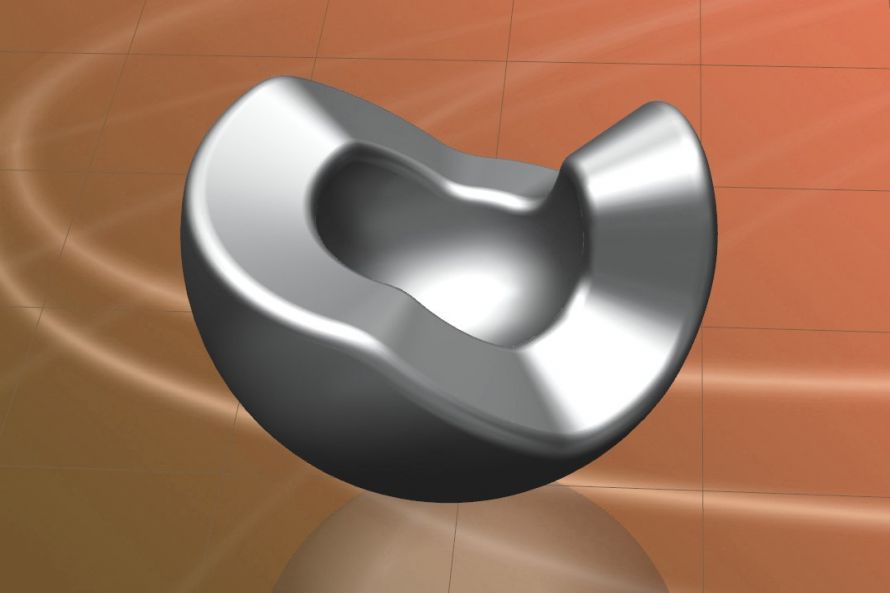
Prof. Dr. Dr. Andrej M. Nowakowski: There are various studies—including large-scale ones involving tens of thousands of patients who underwent surgery—that have analyzed the reasons for repeat surgery—that is, revising the initial surgery: the most common reason was an unstable hip joint, such as due to dislocation, popping out, or slipping out of place. This is precisely where I still see significant room for improvement in today’s hip replacement surgery. We usually use simple hemispherical cups or, at most, symmetrical cups. However, when you consider the natural range of motion of a hip joint, there must be greater mobility in the primary direction of movement—that is, during flexion and extension—than in the lateral direction. My vision, based on extensive biomechanical studies, is an optimized asymmetric acetabular design. We are currently analyzing where material can be reduced and, conversely, added to achieve excellent range of motion while potentially providing additional stability.
Leading Medicine Guide: Can orthopedic surgeons also perform hip surgery that preserves the joint? In other words, intervene at an early stage of osteoarthritis?
Prof. Dr. Dr. Andrej M. Nowakowski: There are always those who argue that too many surgeries are performed and too many artificial joints are implanted. Initially, we always consider conservative therapy—that is, non-surgical treatment. Only in cases of advanced wear and tear and persistent symptoms, despite conservative therapy, are surgical procedures considered. Depending on the underlying cause, joint-preserving surgeries can certainly be offered. We can also perform these procedures using minimally invasive techniques, such as arthroscopy, thereby minimizing the burden on the patients. Hip arthroscopy, for example, is still a relatively new field compared to knee arthroscopy. In the meantime, new surgical techniques have become established for the hip as well, and specialized instruments have been developed.
Prof. Dr. Dr. Nowakowski, we would like to express our special thanks for your detailed presentation of your innovative ideas for improving joint replacement surgeries.
You can contact the specialist directly via his profile page on the Leading Medicine Guide.
Incidentally, Prof. Dr. Dr. Nowakowski has earned a reputation in professional circles through numerous publications and has repeatedly set new standards. Here we have compiled a small collection of his most recent publications:
- H. Bösebeck, A.M. Holl, P. Ochsner, M. Groth, K. Stippich, A.M. Nowakowski, Egloff, S. Hoechel, B. Göpfert, S. Vogt. Cementing technique for total knee arthroplasty in cadavers using a pastry bone cement. Journal of Orthopaedic Surgery and Research, 16(1):417, 2021
- D. Burger, A.M. Nowakowski. Massive eccentric wear of the acetabular cup following polyethylene liner abrasion in hip arthroplasty may lead to a high risk of injury during revision surgery. Journal of Orthopaedic Case Reports, 11(3):75–78, 2021
- P. Ismailidis, V. Kremo, A. Mündermann, M. Müller-Gerbl, A.M. Nowakowski. Total knee arthroplasty: posterior tibial slope influences the size but not the rotational alignment of the tibial component. Knee Surgery, Sports Traumatology, Arthroscopy, 28(12):3899-3905, 2020
- A.M. Nowakowski. [Developments in hip arthroplasty]. German. Therapeutische Umschau, 77(10):499-503, 2020
- M. Reichelt, S. Gehmert, A. Krieg, A.M. Nowakowski. Bone Crushing in Infected Pseudarthrosis—An Extraordinary Way to Treat Osteomyelitis Caused by Resistant Bacteria. Journal of Orthopaedic Case Reports, 9(6):74–77, 2020
- C. Stöbe, S. Hoechel, M. Müller-Gerbl, A.M. Nowakowski. Systematic effects of femoral component rotation and tibial slope on the medial and lateral tibiofemoral flexion gaps in total knee arthroplasty. Journal of Orthopaedic Translation, 22;24:218-223, 2020
Share this article
About the medical author
Claudia Dechamps
Editor
Claudia Dechamps – medical author: expert articles, professional insights and medical knowledge in the Leading Medicine Guide.
More about the medical author →Cantonal Hospital Baselland
ProfileExpert Interviews
Read next
- Expert interview
Cardiogeriatrics: Significance and benefits in the context of hospital reform
Sep 21, 2026
Cardiogeriatrics: Significance and benefits in the context of hospital reform
Read more - Expert interview
Expert Interview with Professor Dr. Amadeus Hornemann, MPH
Sep 18, 2026
Prof. Amadeus Hornemann on Precision Medicine in Gynecology: Modern Surgery, New Techniques, Better Quality of Life
Read more - Expert interview
Expert Interview with Professor Dr. Konstantinos Anagnostakos
Sep 15, 2026
Prof. Anagnostakos on Painful Knee Replacements
Read more