Expert Interviews
The Body's Power Plant: A Conversation with Prof. Dr. med. Markus Heim About the Liver

Alexandra Pfitzmann ·
The human liver weighs a full 1.5 kilograms. Its role is immensely important: This organ, located in the upper right abdomen below the diaphragm, rids the body of toxins. So if you’ve eaten a particularly fatty meal or had too much alcohol, you’re really putting your liver to the test—the more often you do this, the greater the strain. That’s because too many toxins build up in the blood, and the liver has to cleanse them out. About two thousand liters of blood pass through this cleansing gland every day. It’s important to realize that our total blood volume flows through the liver up to five hundred times a day—and is supplied with the vital nutrients stored there in the process. However, if the liver is constantly overburdened, this can lead to fatty liver disease and ultimately trigger life-threatening conditions. The editorial team at Leading Medicine Guide took the opportunity to speak with renowned specialist Professor Dr. Markus Heim about this topic. The chief physician of hepatology at the Clarunis University Liver and Liver Cancer Center in Basel highlights interesting aspects of this fascinating organ!
 The liver is the central organ for our metabolism and the largest gland in our body. You can think of the liver as a recycling center. Nutrients, toxins, and even medications enter the liver via the portal vein, which collects blood from the digestive organs. “All the food we consume is delivered to the liver cells and, so to speak, broken down into the building blocks that are essential for our body’s needs, and those that are released as waste to be excreted,” Professor Dr. Heim begins our conversation.
The liver is the body’s central powerhouse for all metabolic processes
During fat metabolism, liver cells break down fats to generate energy and also produce up to one liter of bile daily, which flows through the common bile duct into the duodenum. Bile acts as a partner to the liver, helping to break down and absorb fats.
During fat metabolism, liver cells break down fats, generating energy in the process—and producing a yellow, brownish, or olive-green fluid: bile. This bile is collected in small bile ducts and flows through the common bile duct into the duodenum. Bile helps break down and absorb fats.
The liver is also responsible for maintaining a constant blood sugar level during carbohydrate metabolism. For example, the liver absorbs sugar and stores it as glycogen when blood sugar levels rise, such as after a meal. If blood sugar levels are too low, the liver breaks down glycogen and releases sugar into the bloodstream.
In protein metabolism, the liver converts amino acids from food in such a way that energy is produced and fats and carbohydrates can be synthesized. The toxic ammonia produced during these processes is broken down by liver cells and converted into non-toxic urea, which is transported to the kidneys and can be excreted in the urine.
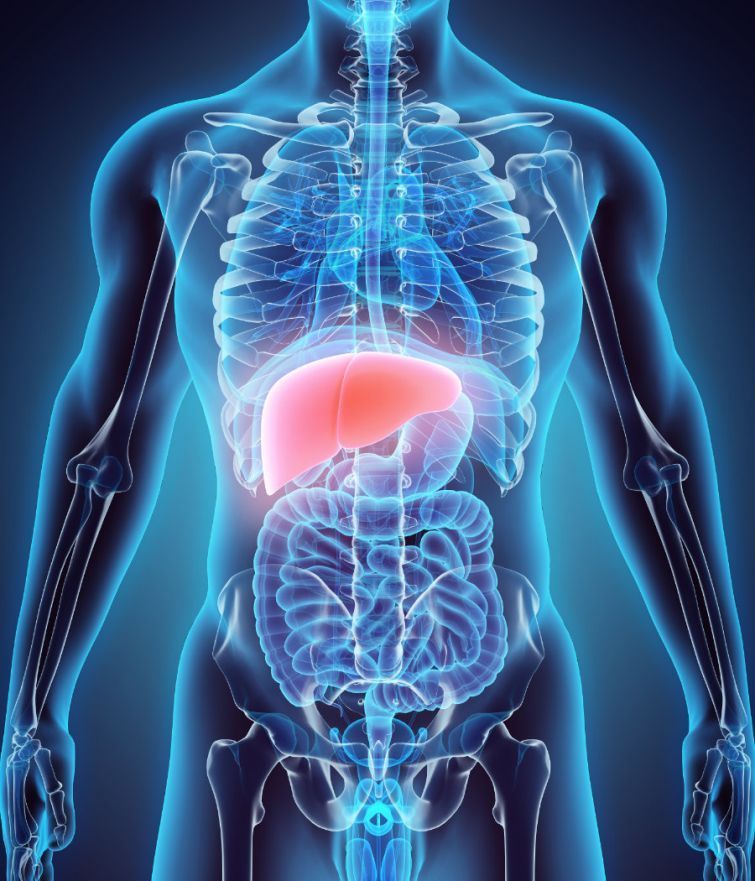
The liver can become diseased due to a variety of causes
“Alcohol consumption, chronic hepatitis B or C, and fatty liver disease caused by obesity can seriously compromise liver function,” explains Professor Dr. Heim, adding: “This can lead to cirrhosis of the liver, meaning the liver becomes scarred and shrinks and can no longer fully perform its functions, which can result in disturbances in metabolism, hormone balance, or blood clotting. Cirrhosis can also trigger the formation of tumors.”
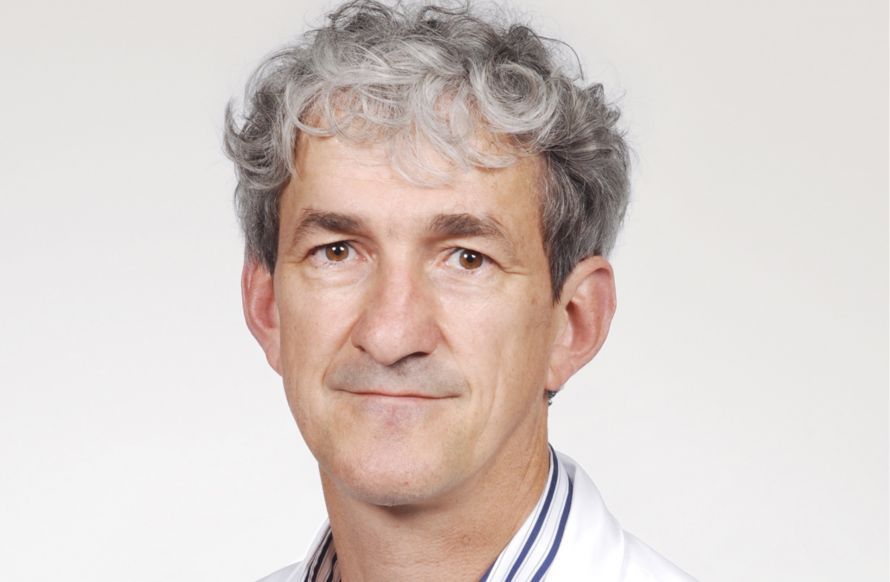
Among malignant tumors, a distinction is made between hepatocellular carcinoma (HCC) and cholangiocellular carcinoma (CCC). To clarify, Prof. Dr. Heim explains: “Hepatocellular carcinoma is a malignant primary tumor that develops from liver cells, known as hepatocytes. The main risk factor for HCC is liver cirrhosis. This form of liver cancer occurs much more frequently than cholangiocellular carcinoma, which, in turn, originates from the bile duct cells. We do not yet know much about the cause of cholangiocellular carcinomas. Chronic inflammation of the bile ducts may be a trigger, but in most cases, no specific cause for the development of the cancer can be identified. In such cases, the prognosis for patients is usually not very favorable, as this type of tumor is typically detected very late.” For patients with the rare form of cancer known as bile duct carcinoma, the integration of visceral surgery, gastroenterology, and hepatology at Clarunis is, of course, particularly beneficial.
Not every case of liver cirrhosis necessarily leads to cancer
It is of paramount importance to keep liver cirrhosis under control in a timely manner. “If a patient, for example, drinks alcohol regularly, it is strongly recommended that they stop drinking completely after being diagnosed with liver cirrhosis. This allows the liver to regenerate, and some scarring can also improve by abstaining from alcohol,” explains Professor Dr. Heim.
“Anyone who thinks this means we’re always dealing with alcoholics is mistaken. It’s quite unpredictable. Some of those affected are what are known as social drinkers. They enjoy having a few glasses of wine or beer in company, which actually represents the average for the general population. Despite moderate alcohol consumption, they develop liver disease,” says Professor Dr. Heim, describing the unpredictability of alcohol-related issues. “If fatty liver has developed due to obesity, the patient is, of course, advised to lose weight through dietary changes and increased physical activity in order to give the liver a chance to regenerate and to prevent the development of cirrhosis,” the liver specialist continues.
As far as general alcohol consumption is concerned, there is no safe limit in that sense. “The World Health Organization (WHO) recommends that men consume no more than thirty grams of alcohol per day. That’s roughly equivalent to three deciliters of wine—women should drink no more than twenty grams, or two deciliters of wine. But here, too, the rule applies: Everyone reacts differently,” says Professor Dr. Heim, who also mentions that there is no drug treatment for cirrhosis of the liver.
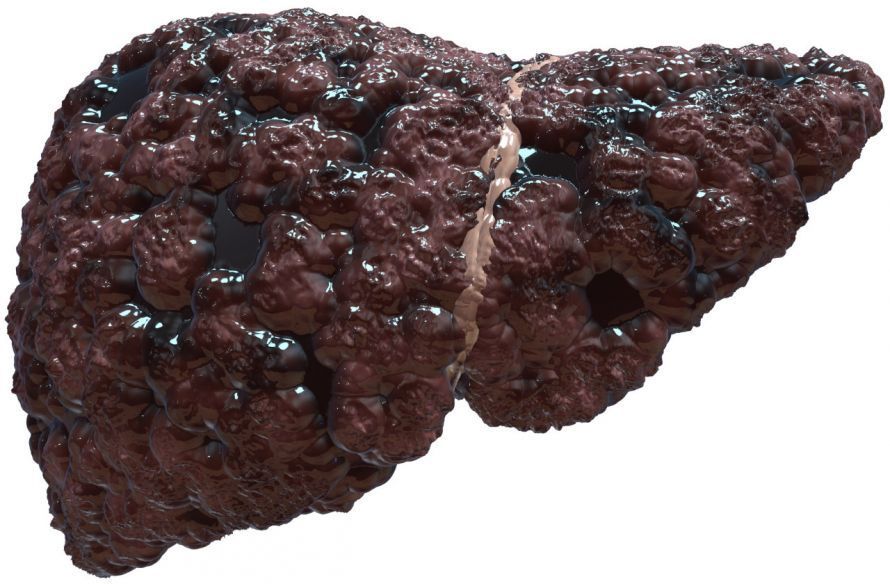
Illustration of cirrhosis of the liver in an advanced stage © SciePro | AdobeStock
Can the liver simply regenerate?
The liver is often said to have the wonderful ability to regenerate. One might conclude from this that damaged tissue can be removed and the liver will regenerate healthily. “Unfortunately, it’s not that simple,” counters Professor Dr. Heim, explaining: “The liver consists of a right and a left lobe. Each half has four functional segments, for a total of 1–8. If, for example, segments 1 and 2 were removed, the six remaining segments would regenerate until the liver once again reached a total weight of 1.5 kilograms. However, if someone has cirrhosis of the liver, this regenerative process unfortunately no longer works as well. With a healthy liver, regeneration wouldn’t be a problem at all—that’s what makes this organ so fascinating.”
Liver diseases develop silently
It takes about ten to thirty years for cirrhosis to develop. As a result, patients usually have had liver disease for years without knowing or noticing it. “Any other inflammation in the body is characterized by pain. But the liver has no pain nerves, and people don’t feel that their liver is diseased. Most people only find out that their liver enzymes are elevated during a checkup or when donating blood,” says Professor Dr. Heim, highlighting the danger of this insidious disease.
“Only in cases of very advanced cirrhosis do symptoms appear in the form of yellowish eyes and yellowish skin, which is why cirrhosis is commonly referred to as jaundice. In addition, patients feel very tired and have reduced performance, precisely because they lack the energy supplied by the liver, which acts as a powerhouse. Occasionally, patients in advanced stages also develop fluid in the abdomen—ascites—which can reach volumes of six to eight liters. This is usually accompanied by abdominal pain,” says Professor Dr. Heim, describing the more severe form of the disease.
Of course, there are also benign changes in the liver that must be diagnosed and treated, such as a harmless liver cyst, which is usually removed via a minimally invasive procedure. Benign conditions also include a liver abscess, which can be treated with medication if necessary.
And what is recommended for prevention?
Of course—a healthy lifestyle is always recommended. No excessive alcohol consumption, a balanced and healthy diet, and sufficient exercise. Those who are overweight are advised to lose weight. These are factors that people can always control themselves. “As a specialist in liver diseases, I, along with my colleagues, am concerned that people do not have their liver function tests checked as part of regular health screenings. They measure blood pressure, cholesterol, blood sugar, and intraocular pressure, but liver function tests are often overlooked. Yet early detection of elevated liver enzymes would allow for an immediate response to prevent disease from developing in the first place,” warns Professor Dr. Heim.
“Viral liver diseases such as hepatitis B or C can be prevented through the same preventive measures used to prevent HIV: safe sex and avoiding the reuse of syringes and needles during intravenous drug use,” explains Professor Dr. Heim, adding: “Of course, all doctors are called upon, when administering medications or writing prescriptions, to educate patients and be aware of which medications can lead to serious liver damage.”
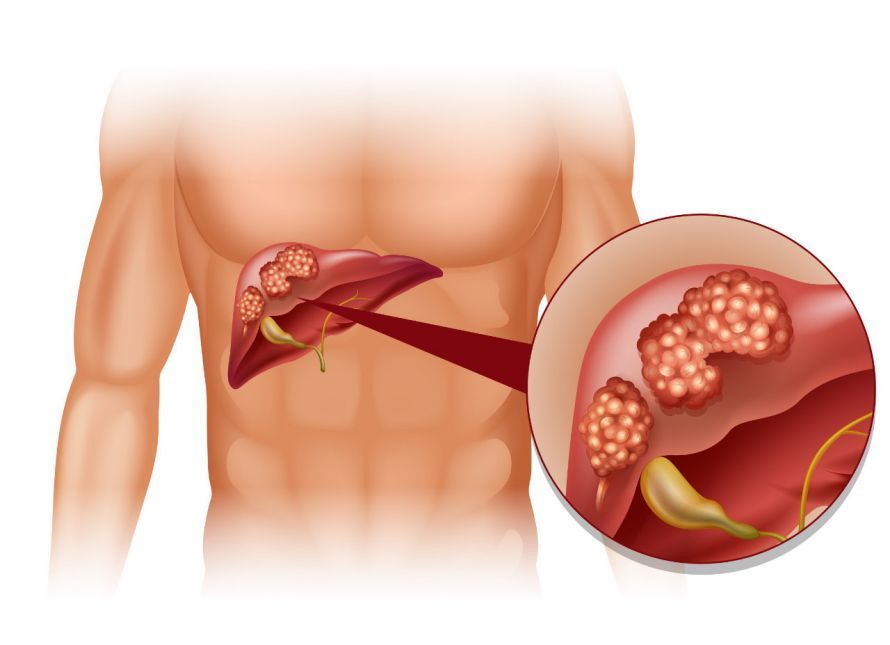
Schematic representation of liver cancer © blueringmedia | AdobeStock
The Highest Standard of Care at the Clarunis Liver and Liver Cancer Center
When it comes to conditions that can arise in connection with the liver, the Clarunis Liver and Liver Cancer Center has two highly specialized liver surgeons who treat all such conditions with university-level expertise and top-tier care: Professor Markus Heim, M.D., and Professor Otto Kollmar, M.D. “What’s important at Clarunis is the interdisciplinary collaboration among the various medical specialties. For the successful treatment of liver diseases, in addition to liver specialists, you also need interventional and diagnostic radiologists, oncologists, and pathologists who are responsible for analyzing tissue samples. At the regularly scheduled tumor board meetings, several internationally renowned specialists work together to determine which form of therapy is best suited for each individual patient,” emphasizes Professor Dr. Heim. Surgeries performed at Clarunis Hospital have a very low complication rate by international standards and demonstrate excellent long-term outcomes.
Professor Dr. Heim, thank you for this insightful and interesting conversation!
Anyone wishing to contact our expert directly can do so via his profile page on the Leading Medicine Guide.
Share this article
Expert Interviews
Read next
- Expert interview
Expert interview with Professor Dr Elmar Herbst, PhD
Oct 15, 2026
Patient-centred and personalised knee surgery
Read more - Expert interview
Cardiogeriatrics: Significance and benefits in the context of hospital reform
Sep 21, 2026
Cardiogeriatrics: Significance and benefits in the context of hospital reform
Read more - Expert interview
Expert Interview with Professor Dr. Amadeus Hornemann, MPH
Sep 18, 2026
Prof. Amadeus Hornemann on Precision Medicine in Gynecology: Modern Surgery, New Techniques, Better Quality of Life
Read more