Expert Interviews
Prof. Dr. med. Peter Issing: “It’s essential to address hearing loss!”

Sabine Schneider ·
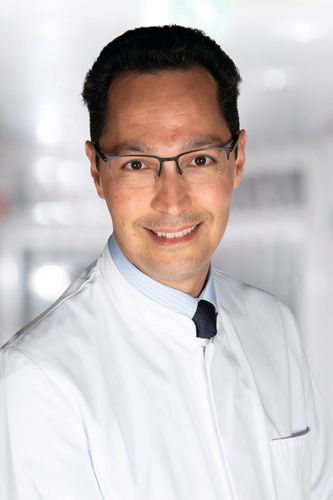
When it comes to hearing loss, Prof. Dr. med. Peter Issing is one of the most experienced and dedicated specialists in the field. The renowned ENT specialist has drawn attention far beyond the region with his Cochlear Implant Center North Hesse, part of the Bad Hersfeld Hospital network. This is also due to initiatives through which Prof. Issing aims to reach precisely those people who do not take their hearing problems seriously enough. Although this empathetic specialist possesses outstanding expertise across the entire spectrum of head, neck, and facial surgery—such as in reconstructive surgeries following tumor treatments—the topic of hearing loss is one of his medical passions. The Leading Medicine Guide spoke with him.
 Leading Medicine Guide: Professor Issing, why do hearing aids still face such resistance among many people—even though they are synonymous with quality of life and social participation?
Prof. Dr. med. Peter Issing: In fact, the vast majority of people with hearing loss try to conceal their “flaw”—for which they are generally not to blame—and avoid the issue. It’s fascinating to look back at antiquity: There, the seers—that is, the prophets—were often blind, yet still highly respected. In society, glasses are seen as a sign of intellectuality, whereas a hearing aid can sometimes even cast doubt on the wearer’s intelligence. This can be explained by an etymological connection: the root of the word “taub” (German for “deaf”)—in Middle and Old High German, this meant “dull-witted” or “confused.” The origin is most likely still evident in the word “doof.”
Leading Medicine Guide: … and where does that come from?
Prof. Dr. med. Peter Issing: It’s quite simply because people with hearing loss have trouble communicating with others. Someone with a visual impairment can do this much better than someone who hears poorly or hardly at all. People then often assume that those affected are mentally impaired—because it’s not immediately obvious that someone simply can’t hear well. A visual impairment is simply noticed more quickly. And that leads to hearing aids being perceived as more of a stigma than glasses.
Leading Medicine Guide: In fact, hearing aid users go out of their way to ensure that their hearing aids go unnoticed. With glasses, it’s quite different.
Prof. Dr. med. Peter Issing: You’ve hit on a very important point there. Take glasses, for example: They’re basically comparable to an ear trumpet, because they don’t actually enhance vision; they ensure that the image on the retina is sharp, but they have no effect on the actual process of seeing. However, the retina still has to function properly; otherwise, you won’t be satisfied even with glasses—whereas hearing aids are generally used when inner ear function is impaired. Many people believe that if they have trouble hearing, all they need to do is turn up the volume, and then their hearing will be just like before. But that’s absolutely not the case. And there are estimates that more hearing aids are sitting in nightstands than in the ears of people with hearing loss—meaning they’re often not being used. Many people wait a very long time before doing anything about their hearing loss, and by then it’s often harder to accept. Even progressive-lens glasses require a period of adjustment.
Leading Medicine Guide: If, for example, I’m a musician and suffer hearing loss due to amplifier noise and feedback—what exactly is happening there?
Prof. Dr. med. Peter Issing: In that case, you have noise-induced hearing loss. Whether it’s caused by music or by working in a quarry, it makes little difference to the inner ear. This leads to sensorineural hearing loss with a high-frequency component; it doesn’t matter whether Beethoven, the Rolling Stones, or a jackhammer is to blame. The noise damages the hair cells, which are particularly sensitive in the high-frequency range—that’s where our ear is, so to speak, most attuned. That’s where the damage begins.
Leading Medicine Guide: So it’s about the inner ear.
Prof. Dr. med. Peter Issing: Yes, most people with hearing loss suffer from inner-ear hearing loss—that is, a problem with the cochlea. The cochlea has two different types of sensory cells: the outer and inner hair cells. The inner hair cells are the actual sensory cells responsible for hearing, while the outer hair cells adjust the ear’s sensitivity—depending on whether our environment is loud or quiet. They are usually the cause when hearing problems arise, because they are sensitive to higher sound levels. When it’s quiet, the outer hair cells can make the ear more sensitive. When it gets louder, they dampen the sounds so we can tolerate the noise better. And an ear with normal hearing has a dynamic range: the difference between the hearing threshold—the level at which we first hear soft sounds—and the discomfort threshold is usually around one hundred decibels. That’s an incredibly wide range when our hearing is good. But if we have difficulty hearing—that is, if we have hearing loss—then the threshold at which we perceive something as quiet is higher. For us to hear anything at all, the sound must be, say, forty decibels loud. Just to hear anything at all.
Leading Medicine Guide: But the discomfort threshold doesn’t rise, does it? My sensitivity to noise hasn’t changed, after all.
Prof. Dr. med. Peter Issing: Exactly. Logically, one would think: If you only hear something at forty decibels, then the discomfort threshold would also rise—the hundred decibels would simply be added on top—and that threshold would shift to 140 decibels. But that’s not the case. The discomfort threshold remains the same; it’s even possible that sensitivity increases further. As a result, the dynamic range between too quiet and too loud becomes extremely limited. And that’s the big problem for hearing aids: in terms of amplification, they can only operate within this range. This is known as the recruitment phenomenon: a damaged ear is actually more sensitive to noise than a healthy ear. This is related to the lack of attenuation provided by the outer hair cells.
 Leading Medicine Guide: Now, of course, there’s a difference between simply perceiving certain sounds as muffled and suffering from severe hearing loss. What happens when standard hearing aids are no longer sufficient?
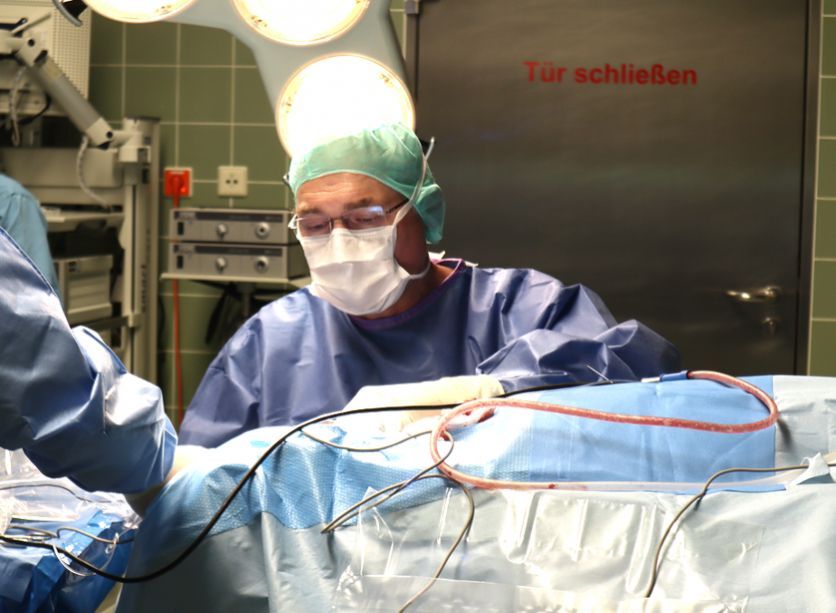
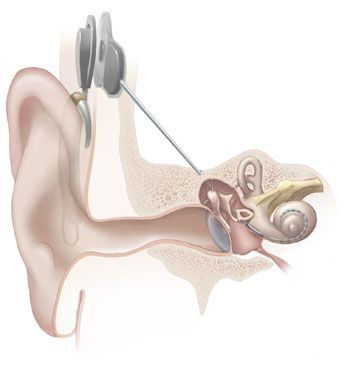
Prof. Dr. med. Peter Issing: If the hearing loss is too severe—if there’s a steep drop in hearing at higher frequencies—it’s difficult to help people with hearing aids. In such cases, a cochlear implant may be the best solution. The implant electrically stimulates the auditory nerve. Instead of amplifying sound, it electrically stimulates the auditory nerve. This can be done very reliably today. When patients no longer derive sufficient benefit from hearing aids, this is a reasonable option. The electrical stimulation activates the auditory nerve. An electrode is inserted into the cochlea, so no acoustic signals are transmitted there anymore. In other words, the cochlea is bypassed. The cochlea receives electrical impulses via mechanical vibrations, and if that no longer works, the auditory nerve can be stimulated along the cochlear axis using the electrode.
Leading Medicine Guide: When exactly is a cochlear implant an option?
Prof. Dr. med. Peter Issing: Of course, one will always try to choose the less invasive procedure. Many people also think that their hearing aids are ineffective. This brings us back to the poor reputation of hearing aids: It’s also related to the specific dynamics of the inner ear, and it’s not a flaw in the hearing aids—but at that stage, hearing aids can no longer compensate for the loss. In such cases, I can’t make any further progress with acoustic stimulation—that is, amplification via a hearing aid’s speaker. Even if the volume is turned up, you don’t understand any better. Of course, hearing aid technology has come a long way—consider all that these little marvels pack into such a tiny space, with directional microphones and other features; there have been significant advancements in technical development. But even the best hearing aid cannot address the fundamental problem of inner ear damage.
Leading Medicine Guide: Cochlear implants can be a real blessing not only for older people but also for children born deaf. Can they actually ensure reasonably normal language acquisition in such cases?
Prof. Dr. med. Peter Issing: I can wholeheartedly confirm that. Timing is absolutely crucial here. First, children born deaf must be identified as early as possible. Today, there is a newborn hearing screening that can determine whether a child can hear just a few days after birth—so that, if necessary, therapeutic intervention can begin very early for a child born deaf. The incidence of hearing loss requiring treatment in newborns is about 1.5 per thousand, so it is relatively common. When you treat children born deaf or with hearing loss—whether with a hearing aid or a cochlear implant—they have the chance to develop normal speech and language skills. Today, efforts are made to perform implantation as early as the first year of life, because the so-called auditory pathway maturation only develops if the hearing process actually takes place.
Leading Medicine Guide: … auditory pathway maturation?
Prof. Dr. med. Peter Issing: The auditory pathway must mature—that is, the synapses, or the connection points between nerves, must develop. And this only works if electrical impulses pass through these connection points. If this does not occur, auditory pathway maturation does not take place. This process only occurs during a critical phase—which lasts a maximum of three or four years. So it must take place within this timeframe, which is why early initiation of therapy is necessary. You wouldn’t recognize these people as hearing-impaired later on. That’s absolutely fascinating: These children can then attend a completely normal public school—which also makes the therapy cost-effective from an economic standpoint.
Leading Medicine Guide: Do such implants need to be replaced at some point?
Prof. Dr. med. Peter Issing: Not because of their size—the cochlea is more or less fully developed at birth. But of course, technology continues to advance, so at some point it may be necessary to perform a technical upgrade. However, there is no wear and tear, and the implant does not become too small.
Leading Medicine Guide: What are the general differences between older and younger people when it comes to hearing loss?
Prof. Dr. med. Peter Issing: Basically, it’s relatively similar—assuming the hearing loss occurred after language acquisition. If someone becomes deaf at age seven or eight, their language development may regress. However, if older people have had a long period during which their hearing was severely impaired, it becomes more difficult again. It’s like a classic car that you pull out of the barn after many years: getting the system up and running again requires a lot of effort. It also becomes difficult when people don’t recognize the need for intervention. But if these people then stop attending birthday parties, this quickly has enormous social consequences. Younger people are more likely to realize that they need to do something about their hearing loss—and that, as a rule, they see a clear benefit right away.
Leading Medicine Guide: So, it’s mainly many older people who don’t take their hearing loss very seriously. What can be done about that?
Prof. Dr. med. Peter Issing: In fact, many people wait too long before taking action. This is partly because hearing loss doesn’t actually hurt. If you have hip pain, you’ll eventually seek medical help. Some people also take the view: “I’m old; it’s just part of getting older to hear less.” And then there may be the added prejudice: “My neighbor has hearing aids, but they don’t help.” All I can say is that it’s important to do something about it. Otherwise, you get caught in a downward spiral: The longer you wait, the harder it becomes—especially if you’ve withdrawn from social life because of your hearing loss and have practically no friends left. It’s also important to note that hearing loss can contribute to the progression of dementia.
Leading Medicine Guide: How so?
Prof. Dr. med. Peter Issing: When one of the sensory channels isn’t functioning properly, less information reaches the brain—so that’s a risk factor for dementia. We can influence this factor through treatment. When you tell people that they’re not seeing a specialist primarily for the sake of those around them, but that a hearing aid benefits them personally by keeping their brain active—that does convince some of them. The feedback I receive confirms that I’m right. However, there are also hearing loss profiles that can be better managed with a hearing aid than others, and in individual cases, we have to consider whether a cochlear implant is the better solution. To reiterate: Of course, not everyone with hearing loss needs such an implant, but it is an additional option—a therapeutic arrow in the quiver. The important thing is to address the issue. You can also try out hearing aids; you can test them for a while. That way, you can see which sound you like best—just like with a stereo system, which has to appeal to you subjectively. So you should face up to your hearing loss, and in most cases, a hearing aid can help.
Leading Medicine Guide: Professor Issing—thank you very much for this interesting and insightful conversation!
Anyone who would like to contact our specialist directly can do so via his profile page on the Leading Medicine Guide.
Share this article
About the medical author
Sabine Schneider
Editor-in-Chief
Sabine Schneider – medical author: Explore expert articles and medical expertise in the Leading Medicine Guide.
More about the medical author →Klinikum Bad Hersfeld GmbH, Clinic for Otorhinolaryngology, Head, Neck and Facial Plastic Surgery
ProfileExpert Interviews
Read next
- Expert interview
Cardiogeriatrics: Significance and benefits in the context of hospital reform
Sep 21, 2026
Cardiogeriatrics: Significance and benefits in the context of hospital reform
Read more - Expert interview
Expert Interview with Professor Dr. Amadeus Hornemann, MPH
Sep 18, 2026
Prof. Amadeus Hornemann on Precision Medicine in Gynecology: Modern Surgery, New Techniques, Better Quality of Life
Read more - Expert interview
Expert Interview with Professor Dr. Konstantinos Anagnostakos
Sep 15, 2026
Prof. Anagnostakos on Painful Knee Replacements
Read more