Expert Interviews
Prof. Dr. med. Ullrich Graeven: “Screening colonoscopies can reduce the risk of colorectal cancer to nearly zero.”

Claudia Dechamps ·
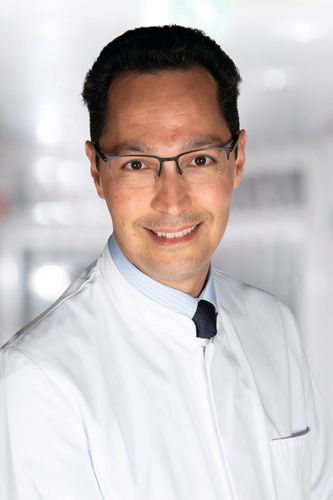
An experienced specialist with an international reputation who has made a name for himself above all as the director of the Oncology Center at the Maria Hilf Clinics in Mönchengladbach—that is Professor Dr. med. Ullrich Graeven. The chief physician of the Department of Hematology, Oncology, and Gastroenterology is regarded as a true authority in the field of medical oncology. HisOncology Center has been certified by the German Cancer Society. This is proof that it fully meets the society’s high professional standards and quality requirements. Prof. Graeven spoke with Leading Medicine Guide about colorectal carcinomas—commonly referred to as colon cancer. And colon cancer is precisely one of the renowned physician’s areas of expertise.

Leading Medicine Guide: Prof. Graeven, we laypeople have no idea that the inside of the colon can actually be quite an aesthetic sight: pink, glossy, and shaped by the muscle rings like an interesting sculpture.
Prof. Dr. med. Ullrich Graeven: That’s true. During a colonoscopy, we really get to see—if you will—a beautiful organ. And here’s another interesting fact: The colon remains timelessly beautiful; it looks exactly the same in an elderly person as it does in a young one—one of the few organs that shows virtually no signs of aging.
Leading Medicine Guide: And is it an organ where screening exams can truly help prevent cancer?
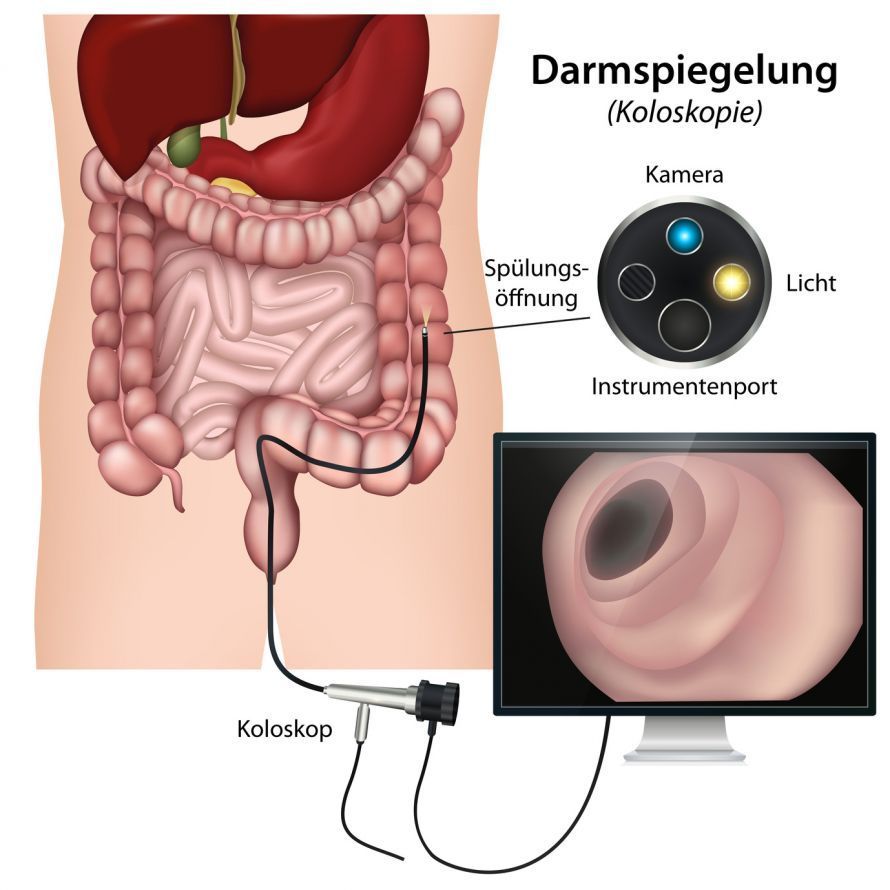
Prof. Dr. med. Ullrich Graeven: Yes, that’s correct. With all other early-detection screenings, cancer is detected in its early stages; with a colonoscopy, we detect the precancerous stage. These precancerous lesions are what are known as colorectal polyps. They are essentially harmless, but over time they can develop into a malignant tumor. This is why we remove all polyps found during a colonoscopy. They are usually easy to identify because they differ from the normal intestinal mucosa. The colonoscope—the device we use to perform the examination—contains not only a camera and a light source but also a small working channel through which small instruments can be inserted, allowing the polyps to be removed, for example, with an electric loop or simply snipped off with small forceps. Once removed, polyps can no longer develop into a tumor; therefore, a screening colonoscopy can reduce your personal risk of developing colorectal cancer to nearly zero.
© bilderzwerg / Fotolia
It can therefore be said that colonoscopy, when used for screening, truly helps prevent cancer. With all other screening tests, the goal is often to detect a malignant tumor early on in order to have even better chances of recovery. With a colonoscopy, as mentioned, the precancerous lesions are removed, and the cancer never develops in the first place. I can therefore only advise everyone to take advantage of this screening, which is regulated by law and is fully reimbursed by public health insurance plans.
Leading Medicine Guide: Why is a preventive colonoscopy only required every ten years? How did this long interval come about?
Prof. Dr. med. Ullrich Graeven: The length of this interval is explained by the fact that research shows it takes a correspondingly long period of time for a benign polyp to develop into a malignant tumor. This gives us sufficient time to interrupt tumor development through screening examinations and the recommended intervals.
Leading Medicine Guide: Are there factors that promote the growth of carcinomas?
Prof. Dr. med. Ullrich Graeven: There is no single cause, but we know of a number of factors that play a role here. A small number of patients have a genetic predisposition. For the majority of them, it is a combination of various factors, such as a low-fiber diet and high consumption of red meat; in addition, nicotine use, lack of exercise, obesity, and alcohol consumption contribute to the development of colon cancer. Since many of these factors are part of our Western lifestyle, it is difficult to successfully prevent the disease through lifestyle changes alone. That is why colorectal cancer screening is so important—because it gives us the opportunity to effectively remove any polyps that have formed.

Leading Medicine Guide: If that is the case, what does treatment typically involve?
Prof. Dr. med. Ullrich Graeven: Treatment for colorectal cancer consists of various “building blocks,” so to speak, depending on the stage and extent of the disease. These include surgery, radiation therapy, and chemotherapy. In early stages, surgery is always the goal, and for many patients, surgery creates the conditions necessary for a cure. All forms of treatment have also seen advances in recent years, whether through improvements in radiation therapy, laparoscopic surgery, or, more recently, robotic surgery. In the field of drug therapy, newer medications have become available in recent years, leading to improved treatment outcomes. For tumors of the rectum—that is, the last few centimeters of the intestine—a combination of all treatment modalities is often used, and in some cases, it may be necessary to administer radiation therapy and chemotherapy prior to a planned surgery to improve treatment outcomes and the chances of a cure. For patients with colon cancer, adjuvant therapy is required in certain situations following surgery to help reduce the risk of metastasis; significant progress has also been made in this area in recent years, and we now know that for many patients, three months of adjuvant chemotherapy is just as effective as the six-month course of adjuvant therapy that was previously considered the standard. At the Maria Hilf Clinics in Mönchengladbach, we also regularly participate in national and international studies to improve various aspects of treatment.
Leading Medicine Guide: What about immunotherapy for colon cancer, or colorectal cancer, as it’s commonly called?
Prof. Dr. med. Ullrich Graeven: Immunotherapies have permanently transformed the field of oncology. It used to be assumed that the immune system had to be activated so that it could fight malignant cells on its own. However, we now know that many cancer cells have the ability to camouflage themselves in such a way that an otherwise active immune system can no longer recognize them. Scientific understanding of these processes has led to the development of so-called checkpoint inhibitors—medications administered via infusion—that effectively remove the tumor cells’ “cloak of invisibility,” allowing the immune system to recognize and successfully combat them again. This so-called immunotherapy has now been successfully used for many types of tumors. In the case of colorectal cancer, we know that further development is certainly still needed, as only a small proportion of patients currently benefit from immunotherapy. A prerequisite for this is a specific genetic alteration in the tumor, known as microsatellite instability; when this is present, a good response to immunotherapy can be expected. In contrast, immunotherapy is not yet successful in patients whose tumors do not exhibit this characteristic.
Leading Medicine Guide: Could you describe the current state of immunotherapy for colorectal cancer in more detail, in a way that’s understandable to the layperson?
Prof. Dr. med. Ullrich Graeven: Thanks to advances in molecular and tumor biology, our understanding of cancer is constantly growing, and based on these findings, we have succeeded in recent years in repeatedly developing new treatment strategies for specific patient groups. One example of this is the aforementioned microsatellite instability—changes in the genetic material of tumors that lead to increased mutations in the tissue. These tumors then exhibit a significantly higher mutation rate and respond better to immunotherapy with checkpoint inhibitors.
Leading Medicine Guide: Let’s briefly discuss prevention. Can colorectal cancer be prevented through lifestyle choices? What role does aspirin play in this?
Prof. Dr. med. Ullrich Graeven: As I mentioned at the beginning, there are factors that can increase the risk of developing colorectal cancer. If you look closely at these factors, they are actually the same recommendations for lifestyle changes that a cardiologist would give to prevent cardiovascular disease, and these are certainly general guidelines that one should integrate into one’s lifestyle whenever possible. There are no additional preventive measures involving medication. The effectiveness of ASA (acetylsalicylic acid) has long been reported, and a certain effect on the growth of polyps has also been observed. Nevertheless, no recommendation has yet been made that ASA should generally be used for prevention, as the potential side effects of bleeding outweigh the benefits.
Leading Medicine Guide: If preparing for a colonoscopy by drinking these laxatives weren’t so unpleasant, people might be more inclined to undergo the procedure.
Prof. Dr. med. Ullrich Graeven: Yes, unfortunately there’s no way around the laxative regimen, because as examiners we need to have a clear view of the colon. Only then can we detect and remove even small polyps, thereby ensuring the necessary safety of the examination. However, the discomfort caused by the laxatives varies greatly from person to person. The procedure itself is usually performed under light sedation, so that patients don’t actually experience any discomfort during the procedure and can go home afterward with the peace of mind that there is no cause for concern regarding their colon.

Leading Medicine Guide: Professor Graeven, we would like to thank you very much for these interesting and informative insights into your work.
Anyone wishing to contact this renowned specialist directly can do so via his profile page on the Leading Medicine Guide.
Share this article
About the medical author
Claudia Dechamps
Editor
Claudia Dechamps – medical author: expert articles, professional insights and medical knowledge in the Leading Medicine Guide.
More about the medical author →Expert Interviews
Read next
- Expert interview
Cardiogeriatrics: Significance and benefits in the context of hospital reform
Sep 21, 2026
Cardiogeriatrics: Significance and benefits in the context of hospital reform
Read more - Expert interview
Expert Interview with Professor Dr. Amadeus Hornemann, MPH
Sep 18, 2026
Prof. Amadeus Hornemann on Precision Medicine in Gynecology: Modern Surgery, New Techniques, Better Quality of Life
Read more - Expert interview
Expert Interview with Professor Dr. Konstantinos Anagnostakos
Sep 15, 2026
Prof. Anagnostakos on Painful Knee Replacements
Read more