Expert Interviews
New Infusion Therapy for Endocrine Orbitopathy: TEPEZZA

Alexandra Pfitzmann ·
Endocrine orbitopathy is an autoimmune disease in which inflammatory processes in the eye socket lead to visible and functional changes. It often occurs in association with Graves' disease and primarily affects the muscles and fatty tissue behind the eye. Swelling of these structures can cause symptoms such as protruding eyes, double vision, dryness, or a feeling of pressure. Since the disease can affect both vision and physical appearance, it requires early diagnosis and close collaboration between endocrinology and specialized ophthalmological disciplines.
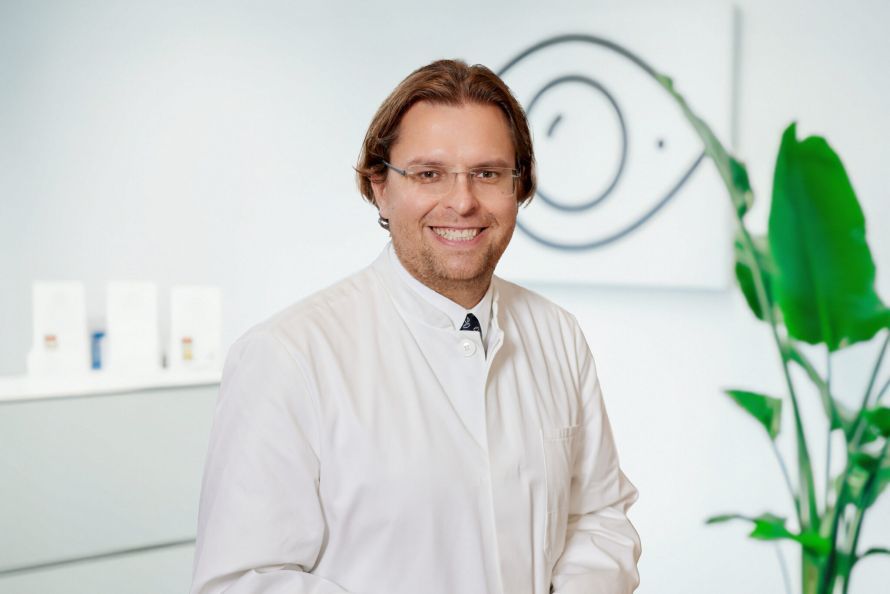
Since 2025, the EU has approved the first specifically indicated drug therapy, TEPEZZA, which is also offered at the practice of Professor Dr. Dr. Heidl, Clear Vision in Cologne, North Rhine-Westphalia. The editorial team of the Leading Medicine Guide learned more in an interview with him.
“Endocrine orbitopathy is an autoimmune disease that most often occurs in association with Graves’ disease and targets not only the thyroid gland but also the tissue of the eye socket. This leads to inflammation, fluid retention, and an increase in fat and muscle tissue within the orbit. This becomes visible through typical changes such as protruding eyes, pronounced eyelid retraction, swelling, redness, pain, and a sensation of pressure behind the eye.
Double vision also frequently occurs because the eye muscles are involved in the inflammatory process. In severe cases, the optic nerve may be damaged, which in extreme cases can lead to blindness. The diagnosis is based primarily on clinical findings. Disease activity is assessed using established scoring systems. This is supplemented by an endocrinological evaluation that includes testing thyroid levels and autoantibodies.
Imaging techniques such as MRI or CT help assess the extent of tissue changes in the orbit and rule out other causes—an approach that is particularly well-established and structured in specialized centers such as here in Cologne, North Rhine-Westphalia,” said Prof. Dr. Dr. Heindl at the beginning of our conversation, adding:
“In the early stages of endocrine orbitopathy, the first changes are often noticeable in the eyes. The eyes begin to protrude slightly, and many patients develop surface issues such as dry eye because the eyelids can no longer close completely due to the protrusion of the eyes. Redness, pain, and a feeling of pressure behind the eye are also among the typical early symptoms.
The condition is by no means rare; it particularly affects women in their forties who are in the prime of their careers and are suddenly confronted with noticeably protruding eyes—a visible problem that can be distressing in everyday life and in social settings.”
Endocrine orbitopathy is a complex autoimmune disease that causes both functional and structural changes in the eye socket. It is far more than a cosmetic problem and can potentially threaten vision. Careful diagnosis and close interdisciplinary care are essential.
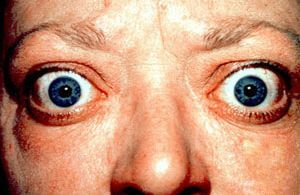
Since 2025, the new infusion therapy TEPEZZA has been available at the Clear Vision Cologne practice; it specifically targets the central mechanism of the disease. The focus is on dysregulated orbital fibroblasts, which form excessive scar tissue and drive inflammatory processes.
Prof. Dr. Dr. Heindl explains: “These cells express an IGF-1 receptor that is closely linked to the thyroid receptor and plays a key role in the development of the disease. This signaling pathway controls inflammation, cytokine release, and the conversion of fibroblasts into fat cells—processes that lead to swelling, an increase in volume behind the eye, and ultimately exophthalmos. TEPEZZA expands the therapeutic concept from purely symptom-oriented to disease-modifying approaches.”
TEPEZZA can produce clinically relevant improvements but requires careful monitoring of the patient’s progress.
During the course of eight infusions of TEPEZZA, several clinical improvements become apparent that affect both the inflammatory activity and the structural changes associated with endocrine orbitopathy.
“In clinical practice, treatment begins with a clearly structured diagnostic cascade. A comprehensive ophthalmologic evaluation—including clinical findings, imaging such as MRI, and additional tests—is crucial for accurately assessing the activity and extent of the disease. Various medical specialties are also involved in the interdisciplinary care. This includes, first and foremost, an ENT examination, as the disease can also affect the hearing and nasal areas.
A stepwise treatment plan is developed based on this assessment. If only superficial symptoms are present, much can be achieved with lubricating eye drops or a gel applied at night to protect the ocular surface. During the active stage, steroids are frequently used to effectively reduce inflammation. Radiation therapy may also be beneficial, particularly when the eye muscles are affected.
However, these methods primarily address symptoms and have only a limited effect on structural changes such as exophthalmos. The new TEPEZZA therapy offered at the Clear Vision Cologne practice goes significantly further. It specifically blocks the IGF-1 receptor on the dysregulated orbital fibroblasts, thereby interrupting the pathological signaling cascade that leads to inflammation, tissue proliferation, and volume increase.
This not only reduces inflammatory processes but also frequently reverses structural changes—an effect that was previously usually achievable only through surgery. The therapy does not completely replace surgical interventions but expands the range of treatment options because it has a disease-modifying effect rather than merely controlling symptoms.
Treatment is not administered in a single session but rather in a predetermined sequence of multiple infusions, typically up to six. This allows the therapeutic effect to be built up steadily and has a lasting impact on the pathological processes in the orbit,” explains Prof. Dr. Dr. Heindl.
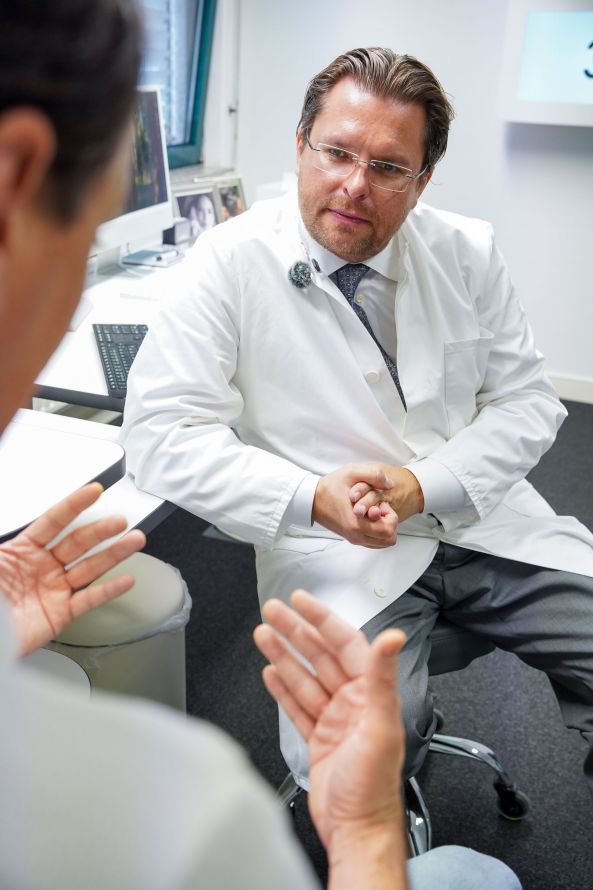
Patients benefit from TEPEZZA across a significantly broader spectrum than was typical with previous treatments for endocrine orbitopathy. It is particularly noteworthy that the efficacy is not limited to the classic active inflammatory phase.
Prof. Dr. Dr. Heindl explains: “The first positive effects of the therapy usually become apparent within the first few weeks to months. Initially, the inflammatory symptoms improve: swelling, redness, pain, and the sensation of pressure behind the eye subside. Structural changes, such as exophthalmos or double vision, generally improve with a slight time lag but often show very impressive results.
Many patients report a significantly improved quality of life. Despite these successes, however, endocrine orbitopathy remains a condition that requires long-term management. Thyroid levels must be kept stable, and smoking should be avoided at all costs, as it can significantly worsen the course of the disease. In some patients, the improvements are long-lasting; in others, the condition may deteriorate again over time. This is precisely why continuous follow-up care is so important.
The infusion therapy itself is not a one-time treatment; rather, in clinical practice—as established, for example, in our practice in Cologne—it is administered as a set series of up to six infusions. Since this is a relatively new treatment, although numerous studies are already available—including some with German participation—long-term experience will continue to grow in the coming years. “With the recent approval in Europe, the therapy is now available not only to study participants but to all affected individuals, which significantly expands treatment options,” he explains, adding:
“There are certainly situations in which the decision is made not to use a therapy—though less because the disease is chronic and more because the benefits vary from person to person. Patients with active, moderate-to-severe endocrine orbitopathy benefit the most. In this phase, the disease process is dynamic, inflammation is pronounced, and the pathological remodeling processes can still be effectively influenced by treatment. This is precisely where the therapy shows the most pronounced effects.”
Both patients with recent, active disease and those with long-standing, chronic EO benefit from treatment with TEPEZZA. What matters is not so much the duration of the disease as the fact that the pathological signaling pathways of the orbital fibroblasts remain active—and that is precisely where TEPEZZA takes effect.
With TEPEZZA, three areas of side effects are of particular focus: blood sugar regulation, infusion reactions, and changes in hearing. These are not only frequently reported but are also clinically relevant because they affect different patient groups and require close monitoring.
“An examination by an ENT specialist is important before starting therapy because, while TEPEZZA is very effective, it is not free of side effects. Of particular concern are potential changes in hearing, which can range from tinnitus to hearing loss. Therefore, hearing function must be carefully monitored before and during treatment. Other risks involve blood sugar levels, especially in people with diabetes or prediabetes, which is why close monitoring is necessary.
Infusion reactions may also occur, but they are usually well managed. Additionally, existing inflammatory bowel diseases and a possible pregnancy must be taken into account. Overall, the therapy requires structured monitoring and comprehensive patient education, as efficacy and safety must always be considered together. In specialized centers such as our Clear Vision practice, this monitoring is standard practice.
TEPEZZA represents an additional option and fundamentally changes the treatment of endocrine orbitopathy. While steroids continue to have their place—especially during the active inflammatory phase—and surgical interventions remain indispensable in the chronic phase, TEPEZZA significantly broadens the therapeutic spectrum. Nevertheless, surgery remains a central component of treatment, particularly when it comes to functional limitations or pronounced anatomical changes.
Overall, interdisciplinary collaboration is becoming even more important: The oculoplastic surgeon leads the treatment but works closely with ENT specialists, endocrinologists, and other medical disciplines. Here in Cologne, in particular, we see just how important close collaboration between oculoplastic surgery, otolaryngology, and endocrinology is. “TEPEZZA broadens the therapeutic spectrum and changes the treatment strategy—a true paradigm shift, but not a substitute for interdisciplinary medicine,” explains Prof. Dr. Dr. Heindl.
TEPEZZA can affect hearing. The most commonly observed side effects include tinnitus, a sensation of pressure in the ear, conductive hearing loss, and, more rarely, sensorineural hearing loss. The exact causes are not yet fully understood; changes in the fluid balance of the inner ear and IGF-1-dependent signaling pathways are thought to play a role. Most hearing changes resolve after treatment ends, but there are also isolated cases with persistent impairments. Therefore, it is recommended to create a baseline audiological profile before starting treatment and to regularly inquire about hearing symptoms during therapy. If new symptoms arise, an ENT evaluation should be conducted promptly.
Treatment with TEPEZZA requires specialized facilities, clear eligibility criteria, and continuous, interdisciplinary care, as it can only be administered safely and reliably in specialized clinics equipped for this purpose.
“However, the therapy is not readily accessible to everyone. Although it is approved in Germany, an application must be submitted to the health insurance provider for each patient. Furthermore, the treatment cannot be administered in every practice. Certain spatial and organizational requirements must be met, as the infusion takes about one and a half hours and requires structured monitoring.
For this reason, this therapy is not suitable for every ophthalmology practice but is best provided in specialized centers where the necessary expertise and infrastructure are available. At our Clear Vision practice in Cologne, we care for many patients with endocrine orbitopathy, as our practice specializes in, among other things, oculoplastic disorders. As a result, we treat patients at very different stages of the disease. Because endocrine orbitopathy requires continuous and close monitoring, it is best managed in a specialized practice.
It’s not just about the infusion therapy itself, but about regular, comprehensive support. The condition requires an interdisciplinary network involving ophthalmology, endocrinology, otolaryngology, and other specialties—a network that is available here. This creates an environment in which patients can receive long-term, structured care,” emphasizes Prof. Dr. Dr. Heindl, and with that, we conclude our conversation.
Thank you very much, Professor Dr. Dr. Heindl, for the information on the new TEPEZZA therapy!
- Renowned specialist in eyelid, lacrimal duct, orbital, and tumor surgery with over 20 years of experience
- Private ophthalmology practice: Clear Vision Cologne, Aachener Str. 233, 50931 Cologne, North Rhine-Westphalia
- Specialist with a focus on individualized, tailored treatment plans
- Expertise in eyelid lifts, Botox®, hyaluronic acid, and modern anti-aging procedures
- Offers a wide range of non-invasive and minimally invasive aesthetic treatments
- A leader in regenerative techniques: skin tightening, fat-reduction therapies, and hair growth stimulation
- Actively involved in scientific research and committed to the further development of gentle aesthetic methods
- Committed to natural, harmonious results and comprehensive, patient-centered consultations
- Established as one of the leading experts
Share this article
Expert Interviews
Read next
- Expert interview
Expert interview with Professor Dr Elmar Herbst, PhD
Oct 15, 2026
Patient-centred and personalised knee surgery
Read more - Expert interview
Cardiogeriatrics: Significance and benefits in the context of hospital reform
Sep 21, 2026
Cardiogeriatrics: Significance and benefits in the context of hospital reform
Read more - Expert interview
Expert Interview with Professor Dr. Amadeus Hornemann, MPH
Sep 18, 2026
Prof. Amadeus Hornemann on Precision Medicine in Gynecology: Modern Surgery, New Techniques, Better Quality of Life
Read more