Expert Interviews
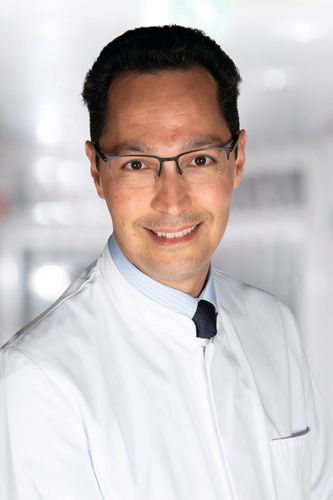
Expert Interview with Prof. Dr. med. Karl-Dieter Heller - Joint Replacement Surgery

Alexandra Pfitzmann ·
Prof. Dr. med. Karl-Dieter Heller is the Chief of Orthopedics at the Herzogin Elisabeth Hospital in Braunschweig and is one of the most renowned specialists in the field of knee and hip surgery. His particular expertise lies in the implantation and revision of joint replacements, as well as in the treatment of complex joint disorders. Patients value him not only for his professional expertise but also for his empathetic and personalized care.
His practice focuses on hip and knee joint replacement, revision surgery for previously implanted hip and knee joints, as well as arthroscopic surgery, cartilage therapy, and meniscus surgery. With extensive experience and precision, Prof. Dr. Heller performs both minimally invasive and complex surgical procedures and utilizes state-of-the-art robotic systems to ensure optimal knee replacement surgery. The Braunschweig Orthopedic Clinic, which he heads, is one of the largest standalone orthopedic clinics in Germany and is the only specialized orthopedic clinic in the region.
With a highly qualified team of senior physicians and resident physicians, the clinic covers all areas of orthopedic surgery. In addition to joint replacement, the clinic’s specialization in spinal surgery and pediatric orthopedics—each led by experienced department heads—is particularly noteworthy. Prof. Dr. Heller has extensive training in orthopedics and trauma surgery, rheumatology, sports medicine, and specialized orthopedic surgery. During numerous specialized consultation hours, an individualized treatment plan is developed together with the patient, based on the latest medical standards.
The high number of joint replacement surgeries and revision procedures performed, the excellent technical equipment, and the close interdisciplinary collaboration within the Duchess Elisabeth Hospital ensure the best possible care for patients. The medical services are complemented by a dedicated nursing staff and comprehensive physical therapy, which begins immediately after surgery and provides long-term support for the healing process.
The editorial team of the Leading Medicine Guide had the opportunity to learn more about joint replacement surgery in a conversation with Prof. Dr. Heller.

Joint replacement is a central component of modern orthopedics and makes it possible to replace damaged joints with artificial implants. The goal of these procedures is to relieve pain, restore mobility, and sustainably improve patients’ quality of life. Hip, knee, and shoulder joints are particularly common targets for replacement when degenerative conditions such as osteoarthritis or injury-related damage significantly impair natural function. Thanks to continuous advancements in implant technology and surgical techniques, a wide range of customized solutions can now be offered that are optimally tailored to patients’ needs. Joint replacement is thus among the most successful and safest procedures in the surgical treatment of chronic joint diseases.
Whether joint replacement is necessary or whether conservative therapies should be pursued first depends on a careful, individualized assessment that takes into account clinical, radiological, and patient-specific factors.
“There is no one-size-fits-all answer to the question of when conservative measures for joint diseases have been exhausted and joint replacement becomes necessary. In general, we prefer that patients have already undergone various conservative therapies before they come to us. These include medication, physical therapy, and, if necessary, injections into the affected joint—for example, the hip or knee—to alleviate the initial symptoms of osteoarthritis. A clear X-ray finding is absolutely essential for a sound determination of the indication. Without a severe X-ray finding, I would never perform hip surgery—the exception here being cases of avascular necrosis of the femoral head, which sometimes are not yet clearly visible on X-rays.
At the same time, we need clear clinical findings: limited joint mobility accompanied by severe pain. If these two criteria are met and the patient is experiencing significant distress, it is up to the patient to make the decision. In this context, the principle of “shared decision-making” is crucial. It is not a matter of the doctor deciding alone or making the decision for the patient, but rather of providing the patient with comprehensive counseling and empowering them to assess for themselves whether their quality of life is so severely impaired by their symptoms that they wish to undergo surgery. Sometimes we see patients who are referred by their orthopedic surgeon because they have severe osteoarthritis, but who report having hardly any symptoms themselves. Even in such cases, there is no reason for surgery, because the hip bone does not become unstable or collapse due to osteoarthritis—it actually tends to become denser.
Open and honest communication therefore remains crucial: “If there are clear findings, we work with the patient to weigh whether surgery is appropriate or not,” explains Prof. Dr. Heller at the start of our conversation, adding a comment on conservative treatment options:
“When it comes to injection therapy, our approach is to first administer a cortisone injection into the hip under image-guided control if we’re not yet entirely sure about the stage of the disease or if we want to delay the onset of symptoms conservatively at first. Hyaluronic acid is used only later, usually by colleagues in private practice. Some patients remain symptom-free for a year after an injection. Others report that their symptoms have returned in full as early as six weeks later.
These time frames are an important factor in decision-making: The shorter the interval until the symptoms recur, the sooner surgery becomes the primary consideration. At the same time, injections also help with diagnosis, especially when there is uncertainty as to whether the primary source of the symptoms is actually in the hip joint or perhaps in the spine. If the symptoms disappear completely after a targeted injection, this provides greater certainty that a subsequent hip replacement surgery is indeed the right treatment.”
Today’s modern hip prostheses differ significantly from earlier generations in key aspects such as the materials used, their durability, and their biocompatibility.
“In the field of hip arthroplasty, there have been no major changes in materials in recent years. The major innovations lie more in the surgical realm, particularly with regard to surgical approaches. In the past, long prosthesis stems were used as standard, but since today’s surgical approaches have become significantly less invasive and smaller, the classic stems are often simply too long. Out of this necessity, a trend toward short-stem prostheses has emerged. However, these short stems are not entirely new; the so-called Meta stem, for example, dates back to 2005, and the Optimys stem to around 2010.
The major advantage of these stems lies in their easier implantation as well as in the type of anchoring: They allow for anchoring close to the body—that is, proximal anchoring—which means that load-bearing occurs closer to the natural hip. As a result, the bone in the upper part of the hip remains under load and strong. In contrast, the use of distally anchored prostheses in the past led to the bone in the upper region being relieved of load and thus becoming increasingly weaker—which could cause significant problems during a later prosthesis replacement. “With today’s short stems, there is generally still sufficient bone available even during revision surgery, which significantly improves the options in the event of a prosthesis replacement,” says Prof. Dr. Heller, adding:
“There have also been significant advancements in the plastics used. In the past, standard polyethylene was used; today, we use ultra-high-molecular-weight polyethylene, which is additionally stabilized with vitamin E, promising a longer service life. For me, the ceramic-on-ceramic bearing pair remains the ideal material combination. Ceramic has the great advantage of being extremely wear-resistant, which significantly extends the implant’s lifespan.
Critics occasionally point out that ceramic can break, but fractures are extremely rare and usually occur only due to technical errors during implantation. Another potential problem with ceramic-on-ceramic bearing pairs is squeaking. However, this is very rare: in the last 25 years, I have encountered perhaps three such cases. Most often, the problem stems from the socket not being implanted optimally and tilting slightly. Ideally, the cup is inserted at a 45-degree angle; if the angle deviates significantly, corner loading can occur, leading to a squeaking noise. Ceramic does not tolerate major implantation errors—neither when attaching the ceramic head nor when positioning the cup. The situation is similar for the knee joint. Here, too, the materials themselves have hardly changed in recent years.
There is a slight trend toward cementless implantation, both for partial prostheses (sliding prostheses) and for bicondylar total knee replacements. However, the actual quality of today’s knee implants is already so high that no further dramatic material innovations are needed. The focus is now on implanting the devices correctly, because many of the problems that arise—such as loosening or premature failure—are not due to material weaknesses but to errors during implantation. This makes the surgeon’s experience a decisive factor for success.”
An important point concerns costs and care
“Many people think that having private health insurance automatically means they’ll receive higher-quality implants. But that’s not true. The flat-rate fee the hospital receives for a surgery is identical for patients with public and private insurance. Private patients pay only for optional services such as better accommodations or treatment by a chief or elective physician, but the implant used remains the same. I believe this is the right approach: The quality of the implant must not depend on insurance status. It should generally be of high quality,” Prof. Dr. Heller emphasizes.
Patient-specific factors have a significant influence on preoperative planning and intraoperative adjustment in modern endoprosthetic procedures.
“During preoperative planning, the usual standard imaging is performed first, accompanied by the necessary patient education. With regard to the actual planning, we use various prosthesis planning systems, which today are not only medically sound but also legally required. These systems make it possible to estimate quite accurately, even before the operation, what size prosthesis is needed.
For me personally, however, the main value of planning lies not solely in determining the prosthesis size, since I work under X-ray guidance again in the operating room anyway and assess the situation myself. What is far more crucial is the in-depth analysis of each individual case. At our hospital, we have five different types of hip prostheses available. Although a standard model covers about 80 percent of cases, there are also special anatomical situations: very steep or very flat hips, extremely short femoral necks—and these cannot simply be treated with a standard implant. That’s why it’s essential to have various models on hand and to carefully plan, on a case-by-case basis, how the offset and leg length can be adjusted to restore the original anatomy as precisely as possible.
Particularly in special cases—such as a very flat femoral neck angle combined with a long femoral neck—problems can easily arise without the right implants. If a prosthesis with a high offset is not selected, the only option is often to create tension through a leg lengthening. However, this results in significantly longer legs—and a patient who suddenly has a leg that is two centimeters longer will generally not be satisfied. Through careful planning, one can opt for specialized prosthesis models with a higher offset and adjust the tension correctly without unnaturally altering leg length. “This preoperative planning is therefore not only important, but also allows for a very high degree of predictability regarding the final outcome,” explains Prof. Dr. Heller.
In the past, the “one-size-fits-all” principle was followed; today, implant treatment is much more individualized.
Prof. Dr. Heller comments on this: “This became evident, for example, during a period when so-called ‘women’s knees’ were being marketed. There was a lot of discussion at the time, but ultimately it turned out that the differences lie less between men and women and more between different body types. Some people simply have wider knees, while others have narrower ones—regardless of gender.
Modern knee systems take this into account: Our system, for instance, includes twelve sizes, each of which is available in narrow and wide versions, allowing for a very precise fit. The concept of custom prostheses has also been applied to hip implants, for example in cases of prior surgeries in children or severe dysplasia, where standard implants reach their limits. However, such situations are extremely rare. If a hospital has a good selection of prostheses and plans carefully, the standard models work exceptionally well in the overwhelming majority of cases. I see real advantages to custom-made prostheses only in truly exceptional cases.”
Minimally invasive techniques for hip or knee replacement offer a number of significant advantages over traditional surgical methods, which can positively influence both the short- and long-term healing process. The focus here is on preserving soft tissue structures such as muscles, tendons, and capsules.
“Today, most surgeries are performed using minimally invasive techniques—though the incision itself isn’t actually the decisive factor. Of course, a smaller incision looks better cosmetically, but it plays hardly any role in the patient’s healing process. What’s much more important is how deeply the surgeon works—namely, in a way that spares muscles and tissues as much as possible. There are essentially three minimally invasive approaches: the anterior (from the front), the anterolateral (anterior-lateral), and the posterior (from the back), each with a minimally invasive variant. All methods allow the surgeon to pass between two muscle groups without cutting through them.
At our clinic, we prefer the anterolateral approach, as it allows the patient to lie on their back and enables intraoperative X-rays. In general, however, there are no significant differences in the quality of outcomes between the various approaches. Today, a minimally invasive approach is standard—specifically in terms of how the muscles are handled, not the length of the skin incision.
In the past, with traditional lateral approaches, a muscle had to be split lengthwise, folded to the side, and sutured back together after the operation. In about ten percent of cases, the suture failed, which often led to a permanent limp. Thanks to modern minimally invasive techniques, in which the muscles remain intact, this problem rarely occurs today. However, this is contingent on the prosthesis still being able to be implanted securely. The prostheses have been adapted for this purpose: They are now shorter and shaped in such a way that they can be easily inserted “in an arc.” “While traditional straight stems must be inserted parallel into the medullary canal, which places greater strain on the muscles, the more modern short stems can be inserted more gently—they follow a more banana-like curve,” explains Prof. Dr. Heller, adding:
“In primary joint replacement—that is, the initial implantation of an artificial joint—this is rarely the case. Exceptions may occur only if, for example, previous surgeries involved unusual approaches. This issue arises more frequently in revision surgeries: When an old prosthesis must be removed and a new one implanted, the minimally invasive approach is often insufficient. Especially with revision prostheses, which usually need to be re-anchored straight and deep within the bone, more space is required to work safely. In such cases, the access is expanded accordingly. In primary joint replacement, however, the minimally invasive technique is now the absolute standard—and no longer an exception.”
Revision arthroplasty—that is, the replacement of an already implanted artificial joint—poses a significantly greater challenge, both surgically and logistically, than primary arthroplasty.
Prof. Dr. Heller highlights the unique nature of revision surgeries: “Revision arthroplasty presents a significantly more complex challenge than primary arthroplasty. It should therefore only be performed by highly experienced surgeons. At the same time, we currently see certain risks in the German healthcare system due to an excessive number of less-experienced practitioners performing these procedures.
An important regulatory tool here could be the introduction of minimum volume requirements: A hospital or department would have to demonstrate a certain number of surgeries per year in order to be permitted to offer these procedures at all. This requirement already exists for knee replacements: A department must implant at least 50 bicondylar knee prostheses annually, or it will lose its accreditation. However, the regulation applies to the department as a whole, not to the individual surgeon. For sled prostheses and, in particular, revision surgeries, there are currently no binding minimum volume requirements—a shortcoming that should be urgently addressed.
The Hospital Reform Act currently under discussion aims to introduce a certain degree of rationing by excluding smaller hospitals with few prosthetic procedures from the field of endoprosthetics. Hospitals performing fewer than 100 prosthetic procedures per year with multiple surgeons are no longer to be active in this field in the future. This measure could improve quality while also preventing unnecessary surgeries from being performed too frequently—a problem that certainly exists in Germany. All too often, procedures are performed on patients for whom surgery is not yet strictly indicated. A minimum volume requirement would be particularly sensible in the case of revision joint replacement surgery. Analyses by major health insurance companies clearly show that surgeons or departments that perform at least 25 revision surgeries per year achieve significantly better outcomes in terms of complications and mortality than those with a lower caseload. In short: “Certain procedures must be performed regularly to ensure high quality.”
However, in addition to the sheer number of cases, the structural and process quality of a hospital also play an important role. Certifications, such as those for a joint replacement center (EndoCert), ensure that standards are met—providing additional protection for patients.
“In cases of severe defects, it may be necessary to use custom-made implants, such as CT-guided special acetabular cups that are precisely adapted to the remaining bone structure. On the stem side, modular systems are used: First, a base stem is anchored, and additional components—such as neck extensions and modular sleeves—are successively built upon it. The degree of difficulty of a revision surgery is also reflected in the duration of the procedure: While a primary hip replacement—performed by an experienced surgeon—can be completed in about 40–50 minutes, an average revision takes around two to two and a half hours. “Complicated cases can take even significantly longer,” notes Prof. Dr. Heller.
Structured rehabilitation programs play a central role in long-term success following hip replacement surgery. Targeted rehabilitation begins immediately after surgery, with the goal of restoring function, mobility, and load-bearing capacity of the operated joint as quickly as possible.
“These days, patients no longer stay in the hospital for very long after hip surgery. Here, too, the so-called ‘fast-track’ approach is increasingly being adopted, with patients being discharged after an average of four to five days. Although even shorter stays would be possible, this is not yet being actively pursued. The most important discharge criteria are a dry wound, sufficient mobility, and, of course, patient satisfaction. After discharge, follow-up care is generally no longer provided directly by the surgeon.
Patients are referred to their private orthopedic surgeons. Should complications arise—such as wound healing disorders or dislocations—a direct return visit to the hospital is strongly recommended. Routine follow-up visits, however, no longer take place in order to keep the limited consultation hours available for new patients. This approach has proven effective and contributes to the efficient use of resources. Many patients subsequently undergo rehabilitation. At the clinic’s own outpatient rehabilitation facility, patients receive follow-up care from the medical team once or twice a week. If they are referred to external rehabilitation clinics or outpatient centers, other physicians there take over their further care. “The clinic only receives feedback from the rehabilitation facility in the event of problems,” says Prof. Dr. Heller.
Due to staff shortages in rehabilitation clinics and organizational hurdles with short-notice admissions, bottlenecks are becoming increasingly common. Nevertheless, there is a legal right to rehabilitation, and many patients’ desire for rehab remains high—even though other countries often do without such programs entirely. “There is no doubt that receiving structured follow-up care after joint replacement surgery is beneficial. Rehabilitation helps address mobility deficits and promote range of motion. However, patients’ expectations are often higher than reality: While they receive several intensive treatments daily in the hospital, therapy in rehab is often reduced to one or two sessions per day. The reason for this is the financial resources available to rehabilitation facilities—at about 110 euros per day, including room and board and therapy, funding is tight. Whether inpatient or outpatient rehabilitation is more appropriate depends on the individual’s life situation: Elderly patients living alone usually benefit from inpatient rehabilitation, while more mobile patients can also be successfully rehabilitated on an outpatient basis with support at home. In many cases, targeted physical therapy alone is sufficient to achieve a good treatment outcome,” recommends Prof. Dr. Heller.
An important quality criterion when choosing a hospital for joint replacement surgery is the experience of the surgeon and the entire team. At the Herzogin Elisabeth Hospital in Braunschweig, approximately 2,400 prostheses are implanted annually, and a significant portion of the procedures are performed personally by one of the senior physicians—Prof. Dr. Heller himself performs about 700 surgeries per year.
“What makes the hospital setting special is the combination of size and individualized care: Despite the extensive orthopedic department, there is a personal atmosphere that allows us to support and treat patients individually.” Another key focus of the hospital is its consistent fast-track approach. The goal is not to discharge patients as quickly as possible, but to restore their mobility as quickly as possible. As early as two hours after surgery, patients can get back on their feet under supervision. Modern blood-sparing techniques mean that blood transfusions are generally no longer necessary for primary joint replacement surgeries. Overall, perioperative management has improved significantly in recent years—a fact confirmed by patients who report entirely new experiences following a second procedure.
Patients should make a conscious decision to undergo surgery. The actual level of suffering—not the X-ray alone—must be the deciding factor. Before any surgery, conservative treatment—such as pain medication or physical therapy—should have been exhausted. In addition, every patient should thoroughly research the surgeon. “Patients should feel free to ask how many procedures their doctor performs each year. Experience is a crucial factor in the success of surgery, and this information should be part of the decision-making process—without any false modesty,” was Prof. Dr. Heller’s concluding advice.
Thank you very much, Professor Dr. Heller, for this informative conversation!
Share this article
Expert Interviews
Read next
- Expert interview
Expert interview with Professor Dr Elmar Herbst, PhD
Oct 15, 2026
Patient-centred and personalised knee surgery
Read more - Expert interview
Cardiogeriatrics: Significance and benefits in the context of hospital reform
Sep 21, 2026
Cardiogeriatrics: Significance and benefits in the context of hospital reform
Read more - Expert interview
Expert Interview with Professor Dr. Amadeus Hornemann, MPH
Sep 18, 2026
Prof. Amadeus Hornemann on Precision Medicine in Gynecology: Modern Surgery, New Techniques, Better Quality of Life
Read more