Expert Interviews
Phenotyping in Knee Replacement Surgery

Alexandra Pfitzmann ·
In Germany, approximately 20 million people suffer from knee problems, many of whom have osteoarthritis. For some of these patients, a knee replacement is necessary to reduce pain and restore mobility. Modern approaches such as phenotyping go beyond traditional standard alignment: The knee is assessed based on its individual anatomical characteristics, and the prosthesis is customized accordingly, resulting in more natural function and greater patient satisfaction.

“Every knee has its own identity—much like a fingerprint. It is individually shaped, aligned, and biologically distinct. This is exactly where phenotyping comes in: It moves away from the previous standard approach, in which prostheses and incisions were aligned based on an average knee. Classic mechanical alignment aimed to bring each leg into a neutral axis. To achieve this, standardized 90-degree cuts were made in the thigh and lower leg—regardless of whether a person originally had straight legs, pronounced bowlegs, or knock-knees. This standardization inevitably led to differences in ligament tension and stability because individual anatomy was not taken into account. With advances in materials—particularly more stable and durable plastics—it became possible to align the procedure more closely with the patient’s natural anatomy. As a result, different cutting angles can now be selected that better match the individual knee. The development of this personalized approach began about seven to eight years ago. The concept of phenotypes considers the knee not only in terms of its axes but as a complete functional unit—including alignment, ligament tension, and anatomical characteristics. This shift moves orthopedics away from “one-size-fits-all” medicine toward truly individualized care. “The major advantage is that the bone cuts better match the natural anatomy, which requires fewer adjustments to ligament tension and leads to greater stability and a more natural feeling in the patient’s own knee,” explains Prof. Dr. Hirschmann at the start of our conversation.
The most reliable clinical parameters for determining the knee phenotype are those that reflect the natural leg axis, ligament tension, joint space geometry, and the functional kinematics of the knee. These are assessed preoperatively through a combination of clinical examination, diagnostic imaging, and functional analysis, enabling a precise classification of the individual knee type.
“Diagnostic methods have advanced significantly for the individualized planning of knee replacement surgery. What is crucial today is that we no longer rely solely on two-dimensional information. While a full-leg X-ray remains standard, it provides only a flat image. However, since the knee has a three-dimensional shape, three-dimensional data is also required. For this reason, a standing CT scan—a computed tomography scan performed under weight-bearing conditions—is performed, for example. These images provide information about stability, alignment, and the actual spatial shape of the knee. Based on this data, there are two options: Either a standard prosthesis is used, which is available in various sizes and whose alignment is individually adapted to the patient’s anatomy. Or a fully personalized knee prosthesis is fabricated. In this case, the CT data is sent to the manufacturer, who uses it to produce both the prosthesis and patient-specific cutting blocks. This procedure maps the individual anatomy with exceptional precision. At the same time, modern robotics also enables highly accurate customization. Here, too, the cutting path and alignment can be precisely adapted to the patient’s anatomy—though using a standard prosthesis available in ten to twelve sizes. “Both approaches pursue the same goal: a precisely fitting, anatomically accurate prosthesis that closely matches the individual knee,” explains Prof. Dr. Hirschmann.
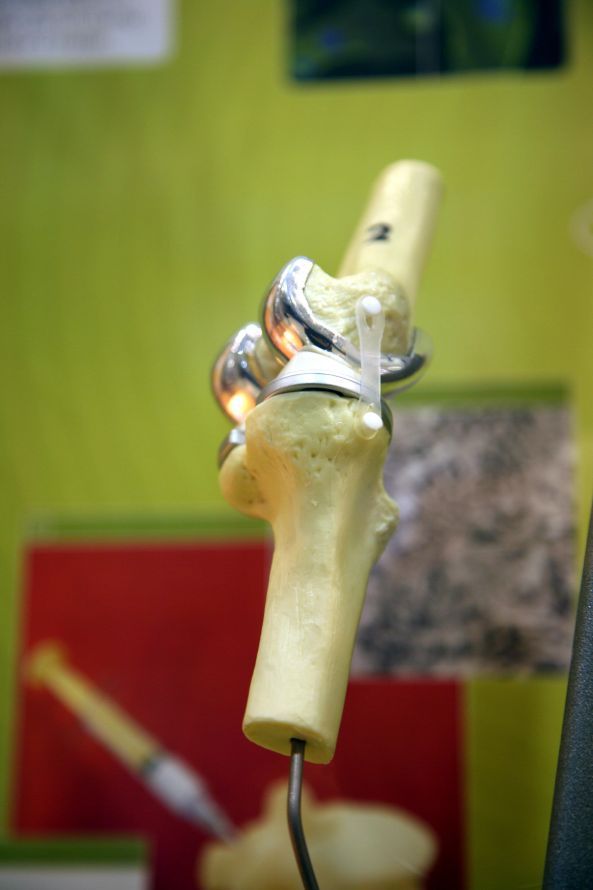
Determining the individual knee phenotype changes the entire process for the patient, because diagnostics, planning, and implant positioning are significantly more precise and highly personalized.
“In robot-assisted knee surgery, one thing in particular has changed: During the operation, significantly more information is available than before. Before the procedure, planning is usually based on a full-leg X-ray—that is, a two-dimensional image. This allows for a good assessment of extension, but flexion is highly individual—and this is precisely where robotics provides crucial additional data. The robot measures ligament tension during flexion more precisely and enables it to be optimally adjusted to the patient’s anatomy during surgery. The major advantage is that information is obtained not only in advance but directly in the operating room. The surgeon can respond to this data and assess the stability of the knee in real time. In a purely conventional procedure without robotic assistance, this information is lacking—particularly regarding the flexion gap and stability in that area. “Robotics thus enables a significantly more individualized, precise, and functionally better-tailored treatment,” emphasizes Prof. Dr. Hirschmann, adding:
“In revision surgeries—that is, when a knee prosthesis is already in place and needs to be replaced due to age or a complication—there are currently no custom-made prostheses available. However, there are initial efforts to use robotics in this area as well, in order to perform revisions in a less invasive manner. During the procedure, the robot—or rather, the navigation system—provides additional information about the alignment and ligament tension of the existing implant. In the future, this data could help avoid having to remove the entire prosthesis, allowing only individual components to be replaced. This would be significantly less invasive for the patient. However, these developments are still in their early stages. The long-term goal is to extend the lifespan of prostheses, replace only the affected parts, and achieve more precise adjustment with the help of robotics.”
The individual knee phenotype influences both implant positioning and intraoperative ligament balance because it determines which anatomical and functional characteristics of the knee should be preserved and which should not be corrected. A varus, valgus, “lax,” or “tight” phenotype each describes a specific functional pattern of the knee that results from three interrelated characteristics: the leg axis, the shape and inclination of the joint space, and the tension of the surrounding ligaments. These characteristics do not occur in isolation but form stable combinations that are typical of each phenotype. For example, a varus phenotype exhibits a tendency toward bowlegs, a narrower medial joint space in extension, and higher tension in the medial ligamentous structures, whereas a valgus phenotype tends to have a knock-knee alignment, a lateral opening in extension, and greater stress on the lateral ligament side. A “lax” phenotype is characterized by greater joint mobility and softer ligament guidance, whereas a “tighter” phenotype has tight ligaments and a narrow, less compliant joint space. Crucially, these combinations shape the knee’s range of motion and stability and thus also determine how a knee should be surgically aligned or prosthetically reconstructed.
There is now a growing, though not yet conclusively established, body of evidence suggesting that phenotype-based alignment is associated with better functional outcomes and higher patient satisfaction —especially when the original phenotype is not “forcibly” converted into a mechanically neutral alignment.
Prof. Dr. Hirschmann comments on this: “The available data show that differences in implant longevity can be reliably assessed after about 15 years at the earliest—and it is precisely these long time periods that are not yet sufficiently covered by robotic surgery. In principle, however, it is assumed that robotic systems help to avoid so-called outliers—that is, implant placements that deviate from the planned ideal because certain anatomical details were not accurately captured intraoperatively. If such deviations occur less frequently, both service life and revision rates should improve in the long term. This line of reasoning is logical and widely accepted among experts, but the current data are not yet sufficient to confirm this unequivocally. Registry data from Australia already show benefits for partial prostheses, though they have not yet been able to demonstrate a significant difference in long-term durability. Overall, it can be said that the results to date are promising, but more robust long-term data are still needed,” and he continues:
“Personalized alignment of the knee joint does indeed lead to a more favorable recovery—not so much because of the prosthesis itself, but primarily because of the more precise alignment and improved ligament orientation. Crucially, phenotyping makes it possible to respect the individual joint type, regardless of whether a standard or a custom-made prosthesis is implanted. The less one has to deviate from the natural anatomy, the easier it is for the body to adapt. Someone who has lived with bowlegs for decades finds it significantly more stressful when the leg is suddenly straightened completely. If, on the other hand, a slight bowleg remains, this corresponds more closely to the patient’s accustomed biomechanics and provides greater stability. For the soft tissues, this means a shorter adjustment period, and that is exactly what patients notice: less adjustment, less irritation, and faster functional recovery. Personalized alignment thus contributes noticeably to a more favorable recovery process—including with regard to the goal of “Back to Sports.”

In complex cases such as revisions, post-traumatic malalignments, or ligamentous insufficiencies, phenotyping cannot simply be applied “one-to-one,” but it remains highly valuable as a conceptual framework. In contrast to primary knee replacement, the focus here is less on the exact reconstruction of the original phenotype and more on a phenotype-oriented approach within the constraints of the existing anatomy and soft tissues. The starting point is always the question: What did the knee presumably look like originally—and what aspects of it can still be reconstructed in a sensible and safe manner under the current conditions?
“Upon closer examination of the knee joint, it becomes clear that there are certainly situations in which a personalized alignment is not advisable. Some deformities are considered clearly pathological—such as pronounced bowlegs, which are functionally disadvantageous and which one would not simply want to reconstruct. In such cases, a deliberate correction is made—that is, an adjusted personalization is performed—to achieve a functional, stable joint. The goal is always not to restore pathologies, but to create a viable biomechanical environment. Several factors play a role here: bone quality, the degree of axial deviation, and ligament stability. If, for example, the medial or lateral ligaments are insufficient, the original alignment cannot simply be replicated, because the joint would otherwise not function stably. Similarly, very soft, osteoporotic bone can mean that certain alignments—such as residual bowlegs—are unsuitable because the prosthesis would not be reliably anchored within it. Age itself, however, does not play a decisive role. What matters is how resilient the bone is and whether the anatomical structures allow for a reconstructive or rather a corrective strategy. This leads to a clear logic: personalization, yes—but only where it makes biomechanical sense and is stable in the long term,” notes Prof. Dr. Hirschmann.
Personalized knee surgery places high demands on the hospital, the team, and the surgeon—not only technically, but above all conceptually. Anyone who wants to implement this approach at a high level needs a deep understanding of how individual anatomy, functional relationships, and surgical decisions interplay.
“The hospital must go to great lengths to be able to offer personalized knee surgery at a high level. For the surgeon, this means above all truly understanding the underlying biomechanical principles in detail: Which alignment leads to which functional outcome, which adjustments make sense, and which do not. Those coming from a background in traditional standard joint replacement must first familiarize themselves with this way of thinking—because personalization requires a significantly more nuanced understanding of individual anatomy and its implications in the operating room. This also involves observing the procedures of experienced colleagues and grasping the logic behind their decisions. The challenge lies less in the technical execution than in the mental preparation: You have to know where you want to “go” during the surgery. It used to be simple—every prosthesis was placed in the same target position. Today, the target position depends on the individual knee, and that makes decision-making more complex. Technically, work is underway to simplify this process—for example, through robotic assistance and AI-based systems that function like a navigation device in the operating room. Early developments suggest that algorithms could eventually provide step-by-step guidance on which adjustment is appropriate for which phenotype. But until these systems are fully established, the greatest challenge remains the surgeon’s mental precision: “Only those who truly understand the interrelationships can perform personalized surgery safely and consistently,” emphasizes Prof. Dr. Hirschmann, explaining the steps required before a surgeon can perform a personalized knee replacement:
“The process leading up to a surgeon’s first personalized knee surgery can best be described as a multi-stage learning and training process. It is crucial that the procedure is not performed on a patient until the entire concept has been thoroughly understood—biomechanically, technically, and in terms of the consequences of each alignment. The first step is familiarizing oneself with the fundamentals: scientific publications, case studies, and the principles of personalized alignment. This is followed by the simulation phase. CT-based models allow one to understand how different alignments affect axes, ligament tension, and movement patterns. These programs are a central component because they sharpen one’s understanding of cause-and-effect relationships. The next step involves courses offered by prosthesis manufacturers—initially using artificial bones, and later on cadavers. Only once these stages have been mastered with confidence do residents begin observing surgeries performed by experienced colleagues. The first surgery performed by the trainee is deliberately not of maximum complexity, but involves a “mild” degree of personalization that can be increased over time as confidence and routine grow.”
The prevalence of personalized knee arthroplasty depends heavily on how one defines “personalization.” In Germany, traditional mechanical or standardized approaches continue to dominate—they still account for around 60 to 70 percent of all implantations. Nevertheless, the ratio is shifting year by year.
Prof. Dr. Hirschmann makes it clear: “Personalized alignment is gaining noticeable momentum because more and more surgeons are recognizing that it makes biomechanical sense and offers functional benefits for many patients. There are understandable reasons why the shift is not happening faster. Many experienced surgeons who have been using mechanical alignment for decades do not switch their method in the final years of their careers—not out of opposition, but because the transition is time-consuming and requires a deep understanding of the new concepts. Growth is therefore coming primarily from the younger generation, who are already being trained in personalized approaches and naturally integrate them into their practice. This results in a continuous—but not sudden—transition. At the same time, patient behavior is also changing. Thanks to online research, patient testimonials, and AI-powered information searches, many patients today are significantly better informed. They check which practitioners offer which methods and specifically seek out centers that use personalized procedures. At the same time, word-of-mouth recommendations remain a key factor: Satisfied patients bring friends and acquaintances with them, while others travel from farther away specifically because they discovered the relevant expertise online.”
Current developments still focus heavily on the overall alignment of the knee joint—that is, on the precise adjustment of the axes and correct alignment. At the same time, there are many indications that the next major advances will go well beyond this.
“In particular, the movement of the patella is coming into sharper focus—not just as a static structure, but as a dynamic process that must be captured and understood during movement. As a result, the field is increasingly moving toward digital twins—that is, digital representations of the individual knee joint—which can be used to simulate how certain surgical decisions will affect subsequent kinematics. Such models could show what movement patterns result when components are positioned in a specific way. Development will continue precisely in this direction, and that is what makes the current phase particularly exciting. Much is currently taking shape, and some things will only become clear once they are applied in clinical practice, but the momentum is enormous and opens up new possibilities. “In Basel, approximately 120 revision surgeries and about 250 primary surgeries are currently performed each year—a figure that is exceptionally high for Switzerland,” Prof. Dr. Hirschmann emphasizes at the conclusion of our conversation.
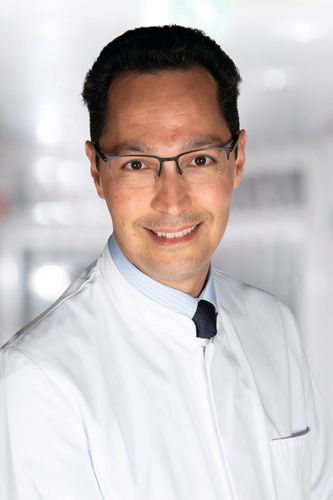
- Internationally leading knee surgeon, specialist in endoprosthetics & revisions
- Pioneer in phenotyping: patient-specific alignment, 3D prostheses, robotics
- Broad surgical spectrum: meniscus, cruciate ligaments, cartilage, osteotomies, partial and total knee replacements
- Expert in post-knee-replacement pain with a standardized diagnostic and treatment approach
- High scientific visibility: >450 publications, international awards
- Leadership roles in professional societies: Past President of the Personalized Arthroplasty Society, Board Member of the DKG & ESSKA
- Clinical Professorship in Orthopedics and Biomechanics at the University of Basel
- Chief Physician and Director of the University Center for the Musculoskeletal System and the University Clinic for Orthopedics and Traumatology
- Strengthens the KSBL as a leading center
Share this article
Expert Interviews
Read next
- Expert interview
Expert interview with Professor Dr Elmar Herbst, PhD
Oct 15, 2026
Patient-centred and personalised knee surgery
Read more - Expert interview
Cardiogeriatrics: Significance and benefits in the context of hospital reform
Sep 21, 2026
Cardiogeriatrics: Significance and benefits in the context of hospital reform
Read more - Expert interview
Expert Interview with Professor Dr. Amadeus Hornemann, MPH
Sep 18, 2026
Prof. Amadeus Hornemann on Precision Medicine in Gynecology: Modern Surgery, New Techniques, Better Quality of Life
Read more