Expert Interviews
Fibroids – Not Always a Case for Surgery

Alexandra Pfitzmann ·
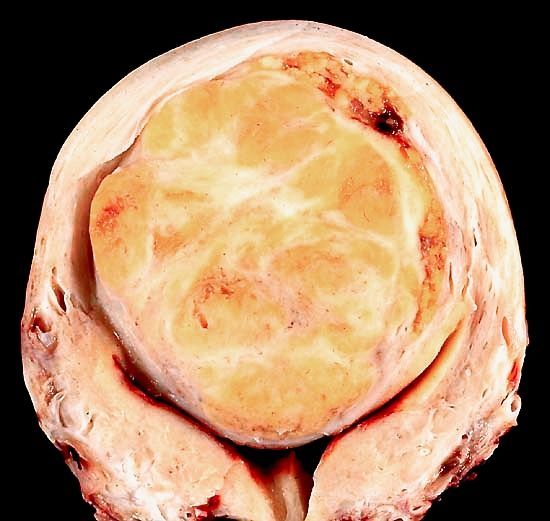
Fibroids are benign growths in the uterus and are among the most common gynecological conditions. In Germany, more than 50 % of women develop at least one fibroid during their lifetime, most commonly between the ages of 30 and 50.
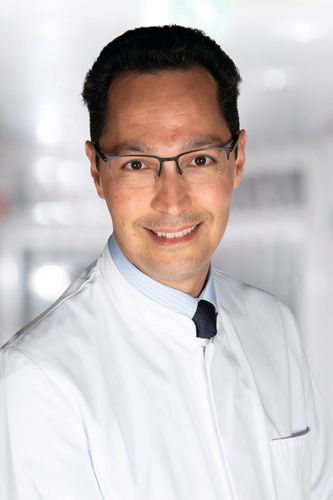
Many fibroids go unnoticed, while others cause heavy bleeding, pain, or impair fertility. The editorial team of the Leading Medicine Guide spoke with Professor Hans-Christian Kolberg, M.D., to learn about the course of this condition and the available treatment options.

“If fibroids are discovered by chance—for example, during an ultrasound—and the patient has no symptoms, there is no need for treatment. Only when fibroids cause symptoms do they become medically relevant and are considered to require treatment.
However, it is important to be certain that it is actually a fibroid. There is an extremely rare but crucial differential diagnosis: sarcoma, a malignant disease that can look exactly like a fibroid on ultrasound and even on an MRI. Ultimately, the two can only be distinguished by their growth rate, which is why an evaluation by an experienced gynecologist is so important.
During the consultation, one of the first questions is therefore how long the patient has been aware of the change. If someone has had fibroids for ten years, it cannot be a sarcoma. Even though this malignant variant is rare, it should be mentioned and kept in mind.
That said, “fibroids only need to be treated if they actually cause symptoms,” explains Prof. Dr. Kolberg, who then describes how fibroids develop:
“Fibroids develop basically like any other benign tumor, because ultimately that’s exactly what they are: benign tissue growing in a place where it doesn’t belong. The term ‘tumor’ unnecessarily frightens many people, but it simply means that tissue is forming somewhere where it doesn’t belong.
There are malignant tumors that are dangerous, and benign ones that cause no harm. With fibroids, muscle tissue grows outside the functional structure of the uterine wall, so it cannot contract and instead forms a lump—that is exactly what a fibroid is. Why women develop fibroids cannot be attributed to environmental factors, diet, or medications.
A genetic predisposition is the most likely cause. No specific gene has been identified so far, and there is no way to predict or test for the risk. Nevertheless, experience shows that women may have an increased risk if their mother or sister also had fibroids, even though this risk cannot be precisely quantified. The key point is that fibroids only become a medical condition when they cause symptoms.
As far as growth is concerned, there are no fixed rules; rather, the assessment is based on empirical data. If a fibroid is detected for the first time and measures about two centimeters, a follow-up examination is often scheduled after six months. In young women with a regular menstrual cycle and normal hormone levels, it is quite common for a fibroid to grow to three centimeters during this time.
A growth of one to two centimeters per year is considered normal, although fibroids do not grow linearly but in spurts. Some remain unchanged for years. A sarcoma, on the other hand, grows continuously and usually shows a significant increase in size within six months—often doubling in size. If, despite follow-up examinations, there is uncertainty as to whether it is truly a fibroid, it is removed.”
The prevalence of fibroids cannot be specified with equal precision for all population groups, but certain trends are well documented.
“Among African women, it is known with relative certainty that about half of women under 40 have fibroids. At first glance, this seems surprising because many women on the African continent have several children without any problems despite this high rate. However, this correlation can be explained by the age at which women there become pregnant: If a woman begins having children as early as age 16, many pregnancies can occur before fibroids even grow large enough to cause symptoms.
If, on the other hand, a woman does not begin planning a family until her mid-30s, fibroids have significantly more time to develop and cause problems. In Germany and other European populations, it is estimated that about one in four women over the age of 30 has fibroids.
The prevalence continues to rise with age because fibroids develop and grow over the course of a woman’s life. They are most commonly found between the ages of 40 and 50. In this age group, as many as 50 percent of women may have fibroids—though this does not mean that all of these women experience symptoms. “Only about 20 percent of those affected actually experience symptoms that require treatment,” explains Prof. Dr. Kolberg.
Many women with fibroids do not notice any changes at first because these benign tumors often grow slowly and the body adapts to the gradual changes. Symptoms usually do not arise until a fibroid reaches a certain size or is located in such a way that it distorts the uterus or presses on surrounding organs.

Prof. Dr. Kolberg adds: “Fibroids do not automatically need to be removed as soon as they cause symptoms, because ultimately it is always the woman herself who decides how severe her distress is and whether she wants treatment. Some women find heavier bleeding or occasional pain barely bothersome and prefer not to take any action, while others say that even significantly milder changes are unacceptable to them.
Both approaches are entirely legitimate. A ‘must’ applies only in the extremely rare situation where it is unclear whether the mass is actually a fibroid or possibly a sarcoma. Since sarcomas account for less than two percent of these findings and many fibroids never cause symptoms, they are not treated preventively but only when symptoms actually appear.
The symptoms themselves can be roughly divided into three groups. The first group includes everything caused by the growth of a fibroid: pain, a feeling of pressure, frequent urination, constipation, or other symptoms resulting from the compression of organs. The second group involves bleeding disorders.
Many women experience breakthrough bleeding or, in particular, very heavy menstrual bleeding that, while remaining regular, is significantly heavier than before. This is one of the most common reasons for treatment. The third group relates to infertility. Fibroids can alter the structure of the uterus, displace the fallopian tubes, or affect the movements of the uterus, thereby disrupting sperm transport.
“So they can be a cause of infertility, but they don’t have to be.” In addition, they can also be a cause of miscarriages or, rarely, premature births.
Fibroids are almost always located in the uterus, as they develop where smooth muscle tissue is present. This is why they are also referred to as uterine fibroids.
“Fibroids can occur in all layers of the uterine wall or in the uterine ligaments, but they do not migrate to other locations. From the outer peritoneal lining to deep within the uterine cavity, they can develop anywhere muscle tissue is present. This often leads to heavier or longer menstrual bleeding, which can result in anemia, as well as cramping pain in the lower abdomen.
Some women feel a sensation of pressure or fullness in the pelvis, which intensifies when sitting or moving. If a fibroid presses on the bladder, frequent urination or difficulty completely emptying the bladder may occur, while fibroids near the bowel can lead to constipation or a feeling of pressure.
Pain during sexual intercourse or reduced fertility are also possible if fibroids alter the uterine cavity. Despite these potential symptoms, many fibroids go unnoticed for a long time because small or poorly located fibroids do not cause any symptoms at all. Even larger fibroids can remain asymptomatic if they grow in such a way that they do not affect either the uterine cavity or neighboring organs.
Many women also interpret mild changes in their menstrual cycle or occasional pain as normal fluctuations and do not seek medical advice until it is too late. Since fibroids usually grow over the course of years, the body becomes accustomed to the changes, so that symptoms are only noticed when the fibroid becomes significantly larger or its location changes.
“A gynecological examination is therefore important if bleeding irregularities, pain, or a feeling of pressure occur, in order to reliably determine the cause,” recommends Prof. Dr. Kolberg.
Fibroids can be most reliably detected through imaging procedures, as these clearly visualize the uterus and reveal changes at an early stage. A medical evaluation is always important, especially if bleeding irregularities, pain, or a feeling of pressure occur, since only a specialist can reliably determine whether a fibroid is present and what its significance is.
“Diagnosis always begins with a consultation, because the first crucial step is to determine what symptoms a woman is actually experiencing and how severe her personal distress is. Many patients come to the fibroid clinic we’ve set up because they’ve noticed symptoms themselves, while others come because their gynecologist detected fibroids on an ultrasound without them having felt anything at all.
In such cases where there are no symptoms at all, it’s often clear after the consultation that no treatment is necessary. That’s why the first step is always to determine whether the patient is experiencing any distress and, if so, what is causing it. The next step involves using an ultrasound to clarify most of the diagnosis.
A transvaginal ultrasound is the most important procedure here, because it allows us to see very precisely where the fibroids are located and whether they could be responsible for the symptoms described. In addition, an abdominal ultrasound may be useful if the location or size of the fibroids warrants it. For specific issues—such as when the exact extent or the relationship to certain structures is unclear—magnetic resonance imaging (MRI) is sometimes used. “A CT scan, on the other hand, plays no role in the diagnosis of fibroids,” says Prof. Dr. Kolberg.
Transvaginal ultrasound is the most important and most commonly used procedure because it provides a highly detailed view of the uterus and reliably reveals the size, location, and number of fibroids
Modern, minimally invasive treatment methods for fibroids today aim to alleviate symptoms and preserve the uterus whenever possible. Which method is appropriate always depends on the individual situation—such as the size and location of the fibroids, the symptoms, and the desire to have children.
Prof. Dr. Kolberg explains: “To understand the treatment of fibroids, one must first be clear about what options are generally available. Both surgical and non-surgical procedures are available, and before discussing specific steps, it is important to fully explain both sides.
The question of family planning plays a central role here, as it significantly determines which options are even appropriate. Women who no longer wish to have children can choose from a wider range of treatments, while certain procedures are not an option for women who wish to have children. Even though patients are usually not elderly—with extremely rare exceptions, fibroids are typically an issue before menopause—by no means do all of them still wish to become pregnant.
Once menopause sets in, fibroids become less of a concern anyway, as hormonal changes prevent them from growing further and often even cause them to shrink. When it comes to surgical options, a distinction is made between uterine-preserving procedures—in which the fibroids are removed and the uterus is reconstructed—and the removal of the entire uterus. A uterus-preserving surgery is primarily considered if a woman still wishes to have children or if non-surgical treatments are not desired or not covered by insurance.
However, if a woman no longer wishes to have children and wants surgery, hysterectomy is usually the procedure with significantly fewer complications. It takes less time, carries a lower risk, and resolves the problem permanently, as fibroids cannot recur afterward. While it is generally no longer necessary to have blood on hand for a hysterectomy today, blood typing is almost always required for a myomectomy because the risk of a blood transfusion is significantly higher.
This does not mean that preserving the uterus is not a worthwhile goal—on the contrary, it is essential for women who wish to have children—but from a purely medical standpoint, a hysterectomy is the option with fewer risks. As for recovery time after the procedures, a period of 4–6 weeks should definitely be planned for a hysterectomy, whereas with a uterine-preserving procedure, patients are usually able to return to work after about 14 days.
Ultimately, the decision always rests with the patient. She alone determines the extent of her distress, which risks she is willing to accept, and which solution she finds most appealing. The role of doctors is to explain all options clearly, not to dictate a specific course of action.
Uterus-preserving surgeries are performed frequently, precisely because many young women have fibroids and wish to undergo organ-preserving treatment. However, they are more complex and can easily take two to three hours in cases of large fibroids,” he emphasizes:
“It is practically unheard of that a woman who wishes to have children would be told that her uterus must be removed. If a patient wants to keep her uterus, there is no medical reason to deny her that. Even very extensive findings can usually be treated with organ-preserving surgery.
Many women come to us for a second opinion because they were told at non-specialized facilities that a hysterectomy was unavoidable. Yet even extreme cases can often be resolved differently. Experience shows that even in a uterus with dozens of fibroids—in one case, there were sixty—all the fibroids can be removed, and the woman can still become pregnant later and give birth to a healthy child.”
Surgery becomes necessary when fibroids cause severe symptoms, rapid growth, fertility problems, or diagnostic uncertainty. Very large or poorly located fibroids can often only be removed surgically. If a woman no longer wishes to have children, a hysterectomy may also be considered in severe cases—always depending on her individual symptoms and needs.
Non-surgical treatment options include both medication and various minimally invasive procedures aimed at shrinking fibroids or alleviating their symptoms without the need for surgical removal of tissue.
“The most important medication option today is treatment with so-called GnRH antagonists. These active ingredients block hormonal stimulation of the ovaries, temporarily inducing a state of artificial menopause in the woman. To counteract typical menopausal symptoms, small amounts of hormones are added in a fixed combination—a process known as ‘add-back.’
This therapy can shrink fibroids and significantly reduce symptoms. Many patients use it to buy time: they become symptom-free for several months and can decide at their own pace whether and what further treatment they would like. The therapy can be used intermittently, paused, and resumed if symptoms recur.
The medications do not need to be taken for life, because any treatment for fibroids is only necessary until the onset of menopause. After that, fibroids lose their hormonal basis, stop growing, and often even shrink, so that treatment is no longer needed. Although medication can be used over a longer period, for most patients it is a temporary solution.
Many women do not begin treatment until they are approaching menopause anyway, and they use the medications to relieve symptoms or buy time until a final decision is made about next steps. In very young women, this therapy is generally not used long-term. In such cases, it serves more to prepare for surgery or to alleviate acute symptoms.
“Long-term use would not be advisable simply because pregnancy is not possible while on this treatment,” explains Prof. Dr. Kolberg, adding:
“In addition to medication, there are three non-surgical procedures that target the fibroid directly. One commonly offered method is uterine artery embolization. Following an MRI evaluation, a procedure called angiography is used to inject material into the blood vessels supplying the fibroid.
These small particles block the vessels, reducing blood flow to the fibroid and causing it to shrink. In 70 to 80 percent of patients, symptoms improve significantly. Another option is high-intensity focused ultrasound. In this procedure, ultrasound waves are focused so that they converge at a single point in the body and generate heat there.
Temperatures of 70 to 80 degrees cause the fibroids to shrink and symptoms to subside, also with success rates of about 70 to 80 percent. However, both procedures are only suitable for fibroids less than eight centimeters in diameter. The third option is radiofrequency ablation, a hybrid approach combining minimally invasive and surgical techniques. Under anesthesia, a probe is guided through the uterine cavity into the fibroid, and radiofrequency energy is used to selectively heat and shrink the tissue without removing any tissue.
From among all these options, the one that best suits the patient’s symptoms, her preferences, and the specific nature of her fibroids is selected in consultation with her. Some types of fibroids are better suited to certain procedures than others, so the decision is always made on a highly individualized basis.”
At the Knappschaft Kliniken Marienhospital Bottrop, uterine-preserving surgery is not only the goal but is also made possible in the vast majority of cases. Even complex fibroid cases are treated there with organ-preserving surgery—a crucial difference, especially for women who wish to have children.
“Whether a uterus can be preserved despite numerous fibroids depends less on an unknown technique than on surgical experience. When operating on a uterus with twenty, thirty, or forty fibroids, it actually looks during the procedure as if there had been an explosion in the tissue, and afterward, every single piece must be carefully put back together.
This is technically demanding, time-consuming, and requires a great deal of experience. Those who rarely perform such procedures often find it hard to imagine that reconstruction can be reliably successful—and therefore are quicker to recommend removing the uterus. This is precisely why fibroids should be treated at specialized fibroid clinics, where diagnostics and surgeries are performed by teams that regularly handle such cases.
It’s similar to oncology: the more experienced the center, the more confident and nuanced the decisions can be. Many patients who were advised to have a hysterectomy at non-specialized facilities were able to undergo organ-preserving surgery at such specialized centers—especially when they wish to have children.
The principle that the woman ultimately makes the decision plays a central role here. There are still colleagues who take a more directive approach and decide for themselves what is possible or advisable. However, whether the desire to have children is a realistic goal for the patient is not the doctor’s decision to make. Even if the chances of pregnancy after a complex myomectomy are not perfect, the possibility of pregnancy remains—whereas after a hysterectomy, it is zero.
Ultimately, much depends on the surgeon’s individual experience and the center’s facilities. The more complex the findings, the more important it is to have someone who performs such surgeries frequently and successfully,” emphasizes Prof. Dr. Kolberg, and with that, we conclude our conversation.
- Long-standing chief physician (over 20 years) and leading expert in gynecologic oncology with special expertise in the treatment of breast cancer and tumors of the female reproductive organs.
- Outstanding surgical expertise, particularly in complex gynecological procedures, uterine fibroids, pelvic organ prolapse, and incontinence.
- A pioneer of modern, minimally invasive therapies such as high-intensity focused ultrasound (HIFU) for fibroids and fibroadenomas, as well as intraoperative radiation therapy for breast cancer.
- An internationally recognized scientist and educator, active in professional societies, clinical trials, and publications, and serving as a visiting professor in China and Malaysia.
- Director of a multi-certified breast and genital cancer center that meets the highest quality standards in diagnostics, treatment, and technical equipment.
- Dedicated obstetrician with expertise in high-risk obstetrics, gentle cesarean sections, and water births.
- Patient-centered care, characterized by personalized support, modern high-performance medicine, and a commitment to providing individualized and responsible care for patients.
Share this article
Expert Interviews
Read next
- Expert interview
Expert interview with Professor Dr Elmar Herbst, PhD
Oct 15, 2026
Patient-centred and personalised knee surgery
Read more - Expert interview
Cardiogeriatrics: Significance and benefits in the context of hospital reform
Sep 21, 2026
Cardiogeriatrics: Significance and benefits in the context of hospital reform
Read more - Expert interview
Expert Interview with Professor Dr. Amadeus Hornemann, MPH
Sep 18, 2026
Prof. Amadeus Hornemann on Precision Medicine in Gynecology: Modern Surgery, New Techniques, Better Quality of Life
Read more