Expert Interviews
Robotics, Innovative Therapies, and Early Rehabilitation

Alexandra Pfitzmann ·
Modern neurological rehabilitation today combines highly advanced forms of therapy that complement each other in a targeted manner. Robotics-assisted methods enable particularly intensive and precise movement training, even in the early stages following an injury. Early rehabilitation begins immediately after a neurological event and activates important functions, while neuropsychological treatment promotes cognitive abilities such as attention, memory, and perception.
Neuropsychological treatment is often already part of early rehabilitation. Together, these approaches create optimal conditions for achieving progress sooner and gradually regaining independence.
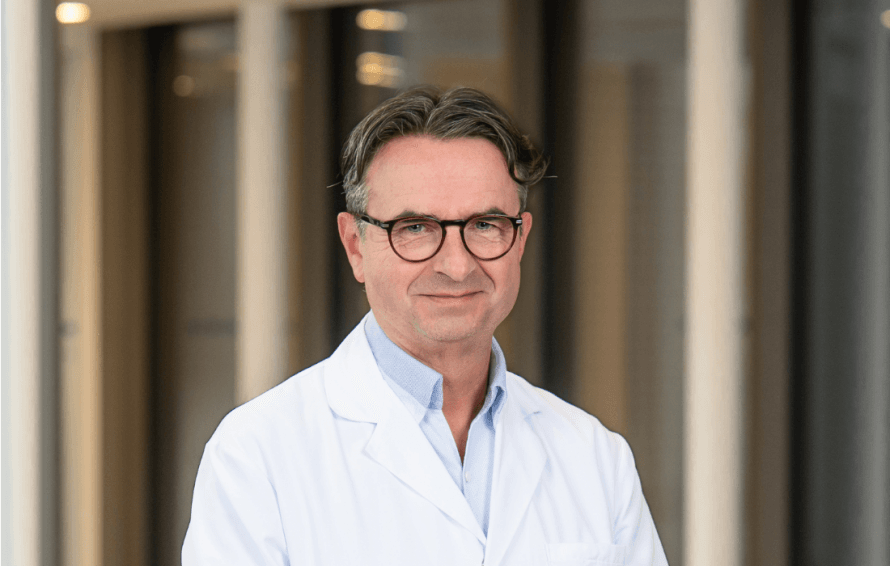
“In fact, the services provided here at the Zihlschlacht Rehabilitation Clinic encompass the entire spectrum of neurological rehabilitation, of which early rehabilitation is just one part. The Zihlschlacht Rehabilitation Clinic is the largest neurological rehabilitation clinic in Switzerland in terms of the number of beds, and thanks to its size and expertise, it is able to cover all phases of neurological rehabilitation.
In many cases, the process begins as early as the early rehabilitation phase. There are two locations: the Zihlschlacht Clinic itself and a ward at the Münsterlingen Cantonal Hospital. Early rehabilitation takes place there even for ventilated patients who are coming directly from the intensive care unit. This intermediate care unit enables the treatment of severely affected patients who are still unconscious, on ventilators, and require constant monitoring—for example, following a stroke, severe traumatic brain injury, or other critical care events.
This earliest phase is followed by further steps at the Zihlschlacht site, where there are two additional early rehabilitation wards: one for somatic and one for cognitive early rehabilitation. Somatic early rehabilitation is intended for patients who still require monitoring, such as those with a tracheostomy or who need monitoring of their breathing or circulation.
Cognitive early rehabilitation, on the other hand, cares for people who are usually already mobile but still exhibit significant cognitive impairments or disorientation. “This ward offers a protected environment and, as a closed unit, is specifically tailored to this patient group,” explains Prof. Dr. Krakow at the start of our conversation, adding:
“Once their condition improves, patients move on to advanced neurological rehabilitation. In this phase, patients are generally able to actively participate in therapies and make their way to their treatments independently. Therapies increasingly take place outside the patient’s room. A wide range of modern technologies is used here. The clinic boasts one of the largest centers for therapeutic robotics in Europe, with numerous devices for mobilization, motor rehabilitation, and cognitive stimulation.
These include robotic gait trainers as well as systems for the upper extremities, often in the form of exoskeletons or other robotic assistive devices. Many of these devices incorporate game-like elements and built-in screens on which real-life tasks are performed virtually—such as putting away objects or avoiding obstacles. The points earned and visible progress serve as a motivating factor. These so-called “gaming aspects” are designed to boost motivation while enabling training that mirrors real-life situations.
In addition to device-assisted therapy, traditional neurological rehabilitation remains a central component. It is highly multidisciplinary, as most patients are affected in multiple functional areas simultaneously—paralysis, coordination deficits, speech and swallowing disorders, visual impairments, or cognitive deficits. Specialized therapists are available for all of these areas. Due to the clinic’s size, there are also highly specialized subunits, such as an orthoptics department for treating neurologically caused eye movement disorders or a dedicated neuro-urology department that addresses neurologically caused bladder and sexual dysfunction. These specialized areas complement the broad spectrum of neurological rehabilitation and enable comprehensive, individually tailored treatment.”
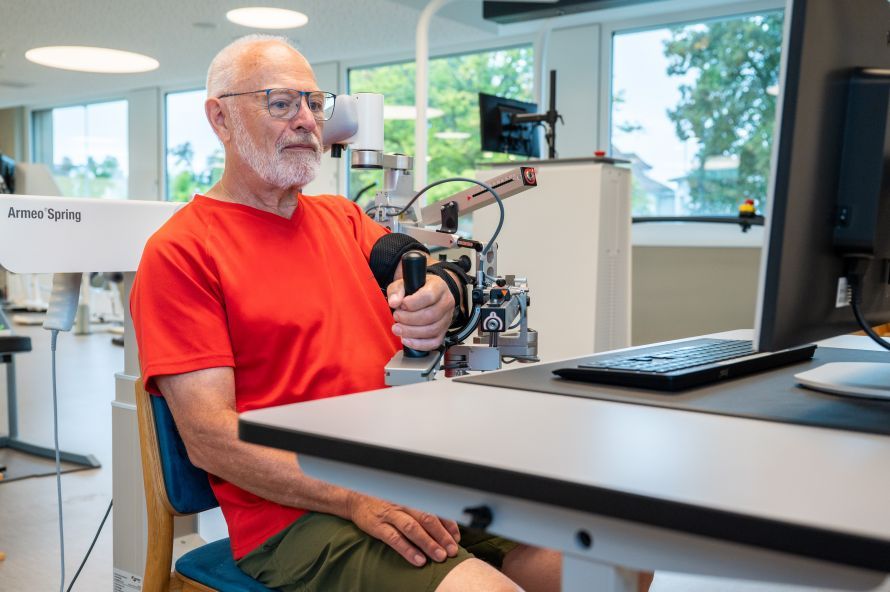
Early rehabilitation takes advantage of the window of opportunity during which the brain is particularly malleable following an injury. In the first days and weeks following a stroke, a brain injury, or other neurological damage, spontaneous reorganization processes take place in the brain, during which networks rearrange themselves, “silent” connections are activated, and healthy brain areas begin to take over tasks from the damaged regions. In later phases, the focus shifts to long-term participation: coping with daily life, independence at home, using assistive devices, counseling for family members, and vocational reintegration. In cases of severe, permanent limitations, the ultimate goal is to preserve existing abilities and ensure long-term quality of life.
During rehabilitation, patients are hospitalized at the clinic in Zihlschlacht, where they receive a personalized therapy program. Each patient has a personalized therapy plan that is continuously adapted to their progress. Progress is discussed in regular, at least weekly, team meetings, allowing tasks to become more complex or new forms of therapy to be added. The planning thus remains consistently individualized and dynamic.
“The length of stay varies greatly, as neurological rehabilitation often takes longer than in other specialties. The good news is that many patients recover very well, but this process takes time. On average, they stay for about 40 days, though the range is wide. Some are here for only a few weeks, while others—especially younger people with high rehabilitation potential—stay for up to several months.
There are various options for family members to stay nearby. Especially for international patients, apartments or hotels are available in the immediate vicinity. In addition, the private clinic offers rooms and suites within the facility where family members can stay. Overall, the clinic offers a highly diverse range of services, accommodations, and dining options. The private clinic has its own restaurant, its own kitchen, and rooms that meet four-star hotel standards.
The high standard of hospitality plays a key role in ensuring that patients feel comfortable—an important factor, as they often spend a long time here and a pleasant environment supports their recovery. In addition to general medical and therapeutic care, there are also specialized rehabilitation programs for specific conditions, such as a dedicated Parkinson’s center—the largest of its kind in Switzerland—as well as a specialized program for multiple sclerosis.
In addition, recreational and complementary therapy options are provided to add variety to patients’ stays and promote relaxation. These include animal-assisted therapy, equine therapy, qigong, yoga, and other activities that are highly valued by many patients. “The goal is not only to provide the best possible medical rehabilitation, but also to create an environment in which people feel well cared for during their long recovery phase,” emphasizes Prof. Dr. Krakow.
Psychological support plays a central role in neurological rehabilitation, as many patients experience phases of frustration, impatience, or discouragement during the course of their treatment. It is often unavoidable that progress comes more slowly than hoped or that setbacks occur.
Prof. Dr. Krakow explains: “Psychological support is firmly integrated into the rehabilitation process. Psychology is an inherent part of neurological rehabilitation, and there are numerous psychologists available who provide both neuropsychological assessment and psychotherapeutic support. On the one hand, we assess whether there are cognitive deficits that can be specifically addressed through training; on the other hand, patients receive support with issues such as coping with their illness, depressive symptoms, or emotional stress.
If necessary, additional psychiatric care is provided by specialists, similar to how other medical specialties regularly provide consultative services at the clinic, so that patients do not have to leave the facility,” and adds:
“There is often a lively exchange among the patients. Many find it a relief to meet people who are in a similar situation. Due to the often lengthy length of stay, acquaintances or even friendships frequently develop. Whenever possible, patients participate in the community program. They eat together—only those with severe symptoms remain in their rooms—and interact in group therapy sessions or in the large robotics center, which is used for robot-assisted therapy on the one hand, but also functions like a supervised fitness center on the other.
There, patients have the opportunity to exercise freely under supervision, which also encourages social interaction. This social exchange is considered an important component of the therapeutic approach. Studies show that mutual motivation and learning strategies from others within the group can positively influence the rehabilitation process. Overall, rehabilitation is therefore always a combination of individual and group therapy, complemented by the valuable dynamics that emerge within the patient group.”
In neurological rehabilitation, neuropsychology is not an add-on but an integral part of the overall process. It begins with a comprehensive analysis of cognitive, emotional, and behavioral limitations as well as preserved resources. This diagnostic assessment forms the basis that allows all professional groups—from physical therapy to occupational therapy and speech-language pathology to nursing—to tailor their interventions to the patients’ cognitive capabilities.
For example, an attention deficit is not only addressed in neuropsychological training but is also taken into account during mobility training, eating training, or communication exercises, thereby preventing patients from becoming overwhelmed and promoting learning processes. Neuropsychology also plays a central role in early rehabilitation because many patients are still experiencing severe disturbances in consciousness, low motivation, or disorientation.
The initial focus here is on using a multidisciplinary approach to stabilize basic mental functions such as alertness, attention, orientation, and motivation. Close coordination within the interdisciplinary team is crucial here, as shared goals, consistent communication, and coordinated stimuli are necessary to integrate patients into the rehabilitation process despite their limited awareness.
Robotic training systems are primarily used in neurology in cases where patients benefit from high-intensity, repetitive, and precisely guided movements. This effect is most pronounced in people who have suffered an acute brain injury, as the repetition of physiological movement patterns is crucial for the brain’s reorganization in these cases.
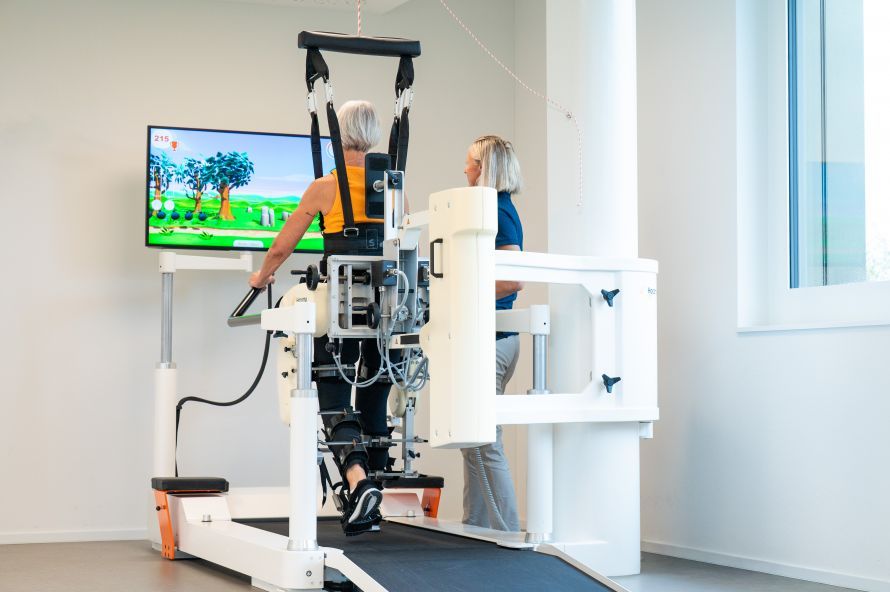
In neurological rehabilitation, there is now a wide range of robotic training systems that pursue very different goals depending on the patient’s functional level. They range from devices that help severely affected patients regain an upright position in the first place to high-precision robotic arms for fine motor training.
“Innovative therapeutic options now include both augmented reality (AR) and virtual reality (VR), including immersive AR and VR using special headsets for specific exercises. In other devices, augmented reality is directly integrated, allowing virtual environments to be projected in which patients can move and train. There is very high demand for inpatient treatment options, both for neurological rehabilitation in general and, in particular, due to the Zihlschlacht Rehabilitation Clinic’s strong national and international reputation.
With an occupancy rate of around 99 percent, the clinic is practically always fully occupied. Those who need rehabilitation are generally able to secure a spot, even if it may sometimes take a few days. The clinic’s size allows for a certain degree of flexibility in admission planning. In addition to regional (cantonal) care, there have traditionally always been international patients, who are usually accommodated in the private clinic and take advantage of the expanded services. Additional staff resources are available for this purpose, ensuring that care for the local population and the admission of international guests complement each other well.
Although the clinic has always specialized in neurological rehabilitation and therefore possesses a very high level of expertise, there are certainly other high-quality facilities. In Switzerland in particular, the standard of neurological rehabilitation is generally very high. There are several other clinics that are also well-equipped. Nevertheless, Zihlschlacht remains the largest among them, though it is not the only one,” emphasizes Prof. Dr. Krakow.
Robotic gait trainers or arm-hand systems make it possible to train movements at a frequency and quality that would be virtually impossible to achieve without technical assistance—especially when patients do not yet have sufficient strength or control to actively participate. Patients with incomplete spinal cord injuries also benefit significantly, because exoskeletons or end-effector devices enable movements that the damaged nervous system can no longer reliably control on its own. This stimulates the central nervous system while simultaneously activating the muscles, circulation, and bone metabolism.
In early rehabilitation, severely affected patients—who would be nearly impossible to mobilize without robotics—benefit the most. Here, robotic standing and gait systems enable safe standing, early steps, and intensive training long before independent walking is possible. Robotic and innovative forms of therapy are most beneficial when they are not viewed as a substitute for human connection, but rather as tools that deepen the therapeutic relationship. It is crucial that the technology does not come between the patient and the therapist, but rather supports their shared process.
Further developments in the field of artificial intelligence and modern rehabilitation technologies are certainly to be expected in the future. The clinic collaborates closely on a scientific level with universities, research institutes, and industry, particularly with companies that develop therapeutic devices.
“Thanks to these collaborations, the Zihlschlacht Rehabilitation Clinic is often among the first facilities to test new innovations. There are many companies in Switzerland that have emerged from university research projects and specialize in rehabilitation technology. Consequently, the field is developing rapidly. In addition to AI (artificial intelligence), there are numerous other areas where major advances are expected. One particularly exciting field is neuromodulation. Through electrical or magnetic stimulation of the brain or other parts of the nervous system, rehabilitation processes can be specifically influenced and accelerated.
Very interesting approaches are currently emerging in this area. In cases of paraplegia, for example, there are stimulation methods that may soon be able to reactivate lost functions. These are developments that have the potential to fundamentally transform rehabilitation. Artificial intelligence will also play a role, but it is only one part of a much broader spectrum of innovation. Equally important are advancements in existing technologies, which are becoming increasingly precise, adaptive, and effective.
“Overall, then, we are by no means at a standstill—rather, rehabilitation is entering a phase in which several technological innovations, working together, will enable major advances,” states Prof. Dr. Krakow, and with that, we conclude our conversation.
Thank you very much, Professor Dr. Krakow, for the insight into this modern world of rehabilitation!
- Medical Director of the Zihlschlacht Rehabilitation Clinic since 2026
- Chief Physician and Deputy Medical Director at the Zihlschlacht Rehabilitation Clinic since 2022
- Board-certified specialist in neurology with a focus on neurological rehabilitation, innovative therapies, and early rehabilitation
- Studied medicine in Marburg, Vienna, and New York (1987–1994)
- Neurology residency in Mannheim (University of Heidelberg) and Frankfurt
- Research and PhD at University College London (1997–2000)
- Board certification in 2003, followed by a position as senior physician at Frankfurt University Hospital (2003–2007)
- Habilitation in 2005; since 2014, Adjunct Professor of Neurology at Goethe University Frankfurt
- Chief Physician and Medical Director of the Asklepios Neurological Clinic in Falkenstein (2007–2022)
Share this article
Rehaklinik Zihlschlacht
ProfileExpert Interviews
Read next
- Expert interview
Expert interview with Professor Dr Elmar Herbst, PhD
Oct 15, 2026
Patient-centred and personalised knee surgery
Read more - Expert interview
Cardiogeriatrics: Significance and benefits in the context of hospital reform
Sep 21, 2026
Cardiogeriatrics: Significance and benefits in the context of hospital reform
Read more - Expert interview
Expert Interview with Professor Dr. Amadeus Hornemann, MPH
Sep 18, 2026
Prof. Amadeus Hornemann on Precision Medicine in Gynecology: Modern Surgery, New Techniques, Better Quality of Life
Read more