Expert Interviews
Scoliosis Surgery

Alexandra Pfitzmann ·
Scoliosis surgery is a specialized branch of spinal surgery that focuses on the surgical treatment of scoliosis—a lateral curvature of the spine accompanied by rotation of the vertebral bodies. In Germany, an estimated 900,000 people suffer from scoliosis.
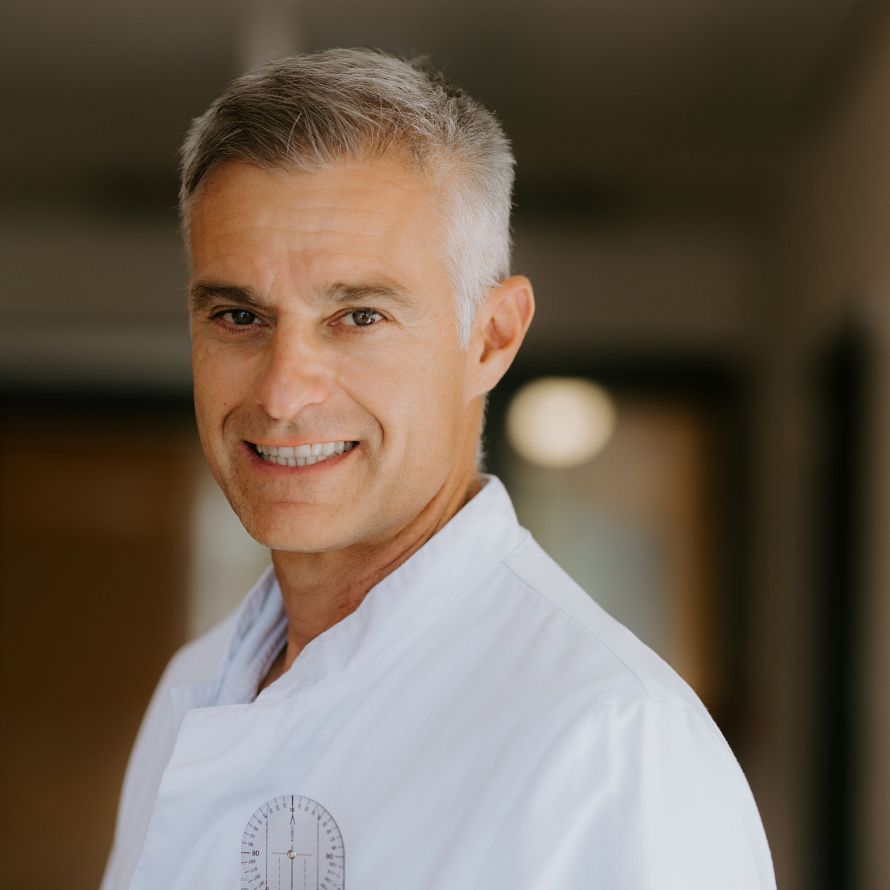
In a conversation with Professor Dr. Kröber, chief physician at the Helios Clinic in Rottweil and at the Heliosspital in Überlingen, the editorial team of the Leading Medicine Guide learned more about the causes and symptoms of scoliosis and the available treatment options.
Scoliosis occurs when the spine curves sideways and rotates at the same time, resulting in an S- or C-shaped deformity. The causes can vary widely.
“There are various forms of scoliosis. In children and adolescents, these are either congenital curvatures—such as those caused by vertebral malformations—or those that develop during growth. The most common form is idiopathic scoliosis, which is believed to be genetically determined and usually first becomes apparent during the pubertal growth spurt.
In addition, there is age-related scoliosis, which typically develops in the fifth or sixth decade of life—triggered by wear and tear, one-sided strain, or degenerative changes. Adolescents often do not even notice their scoliosis themselves because it does not initially cause any symptoms. It is usually first noticed by parents, relatives, or teachers who observe a deformity of the spine when looking at the child from behind. After diagnosis, the question arises as to whether treatment is necessary.
The most important factors are the degree of curvature and the potential for further growth. If the angle is less than 20 degrees, the condition is initially monitored. If the curvature increases and exceeds 20 degrees, conservative therapy is initiated—typically a brace combined with physical therapy. If the degree of curvature continues to increase or is already over 45 degrees at the time of the initial diagnosis, surgery is recommended because conservative measures are no longer sufficient and there is a high long-term risk of wear and tear and symptoms.
Pain is not necessarily present—even pronounced curvatures can be asymptomatic during adolescence. The situation is different in adulthood. Patients usually seek treatment because of chronic symptoms, not because of the visible deformity. Degenerative scoliosis causes back pain, often accompanied by radiating nerve pain, because the spinal canal narrows and nerves become compressed.
This can lead to sensory disturbances, muscle weakness, or even paralysis. Another typical feature is a change in posture: in addition to the lateral curvature (scoliosis), a forward bend—known as kyphosis—often develops. Together, these two features characterize the typical presentation of age-related deformity,” explains Prof. Dr. Kröber at the beginning of our conversation, before going into more detail about the most common form, idiopathic scoliosis:
“In this case, the changes usually occur during adolescence, with genetic factors, growth spurts, and muscular imbalances playing a role. Congenital malformations of the vertebral bodies can cause scoliosis as early as birth or in early childhood, while neuromuscular disorders such as muscular dystrophies or spinal cord injuries can also lead to lateral curvature.
In adults, scoliosis often develops due to degenerative changes, such as wear and tear, disc damage, or osteoporosis. The symptoms of scoliosis are varied and depend on the severity and location of the curvature. Common signs include uneven shoulders, hips at different heights, or a visible rib hump. Those affected may experience back pain or muscle tension, especially in cases of severe misalignment or in adulthood.
Mobility may also be limited, and in rare cases, neurological symptoms such as numbness, tingling, or weakness in the arms or legs may occur if nerve structures are affected. Severe scoliosis in the thoracic region can also impair lung or heart function. The symptoms usually develop gradually and are often not detected until routine checkups during adolescence, while in adults they may worsen due to degenerative changes if the misalignment remains untreated.”
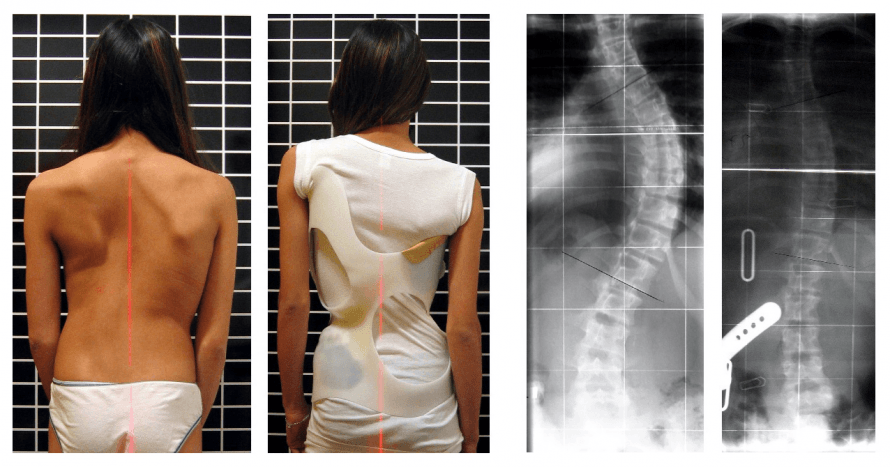 Scoliosis is classified as requiring treatment if the lateral curvature of the spine exceeds a certain degree, the misalignment is progressing, or symptoms such as pain, limited mobility, or functional problems are already present.
Curvatures exceeding 40 to 50 degrees often require surgical correction, especially if they are progressing. Age, growth potential, and symptoms also play an important role in the decision-making process. “In idiopathic, or juvenile, scoliosis, the goal of surgery is to correct the main curvature to such an extent that the remaining counter-curvature can balance itself out naturally as the patient continues to grow.
Many cases of scoliosis are actually double-curved: if the spine curves in one place, the body often forms a counter-curvature to maintain balance. Since children still have growth potential, the surgery focuses on the primary curve. This is straightened using a screw-and-rod system—much like the rods in a corset. The idea behind this is that the secondary curvature will correct itself as the child continues to grow in height. This can be compared to a young, crooked tree that is tied to a stake so that it continues to grow straight.
In this way, a relatively minor surgery can achieve a permanent correction that does not cause symptoms later on. This principle no longer works in adults because they are no longer growing. Therefore, the surgery must cover a longer segment of the spine, and the correction addresses both curves. This is the key difference between adolescent and age-related scoliosis. The surgical technique itself—straightening the spine using a screw-and-rod system—is, however, similar for both forms,” explains Prof. Dr. Kröber.
Scoliosis surgery is a highly specialized procedure aimed at correcting the lateral curvature and rotation of the spine, halting the progression of the deformity, and preserving spinal function.
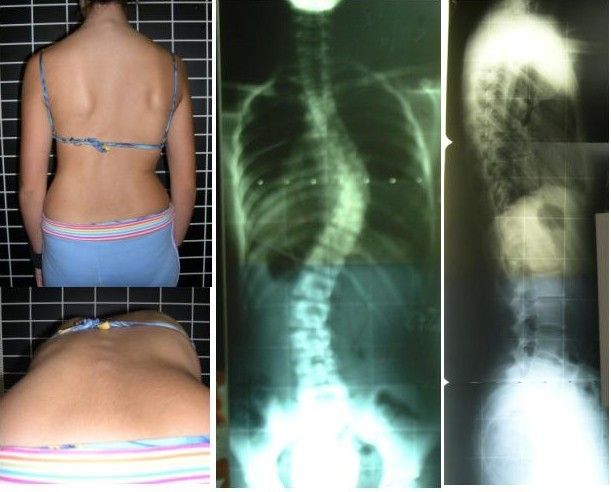
The process typically begins with precise surgical planning, during which the extent and location of the curvature are accurately determined using X-rays, CT scans, or MRI images. Based on this information, a decision is made regarding which vertebral segments need to be corrected and stabilized and which fixation techniques will be used.
Surgical access is usually achieved through the back or the side, depending on the location and type of curvature. Modern scoliosis surgery almost always employs posterior instrumentation techniques, meaning that screws and rods are inserted on the back of the spine to position and fix the vertebrae in the desired alignment. This involves the use of pedicle screws (metal screws, usually made of titanium), contoured titanium rods, or flexible rods, which stabilize the spine while preserving its natural mobility as much as possible.
Prof. Dr. Kröber explains: “During the surgery, the implants are inserted and anchored deep beneath the muscles and directly to the bone. They cannot be seen or felt from the outside. These implants stabilize the spine, realign it using biomechanical techniques, and hold it permanently in the corrected position.
That is why they are not removed later—they generally remain in the body. The number of screws used depends on the length of the curvature being corrected. Two screws are usually placed per vertebra, so that in cases of larger curvatures, the number can easily reach up to 20 screws. This also illustrates just how extensive such spinal surgeries are. Correcting scoliosis, in particular, is one of the most major procedures performed in this field.”
During the operation, the spine is monitored continuously using intraoperative neurophysiology to ensure that nerve structures are not damaged.
“Many patients are initially very afraid of scoliosis surgery, mainly because of concerns about possible paralysis. However, children and adolescents usually cope surprisingly well with the procedure: they recover quickly, regain mobility early on, and often find the postoperative pain to be significantly less than expected. Of course—as with any spinal surgery—there is always a risk of nerve or spinal cord injury.
Today, however, this risk can be reduced to virtually zero because nerve conduction is monitored throughout the entire operation. This neuromonitoring immediately indicates if a nerve is irritated or at risk due to a misaligned screw, allowing for immediate correction. As a result, permanent nerve damage—which used to be the main risk—is now extremely rare. The clinic performs about 60 to 80 such procedures annually—not only on adolescents, but primarily on adults with age-related scoliosis, whose numbers are increasing significantly due to rising life expectancy.
The duration of the surgery varies: for adolescents, the procedure takes about two hours; for adults, due to the more complex initial condition, it takes five to seven hours. Despite the extent of the procedure, it is also recommended for older patients. “Thanks to modern anesthesia, intensive care, and improved surgical techniques, many risks can now be well managed, so that even 70- or 80-year-old patients can undergo successful surgery,” says Prof. Dr. Kröber, adding:
“If surgery is clearly ruled out due to the patient’s inability to undergo anesthesia, the procedure cannot, of course, be performed. In that case, the only option is continued conservative treatment, usually in the form of pain management—just as the patient has been accustomed to for years anyway. In principle, however, the decision for or against surgery is always an individual one and depends heavily on the extent to which quality of life is impaired.
Everyone assesses their own resilience and expectations for daily life differently; even two patients of the same age can have completely different standards. That’s why you always have to weigh the risks against the potential benefits.
It is also important that patients understand what they can realistically expect. The effects of the surgery are not immediate but develop over the course of several months. The surgery first creates the structural conditions, and the actual results become apparent only after three to six months of rehabilitation. However, studies and clinical experience show that quality of life improves significantly afterward and patient satisfaction is high.”
The goal of modern scoliosis surgery is not only to correct the deformity but also to ensure safety, protect the nerves, and achieve a lasting restoration of mobility.
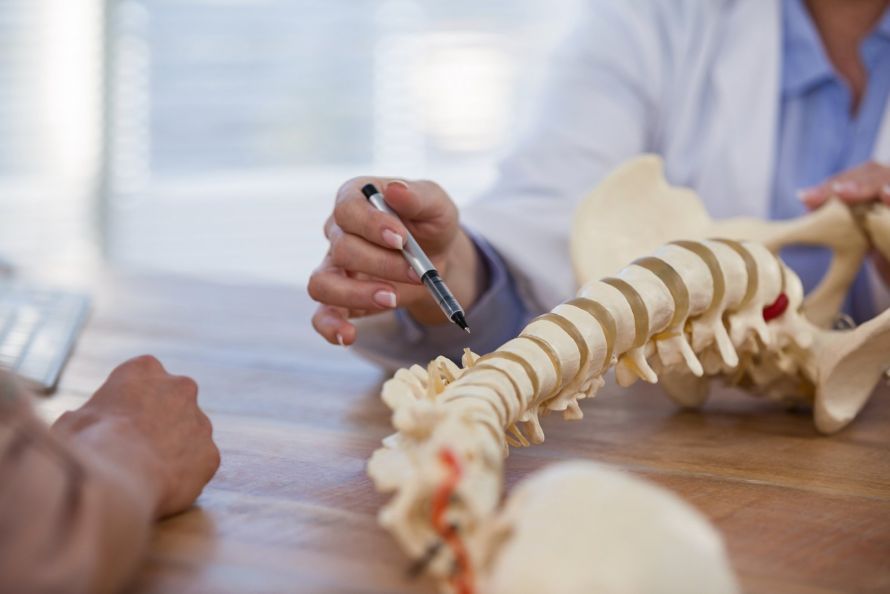
“After surgery, depending on the extent of the procedure, the patient stays in the hospital for about ten to fourteen days—on average, around ten days. Afterward, they go home, take it easy at first, and recover from the procedure. About six weeks later, physical therapy or rehabilitation begins—either on an outpatient or inpatient basis, depending on the patient’s personal needs and individual tolerance.
Follow-up care proceeds in clear stages: A first follow-up examination takes place after six weeks, immediately before rehabilitation begins. Another checkup takes place after about half a year, when the full effect of the surgery has been achieved and the final examination is scheduled,” explains Prof. Dr. Kröber, clarifying the success of the surgery:
“It’s impossible to say whether mobility will be 100% restored after surgery, because the primary focus is not on full mobility, but on pain reduction and, consequently, an improvement in quality of life. This usually improves significantly, even if complete and lasting freedom from pain is rarely achieved.
The goal is to alleviate the chronic symptoms that have developed over the years to such an extent that the patient is satisfied again, needs less strong pain medication, or can even stop taking it altogether. To measure success, we use a pain scale from 0 to 10, which is assessed before and after the surgery.”
What happens if scoliosis is left untreated?
Many patients hesitate out of fear or uncertainty—often for years. As a result, the situation continues to worsen: the pain increases, the curvature progresses, and conservative treatments become less and less effective. Many patients report after undergoing surgery at a later stage that they should have had the procedure much sooner. Education is therefore crucial: There are effective treatment options beyond mere pain management, and seeking care at a specialized center early on can spare patients a great deal of suffering.
In Germany, an estimated 900,000 people have scoliosis, though only a fraction of these patients require surgical treatment. Surgery is generally performed on only a small percentage of patients—namely, those with a severe curvature that is progressing or is already causing pain, functional limitations, or postural deformities.
“With such a major spinal surgery, it is crucial that patients pay close attention to which center they choose for treatment. The most important factor is surgical expertise—it must be clearly present. Everything else follows from there: high-quality intensive care and anesthesia, established neuromonitoring during surgery, and an infrastructure that enables procedures to be performed at the highest level.
Equally important is qualified postoperative care, meaning well-trained physical therapists and a well-coordinated treatment team. To help patients recognize all of this, transparent communication is essential—through websites, informational materials, or discussions like this one that highlight what really matters.
Of course, not all affected individuals require surgery, but the need for effective treatment is great. In fact, only a few hundred to perhaps just over a thousand scoliosis surgeries are performed each year. “This is also because there are only a few centers that are truly specialized in this field and have mastered such complex procedures at a high level,” Prof. Dr. Kröber explains, and with that, we conclude our conversation.
- Chief of Orthopedics, Trauma, and Spinal Surgery, HELIOS Clinic Rottweil and Heliosspital Überlingen
- Renowned specialist in spinal surgery, particularly scoliosis and deformity surgery
- Master’s Certificate from the German Spine Society (DWG)
- Nationally and internationally recognized spine expert
- Areas of Focus: Spinal deformities and degenerative conditions, acute injuries and trauma care, spinal tumors and inflammation, revision surgeries, and second opinions
- Holistic, strictly indication-based treatment approach with a priority on conservative procedures
- Extensive expertise in complex and interdisciplinary spinal procedures
Share this article
Expert Interviews
Read next
- Expert interview
Expert interview with Professor Dr Elmar Herbst, PhD
Oct 15, 2026
Patient-centred and personalised knee surgery
Read more - Expert interview
Cardiogeriatrics: Significance and benefits in the context of hospital reform
Sep 21, 2026
Cardiogeriatrics: Significance and benefits in the context of hospital reform
Read more - Expert interview
Expert Interview with Professor Dr. Amadeus Hornemann, MPH
Sep 18, 2026
Prof. Amadeus Hornemann on Precision Medicine in Gynecology: Modern Surgery, New Techniques, Better Quality of Life
Read more