Expert Interviews
Prof. Minovi: Using a Shaver and Navigation System to Treat Chronic Sinusitis

Claudia Dechamps ·
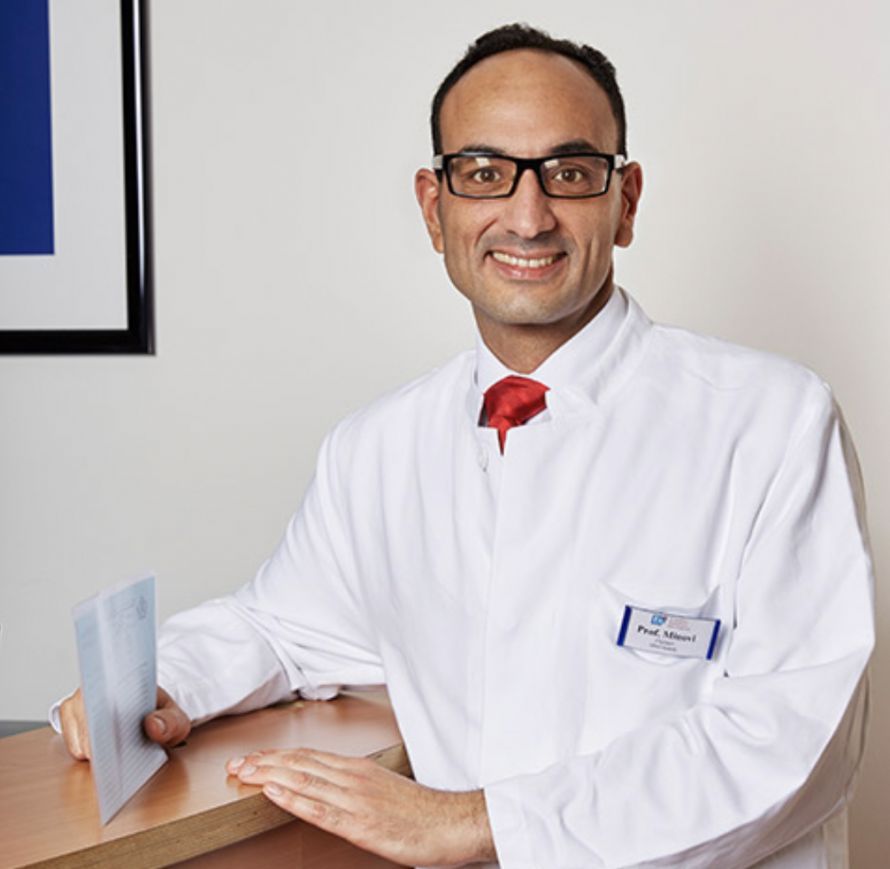
As a specialist in otolaryngology and facial plastic surgery, Professor Dr. med. Amir Minovi specializes in plastic and reconstructive head and neck surgery. At St. Elisabeth Hospital in Cologne-Hohenlind, Prof. Minovi has headed the Department of Otolaryngology, Head and Neck Surgery, and Plastic Surgery since 2017. For over ten years prior to that, he had already made a name for himself with high-quality treatments across a broad spectrum of ENT conditions—for example, through his expertise in sinusitis, or inflammation of the paranasal sinuses. He is also known nationwide for his innovative microsurgical procedures in middle ear surgery and the implantation of hearing aids. The Leading Medicine Guide spoke with this empathetic expert about the latest treatment options for chronic sinusitis.
Leading Medicine Guide: Is sinusitis—especially chronic sinusitis—a condition that significantly impairs the quality of life for those affected?
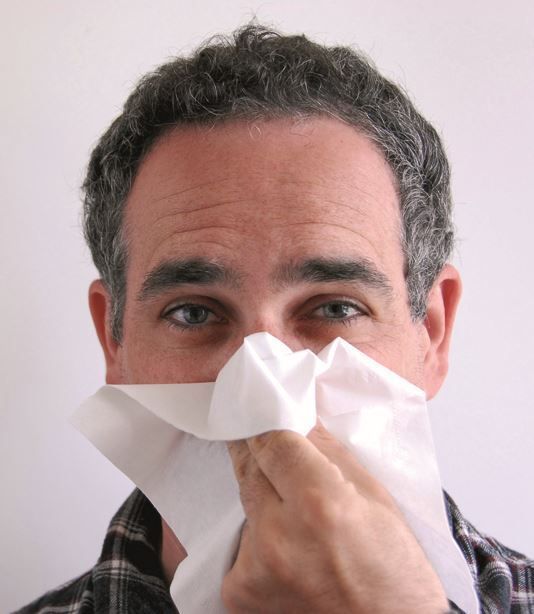
Prof. Dr. med. Amir Minovi: It may not be widely known, but sinusitis affects one in ten people in Germany each year. Patients who suffer from this persistent inflammation of the paranasal sinuses feel severely limited in their daily and professional lives. One study even found that chronic sinusitis is so debilitating that it can trigger symptoms of moderate or severe depression.
Leading Medicine Guide: When do doctors distinguish between chronic sinusitis and acute sinusitis?
Prof. Dr. med. Amir Minovi: Acute sinusitis is an inflammation of the paranasal sinuses. It is characterized by a stuffy nose accompanied by a runny nose, headaches, and sometimes fever. It is usually treated on an outpatient basis. Depending on the severity, treatment may include antibiotics, decongestant nasal drops, and cortisone spray. If it progresses to a chronic stage—which we define as symptoms lasting longer than twelve weeks—then you should consult a specialist. The paranasal sinuses are hollow chambers in the facial skull; they consist of the frontal sinuses, the maxillary and sphenoid sinuses, and the so-called ethmoid cells. The sinuses serve to humidify, filter, and preheat the air we breathe. To do this, they are lined with a special mucous membrane and equipped with cilia that can transport dust particles and mucus. If the mucous membranes swell excessively or remain swollen, the sinuses are no longer properly ventilated.
Leading Medicine Guide: What could be the cause of this?
Prof. Dr. med. Amir Minovi: Chronic sinusitis can have various causes: anatomical variations such as a deviated nasal septum, narrowed sinus openings where secretions accumulate, or nasal polyps.
Leading Medicine Guide: How do you examine patients? What equipment do you use?
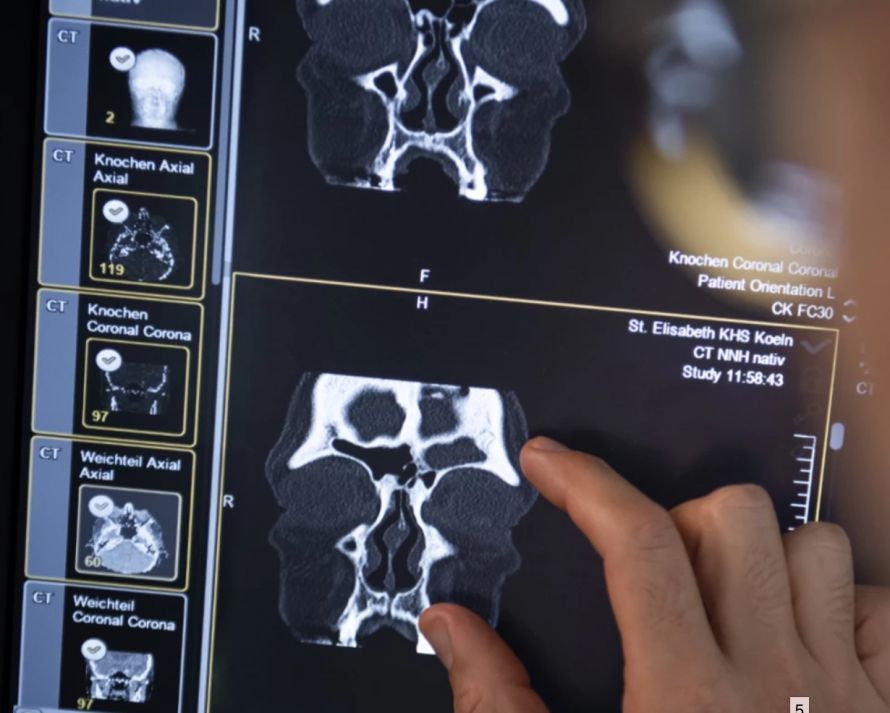
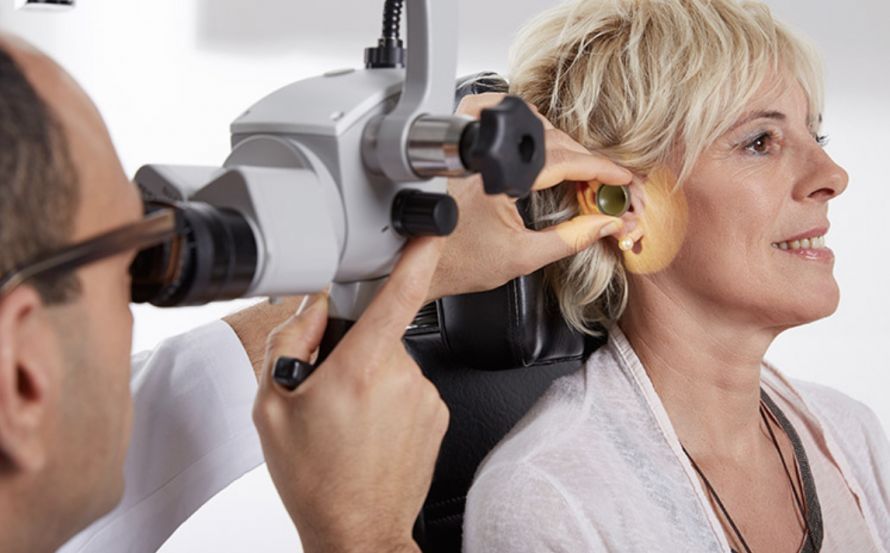
Prof. Dr. med. Amir Minovi: There is the conservative examination method using a light, or I may use an endoscopic device. Imaging techniques such as a CT scan allow us to see exactly how much of the mucous membrane is affected, and a flow measurement provides further insight.
Leading Medicine Guide: What does the treatment involve?
Prof. Dr. med. Amir Minovi: We start with conservative treatment: saline rinses, corticosteroid nasal sprays, and herbal remedies. We achieve varying degrees of success with these. Depending on the severity of symptoms and the patient’s age, we may recommend surgery. Younger people, in particular, are not willing to live with the impairments caused by chronic sinusitis for such a long time. If the sinusitis is not only caused by polyps but is also related to a deviated nasal septum, everything is corrected in a single surgery.
Leading Medicine Guide: Could you describe the surgical procedure in a bit more detail?
Prof. Dr. med. Amir Minovi: For decades, we’ve been performing surgery with endoscopes—all minimally invasive through the nostrils without any external incisions. Essentially, the goal is to reopen the drainage pathways in the sinuses. This is achieved by removing thickened mucous membrane and adenoids. However, the procedure can also be significantly more complex, involving the correction of anatomical variations or even the removal of bony growths. The healthy mucous membrane is left untouched; removing it would only lead to scarring. For the polyps and the affected areas of the mucous membrane, there is a new procedure—the so-called “shaver”—which allows for precise removal of the mucous membrane. In recent studies, the inflamed mucosa was removed very radically, with the result that the tendency for polyps to recur was reduced. We closely follow the latest scientific developments and align our treatment strategies accordingly.
Leading Medicine Guide: What other developments are there in your field?
Prof. Dr. med. Amir Minovi: One new procedure involves cortisone-coated implants with a lattice-like structure, which we insert at the entrance to the frontal sinus. With these lattices, the inflammatory response is significantly reduced. The mesh releases cortisone, which reduces mucosal swelling, over a period of about three to four weeks and then slowly dissolves. There have also been important new developments in drug therapy. We can use so-called biologics, which directly target the immune system and with which we achieve good results, for example, in treating type-2 inflammation associated with chronic sinusitis and nasal polyps. Immune cells produce various signaling molecules that play an important role in chronic diseases. These signaling molecules are actually meant to neutralize viruses and bacteria. However, if their production becomes excessive—if it gets out of control, so to speak—then these signaling molecules can cause tissue damage. This is where biologics can step in and interrupt the inflammatory cascades.
Leading Medicine Guide: That sounds very promising.
Prof. Dr. med. Amir Minovi: Yes, but unfortunately I have to temper those hopes a little right away. While these medications can help avoid surgery and achieve regression of the polyps, the patient must undergo regular treatment, and unfortunately, the medications are relatively expensive. Furthermore, not all patients with this condition are eligible for this treatment; we assess each case individually based on a specific set of criteria.
Leading Medicine Guide: At your Department of Otolaryngology at St. Elisabeth Hospital in Cologne-Hohenlind, you and your team not only adhere to the latest scientific standards, but you also use state-of-the-art instruments—including, of course, for the treatment ofsinusitis.
Prof. Dr. med. Amir Minovi: I’ve already mentioned the special shaver for the mucous membranes of the sinuses. We also have excellent instruments for removing papillomas in the maxillary sinuses. These are benign tumors that we can remove in such a way that they do not recur—and it is particularly important that the structures in the nose can be preserved. In the operating room, we use a modern navigation system that is a valuable aid, especially when dealing with complex anatomical structures. We often treat patients who have undergone multiple surgeries or who have anatomical issues in the frontal sinus. The navigation system allows us to orient ourselves with the utmost precision. Even before the procedure, we calculate the anatomical situation with high precision. During surgery, the system provides pinpoint position data and alerts us to even the slightest deviations from the surgical path, which is crucial given the delicate nature of the head as a surgical site. In addition, we naturally have highly efficient drilling systems at our disposal. But describing our surgical instruments in detail might be a bit too technical for the layperson. In summary, we utilize all the technical options available to us today in both diagnosis and treatment.
Leading Medicine Guide: The procedure is performed under general anesthesia—what happens after the surgery?
Prof. Dr. med. Amir Minovi: After the surgery, patients stay on the ward for a few days; afterward, we continue to care for them on an outpatient basis. It’s important to take it easy physically for about three weeks, and the nose must be treated with care for six weeks—blowing one’s nose, for example, is not permitted. Medical advances have also extended to postoperative care; today we use self-dissolving, relatively small packing, so nothing needs to be removed—only any residual material may need to be suctioned out.
Professor Minovi, thank you very much for this insightful information, which is sure to be extremely useful to many of us.
You can contact this renowned specialist—who has also been awarded the Focus Seal as an expert in sinusitis—directly via his profile page on the Leading Medicine Guide.
Share this article
Expert Interviews
Read next
- Expert interview
Expert interview with Professor Dr Elmar Herbst, PhD
Oct 15, 2026
Patient-centred and personalised knee surgery
Read more - Expert interview
Cardiogeriatrics: Significance and benefits in the context of hospital reform
Sep 21, 2026
Cardiogeriatrics: Significance and benefits in the context of hospital reform
Read more - Expert interview
Expert Interview with Professor Dr. Amadeus Hornemann, MPH
Sep 18, 2026
Prof. Amadeus Hornemann on Precision Medicine in Gynecology: Modern Surgery, New Techniques, Better Quality of Life
Read more