Expert Interviews
Prof. Ninkovic: “Breast reconstruction improves quality of life!”

Claudia Dechamps ·
This is a sensitive issue that requires a highly specialized expert: A great deal almost always depends on the success of a breast reconstruction—above all, of course, a positive outlook on life and the ability to take active joy in one’s own body. The reasons for reconstruction can be very diverse: for example, if, after breast cancer surgery, the operated side looks completely different from the healthy side—or after a mastectomy, that is, the surgical removal of breast tissue. In any case, however, the goal is clear: the breast must be reconstructed—and as naturally as possible. No wonder that patients in particular are happy to turn to a specialized, highly skilled physician for this. At the München Klinik Bogenhausen, there is animmensely experienced specialist who was also happy to answer a few questions on this topic for the Leading Medicine Guide: Prof. Dr. med. univ. Milomir Ninkovic.
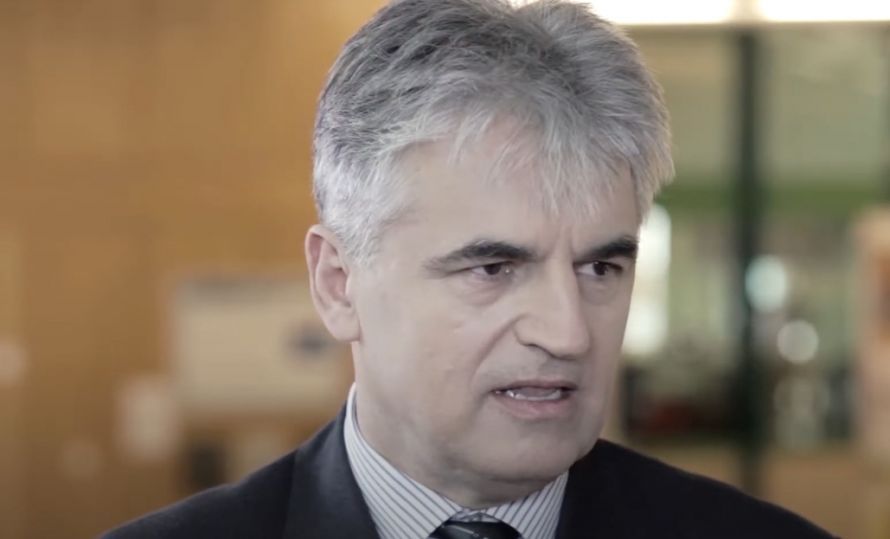
Various techniques and procedures are available for breast reconstruction. Generally, breasts can be reconstructed using silicone implants—or they can be rebuilt and reshaped using the patient’s own tissue. As Chief Physician at the Department of Plastic, Reconstructive, Hand, and Burn Surgery at the Bogenhausen Clinic, Prof. Dr. med. univ. Milomir Ninkovic has extensive experience in the field of surgical breast reconstruction.
Leading Medicine Guide: There are many different methods of breast reconstruction. However, many patients for whom one of these methods is an option—for example, after breast cancer surgery—are still poorly informed. Why is that?
Prof. Dr. med. univ. Milomir Ninkovic: The physician who treats the patient initially should provide this information. But the primary focus at first is on the tumor and finding the appropriate treatment for it. Reconstruction takes a back seat at that stage. The surgical approach is determined based on the tumor’s size and classification, lymph node involvement, and histopathology. Then the tumor is removed first. Afterward, the focus shifts to administering the necessary therapy—that is, treatments such as radiation, chemotherapy, or hormone therapy.
Leading Medicine Guide: And reconstruction isn’t considered until later?
Prof. Dr. med. univ. Milomir Ninkovic: Yes, it’s considered later because more urgent matters take priority at first. I also consider this approach to be the best solution.
Leading Medicine Guide: What are the benefits of breast reconstruction?
Prof. Dr. med. univ. Milomir Ninkovic: Breast reconstruction primarily helps affected women regain their self-esteem. It improves physical well-being, boosts self-confidence, and enhances quality of life. Many patients tell me that they’re confronted with their illness every morning in the shower.
Leading Medicine Guide: And that’s where you come in?
Prof. Dr. med. univ. Milomir Ninkovic: Exactly. Through reconstruction, we can also help our patients regain a positive sense of their bodies. Women go back to the sauna and the swimming pool; they can once again dress in a feminine way according to their desires, moods, and fashion trends.
Leading Medicine Guide: Doctors used to be less interested in such topics.
Prof. Dr. med. univ. Milomir Ninkovic: Good, empathetic physicians are, of course, interested in all relevant aspects of their patients’ lives. But the possibilities for female breast reconstruction have also advanced enormously over the past thirty years or so. Today, in almost all cases, you see very good results with high patient satisfaction. Several factors are crucial to success: an individualized treatment plan, a surgically experienced team, and comprehensive post-operative care options.
Leading Medicine Guide: What reconstruction methods are actually available?
Prof. Dr. med. univ. Milomir Ninkovic: Tumor surgery results in a tissue deficit. The goal of reconstruction is then to restore volume, skin, and possibly also the nipple and areola. Medical professionals distinguish between various methods of reconstruction. One method involves restoring breast volume using a silicone implant. To do this, the skin area is first stretched using a so-called tissue expander.
Leading Medicine Guide: And what about the other method?
Prof. Dr. med. univ. Milomir Ninkovic: The other method involves restoring the breast to its original shape using the patient’s own tissue. It must be said that artificial breast implants carry a certain risk of complications: they must be replaced after ten years at the latest. It’s also true that many patients simply reject the use of foreign materials due to the high complication rate—especially after radiation therapy—and the often unnatural texture.
Leading Medicine Guide: With so many options available, how can patients find a truly experienced surgeon?
Prof. Dr. med. univ. Milomir Ninkovic: As a rule, the treating physician discusses the next steps with the patient—that’s how it should be. One can assume that every physician will recommend what they do best.
Leading Medicine Guide: That doesn’t sound like it’s always in the patient’s best interest.
Prof. Dr. med. univ. Milomir Ninkovic: Unfortunately, implants are still recommended far too often for reconstruction. It’s important to know that an implant isn’t really a good option after radiation therapy.
Leading Medicine Guide: Why is that?
Prof. Dr. med. univ. Milomir Ninkovic: The irradiated skin is damaged. In such cases, an implant combined with a tissue expander is the wrong choice. Instead, healthy tissue should be used—that is, reconstruction with the patient’s own tissue.
Leading Medicine Guide: But that probably requires special expertise, doesn’t it?
Prof. Dr. med. univ. Milomir Ninkovic: Exactly. That’s why I advise every patient to do their own thorough research. These days, it’s easy to find out which specialists, for example, have a high level of expertise in the field of breast reconstruction using the patient’s own tissue. And I strongly recommend seeking a second or third opinion as well.
Leading Medicine Guide: What are the prerequisites for breast reconstruction surgery using the patient’s own tissue?
Prof. Dr. med. univ. Milomir Ninkovic: It’s very important that cancer treatment is truly complete. The patient should also be in good health. Age plays no role in the success of the reconstruction. I had an 85-year-old patient who told me she simply needed it for herself. Therefore, every patient must make this decision for herself.
Leading Medicine Guide: Can complications arise with such a difficult surgery?
Prof. Dr. med. univ. Milomir Ninkovic: We have a complication rate of only three to five percent for breast reconstruction using the patient’s own tissue. Unfortunately, we see wound healing problems more frequently in female smokers. Nicotine consumption disrupts blood flow, particularly in the small blood vessels. In addition, postoperative bleeding can occur. In the worst-case scenario, the transplanted tissue may be lost.
Leading Medicine Guide: Where do you obtain the tissue used for breast reconstruction?
Prof. Dr. med. univ. Milomir Ninkovic: I always joke with my patients that they’re getting a tummy tuck at the same time. That’s because we harvest the tissue from the abdomen. This is the best method. It’s also suitable for slim women. However, depending on the patient, there are many other donor sites for breast reconstruction using autologous tissue—such as the thighs, the back, or the buttocks. Using microsurgical transplantation, a new breast is formed from the patient’s own tissue. It’s possible, but it’s a work of art and requires a great deal of experience.
Leading Medicine Guide: Where did you acquire this high level of skill?
Prof. Dr. med. univ. Milomir Ninkovic: A high level of microsurgical expertise is acquired during residency training in plastic surgery. I have been performing these surgeries since 1989. The goal is to achieve a result that is as natural, symmetrical, and, above all, permanent as possible. The surgery takes about three to four hours, and the result is a reconstructed breast with a normal texture that lasts for the rest of the patient’s life.

Leading Medicine Guide: How long does recovery take?
Prof. Dr. med. univ. Milomir Ninkovic: After the surgery, the patient stays in the hospital for one week. This is followed by three weeks of recovery before she can fully resume her normal daily routine. As part of follow-up care, a breast lift may be necessary on the side that has not been reconstructed to achieve symmetry. Nipple reconstruction and areola tattooing are also performed on the reconstructed side. That’s all.
Leading Medicine Guide: Are you completely against implants? They’re still quite popular, aren’t they?
Prof. Dr. med. univ. Milomir Ninkovic: Of course, the media and the desire to be “perfect” play an important role here. Patients who come to us with these desires need to be guided very carefully and made to understand that an implant will always remain a foreign body to which the body reacts with certain defense mechanisms. We develop an individualized plan for each patient and, of course, take their wishes into account. It’s crucial to educate the patient about all the pros and cons of cosmetic breast augmentation and to discuss the shape and quality of a breast implant in great detail.
Leading Medicine Guide: And what types of implants do you use?
When selecting implants, we place great emphasis on the highest quality, which is based, among other things, on our many years of experience working with implant manufacturers. Since I became chief physician at Bogenhausen Hospital, we have used only very specific implants whose quality we can rely on.
Thank you very much for this very informative conversation, Professor Ninkovic!
Would you like to learn more about Prof. Dr. med. univ. Milomir Ninkovic? Then contact him directly!
Share this article
Expert Interviews
Read next
- Expert interview
Expert interview with Professor Dr Elmar Herbst, PhD
Oct 15, 2026
Patient-centred and personalised knee surgery
Read more - Expert interview
Cardiogeriatrics: Significance and benefits in the context of hospital reform
Sep 21, 2026
Cardiogeriatrics: Significance and benefits in the context of hospital reform
Read more - Expert interview
Expert Interview with Professor Dr. Amadeus Hornemann, MPH
Sep 18, 2026
Prof. Amadeus Hornemann on Precision Medicine in Gynecology: Modern Surgery, New Techniques, Better Quality of Life
Read more