Expert Interviews
High-Tech Surgical Procedures - Innovative Joint Replacement and Revision Joint Replacement

Alexandra Pfitzmann ·
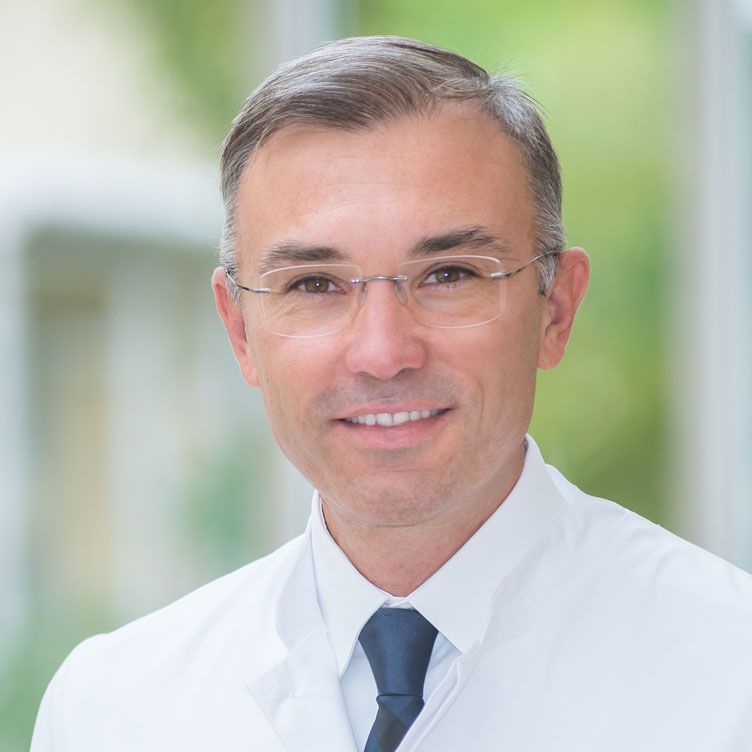
University professor Dr. med. habil. Tobias Renkawitz has been one of the leading innovators in the field of modern endoprosthetics for hip and knee osteoarthritis for many years. He develops patient-specific, minimally invasive surgical techniques that have set international standards and enable immediate relief from pain as well as a rapid return to daily life. Through the use of computer-assisted surgical techniques, he is able to implant artificial joints with precision, tailoring them individually to the anatomy of his patients. As Medical Director and Full Professor at the Department of Orthopedics at the University of Regensburg’s Asklepios Clinic in Bad Abbach, he brings decades of expertise in the field of precision orthopedic medicine. This high-performing physician was the first in Germany to perform the latest generation of robot-assisted knee replacement surgery at a university medical center, marking a significant advancement in this technology. The editorial team of the Leading Medicine Guide spoke with Professor Dr. Tobias Renkawitz about this topic and the particular importance of expertise in revision joint replacement.
In modern medicine, high-tech surgical procedures are revolutionizing joint replacement and revision joint replacement, offering patients significant advantages in terms of precision, safety, and long-term outcomes. These innovative technologies, including computer-assisted surgery and robotic systems, enable surgeons to implant joint prostheses with unprecedented precision.
“In joint replacement surgery, particularly for the knee and hip—one of the most common procedures in German hospitals—a paradigm shift has taken place over the past decade. Modern surgical procedures are now based on three central principles: minimally invasive approaches, fast-track concepts, and computer-assisted orthopedics. With our muscle-sparing approaches, no muscles are cut. As a result, blood loss is extremely minimal, and patients are back on their feet pain-free much sooner than they were 10 or 15 years ago. The postoperative load-bearing capacity of the implants has also changed. In the past, patients had to bear partial weight for six to eight weeks and were not allowed to bear full weight with so-called cementless hip prostheses that grow into the bone. Today, thanks to modern surgical techniques, patients can bear full weight just a few hours after surgery. This is made possible by a so-called “fast-track” procedure—also known in Bad Abbach as “the fast hip” or “the fast knee.” This concept is interdisciplinary in nature and begins even before surgery. With our scientifically developed prehabilitation programs, patients are specifically prepared for the procedure. They train according to a specialized program before entering the operating room. There, the correct, minimally invasive surgical approach is used, along with tailored pain management even during the surgery and modern technology that positions the implants in such a way that maximum mobility and freedom from pain can be achieved immediately after surgery. Digital and computer-assisted procedures support this precision. Anesthesia is equally crucial: specialized forms of spinal anesthesia and medications that minimize blood loss contribute significantly to the procedure’s success. This is complemented by a highly trained surgical team and the appropriate medical devices. On the ward, physical therapists take over, safely mobilizing patients just a few hours after the procedure. All of this demonstrates that this is a comprehensive approach consisting of many coordinated components. Only in this way is it possible for patients to undergo surgery in the morning and, with assistance, get out of bed by the afternoon and then take their first pain-free steps. Despite these impressive advances, however, it remains a demanding procedure, particularly for knee and hip replacements. “Scientific studies have shown that patients benefit from the routine and quality processes in specialized centers,” explains Professor Renkawitz at the beginning of our conversation.
In many hospitals, the kind of close, intensive, and interdisciplinary collaboration required for these modern procedures is not readily achievable. Although Germany has a system of certified endoprosthetics centers where precisely such interdisciplinary processes are part of the quality criteria, establishing such a concept in everyday clinical practice is complex and labor-intensive.
“We are implementing it nonetheless, despite the considerable effort involved—and we do so out of conviction, because the benefit to patients should always be the top priority. It’s not about sheer enthusiasm for technology or computers in the operating room; that’s secondary. What matters is the actual added value for the people we treat. Another example of this is the specific needs of patients with a wealth of life experience. Older patients, in particular, require special attention during joint replacement surgery. They often have specific pre-existing conditions, and after surgery, they require different medications; moreover, postoperative care and physical therapy must be tailored to each individual. Here, thanks to funding from the Joint Federal Committee (GBA), we have established a concept in collaboration with partners at our university hospital in Bad Abbach called “Special Orthopedic Geriatrics,” which has now become part of our routine clinical practice. Our older patients are consistently treated by a multidisciplinary team throughout their inpatient stay. Scientific studies show that this approach can reduce complications following the implantation of an artificial knee or hip joint by up to 70%. “That is patient safety in the very best sense,” emphasizes Professor Renkawitz.
A central component of the modern treatment concept is prehabilitation. Many risks can be addressed even before the procedure to significantly lower the individual risk profile and thus the likelihood of complications.
Professor Renkawitz explains: “This is an important approach that we follow in our daily clinical practice. We know, for example, that severe obesity increases the risk of infections, thrombosis, and other complications. That is why we work together with patients and our colleagues in private practice—especially primary care physicians—to develop individualized plans to achieve weight loss to the extent possible and reduce the risk. Excess weight is also frequently associated with elevated blood sugar levels, and here, too, it has been clearly demonstrated that high levels prior to surgery increase the risk of infection. That is why we work closely with primary care physicians, who take great care to ensure proper management—and, of course, the patient’s willingness to bring their levels to a safe range through diet, medication, and other measures is crucial. Another key component of prehabilitation is improving coordination and muscle strength. This targeted exercise program is designed to strengthen and stabilize the body, because the better the patient’s initial muscle condition, the faster they will recover after surgery. This does not involve standard exercises, but rather carefully selected movement sequences that are low-impact, easy to perform, and yet effective. In addition, we provide guidance on a suitable diet and also address risk factors such as smoking. Nicotine, in particular, significantly increases the risk of complications, which is why we recommend reducing consumption or switching to nicotine patches. It is, therefore, a whole range of measures, at the core of which lies the targeted exercise program. All these steps together contribute significantly to reducing the risk before the procedure and accelerating recovery afterward.”
Computer-assisted surgery plays a crucial role in improving the longevity of joint replacements by optimizing the precision and accuracy of joint prosthesis placement. Minimally invasive surgical techniques, the fast-track concept, and computer-assisted orthopedics are among the most advanced procedures in joint replacement today.
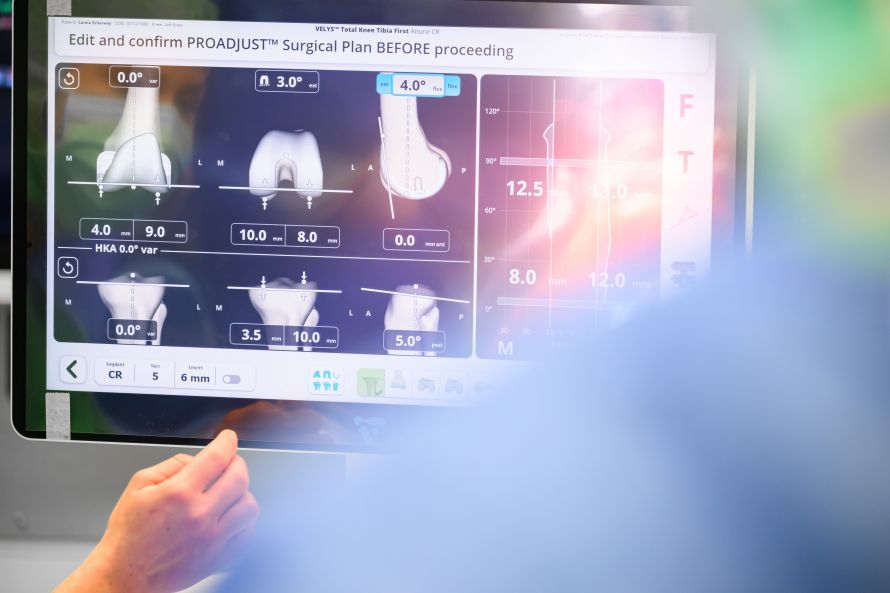
“When we talk about computer-assisted orthopedics, we’re referring to an umbrella term that encompasses navigation, robotics, and other technical procedures. This also includes hybrid solutions using fluoroscopy—that is, digital X-ray systems used as image intensifiers in the operating room. Within this spectrum, robotics is the most modern and innovative technology. I use it for all knee replacements, having previously performed surgeries almost exclusively with navigation technology for about 15 years. Robotics is ultimately the logical next step in the evolution of these navigation techniques. The most common question patients ask is, “Is the robot performing my surgery?” The answer is unequivocal: no. The surgeon continues to perform the surgery personally. The robotic arm merely serves as a support arm for high-precision orthopedic instruments that are robotically guided and controlled in real time—the surgeon retains full control. Damaged cartilage and thin layers of bone must be removed with extreme precision so that implants fit properly and can integrate securely. Scientific studies show that this level of precision cannot always be achieved by eye alone—not even with decades of experience. “Technological support can therefore be invaluable for achieving accuracy in the millimeter and degree range,” explains Professor Renkawitz, adding:
“In addition, every knee joint is different. The ligaments must be optimally balanced so that the joint functions stably and pain-free later on. Robotic surgery allows the individual anatomy to be measured at the start of the operation. Based on this, the prosthetic components can be positioned so that, in conjunction with the ligament guidance, they fit the specific patient well. Whether robotics also leads to a faster recovery is still being investigated scientifically. Results currently vary, and my impression is that patients do indeed regain mobility more quickly after robot-assisted knee replacement.”
Computer-assisted procedures using virtual 3D models enable extremely precise planning and exact adaptation of the prosthesis to the individual’s anatomy. This precision improves joint function, reduces malalignment, and lowers the risk of loosening—which is particularly important for joints subject to heavy loads, such as the hip and knee.
Robotics in joint replacement is not an autonomous system that operates on its own, but rather a high-precision tool that only realizes its full potential in the hands of an experienced surgeon.
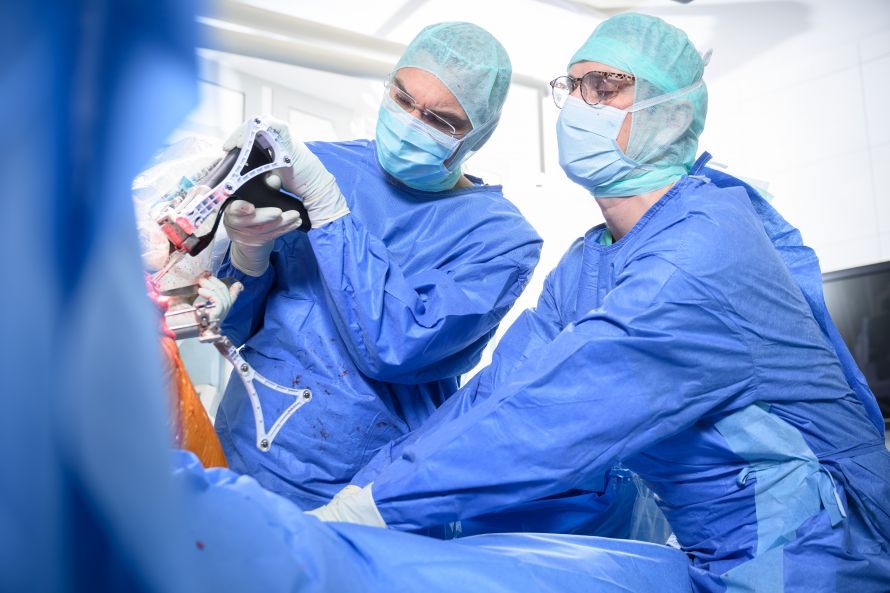
“The technology helps achieve incisions with millimeter precision and exact implant positioning, but it never replaces surgical expertise. Therefore, thorough training and many years of experience in using computer-assisted procedures are crucial. Centers that have been working with navigation and robotics for many years have the necessary expertise to use this technology safely and reliably. There, computer-assisted orthopedics is part of everyday practice. Robotics should only be avoided in very rare, specialized cases—such as complex deformities outside the knee joint resulting from accidents that require additional corrective surgery. “An experienced surgeon can identify such exceptions based on imaging and then select a different approach,” says Professor Renkawitz, adding:
“Scientific studies are also investigating whether computer-assisted orthopedics improves the durability of artificial joints.” In our own patient cohort, it became apparent after ten years that knee joints implanted using navigation technology had a longer service life than prostheses implanted conventionally. The durability was higher, and the prostheses needed to be replaced less frequently. There are varying scientific evaluations, and not all clinics report identical results. What matters most is routine experience with the technology—where it has been consistently used over many years, its advantages are particularly evident.”
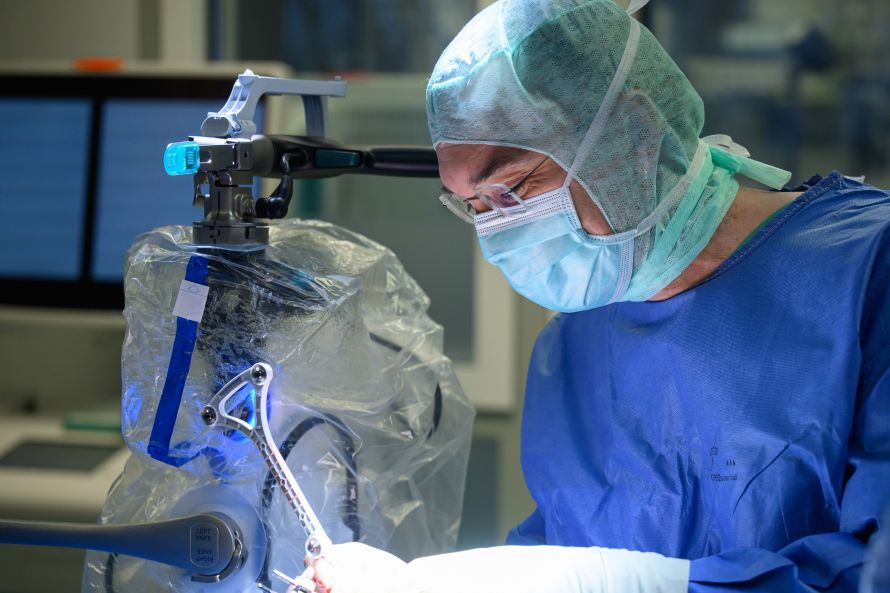
A knee replacement does not always have to involve the entire joint—a partial knee replacement, known as a “slide prosthesis,” is also a very successful procedure. However, it requires a great deal of experience to accurately assess which patients are suitable for this option.
Professor Renkawitz explains: “Partial knee replacement is a successful procedure when only part of the knee joint is affected by osteoarthritis and the ligamentous structures in and around the knee still provide good stability. We generally follow the approach of replacing only the part of the joint that is actually damaged. In this regard, we regularly use the so-called ‘slide’ prosthesis. Robotic-assisted partial knee replacement is a significant advancement and a very successful procedure, but it is not suitable for all patients. At the same time, it remains important to emphasize that, despite all innovations, artificial joints have only a limited load-bearing capacity. The latest developments in computer-assisted orthopedics impressively demonstrate the potential of modern procedures, but they do not replace the medical recommendation not to subject artificial joints to loads beyond their limits.”
Revision arthroplasty, which involves the replacement or revision of a previously implanted joint prosthesis, places special demands on surgeons and the procedure itself. These special requirements stem from the complex anatomy, potential scarring, and the condition of the surrounding tissue, as well as the manner in which the original prosthesis is integrated into the body.
Professor Renkawitz explains the unique nature of revision surgery: “Revision surgeries are among the most complex procedures in orthopedics. While artificial joints can be replaced as they age, this procedure requires a high degree of experience, surgical expertise, and the ability to be prepared for intraoperative challenges. Revision surgeries are generally riskier than the initial procedure, which is why a trained interdisciplinary team and an environment that ensures high patient safety are of paramount importance. Bone defects are often particularly challenging in this context. While defects were previously often filled with bone cement or other non-biological materials—substances that do not promote new bone formation and may further weaken existing bone over the long term—modern biomaterials are now available. These include, for example, bioglass, which can stimulate new bone formation under certain conditions and has proven highly successful in revision arthroplasty. In cases of severe bone defects, standard implants are often insufficient because they cannot achieve adequate stability. Modern imaging techniques such as CT allow for a precise analysis of the defects, based on which patient-specific implants can be manufactured—for example, custom-made titanium pelvic components produced via 3D printing that precisely match the anatomy of the individual patient. These implants are one-of-a-kind and are inserted intraoperatively with a perfect fit. Planning for this is carried out in close collaboration with engineering teams and involves several virtual planning steps until the optimal solution is found. Such specialized procedures are demanding; therefore, they require experience, technical equipment, and interdisciplinary expertise.”
Maximum-Care Endoprosthetics Center
Unparalleled Expertise in Joint Replacement
The Department of Orthopedics at the University of Regensburg at the Asklepios Clinic in Bad Abbach has been certified as a Maximal Care Endoprosthetics Center since 2012—a distinction awarded only to facilities with the highest level of specialization, extensive experience, and excellent quality standards. Independent auditors conduct an in-depth review of interdisciplinary collaboration, the culture of continuing education, and the surgical routine of the entire team. For patients, this means maximum safety and optimal treatment outcomes, especially for complex procedures. The quality seal also provides reliable guidance when choosing a specialized clinic.
Current research trends and developments in joint replacement focus on various approaches to optimizing the outcomes of high-tech surgical procedures. One important trend is the ongoing integration of robotics and computer-assisted surgery, which have the potential to further increase precision and safety in the placement of joint prostheses.
“Intensive work is also underway on new solutions in revision arthroplasty. In the future, it may also play a role in revision cases. Techniques such as intraoperative robotics and navigation are undergoing continuous development. At the same time, materials research is advancing. Biomaterials are becoming increasingly high-performance, and their customization continues to grow. I see great potential in this area in particular, as well as in the implant systems themselves, which are constantly evolving. Innovation is taking place at all levels—technological, biological, and surgical. “Ultimately, however, all these advancements must serve a single purpose—the benefit of our patients,” Professor Renkawitz notes, and with that, we conclude our conversation.
- Professor Dr. Tobias Renkawitz is one of the world’s leadinginnovators in the field of modern endoprosthetics for hip andknee osteoarthritis.
- He develops patient-specific, minimally invasive surgical methods that have set international standards and enable immediaterelief from pain as well as a rapid return to daily life.
- By using computer-assisted surgical techniques, the university physician is able to precisely implant artificial joints tailored to the anatomy of his patients, which optimizes jointbiomechanics.
- Professor Renkawitz performs complex hip andknee replacement surgeries,including revision surgeries forimplant loosening and biological bone augmentation.
- Under his leadership, overa thousand joint replacement surgeries are performed annually at the university-affiliated endoprosthetics center forcomprehensive care at the Asklepios Clinic in Bad Abbach.
- Professor Renkawitz has received numerous prestigious awards for his researchaimed at improving the quality and patient safety of joint replacement, including the 2014 “Medicine Oscar” from the Oskar-Helene Foundation in Berlin
- He utilizes cutting-edge digital technologies, including thelatest robotics, to optimize treatment outcomes for patients.
- The University Orthopedics Department in Bad Abbach is a first-class resource forpatients with hip and knee problems, as well as those with shoulder, hand, andspinal osteoarthritis, sports injuries, or pediatric orthopedicissues.
Share this article
Expert Interviews
Read next
- Expert interview
Expert interview with Professor Dr Elmar Herbst, PhD
Oct 15, 2026
Patient-centred and personalised knee surgery
Read more - Expert interview
Cardiogeriatrics: Significance and benefits in the context of hospital reform
Sep 21, 2026
Cardiogeriatrics: Significance and benefits in the context of hospital reform
Read more - Expert interview
Expert Interview with Professor Dr. Amadeus Hornemann, MPH
Sep 18, 2026
Prof. Amadeus Hornemann on Precision Medicine in Gynecology: Modern Surgery, New Techniques, Better Quality of Life
Read more