Expert Interviews
Expert Interview with Prof. Dr. Peter Schräder: Departmental Structures and Expansion of Expertise at the OrthoCentrum Jugenheim (OCJ)

Sabine Schneider ·
Professor Dr. med. Peter Schräder, Chief Physician and Medical Director of the Department of Orthopedics and Traumatology at OrthoCentrum Jugenheim, is a recognized specialist with outstanding expertise in the conservative and surgical treatment of diseases and injuries of the musculoskeletal system. With his comprehensive specialty training in orthopedics, trauma surgery, joint replacement, pediatric orthopedics, sports traumatology, rheumatology, and joint surgery, Prof. Dr. Schräder covers the entire spectrum of his field—for both adults and children.
He is particularly renowned for his specialization in knee and hip joint replacement as well as joint-preserving procedures such as cartilage transplants and ligament reconstructions. A central priority for Prof. Dr. Schräder is to first help patients through conservative treatment—that is, without surgery—while making individualized and targeted use of all modern diagnostic and therapeutic options. Should surgery be necessary, his primary focus is always on joint preservation. He employs both minimally invasive, tissue-sparing techniques and complex reconstructive procedures—including in the field of revision joint replacement. The clinic in Jugenheim is equipped with state-of-the-art medical technology and places great emphasis on individualized treatment, in which diagnosis, therapy, and follow-up care are optimally coordinated.
With over 1,200 joint replacement surgeries performed annually—including many challenging revision surgeries—the team led by Prof. Dr. Schräders has considerable experience in joint replacement surgery. The clinic in Seeheim-Jugenheim benefits from its international network and continuous quality control, which allows innovative treatment methods to be promptly integrated into daily clinical practice. This includes, for example, precise, robot-assisted and robot-navigated joint replacement, which enables improved long-term functionality and a longer lifespan for the prostheses. Through this consistent focus on the highest standards and patient-centered care, Prof. Dr. Schräder has earned an excellent reputation far beyond the region.
The editorial team of the Leading Medicine Guide spoke with Prof. Dr. Schräder about the individual departments at the specialty clinic in Jugenheim and the expansions planned for the future. 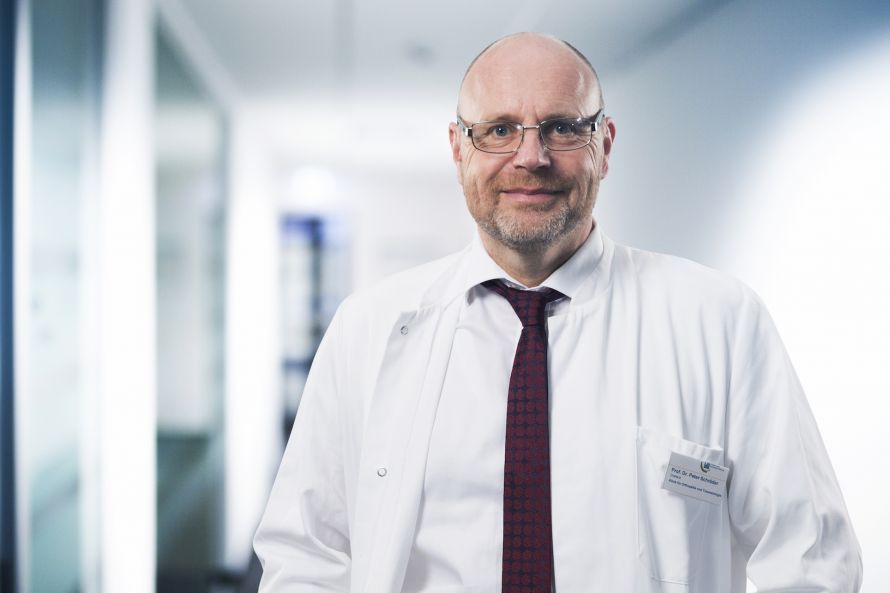
The OrthoCentrum Jugenheim (OCJ) is a specialized facility of the Darmstadt-Dieburg District Hospitals and part of the Jugenheim Specialty Clinic, which focuses on the interdisciplinary treatment of musculoskeletal disorders, both surgically and conservatively. Organizationally, the OCJ is divided into various departments, each led by experienced physicians.
“The OrthoCentrum is currently undergoing a complete renovation and will be renamed the Center for Musculoskeletal Medicine (CMSM). It will then comprise two locations: Jugenheim and Groß-Umstadt. At both locations, individual departments with specific areas of focus will be established. In Jugenheim, the center will operate as a maximum-care endoprosthetics center, with departments for pain management, spinal surgery, plastic surgery, and rehabilitation. The Groß-Umstadt location will serve as an emergency care facility, with its own emergency surgery unit and a geriatric trauma center, as well as departments for spinal surgery and plastic surgery. In addition, an orthopedic clinic will be established there as a branch of the Endoprosthetics Center. The goal is to cover the entire spectrum of musculoskeletal disorders under one roof—including outpatient care, inpatient care, and rehabilitation. Special licenses are even in place for outpatient rehabilitation. This structure—with over 40 physicians and 30 physical therapists who perform more than 1,200 joint replacement surgeries annually, as well as numerous spinal procedures and plastic surgeries—ensures that the entire operation is organized in an even more modern way. This departmental structure fosters a high degree of medical autonomy and accountability for the individual specialties. For patients, this means targeted, specialized care. Centralizing these services at the center is a step toward the future, as more and more specialists are focusing on specific areas, which significantly improves treatment. “This is also an example of what a modern hospital structure should look like: multiple specialties under one roof—efficient, specialized, and of the highest standard,” explains Prof. Dr. Schräder at the beginning of our conversation. 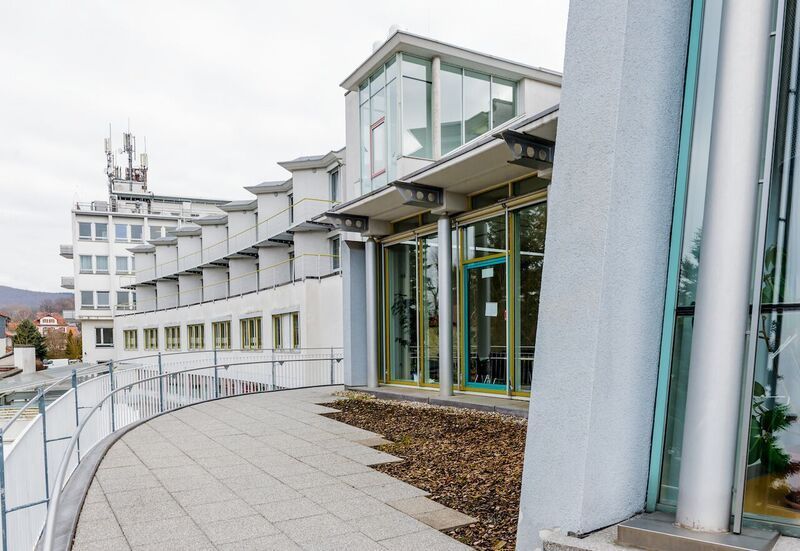
The OrthoCentrum Jugenheim places great emphasis on close interdisciplinary collaboration to ensure holistic and individually tailored patient care. To this end, various departments and specialists are closely integrated organizationally and work together in a coordinated manner.
A comprehensive case discussion takes place as soon as a patient is admitted, during which doctors from orthopedics, trauma surgery, plastic surgery, and neurosurgery—as well as other specialties such as anesthesiology, physical therapy, and pain management—jointly develop the optimal treatment plan. Through regular interdisciplinary team meetings, treatment progress is monitored, adjustments are made, and postoperative outcomes are discussed, ensuring that each treatment dynamically adapts to the patient’s needs. 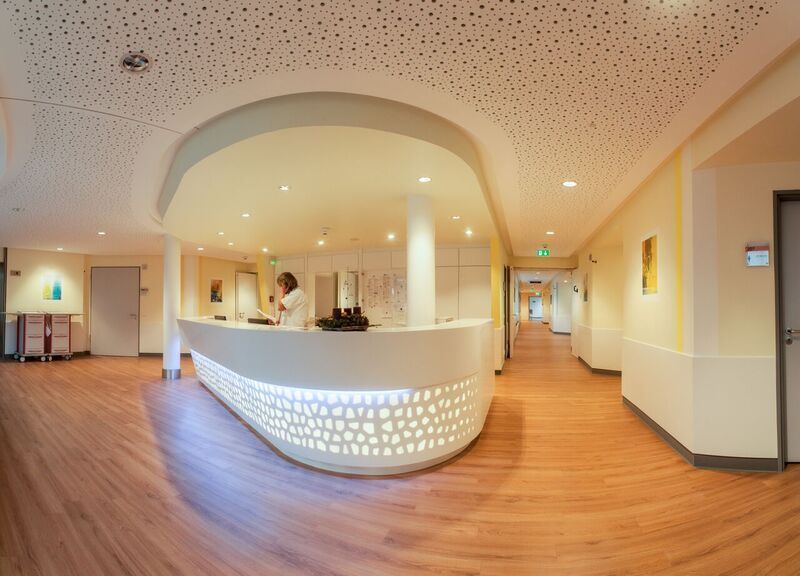
“When it comes to interdisciplinary collaboration—which I always consider very important—I would describe it as follows: We hold daily joint meetings, usually in the afternoon, during which we discuss patients together. We assess whether a patient is better suited to another specialty or would receive better care there. There are also regular coordination meetings across locations to determine whether a patient is better suited for Location A or B, or for Department A or B. If patients cannot clearly state exactly what they need during their initial consultation—for example, whether they need a new knee or simply have leg pain without being able to pinpoint the exact cause—there is a general pain clinic that serves as a screening mechanism. In addition, there is a general orthopedic clinic as well as a spine clinic. The senior physicians each have specific areas of expertise, such as pediatric orthopedics or shoulder surgery, so we can already assess the patient’s needs here. If it becomes apparent during one of these clinics that another specialty or a different colleague is actually responsible for the case, we take advantage of the short distances within our small hospital. Then, for example, we simply pick up the phone to call the colleague and ask if they can see the patient. “This generally works very well here because we work in a manageable environment, even though we’re a large department. This allows us to ensure the best care for the patient quickly and easily,” Prof. Dr. Schräder explains.
In addition, the OCJ uses modern communication and documentation systems that enable the rapid exchange of information and prevent duplicate tests or loss of information. Physical therapists, nurses, and social workers are also integrated into the treatment process to complement medical therapy with targeted rehabilitation and psychosocial support. This ensures that not only are acute symptoms treated, but the patient’s long-term mobility, freedom from pain, and quality of life are also prioritized. Through this comprehensive integration of various disciplines, OrthoCentrum Jugenheim is able to provide holistic care for complex clinical conditions and implement individually tailored treatment plans. 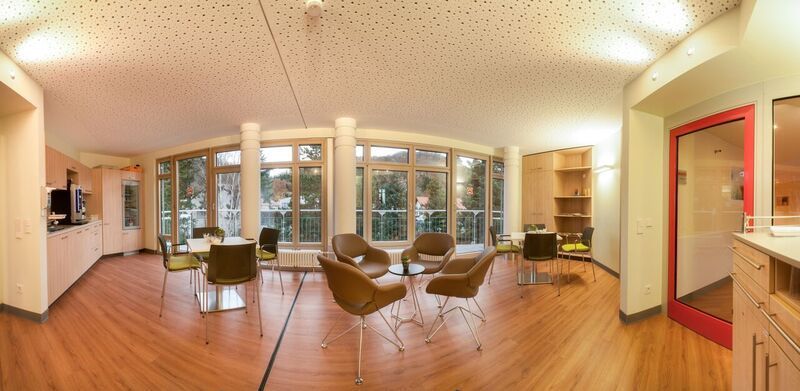
Certification as a “Maximum-Care Endoprosthetics Center” is of great significance to OrthoCentrum Jugenheim, as it confirms both the high quality of care and the clinic’s comprehensive expertise in endoprosthetics.
For patients, this designation means they are being treated at a center that meets particularly stringent requirements for expertise, technical equipment, and organizational processes. This means they can be confident that hip and knee joint replacements are performed according to the latest scientific standards and using state-of-the-art technology. This enhances the safety of the procedures, minimizes complications, and improves the long-term functionality and lifespan of the implanted prostheses.
“Certain areas of expertise must be maintained, for example in vascular surgery, intensive care medicine, or anesthesia—that is, medical fields that lie outside the scope of pure joint replacement but are crucial to the success of treatment. In addition, a certain caseload must be met annually. Furthermore, quality criteria are reviewed based on outcomes, such as the number of complications, the accuracy of postoperative X-rays regarding axial alignment, and the number of patients who must be transferred to another facility. These criteria are reviewed annually. When we recently received recertification, it was particularly interesting to see that our case volume had increased by over 20% within a single year. The certifying body found this impressive and said it was very rare, and that we must have done everything right. Such successes show that hard work in structural, process, and outcome quality pays off, because in the end, that’s exactly what patients notice. Preparing for recertification is an intense time, but also a very positive one. It’s a phase in which we scrutinize ourselves very closely, because we always believe we’re doing a good job. Now, however, we have to use strict criteria to verify whether we’re really as good as we think we are. To do this, we evaluate data, analyze surgery times and statistics—together with the physical therapists, the nursing staff, and the medical team. This fosters a kind of interdisciplinary collaboration in which all professional groups reflect together. Ultimately, this often leads to greater cohesion, which can only benefit the patients,” says Prof. Dr. Schräder, adding:
“I am firmly convinced that this certification—the criteria established by the professional association—is more than just a piece of paper. It is clear to me that it improves our engagement with our own results and our capacity for critical reflection. It leads us to scrutinize certain processes and continuously improve them. As for the patients, a follow-up survey is mandatory. We receive patient referrals from colleagues in private practice, and vice versa. If patients are satisfied and rate the collaboration positively, they’ll refer new patients to us. That’s why it’s important to know how satisfied our referring physicians are with us. In addition, we evaluate traditional patient satisfaction surveys to systematically collect patient feedback.” 
Modern technologies such as navigation and minimally invasive procedures play a central role at OrthoCentrum Jugenheim in improving treatment outcomes and patient satisfaction.
Prof. Dr. Schräder comments on this: “There are definitely more modern approaches that we have been using at the clinic for many years. However, these innovations do not currently fall within the scope of certification, as the certification requirements are primarily limited to standard processes. We began intensively exploring the introduction of navigation-assisted procedures and robotic systems in knee arthroplasty at least 15 years ago. At that time, we were even a reference clinic for early trials in robotics. After a prolonged period during which robotics took a back seat, we have been relying on this technology again for several years now. We now have a surgical robot in use that is regularly employed for knee arthroplasty. This allows us to achieve precise, anatomically appropriate alignment of the implants on an individualized basis. The robot performs absolutely precise milling tasks using a semi-automated technique, which significantly improves the results even further. This modern technology has taken our range of treatments to a new level. We’re already noticing that our patients benefit from this subjectively: they’re able to regain mobility faster—often ahead of schedule—and mobilization begins as early as the first few days after surgery. We plan to further investigate and document these effects scientifically,” he adds:
“This also means that patients typically don’t stay in the hospital for very long. We follow the so-called fast-track approach, which is used in many medical specialties. The goal is to help patients regain independence as early as possible, because they generally appreciate this very much and dislike feeling dependent. Most patients want to maintain their independence not only when walking but also when washing or taking care of their personal hygiene. To achieve this, we tailor pain management, nutrition, and care to each individual, so the length of stay varies depending on the patient’s progress. If a patient is well enough after three days, they can go home, to a rehab facility, or to receive further treatment; for others, it simply takes a little longer. There is no set rule that everyone must be discharged after a specific period of time; we prioritize individual needs. For many patients, the psychological aspect also plays a major role. For some, the feeling of being in safe hands at the hospital is a decisive factor in actively shaping their stay. Compared to other countries, the German system is structured differently, partly because other countries often rely on outpatient care or have a different culture of care. In Germany, we cannot simply overhaul the system without changing the entire supporting infrastructure. This means we need flexible approaches that are tailored to each individual patient. “The most important thing is that we can now design care in such a way that the needs of each individual are taken into account, both physically and psychologically.” 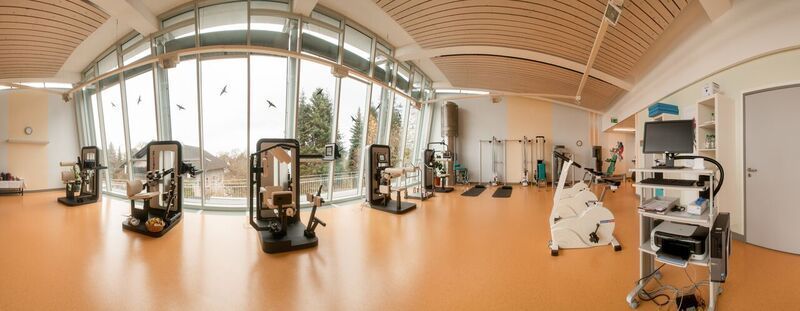
The OrthoCentrum Jugenheim is continuously expanding its range of services to meet the diverse needs of different patient groups and to ensure the most comprehensive care possible for the musculoskeletal system.
“We have significantly expanded our range of expertise in recent years; some of these innovations are relatively new, while others have been in place for a long time. For example, starting next year, we aim to operate a certified maximum-care joint replacement center at both locations, Jugenheim and Groß-Umstadt. In addition, since April 1, we have had our own pain clinic, which is now authorized to provide both outpatient and—starting September 1—inpatient care. This means that patients with chronic muscle and joint pain can now be treated as inpatients by an interdisciplinary team. The initial focus is on non-surgical, multimodal therapy, in which various specialties work together to develop and implement a treatment plan. Should a surgical solution nevertheless become necessary, this can of course also be performed. Another new addition is the outpatient rehabilitation program we now offer. Patients who have undergone surgery on the spine, shoulder, knee, or hip, for example, can undergo rehabilitation either as inpatients or outpatients. We were asked several times whether we could provide this rehabilitation in-house, since we already employ excellent physical therapists and patients feel they are in good hands with us. That is why we submitted an application and, as of July, have been approved for 20 slots for outpatient rehabilitation. The same physical therapists who previously provided inpatient care are now also caring for patients on an outpatient basis. In addition, we were able to recruit an experienced rehabilitation physician who has been leading this department since the beginning of July, so we now have our own medical leadership and the coordination with physical therapy and the medical training center is excellent. “These are the most important new developments currently complementing our structure: the pain clinic since April, outpatient rehabilitation since July, and the expansion of the joint replacement center to both locations starting in January of next year,” explains Prof. Dr. Schräder.
There are 140 beds across the two locations. Approximately 3,500 surgeries are performed annually by over 40 physicians, and more than 30 physical therapists provide comprehensive patient care. 
“Our catchment area has grown significantly. We now have patients who travel up to 100 kilometers to reach us, including from Schleswig-Holstein, Berlin, and southern Germany. This is no coincidence: We are known for providing exceptional care and generally serve a very large patient catchment area, which shows that we are recognized in the region and beyond. I took over as director here about ten years ago, and during that time, the volume of work in joint replacement alone has more than doubled. The various specializations have been added gradually over the years. Looking back, I first introduced joint replacement surgery, followed by pediatric orthopedics, then spinal surgery, plastic surgery, and finally the areas of focus in pain management, rehabilitation, and the comprehensive center for high-complexity joint replacement surgery. These are the developments that have taken place over the past ten years. “I always say that we started out as a district hospital and are now a multi-site specialty care provider in the field of musculoskeletal disorders. That’s something our staff can be very proud of—you can really tell,” states Prof. Dr. Schräder, and with that, we conclude our conversation.
Thank you very much, Professor Dr. Schräder, for describing your newly established OrthoCentrum clinic!
Share this article
Expert Interviews
Read next
- Expert interview
Expert interview with Professor Dr Elmar Herbst, PhD
Oct 15, 2026
Patient-centred and personalised knee surgery
Read more - Expert interview
Cardiogeriatrics: Significance and benefits in the context of hospital reform
Sep 21, 2026
Cardiogeriatrics: Significance and benefits in the context of hospital reform
Read more - Expert interview
Expert Interview with Professor Dr. Amadeus Hornemann, MPH
Sep 18, 2026
Prof. Amadeus Hornemann on Precision Medicine in Gynecology: Modern Surgery, New Techniques, Better Quality of Life
Read more