Expert Interviews
Expert Interview with Prof. Shafizadeh on Leg Alignment Deformities

Alexandra Pfitzmann ·
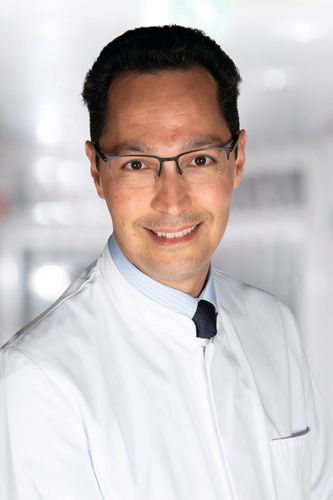
Prof. Dr. med. Sven Shafizadeh is a recognized specialist in knee surgery and sports traumatology and practices at the Sportklinik 360° at Sana Dreifaltigkeits Hospital in Cologne. His extensive expertise and many years of experience have made him a leading expert in the treatment of knee joint injuries and disorders. He is particularly well-known for his skills in reconstructive joint surgery and the treatment of sports injuries.
His practice focuses on the treatment of complex knee injuries and conditions. These include anterior and posterior cruciate ligament reconstruction, the treatment of knee dislocations and multiligament injuries, as well as specialized procedures on the patella, such as trochleoplasty and MPFL reconstruction. Prof. Dr. Shafizadeh also performs corrective osteotomies for leg deformities, treats tendon injuries such as biceps, hamstring, quadriceps, and patellar tendon tears, and performs surgeries for pediatric knee injuries. His expertise also extends to the treatment of complex cases and revisions following failed surgeries, as well as modern techniques in cartilage cell transplantation and meniscus surgery.
At the Sportklinik360° locations in Cologne and Leverkusen, Prof. Dr. med. Sven Shafizadeh and his team provide state-of-the-art, high-performance medical care. The philosophy of Sportklinik360° and the Med 360° clinic network is based on providing highly specialized medical care in which patients feel they are in the best hands at all times. This philosophy is put into practice through the close integration of outpatient and inpatient care, which consistently attracts attention from the medical community through pilot projects and medical innovations.
Prof. Dr. med. Sven Shafizadeh has more than 20 years of professional experience as a specialist in surgery, orthopedics, and trauma surgery. His expertise is in high demand both nationally and internationally. He has published numerous scientific articles in international journals and is a regular presenter at conferences. In addition, he teaches at Witten/Herdecke University, which underscores his deep roots in both academic and clinical medicine. Close collaboration with experts in radiology and orthopedics ensures precise diagnostics and enables the rapid development of individualized treatment plans.
Leg alignment abnormalities are widespread among the general population. Studies and estimates suggest that approximately 20 to 30 percent of adults in Germany are affected by some form of leg alignment abnormality. This includes both bowlegs (valgus) and knock-knees (varus deformity). These figures may be higher among children and adolescents, as many deformities can still correct themselves or worsen during growth and development. The editorial team of the Leading Medicine Guide spoke with Prof. Dr. med. Shafizadeh in more detail on this topic.

Leg alignment abnormalities, such as bowlegs (genu valgum) and knock-knees (genu varum), are common orthopedic conditions that affect the biomechanics of the lower extremities and can lead to significant health problems. These misalignments result from uneven stress on the joints and can have both genetic and acquired causes. Accurate diagnosis is crucial for determining the extent and causes of the misalignment and for initiating targeted therapeutic measures. Modern treatment options, ranging from conservative approaches to surgical interventions, offer promising solutions for correcting leg alignment and improving joint health in the long term. In this context, it is important to understand the mechanisms of development, diagnostic methods, and current treatment options in order to make an informed decision regarding the treatment of leg axis misalignments.
Leg alignment abnormalities, also known as leg axis deviations, result from a multifactorial interaction.
“On the one hand, we are dealing with children and adolescents who, due to their genetic predisposition, actually have genetically determined misalignments in the form of bowlegs or knock-knees. From a medical perspective, this is an interesting patient group, as growth-modifying procedures can also be performed here. During the growth phase, misalignments can be corrected very early on with minimal surgery to achieve leg-axis straightening, ensuring that no problems develop later on. This is a preventive procedure designed to counteract functional problems as well as joint injuries and damage—a approach that also works well for foot deformities. This is important because foot deformities can, over time, lead to knee and hip problems. The other important group of patients consists of those who have previously suffered bone fractures, for example in the thigh or lower leg, or even in the ankle joint. This is because if the fracture does not heal perfectly, a wide variety of misalignments can develop, such as bowlegs and knock-knees, rotational abnormalities (deviation from the normal axis of rotation of the legs), or issues affecting the upper or lower leg. These are the two main groups of patients we deal with. “It’s rather unusual for a person to develop a misalignment due to being overweight,” explains Prof. Dr. Shafizadeh at the beginning of our conversation.
Leg misalignments lead to uneven joint stress, which increases the risk of osteoarthritis in the knees and hips. With bowlegs, the outer knee bears a greater load, while with knock-knees, the inner knee does, each of which can lead to premature cartilage wear. Early diagnosis and preventive measures such as physical therapy, orthopedic devices, and healthy lifestyle habits are important for optimizing joint load. In severe cases, surgical correction may be necessary.
Early diagnosis and intervention play a crucial role in preventing the progression of leg alignment abnormalities and the associated joint problems.
“Diagnosis, of course, depends largely on the type of patient we are seeing. When it comes to children with misalignments, they usually have few symptoms. They come to us because their parents or teachers have noticed something unusual. If such misalignments are present during the growth phase and everything deviates from the norm, the patient should at least be referred to a physician trained in pediatric orthopedics, especially during the growth phase. Only this specialist can determine whether immediate action is needed, whether the condition can be monitored, or whether treatment is necessary. The situation is different for adult patients, as they typically visit a doctor because of symptoms. In these cases, the diagnostic process focuses on identifying the underlying causes. The symptoms may stem from cartilage or meniscus damage or from ligament injuries. In the past, diagnosis focused solely on a single joint. Today, the approach is quite different. The patient must be assessed and examined within the context of their functional system. Accordingly, today’s diagnostic approach incorporates not only joint-specific examinations but also functional assessments of adjacent joints and the leg axes. And when joint problems are present—whether in the knee, hip, or foot—and leg alignment issues are a factor, patients undergo more targeted examinations to assess the impact of these misalignments. The individualized assessment of joint complaints and their causes is of great importance today. Only then can one decide whether acute treatment is necessary or whether there is time to develop a treatment plan. Diagnostics today are extremely advanced compared to earlier methods. It is much easier to determine the severity of a leg alignment abnormality. The overall approach to treating leg alignment abnormalities has also improved significantly,” says Prof. Dr. Shafizadeh regarding initial considerations in the diagnostic process, and he explains further about the subsequent course of treatment:
“This involves a precise analysis of the symptoms—the process of identifying causes in orthopedics and trauma surgery is a bit different. For us, the specific symptom profile is the first priority—we need to know whether symptoms are triggered by everyday activities or, for example, by occupational or athletic activities—and a thorough functional and clinical examination is standard practice to assess existing problems in daily life or during sports. What type of pain occurs, and how does it progress over time? Is there a connection to an injury or a new activity that has been taken up? Are there any underlying conditions that might be causing the symptoms? Here, we strive to understand the various interrelationships. Depending on the findings, targeted diagnostic testing can then be arranged if necessary. The second step in the diagnostic process is the clinical examination, which is an absolutely essential part of the process. Misalignments such as bowlegs and knock-knees or rotational abnormalities can sometimes be accurately assessed even without imaging. However, if there are misalignments that require further clarification, conventional X-ray techniques—which allow, for example, the entire leg to be imaged—are typically used. Modern X-ray techniques allow for precise measurements of misalignments with reduced radiation exposure, helping to determine whether immediate treatment is necessary or if there is time to wait. In cases of uncertainty, the patient may not need to be referred for further imaging diagnostics at all. If imaging is necessary, depending on the symptoms and findings, supplementary MRI and CT scans may also be used to enable an individualized analysis of the cause. MRI and CT scans are required, or conventional X-rays, which can also image the entire leg to measure the leg axes. This also includes torsion analyses, which are used primarily for rotational misalignments. There are also more complex examinations using what is known as low-dose CT (with very low radiation exposure), which is the latest trend and well-suited for rotational abnormalities. The specific method used depends on the problem at hand. For example, we also have patients with patellar instability—where the kneecap repeatedly dislocates—who typically have bowlegs or rotational misalignment in the thigh or shin bones. And as long as the rotational misalignment isn’t corrected, patellar instability cannot be adequately treated. In such cases, an X-ray is definitely not sufficient.”
X-rays provide a clear view of bone structures and help identify misalignments of the leg axis, such as bowlegs (varus) or knock-knees (valgus). X-rays can be taken from both the frontal and lateral views to assess the alignment of the bones and accurately measure any misalignments. They are particularly useful for preoperative planning and for evaluating progress following surgical procedures.
Computed tomography (CT) provides a more detailed three-dimensional view of bone structures than X-rays. CT scans are particularly helpful when a precise analysis of bony structures and joint surfaces is required. They can help diagnose complex misalignments and capture the exact anatomy of the joint, which is of great importance in planning surgical procedures.
Magnetic resonance imaging (MRI) provides detailed images of soft tissues, including muscles, tendons, and ligaments, as well as cartilage structures. While MRI provides less detailed information about the bone structures themselves, it is particularly useful for assessing accompanying soft-tissue injuries or conditions that can frequently occur with lower-limb misalignments. It can also help assess the condition of the articular cartilage and detect potential damage at an early stage.
Three-dimensional (3D) X-rays or digital 3D analyses provide a comprehensive assessment of the leg axis and joint mechanics. These modern techniques enable a precise three-dimensional analysis of the leg axis and joint alignment, which is particularly advantageous when planning complex corrective surgeries. They provide a detailed depiction of bone structure and alignment in multiple planes and help determine the exact adjustments needed for individualized treatment.
Leg axis misalignments can lead to significant biomechanical and functional impairments that increase the risk of secondary joint damage and chronic pain. In cases of progressive joint degeneration or significant loss of function—especially when these misalignments are accompanied by osteoarthritis or other structural damage—surgical intervention is considered.
“It must be made very clear that not every leg alignment abnormality requires surgery. The point is not to rush into a decision for surgical intervention. The focus is on analysis to determine exactly what is causing the symptoms. In fact, there are also patients in whom existing bony leg alignment abnormalities do not lead to symptoms, but rather the misalignments result from functional deficits. In these cases, specialized exercise therapy—for example, when strength and coordination are unevenly distributed in the leg—may be sufficient. “In such cases, a clinical examination would suffice, and X-rays would not be necessary,” explains Prof. Dr. Shafizadeh, adding his thoughts on possible conservative treatments: “If the causes are functional and associated with muscular problems, exercise programs—whether performed independently or with the support of a physical therapist—can sometimes provide partial or even complete relief. However, in cases of complex misalignments that also affect the cartilage, ligaments, or menisci, only bony corrections can relieve pressure on the joint and may become necessary.”
Prof. Dr. Shafizadeh therefore recommends carefully evaluating all options for alternative treatment methods before deciding on surgical correction of leg alignment abnormalities. If conservative measures such as physical therapy, orthopedic insoles, and medication are insufficient to alleviate symptoms or sustainably improve the functionality of the affected leg, then an osteotomy is recommended.
Leg alignment abnormalities can lead to significant biomechanical and functional impairments that increase the risk of secondary joint damage and chronic pain. In cases of progressive joint degeneration or significant loss of function—especially when these misalignments are accompanied by osteoarthritis or other structural damage—surgical intervention is considered.
“The goal of bony correction may be to reduce pain, improve stability, or slow the progression of osteoarthritis. One of the most commonly performed leg alignment corrections is for osteoarthritis symptoms and bowlegs. These are among the most common conditions we encounter here. Leg alignment correction not only reduces symptoms but also aims to delay the need for joint replacement caused by osteoarthritis. This can also postpone the need for a prosthesis by ten years or more. Corrections for X-shaped leg deformities and rotational bone misalignments are performed particularly in patients with patellar instability or patellofemoral syndrome and can be carried out on the femur or tibia, depending on the location of the deformity. However, due to our specialization, we also see many patients who suffer multiple cruciate ligament tears despite having undergone cruciate ligament reconstruction surgery; in these cases, we often identify a malalignment of the tibial head as the cause. In these cases, as one of the few centers in Germany, we regularly perform corrective osteotomies to alter the angle of the tibial head and prevent the cruciate ligament graft from tearing again. This can be corrected very effectively and prevents the next cruciate ligament from tearing as well. “We have a great deal of experience in this area, as we work extensively with athletes,” explains Prof. Dr. Shafizadeh.
Regardless of the misalignment and its location, the most common surgical technique for correcting leg axis misalignments is osteotomy. In an osteotomy, the affected bone is cut and then repositioned to correct the misalignment. These procedures, which are usually minimally invasive, are performed under radiological guidance using imaging techniques to ensure the precise alignment of the bone. In a valgus osteotomy, the bone is corrected so that the leg axis is set at the correct angle, which is typically necessary for bowlegs. In contrast, a varus osteotomy corrects the misalignment associated with bowlegs. Both procedures aim to improve the biomechanical load on the joint and slow the progression of joint degeneration.
Prof. Dr. Shafizadeh offers hope and reassurance regarding necessary surgical procedures: “Over the past 10–15 years, there have been incredibly positive developments, both in technique and in terms of implants, so that the majority of procedures can be performed safely and quickly using minimally invasive techniques. Complications have been drastically reduced thanks to this massive progress. This is, of course, particularly crucial for young, active people. A simple bowleg or knock-knee correction, for example, takes only 30–45 minutes. If the procedure is more complex, it can sometimes take up to 1.5 hours. Patients also recover more quickly thanks to these modern techniques. In the past, they had to stay in bed for about six weeks. Today, they are helped to walk with crutches the day after surgery. They can then stop using the crutches after about 4–6 weeks. However, depending on the type of osteotomy performed, it takes 8–12 weeks before patients can once again bear full weight in their daily activities. For many patients, this is certainly a long time. But it is an investment in the future health of their legs and knees. These surgeries are generally easy to schedule, so time off work can be arranged. Only in the case of children and adolescents should one not let too much time pass, as the growth process must be taken into account. “At our clinic, we see significantly more adults due to wear-and-tear issues or the aftermath of injuries.”
Advances in materials technology for minimally invasive surgical techniques and the development of modern, stable implants have contributed significantly to adapt rehabilitation concepts in such a way that the treatment of lower limb alignment abnormalities has been optimized through improved implant materials and techniques, leading to better biocompatibility and durability. These innovations shorten recovery time and significantly improve the prognosis. In addition, a better understanding of biomechanics has led to more individualized treatment approaches that, in addition to surgical correction, also include targeted physical therapy measures and personalized treatment plans to ensure the best possible outcome.
“If treatment is delayed too long, it’s like a car whose axle or shock absorber is no longer functioning properly. If you continue to drive this car on a long-distance trip or even on a racetrack, the wear and tear becomes noticeable. In this case, you’d have to repair the defective parts to ensure the car remains roadworthy for as long as possible. For patients, the individual circumstances make a huge difference. For example, someone with pronounced bowlegs has a much higher risk of developing osteoarthritis compared to patients with straight legs,” states Prof. Dr. Shafizadeh.
At the Sportklinik 360° at Sana Dreifaltigkeits Hospital in Cologne, approximately 2,500 surgeries are performed each year to correct leg alignment abnormalities.
The Sportklinik 360° at Sana Dreifaltigkeits Hospital in Cologne is one of the largest centers in Germany specializing in the full spectrum of knee surgery and, in particular, in corrections of leg alignment abnormalities. As a certified joint center of the German Society for Knee Surgery (DKG) and the Working Group for Arthroscopy (AGA), patients at Prof. Dr. Shafizadeh’s clinic are treated exclusively by specialized experts to ensure optimal care.
“We, too, must work to reduce joint injuries and diseases through prevention and to develop new treatment options through research. Specialization is currently a key factor in the success of our patients’ treatments. Doctors with a high level of expertise who can cover the full spectrum of care work here. I would like to see better preventive care. Injuries must be reduced! As for individually customized implants and instruments, I think there’s still a lot to come in that area. And certainly, in the future, we’ll be able to replace tissue and cartilage even more effectively,” said Prof. Dr. Shafizadeh, and with that, we conclude our conversation.
Thank you very much, Prof. Dr. Shafizadeh, for the interesting insight into treatment options for lower limb misalignments!
Share this article
About the medical author
Alexandra Pfitzmann
Editor
Alexandra Pfitzmann – medical author: expert knowledge, professional articles and medical insights in the Leading Medicine Guide.
More about the medical author →Expert Interviews
Read next
- Expert interview
Cardiogeriatrics: Significance and benefits in the context of hospital reform
Sep 21, 2026
Cardiogeriatrics: Significance and benefits in the context of hospital reform
Read more - Expert interview
Expert Interview with Professor Dr. Amadeus Hornemann, MPH
Sep 18, 2026
Prof. Amadeus Hornemann on Precision Medicine in Gynecology: Modern Surgery, New Techniques, Better Quality of Life
Read more - Expert interview
Expert Interview with Professor Dr. Konstantinos Anagnostakos
Sep 15, 2026
Prof. Anagnostakos on Painful Knee Replacements
Read more