Expert Interviews
Focus on Chronic Rhinosinusitis: When Are Medications Enough—and When Are Biologics or Modern Sinus Surgery the Right Approach?

Alexandra Pfitzmann ·
Chronic rhinosinusitis is a persistent inflammation of the nasal and sinus mucosa that lasts longer than twelve weeks and causes recurring symptoms. Typical symptoms include a persistently stuffy nose, facial pressure, thick mucus, and a diminished sense of smell. Depending on the type of inflammation and the anatomical situation, it is determined whether medication is sufficient—or whether biologics or modern, minimally invasive sinus surgery offer a better course of treatment.
The editorial team of the Leading Medicine Guide discussed this topic with Professor Dr. med. Dr. rer. Nat. Holger Sudhoff, a specialist in otolaryngology.

Chronic rhinosinusitis is a complex, multifaceted condition in which the mucous membranes of the nose and sinuses remain persistently inflamed for at least twelve weeks. This inflammation is not simply a “prolonged cold,” but a profound process in which the mucous membranes lose their normal function, swell, thicken, and become increasingly sensitive.
“Chronic rhinosinusitis is one of the most common upper respiratory tract conditions and affects approximately six to eleven percent of the population. It noticeably impairs quality of life because nasal breathing is restricted, the sense of smell diminishes, a persistent feeling of pressure develops, and infections recur repeatedly. Asthma often occurs in conjunction with this condition, further exacerbating the burden. However, this condition has nothing to do with what is commonly called a “stinky nose.” That condition arises after extensive surgery on the nose and paranasal sinuses, during which the mucous membranes are significantly reduced. The consequences are crust formation and recurrent inflammation. In the case of “empty nose syndrome,” this can lead to the development of ozena—though ozena is not a consequence of chronic rhinosinusitis. Many patients have already been through a long and arduous journey before they reach a specialized clinic. Symptoms are often misdiagnosed at first, or there is a lack of diagnostic tools capable of reliably detecting chronic inflammation of the sinuses. Only a combination of endoscopic examination, digital volume tomography, and a measurement of nasal airflow—rhinomanometry—can reveal whether polypoid changes or chronically inflammatory structures are present. Today, anxious patients often turn to online information, which can, however, lead to poor decisions. Self-medication carries risks, as untreated or improperly treated inflammation can spread and, in the worst case, lead to serious complications such as meningitis, orbital infections, or even sepsis. Another problem arises from the excessive use of decongestant nasal sprays. While they provide short-term relief, they are not a solution for long-term use. “With long-term use, the mucous membranes thin out, holes can develop in the nasal septum, and there is a risk of additional complications triggered by the chronic use of such medications,” explains Prof. Dr. Sudhoff at the beginning of our conversation.
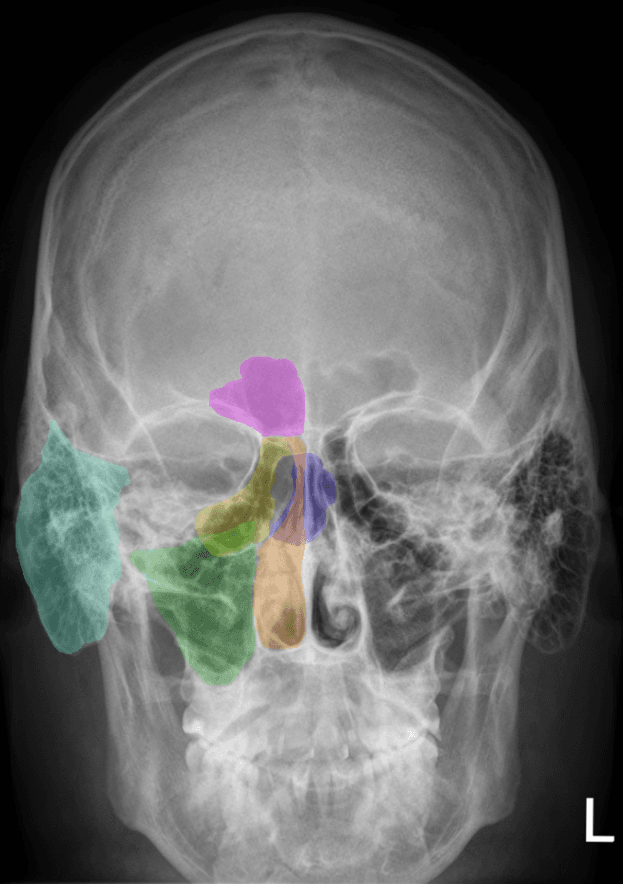
The diagnosis of chronic rhinosinusitis always begins with a careful clinical evaluation, because the severity of the condition can vary greatly and the choice of treatment depends on which mechanisms are predominant in each individual case.
Hellerhoff, CC BY-SA 3.0
Regarding the diagnosis, Prof. Dr. Sudhoff explains: “A structured diagnostic process always begins with a detailed interview in which the symptoms, their duration, and their impact on daily life are systematically documented. Standardized questionnaires such as the SNOT-22 or the Sino-Nasal Outcome Score help to objectively assess the impact on quality of life. This is followed by a targeted examination to determine whether allergies, extraesophageal reflux, or other contributing factors such as asthma are contributing to the symptoms. Only the combination of medical history, structured questionnaires, and the evaluation of possible comorbidities enables a reliable diagnosis of chronic rhinosinusitis.”
The SNOT-22 and Sino-Nasal Outcome Score are standardized questionnaires that assess the extent to which nasal and paranasal sinus symptoms interfere with daily life. They assess typical symptoms such as impaired nasal breathing, a sensation of pressure, impaired sense of smell, sleep problems, and general limitations. The results reveal the severity of the condition and help assess its progression and plan appropriate treatment.
Whether the condition can initially be treated with medication depends on several factors. The key factor is whether the mucosal inflammation still responds to conventional therapies—that is, corticosteroid nasal sprays, nasal irrigation, anti-allergic measures, or short-term systemic corticosteroid regimens.
“The treatment of chronic rhinosinusitis today is based on three central pillars that have evolved significantly in recent years. Conservative therapy is always the first step: regular nasal irrigation, topical steroids, and—if necessary—short-term systemic steroid therapy. At the same time, comorbid conditions such as asthma must be treated as well, since they significantly influence the course of the disease. If, despite these measures, there is no sufficient improvement or the disease continues to progress, functional endoscopic sinus surgery may be considered. In cases with more complex findings, this procedure is performed using navigation guidance and can be done on an outpatient basis or during a short inpatient stay. Biologics constitute a third, increasingly important pillar of treatment. These monoclonal antibodies specifically target the underlying Type 2 inflammatory response by blocking certain interleukins. “They can improve the condition of the paranasal sinuses even when traditional conservative measures are no longer sufficient,” explains Prof. Dr. Sudhoff, adding:
“The duration of each treatment depends heavily on the individual’s symptoms. As long as conservative therapy controls the symptoms, the condition is considered adequately treated. If quality of life deteriorates despite consistent measures, surgery is usually indicated. Biologics, on the other hand, are only used if at least two surgeries have failed to produce lasting improvement. For approval, these procedures must be documented, and long-term—sometimes lifelong—use is often required, accompanied by continued use of topical steroids.”
Many patients live with their symptoms for years before seeking specialized treatment. They often try to manage the symptoms with home remedies, oils, or ointments, or they use decongestant nasal drops on a long-term basis.
Prof. Dr. Sudhoff explains: “It is only when quality of life noticeably declines—for example, due to loss of the sense of smell, a nasal voice, or significantly impaired nasal breathing—that patients take the step to see a specialist. This long delay is considered one of the biggest mistakes, because the inflammation can become more entrenched during this time, often making treatment more complex. In addition to allergies, smoking is one of the main factors that can further contribute to the condition. The fine cilia of the nasal mucosa, which moisten, warm, and filter the inhaled air, lose their function under the influence of cigarette smoke. At the same time, carcinogenic substances and irritants reach the mucous membranes and promote chronic inflammatory processes. Recent studies also show links between gut flora and chronic rhinosinusitis, which draws attention to everyday products that come into contact with mucous membranes and immune barriers. In this context, certain ingredients in toothpaste and rinse aids are coming under scrutiny. Substances such as sodium lauryl sulfate can weaken the mucosal barrier, while surfactants—that is, detergent-like substances that reduce surface tension—may facilitate the entry of allergens into deeper structures. “These factors are not the sole cause, but they can exacerbate existing inflammatory processes and make the mucous membranes more sensitive.”
Acute sinusitis usually develops following a viral infection, which can be exacerbated by a bacterial superinfection. Such acute inflammations sometimes require antibiotics and generally heal completely within a few weeks.
“Chronic sinusitis, on the other hand, is only diagnosed when symptoms persist for more than three months and can no longer be controlled despite consistent conservative treatment. In this chronic stage, the condition may occur with or without the formation of polyps and requires further therapeutic measures. This is often caused by a Type 2 inflammatory response—an immunological pattern characterized by interleukin-4, interleukin-5, and interleukin-13, elevated eosinophil levels, and an IgE-mediated reaction. This means that the mucosa is constantly irritated, swells, produces more secretions, and reacts more sensitively to stimuli. “It is precisely these mechanisms that serve as the target for modern biologics, which specifically intervene in the dysregulated inflammatory response and can thus enable a lasting improvement,” explains Prof. Dr. Sudhoff.
Anatomical narrowings that permanently block the drainage of secretions tend to indicate the need for a surgical approach. In patients without polyps, with milder inflammation, and who respond well to local therapies, however, medication is often the first and appropriate step.
Modern, minimally invasive sinus surgery becomes the next logical step whenever the inflammation can no longer be controlled by medication alone or when anatomical factors hinder the healing process.
Regarding the surgery and the particular challenge it poses for the surgeon, Prof. Dr. Sudhoff explains: “Today, the procedure is performed entirely using minimally invasive techniques and without external incisions. Access is gained exclusively through the nostril, and the surgery is performed under endoscopic or microscopic visualization. Modern navigation systems enable precision of less than one millimeter, making it clear at all times which anatomical structure is being worked on. This significantly increases safety and allows for a highly controlled procedure. The real challenge lies in the delicate anatomy of the surgical site. Structures such as the orbit, the optic nerve, and the anterior skull base require special protection. If the procedure is not performed with care, complications such as bleeding, injury, or the leakage of cerebrospinal fluid can occur in these areas. Therefore, a precise navigation and safety protocol is crucial throughout the entire procedure. Treatment with biologics has shown that these drugs do not have a disease-modifying effect. They are effective only as long as they are administered. Once treatment is discontinued, the inflammation often flares up again because the suppression of the type 2 inflammatory response is no longer present. Therefore, this is usually a long-term, often lifelong form of therapy.”
Cost coverage is clearly regulated: biologics are listed medications whose costs are fully covered by health insurance plans when the indicated conditions are present.
In most cases, the treatment leads to a significant and lasting improvement, but some patients experience relapses.
“People with certain risk factors—such as allergies, aspirin intolerance, severe type-2 inflammation, or specific immunological characteristics—are particularly at risk. In these patients, the mucosa is immunologically predisposed in such a way that local inflammatory flare-ups can occur repeatedly—even after a technically flawless surgery. These recurrent inflammatory phases can bring back the familiar symptoms and make the disease more complex in the long term. Consistent follow-up care that takes into account both mucosal health and the underlying immunological mechanisms is therefore crucial,” emphasizes Prof. Dr. Sudhoff.
A change in therapy becomes necessary when it becomes clear that the current treatment is no longer adequately controlling the underlying inflammation or that anatomical conditions are so unfavorable that medication alone can no longer be effective. If patients repeatedly require systemic corticosteroids just to achieve a period of improvement, this indicates that the inflammation is too deeply rooted to remain stable in the long term through local measures alone. Equally crucial is the evaluation of imaging findings: If a CT scan shows chronically poorly ventilated sinuses, stagnant secretions, or narrowings that block drainage, surgical dilation is often necessary to create the foundation for effective drug therapy in the first place.
The Bielefeld Head Center treats approximately 800 patients with chronic rhinosinusitis each year.

“Some patients achieve complete recovery with consistent conservative treatment—for example, when their sense of smell returns or nasal breathing is restored. Another group requires surgery, which typically lasts 30 to 45 minutes and leads to lasting improvement in most patients. For a smaller proportion, subsequent treatment with biologics is necessary, guided by the S2K guideline and the European position paper EPOS 2024, which defines the current standards for the treatment of chronic rhinosinusitis and nasal polyps. In addition, a central registry for chronic rhinosinusitis is currently being established to further improve care in the long term. It is striking that the number of people affected is noticeably increasing. This is linked, among other factors, to rising levels of fine particulate matter and milder temperatures, which prolong the allergy season and thus influence the incidence of the disease. Over the past few years, there has been a clear trend toward more cases of this complex condition. From an international perspective, it is striking that regions with heavy industrial pollution—in both developing and emerging economies—are particularly affected. “There, the prevalence of the condition is rising significantly, which is attributed to direct exposure to particulate matter and other environmental factors,” explains Prof. Dr. Sudhoff, who concludes our conversation by offering some tips on general nasal care:
“Good nasal care can go a long way toward keeping the mucous membranes healthy and preventing inflammation—both after surgery and in everyday life. Consistent care is important immediately after surgery: Ointments such as Bepanthen support healing, topical steroids reduce local inflammation, and accompanying medications stabilize the mucous membranes. Nasal rinses with saline solution have proven particularly effective; they flush mucus, crusts, and environmental particles out of the nose and soothe the mucous membranes. This routine is worthwhile even if you haven’t had surgery. A physiological saline solution keeps the mucous membranes moist, supports their natural cleansing function, and can have a preventive effect. However, other remedies that create a sensation of easier nasal breathing—such as menthol or eucalyptus—do not actually alter the air passage. They act exclusively on temperature receptors and merely give the impression of a “clearer nose.”
Thank you very much, Professor Dr. Sudhoff, for this helpful information on chronic rhinosinusitis!
- Internationally leading ENT and head and neck surgeon with broad scientific expertise
- Director of the Bielefeld Head Center, equipped with state-of-the-art technology, AI-supported procedures, and two high-end operating rooms
- Focus on chronic rhinosinusitis: tailored treatment decisions between medications, biologics, and modern surgery
- Specialist in head and neck tumors, salivary gland disorders, phonosurgery, and laryngeal disorders
- Internationally trained (Bochum, UCSD), recipient of numerous awards, a leading figure in research and teaching
- Establishment of a highly qualified interdisciplinary team; 2,000 surgeries planned annually at the highest level of medical care
Share this article
Expert Interviews
Read next
- Expert interview
Expert interview with Professor Dr Elmar Herbst, PhD
Oct 15, 2026
Patient-centred and personalised knee surgery
Read more - Expert interview
Cardiogeriatrics: Significance and benefits in the context of hospital reform
Sep 21, 2026
Cardiogeriatrics: Significance and benefits in the context of hospital reform
Read more - Expert interview
Expert Interview with Professor Dr. Amadeus Hornemann, MPH
Sep 18, 2026
Prof. Amadeus Hornemann on Precision Medicine in Gynecology: Modern Surgery, New Techniques, Better Quality of Life
Read more