Expert Interviews
Chronic Inflammatory Bowel Diseases (Crohn's Disease, Ulcerative Colitis)

Alexandra Pfitzmann ·
Chronic inflammatory bowel diseases (IBD) include conditions such as Crohn’s disease and ulcerative colitis, in which the immune system causes persistent inflammation in the intestines. These conditions typically progress in flare-ups, can significantly impact daily life, and require precise diagnosis as well as personalized, long-term treatment. Modern therapies now allow for significantly better control of inflammation, alleviate symptoms, and help many patients improve their quality of life in the long term.
To learn more about this, the editorial team of the Leading Medicine Guide spoke with Professor Dr. Birgit Terjung, a specialist in gastroenterology and nutritional medicine.

“Crohn’s disease and ulcerative colitis are two distinct chronic inflammatory bowel diseases that, while clearly different from one another, can also overlap in certain aspects.
Their causes cannot be attributed to a single trigger but arise from the interaction of many factors. Both diseases are based on a misdirected immune response against the intestinal mucosa, the exact mechanisms of which are not yet fully understood. Genetic influences also play a role: There are numerous genes that make small contributions to the risk of developing the disease, including the frequently studied NOD2 gene.
A familial clustering is evident—the risk for children is six to ten percent if one parent is affected, and about 30 percent if both parents have the disease. The gut microbiota also plays an important role. Changes in the microbiome can promote inflammation, even though no single bacterium has been identified as a trigger. Lifestyle factors also play a role: Smoking significantly worsens the course of Crohn’s disease, while ulcerative colitis responds positively to nicotine to a certain extent.
Diet—particularly highly processed foods—can influence inflammatory processes. Stress and psychological strain are not considered causes, but they can exacerbate existing conditions. Many patients associate the onset of their symptoms with stressful life events, but these tend to act as triggers for a pre-existing, previously unnoticed predisposition to the disease,” explains Prof. Dr. Terjung at the beginning of our conversation, describing the patients’ symptoms:
“The conditions can, in principle, occur at any age, although there are two typical peaks in incidence: children and young adults are particularly frequently affected, as are people from around age 50 onward into old age. Even babies can develop the condition, while others do not experience their first flare-up until age 80. Neither gender is affected more frequently, and in Germany, the current estimate is around 600,000 people with the condition.
The flare-ups manifest very similarly in both conditions. The primary symptom is diarrhea, often several times a day and typically at night as well—a difference from irritable bowel syndrome, in which nighttime symptoms are rare. In ulcerative colitis, blood in the stool is also common because the inflammation affects the superficial, well-vascularized mucosa.
In Crohn’s disease, the entire intestinal wall is inflamed with deep ulcers, which is why bleeding is less pronounced. Additional symptoms include abdominal pain—sometimes severe pain associated with bowel movements—loss of appetite, nausea, and weight loss. Fever or abnormal inflammatory markers in the blood may be further indicators. However, based on symptoms alone, it is not possible to reliably distinguish between the two conditions.”
Diagnosing chronic inflammatory bowel diseases requires a systematic approach, because the symptoms are often nonspecific and many other causes are possible. Step by step, tests are conducted to determine whether there is actually inflammation of the intestinal mucosa, where it is located, and whether the condition is more likely to be Crohn’s disease or ulcerative colitis.
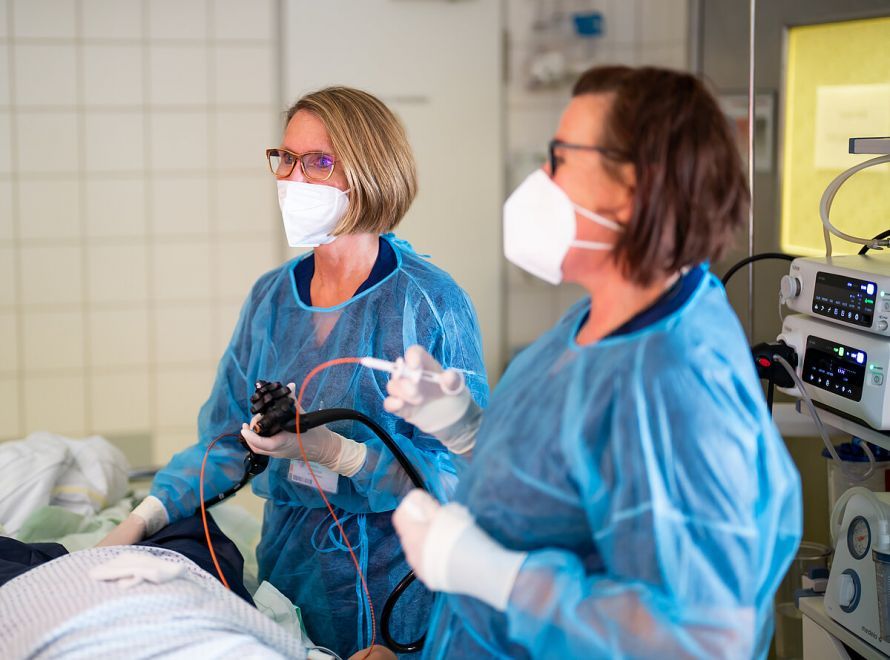
Prof. Dr. Terjung explains: “When a patient presents with nonspecific symptoms such as diarrhea, abdominal pain, or weight loss, the first step is to determine whether the underlying cause is a chronic inflammatory bowel disease or something else.
First, a clinical examination is performed to assess tender points in the abdominal area, palpable abnormalities, or enlarged lymph nodes. Next, a stool sample is analyzed, including for the inflammatory marker calprotectin (a protein released by certain white blood cells when inflammation is active in the intestine).
If this level is elevated, it suggests inflammation of the mucous membrane. In addition, stool tests are performed to check for bacterial or viral infections in order to rule out common pathogens such as Salmonella, Shigella, Campylobacter, or noroviruses as the cause of the diarrhea. An ultrasound reveals whether the intestinal lining is thickened or if there is inflammation-related fluid in the abdominal cavity.
A blood test provides further clues, such as elevated inflammatory markers or changes in organ function. If Crohn’s disease or ulcerative colitis is still suspected after these tests, a colonoscopy is performed. During this procedure, the mucosa is visually examined directly via the endoscope, and tissue samples are taken.
Depending on the findings, the final section of the small intestine—the terminal ileum—may also be examined. If Crohn’s disease is suspected, a specialized MRI scan of the small intestine may follow, during which a contrast agent is ingested to visualize inflamed sections of the intestine. A gastroscopy may also be useful, as Crohn’s disease can affect the entire digestive tract from the lips to the anus.
Finally, all findings are compiled, and the pathologist uses the tissue samples to confirm whether the condition is most likely Crohn’s disease or ulcerative colitis.”
Several treatment options are available, and a decision often has to be made early on, even though a definitive diagnosis is not always available. The pathology report can sometimes only confirm the presence of inflammation without clearly distinguishing between Crohn’s disease and ulcerative colitis.
“This is frustrating for many patients, but this lack of clarity does not play a major role in the initial therapeutic steps, because the initial treatment for both conditions is structured similarly. The first step is usually to use a mucosal protectant, typically mesalazine (an anti-inflammatory). This medication acts directly on the intestinal mucosa and can be administered as a tablet, granules, suppository, enema, or foam.
It is particularly helpful when the inflammation is not yet very severe and supports local healing of the mucosa. If mesalazine is not sufficient, corticosteroid therapy often follows as a second-line treatment to quickly curb the inflammation. There are corticosteroid preparations that have fewer side effects because they are largely broken down in the liver before reaching their site of action.
These specific corticosteroid preparations (e.g., budesonide) are particularly suitable when the inflammation is limited to the transition area between the small and large intestines, also known as the terminal ileum. If this is not sufficient, conventional corticosteroids must be used—but only for a few weeks, as long-term use should be avoided due to the side effects.
“After this phase, we assess whether the therapy is sufficiently effective or whether other medications, such as biologics, are necessary,” says Prof. Dr. Terjung, explaining the potential use of biologics:
“For patients for whom these treatments are insufficient, modern, targeted medications are now available: biologics. To many, the name initially sounds like natural remedies, but in fact, they are biotechnologically produced antibodies that specifically block the body’s own inflammatory mediators.
They work on the lock-and-key principle and intervene very specifically in the misdirected immune response of the intestinal mucosa. These medications have fundamentally changed treatment: they are highly effective and, at the same time, relatively well tolerated. They often enable what is known as mucosal healing—that is, a state in which the intestinal mucosa appears completely free of inflammation on endoscopy. This was once considered nearly impossible and today represents one of the greatest advances in the treatment of chronic inflammatory bowel diseases.”
Biologics are modern medications produced using living cells—not through traditional chemical synthesis. In specialized cell cultures, these cells act like tiny factories: they receive a genetic “blueprint” and then produce very specific protein molecules, usually antibodies. These antibodies can very specifically block individual inflammatory substances in the body, thereby reducing inflammation in the gut. Because of this precise mechanism of action, biologics are now considered a major advance in the treatment of chronic inflammatory bowel diseases.
Biologics are generally used over a long period of time and follow a clearly structured treatment regimen.

“Initially, they are usually administered as an infusion at intervals of about two to eight weeks, each lasting about an hour at the doctor’s office or clinic. Once the therapy is stable, patients can often switch to pre-filled syringes or pens for self-administration—similar to insulin pens.
These injections are also given every two to eight weeks at home, after patients have been instructed on how to administer them. The treatment is generally designed to last for years, not months. The goal is to allow the mucosa to heal permanently and to prevent or significantly reduce the typical flare-ups of the disease.
Since Crohn’s disease and ulcerative colitis are chronic conditions, a certain predisposition to inflammation always remains in the background. For this reason, biologics are usually administered for at least two years, but often for much longer. If one medication is not effective enough, patients can switch to another—which is also a long-term process. Many patients remain on a highly effective biologic for many years, and some have been on it since their youth.
The therapy itself is not new: the first biologics came onto the market as early as the 1990s. Initially, there were major concerns about possible side effects such as severe infections. Today, they are considered an indispensable part of treatment because they combine high efficacy with comparatively good tolerability and enable many patients to lead largely normal lives.
While cortisone can alleviate acute symptoms, it cannot achieve lasting healing of the mucous membranes—biologics, on the other hand, can, which represents a real breakthrough. One drawback remains the high cost: expenses of 5,000 euros or more can be incurred per quarter. For health insurance companies, this is a financial burden, though it is partially offset by fewer hospital stays and surgeries,” says Prof. Dr. Terjung, emphasizing:
“Selecting the right biologic is currently one of the biggest challenges. There is no marker that clearly indicates which medication works best for which patient. Much of it is based on experience, typical disease patterns, and close communication between doctor and patient. In addition, regular checkups—such as colonoscopies or the stool marker calprotectin—help to objectively assess how well the therapy is working. A truly personalized selection, as is sometimes possible in oncology, remains an important goal of current research.”
In the long term, treatment with biologics can be planned very effectively because these medications can generally be used indefinitely. Many patients respond so well to them after just a short time that they are able to live completely normal lives again: regular bowel movements, no symptoms, daily life, studies, work, pregnancy—that is precisely the goal of the therapy.

Prof. Dr. Terjung comments on this: “However, there are also cases in which, despite all available biologics and additional oral medications, there is no sufficient improvement. In such cases, one must carefully weigh whether surgery is a more sensible option to put an end to the constant flare-ups. In ulcerative colitis, the colon—as the primary site of inflammation—can be completely removed. Afterward, the small intestine is sutured to a section of the rectum, creating an artificial rectum and eliminating the need for a colostomy.
With Crohn’s disease, this is more difficult because the disease can occur anywhere in the digestive tract. In such cases, surgery is performed selectively when individual sections are severely inflamed or scarred. Despite all measures taken, some patients experience recurring flare-ups for which surgery offers little relief—for these individuals, the course of the disease is particularly distressing.
However, the vast majority of patients can be stabilized very effectively. Out of every hundred patients treated, perhaps two or three have a truly difficult course of the disease and require further discussion in expert panels. For everyone else, modern therapies enable a largely normal life. Nevertheless, it remains a lifelong condition. The frequency of flare-ups varies greatly from person to person: Some experience symptoms once or twice a year, while others remain completely symptom-free for many years. It is very difficult to make predictions.”
Diet, lifestyle, and stress management can significantly influence the course of inflammatory bowel diseases because they are closely linked to inflammatory processes, the microbiome, and the intestine’s ability to regenerate.
“In addition to genetic predisposition and immunological dysfunction, lifestyle factors play a major role. This is particularly evident in Crohn’s disease: People who continue to smoke after surgery in the transition zone between the small and large intestines have up to a twelvefold increased risk of a stricture forming again at the same site. This is a major factor—and an area where patients themselves can have a significant impact.
Not smoking is therefore one of the most important recommendations. Diet can also have a noticeable impact on the course of the disease. It affects the gut microbiota and the immune functions in the gut and can thus support mucosal healing. “Diet and quitting smoking are therefore two key levers that can positively influence the course of the disease—in addition to the genetic and immunological factors that individuals cannot change themselves,” Prof. Dr. Terjung emphasizes.
Many people with the condition are sensitive to highly processed foods containing additives such as emulsifiers or artificial sweeteners, as these can disrupt the microbiome and weaken the mucosal barrier. Very high-fat or fried foods, high-sugar foods, alcohol, highly processed foods, and red or highly processed meat are also often less well tolerated because they promote inflammatory processes or strain digestion.
During active flare-ups, high-fiber or gas-producing foods such as raw vegetables, legumes, nuts, or coarse whole-grain products can also exacerbate symptoms, as the inflamed gut reacts more sensitively.
Stress management is another key component, as stress directly affects the immune system and gut function via the gut-brain axis. Many people with the condition experience an increase in symptoms during stressful periods. Methods such as mindfulness, breathing exercises, yoga, or structured relaxation programs can help regulate the body’s stress response. Psychological support or talking with others who have the condition can also provide relief and strengthen the sense of being able to better manage the disease.
The prevalence of chronic inflammatory bowel diseases has been rising for years, and there are several reasons for this. On the one hand, these conditions are diagnosed more accurately today; on the other hand, environmental and dietary habits have changed significantly.
“In particular, the so-called ‘Western-style diet’—characterized by highly processed foods, ready-made meals, fast food, and an overall unfavorable nutrient profile—is considered a significant contributing factor. Many people with these conditions continue to eat highly processed foods even after their diagnosis, even though this is precisely what can promote inflammation in the gut.
At the same time, there is now a trend back toward freshly prepared, less-processed foods, which is very welcome from a medical perspective. Nevertheless, many patients have a misconception: when they experience diarrhea and abdominal pain, they automatically turn to bland foods such as white bread or very mild, low-fiber meals.
For chronic inflammatory bowel diseases, however, this is often counterproductive. Fiber—from vegetables, fruits, legumes, and seeds—is crucial because it positively influences the gut microbiota and promotes anti-inflammatory metabolic products. Mediterranean dietary patterns also have a beneficial effect. In contrast, diets that are extremely meat-heavy or ketogenic (very low in carbohydrates but high in fat) are less suitable.
To help patients understand these connections and apply them in practice, nutritional counseling is available for inpatients. For outpatients, specialized nutritionists are consulted. “In addition, knowledge of nutritional medicine is directly integrated into medical care, because changing dietary habits is a central component of the overall treatment plan,” explains Prof. Dr. Terjung.
Many of the general recommendations—sufficient exercise, good sleep, stress reduction—naturally apply here as well. But when it comes to nutrition in particular, it often becomes clear just how deeply ingrained habits are.

On this point, Prof. Dr. Terjung notes: “Many people, especially older adults, struggle with change and feel a kind of inner resistance. The idea of cooking fresh meals or eating a diet richer in fiber quickly feels overwhelming to them, even though in practice it’s usually less time-consuming than they think. This pattern is frequently observed during consultations: Nearly everyone is convinced they’re already eating healthily.
It’s only when they keep a food diary that it becomes clear just how heavily their diet is still dominated by highly processed foods (which, unfortunately, are often not clearly labeled as such), a lot of wheat, little fiber, and traditional habits. In particular, the shift toward more plant-based protein sources like legumes or toward a Mediterranean-style diet is difficult for many because it requires a change in mindset—moving away from red meat and toward vegetables, fruits, and seeds.
Of course, there can also be “unhealthy days.” The key principle is this: A wheat-heavy, low-fiber diet has an adverse effect on the gut, while a high-fiber, varied diet strengthens the gut microbiota and supports anti-inflammatory processes. Conveying precisely this shift in perspective is one of the most important tasks in counseling.”
The gut microbiome plays a central role in the development and progression of chronic inflammatory bowel diseases because it is closely linked to the immune system and the barrier function of the intestinal mucosa.
The microbiome refers to the totality of all microorganisms—primarily bacteria—that live in our gut. This “gut flora” aids digestion, strengthens the immune system, and influences many processes in the body. If the microbiome becomes unbalanced, it can noticeably impair gut health and well-being.
New findings suggest that certain groups of bacteria promote inflammation, while others may have a protective effect. The diversity of the microbiome also appears to be important: lower diversity is more frequently observed in active disease.
Current scientific approaches are investigating how the microbiome can be specifically influenced—for example, through diet, probiotic strategies, or new therapeutic methods aimed at restoring the balance of the gut flora. In the long term, these developments could help better control inflammatory activity and positively influence the course of the disease.
“The microbiome reacts very sensitively to environmental and dietary conditions, and in fact, it varies significantly depending on the country, region, and lifestyle. Travel, different foods, or a changed environment can alter the microbiome in the short term—often noticeable through changes in bowel movements.
Upon returning home, it usually settles back into the individual’s ‘pre-established’ pattern, but remains susceptible to external influences at all times. Environmental factors such as urban air, exhaust fumes, or fine particulate matter also play a role, although many of these connections have not yet been fully researched. One thing is clear, however: the microbiome can be repeatedly disrupted by environmental conditions, and these changes can influence the development or severity of chronic inflammatory bowel diseases.
To prevent or mitigate a potential disease outbreak, classic lifestyle factors are considered crucial: a Mediterranean-style diet with minimal processed foods, avoiding smoking, moderate alcohol consumption, regular exercise, and effective stress management. If symptoms appear, early medical evaluation is important.
The first point of contact is the primary care physician, who will refer the patient to a gastroenterologist if the condition is suspected—even though it is often difficult to get an appointment on short notice. It’s worth persevering, because specialized care is crucial for effective treatment,” says Prof. Dr. Terjung, concluding our conversation with an optimistic note:
“The key message remains important: With the right treatment, most people affected can lead a largely normal life—including starting a family, working, and going about their daily lives!”
Thank you very much, Professor Dr. Terjung, for this detailed explanation of chronic inflammatory bowel diseases!

- Chief of Gastroenterology at the GFO Clinics in Bonn and a recognized expert in diseases of the gastrointestinal tract and the liver
- Board-certified specialist in internal medicine and gastroenterology with many years of clinical and scientific experience
- Specializes in inflammatory bowel diseases (Crohn’s disease, ulcerative colitis), gastroesophageal reflux disease, gastric and duodenal ulcers, diverticular disease, irritable bowel syndrome, and food intolerances
- Expertise in the diagnosis and treatment of malignant colorectal diseases as well as diseases of the bile ducts and the pancreas
- Performs modern endoscopic procedures, including gastroscopy, colonoscopy, and specialized diagnostics of the digestive tract
- Committed to individualized, evidence-based therapy at the highest medical standard
- Leads an interdisciplinary team providing comprehensive prevention, diagnosis, and treatment of complex gastroenterological diseases
- Committed to patient-centered medicine with a focus on early diagnosis and minimally invasive, modern treatment methods
Share this article
Expert Interviews
Read next
- Expert interview
Expert interview with Professor Dr Elmar Herbst, PhD
Oct 15, 2026
Patient-centred and personalised knee surgery
Read more - Expert interview
Cardiogeriatrics: Significance and benefits in the context of hospital reform
Sep 21, 2026
Cardiogeriatrics: Significance and benefits in the context of hospital reform
Read more - Expert interview
Expert Interview with Professor Dr. Amadeus Hornemann, MPH
Sep 18, 2026
Prof. Amadeus Hornemann on Precision Medicine in Gynecology: Modern Surgery, New Techniques, Better Quality of Life
Read more