Expert Interviews
The Journey of a Visionary: How Dr. Jörg Zehetner Became the World Leader in Innovative Reflux Surgery

Alexandra Pfitzmann ·
Reflux surgery involves the surgical treatment of chronic heartburn and its consequences—a condition that is far more than just an annoying burning sensation behind the breastbone. When medication is no longer sufficient or the reflux of stomach acid has already led to inflammation, damage to the mucous membrane, or a reduced quality of life, surgical intervention can restore the natural barrier between the stomach and the esophagus.
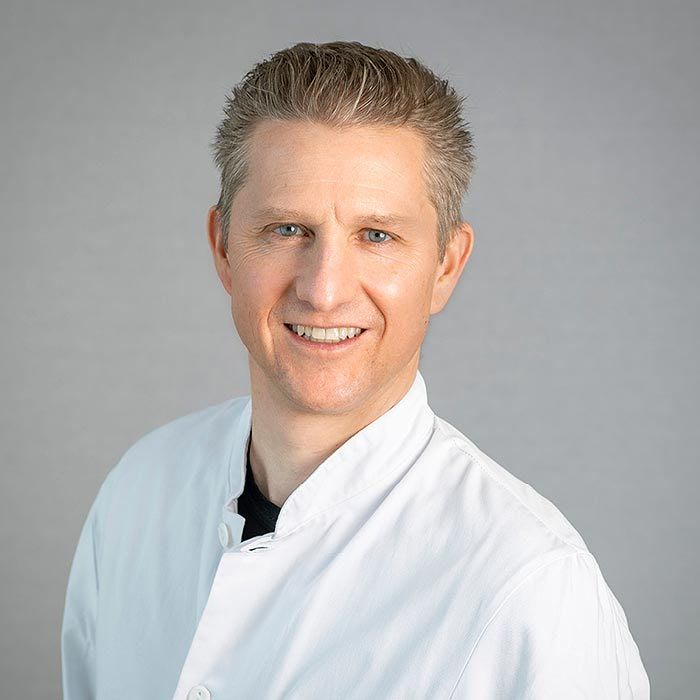
Dr. Jörg Zehetner, Professor (USC), has established himself as one of the world’s leading experts in the field of innovative reflux surgery, particularly through his expertise in minimally invasive surgery and groundbreaking techniques such as RefluxStop™. As surgical director at Swiss1Chirurgie and at the Hirslanden Klinik Beau-Site in Bern, he has made a significant contribution to the development and widespread adoption of new treatment approaches.
The editorial team of the Leading Medicine Guide spoke with Professor Dr. Jörg Zehetner about this groundbreaking development.
Reflux surgeries have been performed since the 1950s and 1960s, but it was not until the introduction of laparoscopic—that is, minimally invasive—surgery in the early 1990s that surgical treatment truly became widespread.
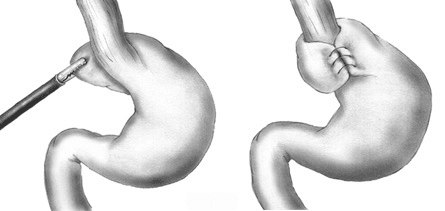
“The classic procedures were fundoplications, in which the stomach is wrapped around the esophagus—either as a complete sleeve (Nissen) or as a partial sleeve (Toupet). These techniques are still used in many places today, but I now use them only in specific cases because more modern methods are now available.
One of these newer developments is the LINX system, which was developed in the U.S. nearly 20 years ago. In this procedure, a chain of small magnets is placed around the lower end of the esophagus. Unlike a fixed sleeve, this is a dynamic system that reinforces the sphincter without permanently compressing it. As a result, patients can still burp or vomit after surgery—something that was often barely possible, if at all, following a traditional fundoplication.
The LINX system is also designed to cause less bloating and flatulence. However, it has been shown that difficulty swallowing can occur here as well, because the implant encircles the esophagus. “That is why LINX is only suitable for patients who have completely normal esophageal function prior to surgery and do not have dysphagia,” explains Dr. Zehetner.
Dr. Zehetner not only helped develop the correct implantation technique for the LINX system early on, but over many years has become one of the most experienced practitioners of the system internationally. This is precisely why his subsequent move toward RefluxStop™ is so remarkable: it does not stem from a rejection of existing methods, but from a deep understanding of their limitations.
Anyone who has used a procedure on a large number of cases over many years can see very clearly where it works—and where, despite all the innovation, it reaches its physiological limits. He sought a solution that does not work “against” the esophagus, but rather restores the original anatomy—in other words, corrects the cause rather than blocking the symptoms.
“After helping to shape the LINX system for over 15 years, I recognized the limitations of mechanical barriers. LINX is a great step forward, but it relies on sphincter augmentation—and thus, to some extent, compression. My goal has always been pure physiology. RefluxStop™ fascinated me because it tackles the problem at its root: It restores the natural anatomy and the angle of His (a small but crucial anatomical angle between the esophagus and the entrance to the stomach) without constricting the esophagus.
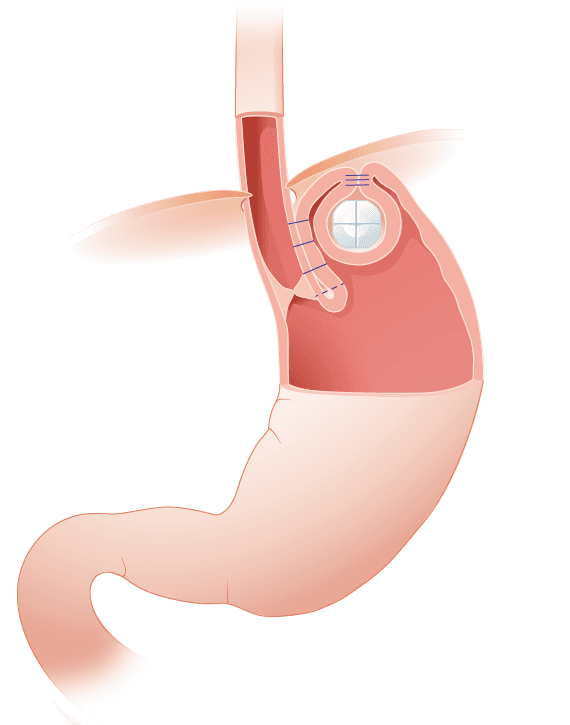
It’s the shift from a mechanical barrier to an anatomical reconstruction, which minimizes swallowing difficulties and dramatically improves quality of life. I was introduced to the RefluxStop™ method in 2018, began using it in 2020, and collaborated on developing the correct surgical technique. The procedure is based on a small silicone implant measuring approximately two by two centimeters—a five-part sphere. However, it is not the implant alone that is crucial, but the entire surgical technique.
First, the esophagus and any diaphragmatic hernia are exposed, the lower end of the esophagus is mobilized, and it is guided back into the abdominal cavity. Next, the natural antireflux barrier is reconstructed by restoring the His angle between the esophagus and the stomach, thereby reestablishing the physiological reflux valve. The RefluxStop™ implant is then sutured into a gastric pouch and stabilizes this anatomical reconstruction, so that the sphincter is once again positioned naturally within the abdominal cavity.
“The major advantage over LINX and traditional fundoplications is that the esophagus is not wrapped around anything; instead, the natural reflux mechanisms are restored,” explains Dr. Zehetner, adding:
“I first became familiar with the development of this method in Switzerland, and the initial studies were also conducted in Europe. My time in Los Angeles at USC (University of Southern California) taught me to constantly question established practices. Traditional fundoplication (sleeve surgery) was the gold standard for decades, but it often causes side effects such as ‘gas-bloat syndrome’ or dysphagia (difficulty swallowing), as it artificially puts pressure on the sphincter.
Drawing on my experience in the U.S., I wanted to establish a method in Switzerland that respects the functionality of the diaphragm. RefluxStop™ overcomes the limitations of the sleeve procedure by not wrapping the gastric fundus around the esophagus, but rather using it as a natural buffer. Based on my own early results, I further refined the technique and published findings on my first 20 patients, later 40, and now 100.
A large European multicenter study involving over 600 patients is now available. In the U.S., FDA approval (official authorization from the U.S. Food and Drug Administration) is still pending but is expected to be granted soon. In recent years, I have worked intensively to further develop the method so that it can be easily taught—and today I am the surgeon with the most experience worldwide in the RefluxStop™ procedure. In addition, I have trained staff at nearly all European centers, including numerous teams in Spain, Italy, France, England, Norway, Sweden, Germany, Austria, and Switzerland.”
The LINX system is a minimally invasive magnetic band implant that strengthens the lower esophageal sphincter and thus prevents chronic reflux (GERD). It consists of small titanium beads with magnetic cores that are placed around the esophagus like a flexible chain; they open when swallowing but then close again to stop acid reflux. RefluxStop™ follows precisely this paradigm shift. Instead of narrowing the esophagus, it stabilizes the anatomical position of the stomach below the diaphragm, thereby restoring the natural pressure barrier.

The question of how well a new surgical technique actually works can only be answered through systematic, long-term follow-up studies. That is precisely why the first RefluxStop™ patients were closely monitored and enrolled in structured studies.
“Initially, the first patients participated in a safety study, which focused primarily on determining whether the surgery could be performed with a low incidence of complications. This was followed by a follow-up study in which we systematically tracked how the patients were doing before and after the procedure—using questionnaires administered before surgery and at six months, one year, two years, and five years.
The six-month and two-year data for the first 50 patients are now available. In addition, prior to surgery, we performed not only a gastroscopy and a barium swallow on all patients, but also a manometry—that is, a pressure measurement of the esophagus—as well as an acid measurement. These examinations were repeated after six months and after two years. The results showed that RefluxStop™ delivers excellent objective results both after six months and after two years: In over 94 percent of patients, acid no longer rises into the esophagus.
The questionnaires also reflect a very high level of subjective satisfaction—over 95 percent of patients are symptom-free or have experienced significant improvement. At the same time, we have observed that in cases of very large hiatal hernias, the diaphragm itself remains the critical weak point—regardless of the type of reflux surgery performed.
For this patient group, we therefore continue to rely more frequently on traditional fundoplications, as they may require a second or third operation on the diaphragm at some point in their lives. In such cases, a mesh is often inserted as well to reinforce the diaphragm,” Dr. Zehetner explains.
When selecting a patient for RefluxStop™, anatomical and functional factors play a much more nuanced role than with traditional antireflux surgical procedures.
“In the past, the indication was often binary: surgery or lifelong PPI (long-term use of proton pump inhibitors). Today, we make more nuanced decisions. For me, the key factors for RefluxStop™ are the manometry data on esophageal motility and the anatomy of the diaphragmatic hiatus.
While a fundoplication is risky in cases of very weak esophageal pump function, RefluxStop™ allows us to treat a broader group of patients, since the chyme does not have to fight against mechanical resistance. “Today, we select patients based on function rather than just on the presence of a defect,” explains Dr. Zehetner, describing the practical procedure:
“Before surgery, patients either come to me with preliminary test results, or we conduct all evaluations at our Reflux Center in Bern—gastroscopy, acid monitoring, esophageal pressure measurement, and a barium swallow. Once all the findings are available, I discuss in detail with the patient exactly what symptoms they are experiencing, how severe their distress is, how well they respond to acid-blocking medications, how pronounced any potential inflammation of the esophagus is, and whether there are already mucosalchanges that could be considered precursors to cancer.
Equally important is assessing how well the esophagus is functioning and the size of any hiatal hernia. In principle, almost all patients are eligible for the RefluxStop™ procedure—the only exceptions are those with very large hiatal hernias measuring more than eight centimeters.
“Having seen such good results with RefluxStop™ over the past one to two years, I now recommend this new method to most of my patients because it offers reflux control that is just as good—and often even better—than previous procedures, while causing significantly fewer swallowing difficulties and other side effects.”
Establishing a completely new anti-reflux surgical procedure is never a single step, but rather a long, multi-stage process—and this is precisely the path RefluxStop™ followed before it gained international recognition. Crucially, the procedure was not initially viewed as a “variation” on existing techniques, but rather as a fundamentally new approach that reconstructs the anatomy rather than compressing the esophagus.
Dr. Zehetner comments on this: “The key was the triad of precision, publication, and persistence. It’s not enough to have a good idea; you have to back it up with prospective studies and long-term data. I have always advocated for new procedures to undergo independent peer-review processes. International acceptance came through demonstrating that with RefluxStop™, we reduce the rate of side effects while increasing patient satisfaction. Trust in surgery grows only through transparent data.”
Dr. Zehetner succeeds in advancing minimally invasive techniques primarily because he never views innovation as a purely technical project, but rather as an interplay of anatomy, physiology, surgical experience, and long-term patient benefit.
“For me, innovation means mastering the complexity of the procedure for the surgeon in order to reduce the burden on the patient. We optimize the technique through the use of high-resolution 4K laparoscopy and the finest instruments. The key lies in standardizing the surgical maneuvers: The more precisely we reconstruct the diaphragm and place the RefluxStop™ device, the more stable the long-term outcome.
Safety is achieved through the perfect synergy of technology and surgical finesse. Recently, I’ve been working extensively with the DaVinci surgical robot, because the future of surgery lies in robotics and AI,” he adds:
“From a surgical perspective, the RefluxStop™ procedure is, first and foremost, a very interesting and effective method because it works functionally and noticeably improves the quality of life for many patients. The real challenge, however, lies less in the procedure itself than in ensuring that only truly experienced surgeons perform this technique. Patients naturally cannot judge how well a surgeon operates, which is why we take great care to ensure that the procedure is performed only by specialists who have already gained extensive experience in reflux surgery and perform at least 25 to 50 such procedures per year.
When surgeons express interest—for example, after hearing about our results at conferences—the training begins with online courses, webinars, and video materials. They then come to my clinic in Bern to observe two to three live surgeries, complete with all the tips and tricks. Only then do they begin performing the procedure at their own centers, and I am personally on site for the first two to four procedures to ensure maximum patient safety. In addition, the first 20 surgeries are documented on video and evaluated.
Based on data—including data from Germany—we now know that there is a clear learning curve for this more complex procedure: A surgeon needs about ten procedures to feel confident, and after 25 to 30 surgeries, they can teach the method to others. The surgery is performed laparoscopically and now takes me between 50 and 60 minutes. I also frequently work with the da Vinci surgical robot, which I see as an important part of the future of surgery because it combines robotics and artificial intelligence—an approach that will have a decisive impact on the further development of our field.”
Dr. Zehetner often describes the learning curve for RefluxStop™ as a kind of “return to functional anatomy”—albeit at a significantly higher level of precision than is required for traditional sleeve surgeries.
“Hundreds of procedures have sharpened my understanding that the diaphragm is not a rigid barrier, but a dynamic valve. That is precisely why surgical experience is so crucial with RefluxStop™: You have to understand the geometry of the hiatus precisely, without rigidifying it. While a sleeve sometimes masks minor inaccuracies, RefluxStop™ requires precise placement of the implant to fully preserve the esophagus’s mobility.
It is a delicate surgical procedure that requires a deep understanding of the pressure dynamics in the chest and abdominal cavities. To date, I have performed surgery on more than 250 patients in Switzerland, including international patients who greatly value my experience as a world-leading surgeon in this procedure. With well over a thousand procedures in the field of esophageal and gastric surgery and as one of the world’s leading experts on LINX and RefluxStop™, I have the necessary experience to select the best individual procedure for each patient.
“At our centers in Bern, Solothurn, and the Valais, we have long since moved past the learning curve associated with new technologies and are now setting standards for safety and long-term treatment success,” says Dr. Zehetner, emphasizing:
“Using the DaVinci system does indeed involve an additional learning process. I’ve been working with the DaVinci robot in the U.S. since 2012, took a break for a while, and then immersed myself intensively in the latest generation. As part of this, I have also standardized the technique for the RefluxStop™ procedure using the robot. Later this year, we will publish details on what the standard technique for this procedure looks like—both in the laparoscopic version and with the DaVinci surgical robot.”
Reflux surgery has evolved rapidly in recent years—and with it, patients’ expectations, as they now specifically seek out proven specialists. At the same time, the question arises of how trust is built when a method requires a high degree of technical precision and only a few surgeons worldwide have extensive experience.
“Many patients come across my work during their research and realize that, thanks to the large number of procedures I’ve performed and my long-standing specialization, I have particular expertise in reflux surgery. This is understandable, as these surgeries require a deep understanding of anatomy and a great deal of surgical precision. At the same time, it’s important that patients can also trust other treating physicians.
I have been working in the field of reflux and reflux surgery for 25 years; I spent seven years at the University of Southern California under Tom DeMeester and earned my professorship there. This academic career has earned me a strong international reputation—among surgeons, colleagues, and referring physicians. However, it is only through social media over the past ten years that I’ve come to realize how many patients also find me through personal testimonials. Today, patients rely less on studies and more on the experiences of others who have gone through the same condition—previously through direct conversation, and now through blogs, forums, and social networks.
In addition, many people use AI-powered search systems to find experts and discover me because of my decades of experience and the many patients I have successfully operated on. Consequently, the proportion of patients who specifically choose me has risen significantly. “Although the Swiss healthcare system is very expensive and I therefore treat primarily Swiss patients, the proportion of international patients has been growing rapidly for about three years—I now operate several times a month on people from all over the world who deliberately choose the surgeon who has performed the most procedures using this method,” says Dr. Zehetner.
The adoption of a new surgical technique depends not only on its results but, above all, on how consistently knowledge is shared and surgical quality is ensured. This is precisely why the structured training of international teams plays a central role—and it demonstrates just how firmly RefluxStop™ has now established itself in Europe.
“I’ve been training surgeons throughout Europe for years. In Spain, where I’ve personally trained all the centers, there’s a particularly close exchange of knowledge. Just a few weeks ago, the second RefluxStop™ user meeting took place in Madrid; the first was held a year and a half ago. These meetings are held every one to one and a half years: All surgeons who use the method come together; we go through the technique step by step, discuss indications, tips and tricks, and new studies.
Similar meetings have been held in Italy, England, and most recently in Vienna for the German-speaking region. This allows me to ensure that the method is applied correctly and that new surgeons are properly trained. In Germany, there are now around ten centers with solid experience—including in Frankfurt, Berlin, Munich, Friedrichshafen, and Mainz. Some smaller clinics have also mastered the method. In some cases, there are still challenges with insurance coverage, which varies by country; in Switzerland, this is currently not an issue.
In general, however, the method is steadily gaining acceptance. I have also reoperated on patients who were previously treated with older procedures such as Nissen or Toupet fundoplication or with LINX. These methods can work very well, but in some patients they cause side effects such as a feeling of fullness, bloating, or difficulty swallowing. Overall, we have already successfully converted about 30 patients to RefluxStop™ and have published the results in a scientific paper together with a German colleague. There are few limitations—the key is to assess intraoperatively whether the stomach wall at the site where the implant is sutured is healthy and well-perfused. This cannot always be reliably determined in advance,” explains Dr. Zehetner, adding:
“In Switzerland, I have now performed over 250 RefluxStop™ surgeries. In the early years, the number was lower; today, we perform about 60 to 80 procedures per year. Reflux is a widespread problem: up to 20 percent of the population experiences occasional symptoms.
If these symptoms occur more frequently, severely impair quality of life, or persist despite medication—such as due to volume reflux, chronic cough, tooth erosion, hoarseness, or pain—then it makes sense to consider a surgical solution. This always requires a thorough evaluation and treatment by an experienced specialist.”
Everyday Tips for Relieving Reflux Symptoms
- Eat dinner earlier: Avoid late, large meals; ideally, have dinner around 6 p.m.
- Adjust your sleeping position: Raise your upper body—for example, with a second pillow or a special wedge pillow.
- Cut back on foods that trigger reflux: garlic, onions, spicy foods, citrus fruits, alcohol, and carbonated beverages.
- Protect the lower esophageal sphincter: Coffee and nicotine weaken the lower esophageal sphincter and can worsen symptoms.
- Make conscious dietary adjustments: Many symptoms can be significantly reduced through small changes.
Sometimes the esophagus tells a completely different story than the patient—and that is precisely what makes reflux so fascinating.
“There are actually patients who have very severe reflux symptoms, even though the esophageal lining looks completely normal and the hiatal hernia is barely noticeable. In such cases, acid monitoring is crucial to objectively determine how severely the patient is actually affected.
On the other hand, there are patients with severe inflammation of the esophagus or even suspicious mucosal changes who feel surprisingly little discomfort. For both groups, surgery is ultimately necessary to effectively treat reflux. I’m glad that more and more people affected by this condition are seeking information online or with the help of AI, because there are actually doctors who say, “There’s nothing we can do; you’ll just have to take the medication.” That’s not true. There is a surgical solution—not for everyone, but for many. And that’s exactly why it’s important for patients to see a specialist who can assess whether they’re candidates for one of these methods,” Dr. Zehetner emphatically states, and with that, we conclude our conversation.
Dr. Zehetner, thank you very much for these encouraging words on the topic of reflux treatment!
- Board-certified surgeon specializing in visceral surgery
- Specialist in Upper Abdominal Surgery, Reflux Surgery (GERD), and Obesity/Bariatric Surgery
- Long-time professor at the University of Southern California (USC), USA
- A European leader in complex reflux surgeries and reoperations
- The only surgeon in Switzerland with comprehensive expertise in all reflux surgical methods
- Minimally invasive and robotic surgery at the highest level
- Treatment of diseases of the esophagus and stomach, as well as tumors of the gastrointestinal tract
- Surgical treatment of complex hiatal and abdominal wall hernias
- Many years of experience with LINX™ and RefluxStop™, with excellent results
- Founder of Swiss1Chirurgie AG, Switzerland’s largest private practice for reflux and bariatric surgery
- Practices at multiple locations throughout Switzerland (including Bern, Thun, Solothurn, and Valais)
- Treats approximately 3,500 patients per year through a specialized network
Share this article
Expert Interviews
Read next
- Expert interview
Expert interview with Professor Dr Elmar Herbst, PhD
Oct 15, 2026
Patient-centred and personalised knee surgery
Read more - Expert interview
Cardiogeriatrics: Significance and benefits in the context of hospital reform
Sep 21, 2026
Cardiogeriatrics: Significance and benefits in the context of hospital reform
Read more - Expert interview
Expert Interview with Professor Dr. Amadeus Hornemann, MPH
Sep 18, 2026
Prof. Amadeus Hornemann on Precision Medicine in Gynecology: Modern Surgery, New Techniques, Better Quality of Life
Read more