Expert Interviews
Prof. Hornemann and His Innovative Method: Tendons for Pelvic Organ Prolapse

Sabine Schneider ·
He is one of the most outstanding gynecologists of our time: Prof. Dr. med. Amadeus Hornemann, MPH, has impressed the medical community with a fascinating alternativeto the controversial synthetic mesh used in surgeries for uterine prolapse. These meshes were once considered innovative in gynecology,but are they still necessary today? After all, the risks of complications—some of which can be severe—are high. The chief physician has developed a completely new technique that uses a tendon from the back of the knee. How does it work? The renowned specialist explains this clearly and vividly in an interview with the Leading Medicine Guide

Hamstring Instead of Plastic: Prof. Hornemann and His Unique Surgical Method for Uterine Prolapse
Years ago, Prof. Dr. med. Amadeus Hornemann caught the attention of the medical world and made international headlines: He was among the first specialists to explore 3D keyhole surgery—which was largely unknown at the time—and thus revolutionized the entire field of 3D surgery. And when he performed the world’s first ovarian surgery without visible scars, even the most experienced gynecologists in the U.S., Japan, and Australia were amazed: Prof. Hornemann created an access route to his patient’s ovaries that passed through the stomach.
Ever since this highly acclaimed surgery, it has been well known in professional circles that when Prof. Hornemann announces an innovation, it almost certainly signals fundamental advances for the entire field of gynecology. It’s no wonder, then, that Prof. Hornemann is also considered one of the leading international experts in the field of pelvic floor medicine.
Leading Medicine Guide: Prof. Hornemann, in the method you developed to permanently correct uterine prolapse, you harvest a tendon from the back of the knee for transplantation. To put it simply: Why do you do that?
Prof. Dr. med. Amadeus Hornemann: From a gynecological perspective, using a tendon to secure the uterus offers a clear advantage. Initially, it was considered optimal to correct uterine prolapse with a synthetic mesh. This can be done as part of a minimally invasive procedure. However, it’s obvious that such a mesh remains a foreign body. Even though it’s rare, such a synthetic mesh can sometimes cause adverse reactions. This poses a real risk to the patient—and the mesh must be removed in a complex surgical procedure. This then raises another problem: whether the mesh can actually be removed completely.
Leading Medicine Guide: If you use a tendon, this problem naturally doesn’t arise.
Prof. Dr. med. Amadeus Hornemann: Exactly. With the body’s own material, such as a tendon from the back of the knee, you’re on the safe side. You also have to consider that such a synthetic mesh is implanted in younger women and thus often remains in the body for decades. Partly because life expectancy is increasing, this will lead to a rise in complications, and especially in older people, the subsequent removal of a synthetic mesh poses an additional risk.
Pelvic organ prolapse—what does that actually mean?
About half of all women experience pelvic floor prolapse symptoms at some point in their lives; among older women, some experts estimate the figure is as high as sixty percent. The pelvic floor holds the organs in the pelvis in place—namely, the bladder, the uterus, and the intestines. But what if it no longer does so? This can happen, for example, after pregnancy: When the vagina prolapses, leading to a corresponding prolapse of the pelvic organs, the organs lose their support. The result: Initially, there is a feeling of pressure and a pulling sensation in the pelvic area that extends toward the vagina. This is followed by urinary incontinence; protrusions of the bladder and bowel toward the vaginal opening may also occur. Prolapse symptoms occur more frequently in cases of hereditary connective tissue weakness, after childbirth, due to heavy lifting—and due to being overweight. It’s important to see a specialist as soon as you first suspect a problem!
Leading Medicine Guide: And yet, plastic meshes are still predominantly in use? They remain standard in most surgeries.
Prof. Dr. med. Amadeus Hornemann: In fact, more than 20,000 prolapse surgeries are performed annually in Germany, and only a fraction of those are performed by me using tendon. Synthetic meshes are well-established here and are generally used successfully.
Leading Medicine Guide: And what about the risk?
Prof. Amadeus Hornemann, M.D.: It is difficult to make clear statements about the risk. For one thing, new materials are constantly appearing on the plastic market, which is why there is little long-term data on the individual meshes. However, there have been multiple warnings because it has been proven that vaginal synthetic meshes have led to complications, some of which are serious. In addition, these synthetic implants are blamed not only for local complications but also for a wide range of other, nonspecific symptoms. This has led to the use of plastic tapes in incontinence surgery being critically questioned. And that, in turn, resulted in a search for alternatives.
Leading Medicine Guide: Haven’t some countries already banned the use of plastic?
Prof. Dr. med. Amadeus Hornemann: The use of these plastic mesh implants can cause long-term problems for patients and pose numerous risks to them, which is why this procedure is already prohibited in many countries. In the long run, these mesh implants will certainly disappear.
More and more mesh bans: In the spring of 2019, the relevant regulatory agency in the U.S. banned the sale of plastic meshes for the transvaginal treatment of organ prolapse; in the United Kingdom, for example, a ruling was issued stating that specialists should stop using meshes. Numerous manufacturers of plastic mesh are now facing massive lawsuits—with claims for damages amounting to several billion. In fact, more than 100,000 affected women worldwide have filed lawsuits, mainly due to chronic pain and urinary problems, but also because plastic mesh implants have led to infections, bleeding, and dislocations.
Leading Medicine Guide: No wonder, then, that word of your innovative approach has spread quickly among medical professionals. How does it work?
Prof. Dr. med. Amadeus Hornemann: My new approach simply combines two established procedures: tendon harvesting from the popliteal fossa and sacropexy or pectopexy, both of which have been in use for many years. Pectopexy is a relatively new procedure for securing the pelvic floor, developed primarily for obese female patients—or for those who have already undergone previous surgeries.
Leading Medicine Guide: So there are several methods for surgically treating pelvic floor prolapse?
Prof. Dr. med. Amadeus Hornemann: Yes, in fact, more than forty surgical procedures have been described to date. The standard approach for uterine prolapse is fixation to the spine or to the ligamentous structure in front of the spine. However, the first step is always to try to avoid surgery when correcting the prolapse. There are many options, such as conservative therapy with pelvic floor exercises. If that is not successful, one can try treatment with a pessary—in the form of a ring, disc, or cube. Inserted into the vagina, it supports the structures from below. However, because this usually provides only temporary relief, surgery is often the only option that offers long-term success.
Leading Medicine Guide: And how exactly do you proceed?
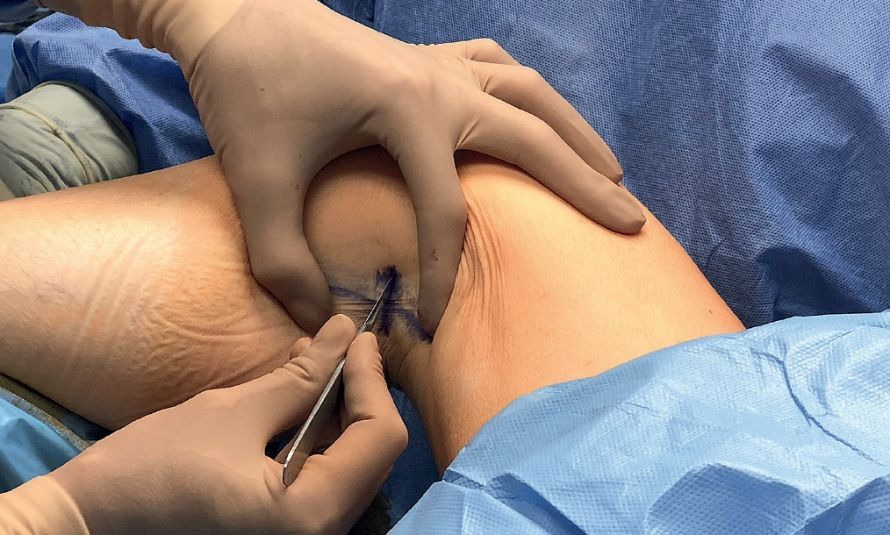
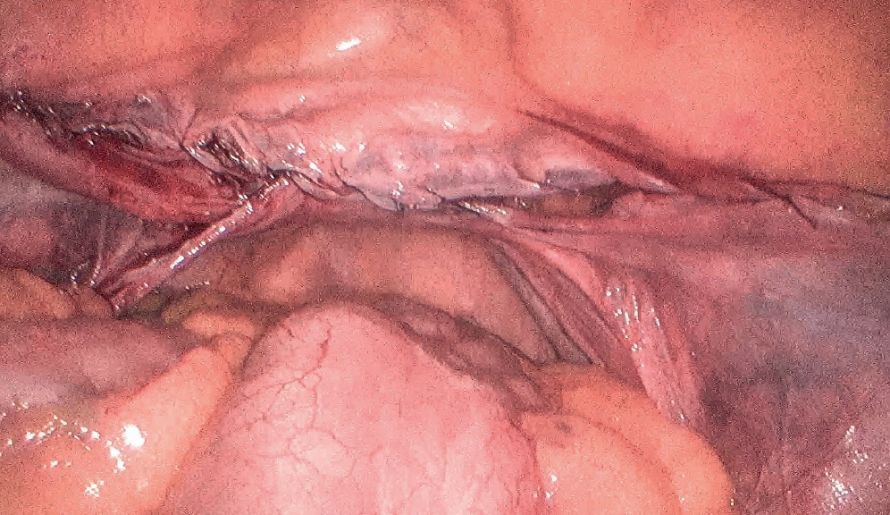
Prof. Dr. med. Amadeus Hornemann: Once all relevant areas have been disinfected and covered with sterile drapes, I first perform a laparoscopy—a minimally invasive procedure—to prepare for implanting the tendon into the abdominal cavity. During this preparation, we also verify whether the technique can actually be applied. Only once I know it will work do I begin harvesting the tendon. To do this, a horizontal skin incision—typically about twenty millimeters long—is made in the selected popliteal fossa over the tendon, which is usually palpable. Harvesting the tendon is then quite simple and takes only a few minutes. The skin is then closed with one or two single-button sutures. Now the tendon is passed through the trocar...
Leading Medicine Guide: Trocar?
Prof. Dr. med. Amadeus Hornemann: ... yes, a trocar is a “tube” that is inserted through the abdominal wall into the abdominal cavity. Instruments or the camera can then be inserted into the abdominal cavity through it. The tendon is also inserted into the abdomen—that is, the abdominal cavity—through the trocar and attached to the structures to be secured.
Leading Medicine Guide: How long does such a surgery take?
Prof. Amadeus Hornemann, M.D.: The tendon harvest takes no more than ten minutes; the transplantation and fixation take about forty minutes without any additional procedures. However, since further steps are usually necessary, I always plan for a total time of approximately two hours.
Leading Medicine Guide: How did your first patient react to the idea of harvesting a tendon from the back of her knee?
Prof. Amadeus Hornemann, M.D.: This was a procedure approved by an ethics committee under clinical trial conditions. The patient came from the Netherlands and was immediately enthusiastic because she had been suffering from the effects of her uterine prolapse for many years. She had severe abdominal pain and significant difficulty emptying her bladder. The patient was accompanied by her husband and was overjoyed immediately after the surgery. There was spontaneous applause in the operating room at the time. I saw her again two years later for a follow-up examination. She remains extremely satisfied and would make the same decision again in a heartbeat. She is now working to raise awareness of the procedure in the Netherlands so that as many women as possible there can benefit from it as well.
Of course, patients are always informed about which surgical procedures are options. Incidentally, I usually remove only half of the tendon, so there is hardly any functional damage resulting from the loss. And the tendon regenerates within two years.
Leading Medicine Guide: How did you actually develop this method, which the entire medical community is talking about today?
Prof. Dr. med. Amadeus Hornemann: Strictly speaking, it was a coincidence: I was looking over the shoulder of a colleague from orthopedics during one of his surgeries. Orthopedic surgeons have long favored using a tendon from the thigh when replacing a cruciate ligament. Since this is a simple, atraumatic procedure, it seemed natural to me to adapt it for my own specialty. In addition, orthopedics already has a great deal of experience with this: Aside from the relatively simple harvesting process, the high tensile strength of the tendon tissue is a major advantage; furthermore, the morbidity associated with the loss of the tendon is low, so there are virtually never any complications or secondary conditions. Knee surgeons expect the tendon to last a lifetime after transplantation into the knee joint. Furthermore, studies have shown that the harvested tendon tissue regenerates. As I mentioned, after an average of two years, the tissue can be detected again at the site of harvest.
Leading Medicine Guide: So, is this a thoroughly successful method?
Prof. Dr. med. Amadeus Hornemann: You could say that. So far, all patients have been very satisfied and have stated that they would unreservedly recommend it to other women affected by this condition. Recovery is rapid, and patients are usually able to be discharged on the second or third day after surgery. We have long since proven the feasibility and safety of this procedure. Therefore, I expect that this procedure will play an important role in the future of prolapse surgery.
Professor Dr. Hornemann, thank you very much for this extremely interesting conversation!
Share this article
Expert Interviews
Read next
- Expert interview
Expert interview with Professor Dr Elmar Herbst, PhD
Oct 15, 2026
Patient-centred and personalised knee surgery
Read more - Expert interview
Cardiogeriatrics: Significance and benefits in the context of hospital reform
Sep 21, 2026
Cardiogeriatrics: Significance and benefits in the context of hospital reform
Read more - Expert interview
Expert Interview with Professor Dr. Amadeus Hornemann, MPH
Sep 18, 2026
Prof. Amadeus Hornemann on Precision Medicine in Gynecology: Modern Surgery, New Techniques, Better Quality of Life
Read more