Expert Interviews
Professor (USC) Jörg Zehetner, MD, on GLP-1 medications and reflux: When is reflux repair indicated?

Alexandra Pfitzmann ·
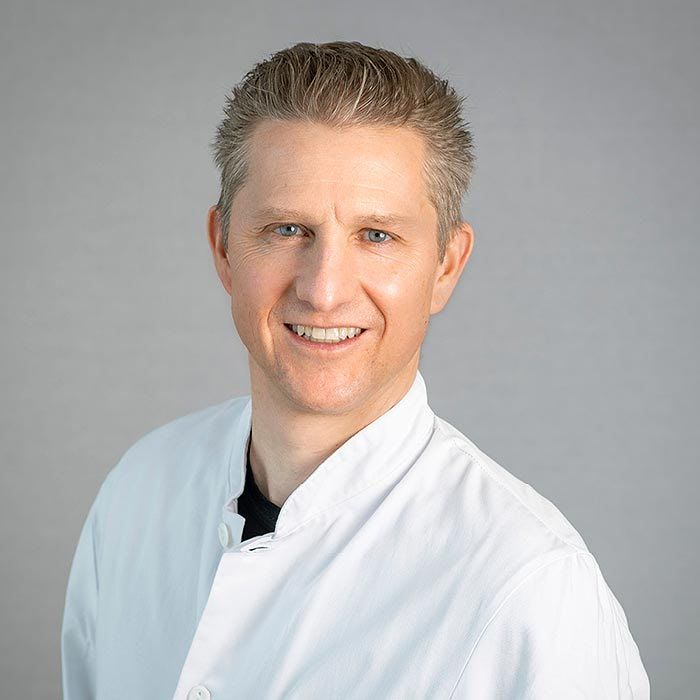
Professor (USC) Dr. med. Jörg Zehetner is an outstanding specialist in visceral surgery, particularly upper gastrointestinal surgery, and enjoys an excellent international reputation for his expertise and innovative approach. His broad expertise includes treating diseases of the esophagus and stomach, from cancer to reflux, as well as performing complex hiatal and abdominal wall hernia repairs at the highest academic level.
His career took him from Switzerland and Austria to the United States, where he served as a professor at the renowned University of Southern California (USC). He received multiple awards for excellence in teaching and is an honorary member of USC’s Society of Graduate Surgeons. Since 2015, Prof. Dr. Zehetner has been practicing in Switzerland again, leading the surgical department at the Klinik Beau-Site in Bern and, with Swiss1Chirurgie AG, has built a leading center for bariatric and reflux surgery. His expertise in minimally invasive techniques, including robotic surgery, makes him a leading European specialist, particularly for reoperations and especially complex cases.
Prof. Dr. Zehetner stands out for his extensive expertise in disorders of the esophagus and stomach. Especially in the field of gastroesophageal reflux disease (GERD), he employs the latest surgical procedures to achieve lasting relief for patients with reflux symptoms. His scientific experience and clinical competence make him a trusted resource for diagnosis and individualized treatment of reflux, even in difficult cases.
In addition to focusing on the treatment of acute and chronic diseases of the upper abdominal organs, Prof. Dr. Zehetner is also dedicated to obesity medicine and metabolic surgery. His holistic understanding, modern approach to minimally invasive techniques, and commitment to innovative therapies make him one of Europe’s leading surgeons. Patients benefit from his many years of experience, his expertise, and his personal, patient-centered care. The editorial team at Leading Medicine Guide spoke with Prof. Dr. Zehetner about treating reflux using GLP-1 agonists, which mimic the body’s own GLP-1 hormone.
The relationship between GLP-1 agonists and gastroesophageal reflux is attracting growing attention in the medical community. While glucagon-like peptide-1 (GLP-1)-based medications are primarily used to treat type 2 diabetes and obesity—and are known for their positive effects on body weight and blood sugar regulation—potential side effects and impacts on the gastrointestinal tract are also important. In particular, determining when it makes sense to treat gastroesophageal reflux or perform a reflux repair plays a key role in guideline-based care for affected patients. In this context, it is essential to carefully weigh the individual course and symptom profile in order to make the optimal therapeutic decision.
GLP-1 medications, also known as glucagon-like peptide-1 agonists, are specialized drugs that mimic the action of the body’s own GLP-1 hormone. This hormone is produced in the gut—mainly by L-cells in the ileum and colon—after food intake and plays a decisive role in fine-tuning glucose metabolism.
„The body’s own hormone GLP-1 (glucagon-like peptide-1) plays an important role in regulating blood sugar. It is released in the intestine and promotes insulin secretion, inhibits glucagon release, and slows gastric emptying. These effects help lower blood sugar after meals and increase the feeling of fullness. GLP-1 medications—synthetically manufactured peptides, also known as GLP-1 agonists—mimic the action of GLP-1. They are often used to treat type 2 diabetes because they help control blood sugar and reduce body weight“, explains Prof. Dr. Zehetner.
GLP-1 agonists affect the gastrointestinal tract in multiple ways, which can also influence the development and course of gastroesophageal reflux. They primarily act by slowing gastric emptying and prolonging satiety.
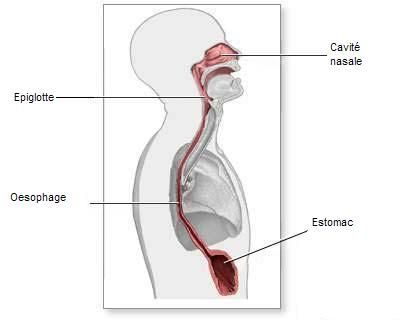
„GLP-1 agonists can influence the onset and course of gastroesophageal reflux by delaying gastric emptying and altering pressure in the lower esophageal sphincter. Due to a so-called backup throughout the digestive tract, gastric emptying is also delayed. A full stomach leads more often to reflux episodes which, beyond a certain number, cause symptoms such as heartburn and acid regurgitation.
Especially at night, this can lead to regurgitation (backflow of gastric juices) and so-called micro-aspirations (cough, lung problems, hoarseness). On the other hand, the weight loss associated with the medication can provide a positive counterbalance and lead to less reflux by reducing abdominal pressure on the stomach“, says Prof. Dr. Zehetner, who also recommends measures patients can take at home:
„Medications for reflux can also have negative effects. In particular, they may worsen problems with acid regurgitation or nighttime coughing. To minimize this, there are certain measures you can take at home in addition to drug therapy. In general, different symptoms should be distinguished: daytime heartburn after eating, and regurgitation, in which stomach acid rises into the esophagus and sometimes up into the throat. Reflux is always position-dependent—when lying down, such as in bed or on the sofa, gravity has less effect, and fluid tends to rise into the esophagus.
Normally, the musculature of the esophagus ensures that the acid is automatically pumped back into the stomach. In people with chronic reflux disease, however, esophageal function may be limited or impaired. This means the musculature is too weak or too slow to remove the acid from the esophagus in time. This leads to problems such as esophagitis, mucosal changes, coughing, lung problems, or a sensation of hoarseness. To improve symptoms at night, it is advisable to elevate the upper body. Ideally, the head of the bed should be raised by about 30 degrees. In practice, however, this is not always easy to implement because the bed height can only be inclined to a limited extent“.
The use of GLP-1 agonists is associated with a number of potential gastrointestinal side effects, the most common being nausea, vomiting, diarrhea, and constipation.
Prof. Dr. Zehetner explains: „These side effects result from delayed gastric emptying and altered intestinal motility triggered by the medications. Nausea and vomiting occur particularly often at the start of therapy and usually subside with longer use, but they can significantly affect quality of life. With regard to reflux symptoms, these side effects can have varying effects.
Delayed gastric emptying causes the stomach to remain filled with acidic contents for a longer period, increasing the risk that these will flow back into the esophagus and thereby worsen heartburn, acid regurgitation, or chest pain. Especially in patients who already suffer from gastroesophageal reflux disease (GERD), these side effects can aggravate symptoms. Conversely, in some patients, reduced gastric emptying and prolonged retention of food in the stomach can also intensify reflux attacks due to the medications“.

From a clinical perspective, the right time for reflux repair in patients with medication-induced or medication-worsened reflux is when conservative measures, such as drug therapy and lifestyle changes, fail to provide clear and significant symptom relief.
„The timing of reflux repair depends on symptom severity and response to conservative treatments. Surgery should be considered when conservative measures are insufficient: if symptoms persist despite acid blockers (so-called proton pump inhibitors, PPIs), a permanent surgical solution should be seriously considered. For BMI over 35 kg/m2, this is a laparoscopic gastric bypass; for patients under BMI 35 kg/m2 there are several options.
I am the only surgeon in Switzerland who offers the classic Nissen and Toupet fundoplication, the alternative variants such as Dor and Watson fundoplication, as well as the newer, modern methods like the LINX Reflux Management System or the RefluxStop method. In particular, the RefluxStop method, which I have further developed (more than 200 operations to date in Bern), has an excellent success rate even in difficult cases, with significantly fewer side effects. Patients experience hardly any bloating and can still vomit and burp; likewise, swallowing problems are hardly known after this method“, emphasizes Prof. Dr. Zehetner.

The Nissen and Toupet fundoplication are surgical procedures in which the upper part of the stomach (fundus) is wrapped around the lower part of the esophagus to reinforce the reflux valve. The Nissen procedure involves a complete wrap, while the Toupet technique uses a partial, 270-degree wrap to offload the esophagus.
The Dor and Watson fundoplication are specific variants of these procedures, in which the stomach is also wrapped around the esophagus, often used under particular anatomic or functional conditions.
The LINX Reflux Management System is a small magnetic ring implant placed at the junction between the esophagus and stomach. It reinforces the natural reflux valve and opens only for liquid or food, preventing backflow without impairing normal esophageal function.

Reflux can be treated very effectively with medication in many patients. However, there are certain cases in which medications are not sufficient or cause undesirable side effects. In particular, for patients who continue to experience nighttime regurgitation of gastric acid, persistent heartburn, or acid regurgitation despite medical therapy—or who develop bloating and a feeling of fullness due to medication—surgical treatment offers a meaningful alternative.
„Among the surgical options, the RefluxStop method is the newest technique and has been available in Europe for about seven years. Like the other procedures, it is minimally invasive, but it has the advantage of causing significantly fewer side effects and being suitable for more patients. Other methods require certain prerequisites—for example, normal esophageal function—or are not feasible in the setting of prior surgeries or large hiatal hernias. By contrast, the RefluxStop method can be used in a broad patient population, including those with severely impaired esophageal function.
With this technique, the reflux valve is repaired by stabilizing the diaphragm and correcting the angle between the esophagus and stomach. The end of the esophagus is fixed within the abdominal cavity, keeping the sphincter region in its natural position. Instead of extensive wraps around the esophagus, a small silicone implant is sewn into the stomach to secure the position of the esophagus in the abdomen. This implant prevents the esophagus from sliding upward and rendering the reflux valve ineffective—a problem that can sometimes occur with other methods. As a result, the method is gentler, causes fewer swallowing difficulties, and is considerably less invasive.
The question of why classic surgical methods are still used is related to the fact that the pressure-based reflux method is currently spreading. In the United States, this technique is expected to receive FDA approval later this year or next year, likely making it the standard approach there. For special cases—such as in patients after bariatric surgery or with large hiatal hernias—the classic techniques remain relevant. There is a variety of methods, and it is important that an experienced specialist recommends the most appropriate, individualized treatment.
In Germany, the RefluxStop method is also known and is already offered in several cities, including Munich, Frankfurt, Friedrichshafen, and Berlin. A comparative study on its effectiveness is currently underway, and the technique can already be considered a serious treatment option there“, notes Prof. Dr. Zehetner.
Individual symptom patterns and the course of reflux disease are central factors when deciding between surgical and conservative treatment.
It is crucial to comprehensively assess the patient’s complaints: if reflux symptoms are pronounced and significantly impair quality of life, this often justifies a more intensive treatment approach, potentially including surgery.
Prof. Dr. Zehetner makes it clear: „Individual symptomatology and the course of reflux disease should play a central role in the decision for surgical versus conservative treatment. A careful assessment of the advantages and disadvantages of both approaches is necessary. Various preliminary examinations are required for decision-making, such as upper endoscopy, esophageal manometry, and pH monitoring, as well as a contrast swallow X-ray. Only an experienced surgeon who performs at least 100 operations per year can truly serve as an expert and propose the best individualized therapeutic option“.
Current guidelines recommend individualized, carefully weighed therapeutic options for patients being treated with GLP-1 medications who also suffer from reflux symptoms.
„Current guidelines recommend tailoring therapy to the individual, taking into account both medical treatment and potential lifestyle modifications. In our bariatric centers in Bern and Pfäffikon (Schwyz), we address our patients’ individual problems and, if necessary, carry out the diagnostic work-up, including a surgical recommendation in my specialized reflux consultation. Surgery is not always the best solution. Before any operation, it is absolutely necessary to perform an upper endoscopy to ensure that the anatomy of the esophagus is correct. This checks the size of the hiatal hernia, whether there are mucosal changes at the end of the esophagus, and whether there may be malignant changes.
This examination is essential to establish a reliable diagnosis and plan the correct treatment. In addition, a contrast swallow X-ray—also called a barium swallow—is necessary to assess esophageal function. This is a relatively simple and quick test in which the patient swallows a contrast agent and a video X-ray is taken. It allows very good assessment, both standing and lying down, of the size of the hiatal hernia and the movement of the stomach and esophagus“, states Prof. Dr. Zehetner.
For patients who have developed swallowing difficulties or whose contrast swallow shows impaired esophageal function, it is also important to perform esophageal manometry.
„This helps rule out severe esophageal motility disorders. In addition, esophageal pH monitoring is performed if needed. This is particularly useful when endoscopy does not reveal evidence of inflammation or mucosal changes such as Barrett’s esophagus. If endoscopy already shows advanced esophagitis—for example, grade C or D—or mucosal changes, the diagnosis of reflux is usually clear, and additional pH monitoring is no longer necessary.
In patients whose esophagus appears normal on endoscopy but who still have symptoms, pH monitoring is particularly important. It clarifies whether reflux is truly present, whether there is a hypersensitive esophagus, or whether other factors are responsible for the symptoms that may not be directly attributable to reflux“, emphasizes Prof. Dr. Zehetner.
To better assess the relationship between GLP-1 agonists and reflux in clinical practice, a careful and systematic approach is necessary.
„Clinicians can better assess the relationship between GLP-1 agonists and reflux by closely monitoring individual symptoms and the course of disease in each patient. Close collaboration with gastroenterologists and adherence to current guidelines are also important. The question is not medication versus surgery, but a holistic consideration of the patient’s overall situation, taking into account symptoms, age, weight, severity of reflux disease, and current esophageal function (intact vs. impaired). Only a skilled surgeon who masters all surgical methods can propose the individually best option.
The decision for surgery is then weighed and always made jointly. There are certainly cases of mistreatment attributable to operations performed by physicians who are not specialized in reflux surgery. In general, surgeons who specialize in reflux surgery usually have sufficient experience, as they perform at least between 25 and 50 such operations per year. I myself perform about 150 reflux operations annually and around 600 operations in total per year, including various revisional and interventional procedures“, says Prof. Dr. Zehetner, adding:
„However, when surgeons only occasionally—once or twice a year—perform such operations from other subspecialties like liver or colorectal surgery, outcomes are often not as good. We know this from experience, and it happens that patients whose operations were not optimal come to us for corrections.
I perform about 50 reoperations per year to correct a previous procedure that may not have been specialized. Serious damage from an inexperienced operation is rare, but there is a risk that the wrong method was chosen—for example, because the severity of esophageal dysfunction was not properly assessed or the hiatal hernia was not correctly repaired. Patient education and proper follow-up are also crucial. If these factors are not properly considered, postoperative problems can arise that then need to be corrected“.
Advantages of interdisciplinary treatment at Swiss I-Chirurgie at the Hirslanden Klinik Beau-Site with GGP-Bern and state-of-the-art technology.
„The primary benefits for patients who come to us can be summarized in several points. First, I operate on all patients at the Hirslanden Klinik Beau-Site, where treatment is integrated with comprehensive, interdisciplinary care. Patients begin in my practice at Swiss I-Chirurgie, which is part of the networked gastroenterology group practice with GGP-Bern, allowing all necessary functional assessments to be carried out very quickly.
These include upper endoscopy, esophageal manometry, and pH monitoring, all of which are performed within our facility. The contrast swallow X-ray is conducted at the Hirslanden Klinik Beau-Site, which is directly adjacent to my practice, so patients have short distances. I personally conduct the consultations and patient education there.
A particular advantage is our close collaboration with gastroenterology in the clinic, which offers all the necessary specialized examinations in-house. In addition, we have state-of-the-art equipment in the operating room: advanced laparoscopic systems, high-resolution OR towers, and the da Vinci surgical robot, which can be used with great precision and gentleness in reoperations. Our center of excellence provides patients with all resources and the latest technology to ensure optimal treatment“, highlights Prof. Dr. Zehetner, and with that we conclude our conversation.
Thank you very much, Professor Dr. Zehetner, for these important insights into reflux treatment!
Share this article
Expert Interviews
Read next
- Expert interview
Expert interview with Professor Dr Elmar Herbst, PhD
Oct 15, 2026
Patient-centred and personalised knee surgery
Read more - Expert interview
Cardiogeriatrics: Significance and benefits in the context of hospital reform
Sep 21, 2026
Cardiogeriatrics: Significance and benefits in the context of hospital reform
Read more - Expert interview
Expert Interview with Professor Dr. Amadeus Hornemann, MPH
Sep 18, 2026
Prof. Amadeus Hornemann on Precision Medicine in Gynecology: Modern Surgery, New Techniques, Better Quality of Life
Read more