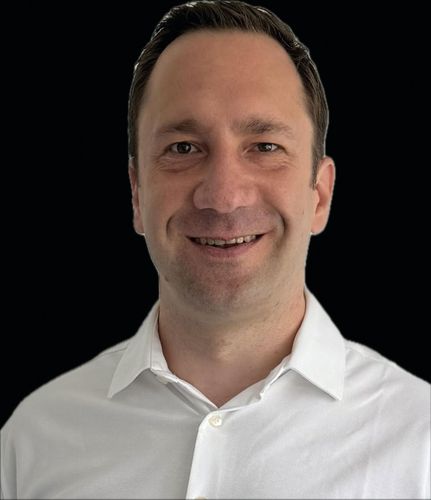
Expert Interviews
Robotic Surgery in Upper Abdominal Surgery

Alexandra Pfitzmann ·
Robotic surgery is a state-of-the-art, minimally invasive surgical procedure that combines the highest precision with maximum comfort for patients. With the help of robotic assistance systems, even complex procedures can be performed with exceptional precision, safety, and minimal tissue trauma. This allows for smaller incisions, less pain, a faster recovery, and optimal functional outcomes. The editorial team at Leading Medicine Guide learned about the extent to which robotic technology can also be used in upper abdominal surgery—and specifically in reflux surgery—during a conversation with visceral surgeon Prof. Dr. med. Jörg Zehetner.

Robotic surgery represents a highly precise advancement of traditional laparoscopic techniques for abdominal surgeries, particularly for gastroesophageal reflux disease (GERD).
“Basically, robotic surgery has been around for about 20 years, but only now—as the systems have improved significantly—has the time come to make greater use of it in upper abdominal surgery as well. When considering the advantages of robotic surgery, it is clear that they have improved over the past 20 years with every new technological innovation. Today, robotic surgery offers several advantages: The imaging is significantly higher quality, there is a high-resolution 3D image, and the instruments have more degrees of freedom than traditional laparoscopic instruments. This allows for much more precise work in confined spaces. These advantages have been particularly evident in pelvic surgery, such as in urology for prostate surgery or in colorectal surgery. With the latest equipment, which features improved instruments, the benefits are now also becoming apparent in upper abdominal surgery. “This is relevant, for example, in esophageal resections for esophageal tumors, but also in certain reflux surgeries or diaphragmatic surgery,” notes Dr. Zehetner, adding regarding the specific challenges of upper abdominal surgery:
“On the one hand, precision is crucial—especially in tumor surgery—to ensure optimal removal of lymph nodes and tissue. On the other hand, in reflux or diaphragmatic surgery, the robot makes it easier to handle the instruments, especially in areas where laparoscopic space is limited and visibility is restricted. Another advantage is suturing: With the robot, sutures can be placed in areas that were previously difficult to access—for example, in the upper left or right quadrants of the upper abdomen. While laparoscopically, suturing was only feasible directly in the surgeon’s line of sight, the robot allows for precise work even in hard-to-reach areas.”
Thanks to the high-resolution 3D camera, anatomical structures such as the vagus nerve, small vessels, and tissue layers can be better identified and preserved, which can significantly reduce intraoperative complications. The robotic instruments have multiple degrees of freedom, allowing for greater manual precision and maneuverability than conventional laparoscopic instruments. Dr. Zehetner comments:
“The learning curve for robotic surgery depends heavily on the surgeon’s experience. If you’re already an experienced laparoscopic surgeon, the transition to robotic surgery happens relatively quickly. Moreover, you don’t switch over completely to the robot overnight. I myself started 15 years ago, but then performed few surgeries for about ten years. With the new DaVinci surgical robots, however, I was able to quickly take advantage of the benefits and make the transition relatively quickly. In principle, the transition requires only a relatively short learning curve: after about five to ten surgeries, you have a good command of the technique.”
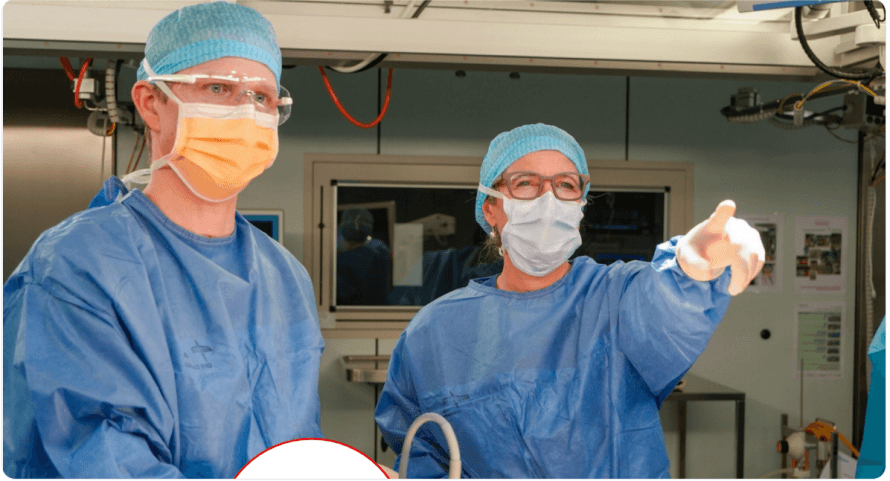
The robotic approach in upper abdominal surgery is particularly useful for patients whose anatomical or clinical conditions make the procedure more complex.
Large hiatal hernias, in which a significant portion of the stomach has shifted into the chest cavity, are a classic example. In such cases, the precise mobilization of the lower esophagus and the reconstruction of the anti-reflux barrier require particularly meticulous dissection, which is significantly facilitated by robotic technology. Complex or repeat reflux surgeries also benefit from robotic technology: scar tissue, adhesions, or previous surgeries alter the normal anatomy and make it more difficult to perform a safe and functionally optimal reflux surgery.
“The only limitation arises when patients have already undergone multiple surgeries. In such cases, it can be more difficult to position the robot because adhesions must first be released. Sometimes, in these situations, surgeons begin with laparoscopic surgery and continue the procedure in this manner. Apart from that, robotic surgery is possible for all patients. Whether it is appropriate—that is, whether it actually makes the procedure better, faster, or easier—is always decided by the surgeon on a case-by-case basis. There may therefore be situations in which the surgeon deliberately chooses to perform laparoscopic surgery because it is equally effective but faster, since setting up the robot sometimes takes a little more time. Otherwise, there is no fundamental reason to opt against using the robot. “If the procedure can be performed laparoscopically without any problems and efficiently, this is generally the preferred approach,” states Dr. Zehetner.
The use of robotic surgery in upper abdominal surgery significantly improves intraoperative visibility and precision on several levels.
The improved visibility and maneuverability of the instruments allow for controlled and gentle dissection of scar tissue, secure positioning of the esophagus, and precise reconstruction of the anti-reflux barrier. This not only reduces the risk of postoperative complications such as dysphagia, recurrent hernias, or gas-bloat syndrome, but also supports the long-term functional preservation of the anti-reflux valve.
Gas-Bloat Syndrome:
Gas-bloat syndrome is a possible side effect following reflux surgery. Affected patients are no longer able to burp effectively, leading to a feeling of fullness, bloating, and pressure in the upper abdomen.
“When reconstructing the anti-reflux valve, robotic surgery primarily provides an improved view during the operation. Surgeons can work more precisely around the esophagus at the hiatus, allowing for better mobilization of the esophagus and enabling a greater portion of it to be repositioned into the abdominal cavity. During reconstruction—for example, using the RefluxStop method—numerous sutures must be placed between the esophagus and the stomach, and the diaphragm is also sutured again. The robot facilitates this suturing, particularly in patients who have undergone previous surgery and have adhesions on the diaphragm. If the esophagus cannot be mobilized sufficiently, the RefluxStop method is not optimal. In such cases, the esophagus can be lengthened by partially removing the stomach—a method that is, however, rarely necessary. In most cases, however, the esophagus can be mobilized effectively. Side effects of reflux surgery include, for example, difficulty swallowing (dysphagia) or gas-bloat syndrome. Difficulty swallowing occurs when the diaphragm has been closed too tightly, causing food to get stuck. This can be reduced with more precise sutures. Gas-bloat syndrome occurs when patients can no longer burp, leading to a feeling of fullness and bloating. “Thanks to the greater precision afforded by the robot and the use of the RefluxStop method, which involves inserting only a partial sleeve or an implant, this syndrome occurs much less frequently,” says Dr. Zehetner, adding:
“Recurrences depend primarily on the size of the hiatal hernia and less on the surgical method. Nevertheless, the use of new technologies such as robots and special meshes can help reduce the risk of recurrence. There have been some changes with the meshes: They are now positioned laterally around the esophagus, adhered rather than sutured, and partially or fully absorbable sutures ensure that scar tissue forms, which stabilizes the diaphragm in the long term. Despite these methods, the risk of recurrence remains, especially in older patients with large hernias. The robot can also be used for revision surgery, depending on the situation. For routine procedures or smaller hernias, laparoscopic surgery is usually faster and more cost-effective, as the robot involves additional effort. In more complicated cases, such as reoperations or large diaphragmatic hernias, however, the robot is particularly advantageous. Furthermore, the robot offers significant advantages in complex surgeries, particularly in esophageal surgery. Thanks to precise dissection along the esophagus, surgery through the chest can often be avoided; the entire procedure can be performed through the abdomen. Internationally, it has been shown that esophageal cancer is increasingly being treated with robotic surgery. Another complex area of application is large abdominal wall hernias, which previously had to be treated with open surgery. With the robot, the surgery can be performed minimally invasively from the side, which significantly reduces the infection rate. Without the robot, this would be technically nearly impossible, as the instruments cannot be angled sufficiently.”
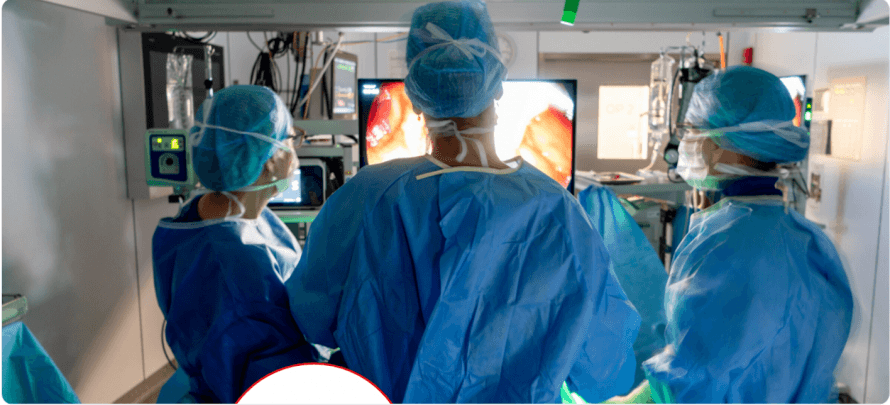
Robot-assisted upper abdominal surgery demonstrates clear advantages in clinical practice and in initial studies regarding recovery time, pain levels, and quality of life compared to conventional laparoscopic procedures.
Dr. Zehetner describes the added value for patients: “Generally speaking, patients get back on their feet faster, and hospital stays are shorter. In upper abdominal surgery, the robot reduces the leverage forces acting on the abdominal wall, so patients experience slightly less pain. The greater advantage, however, lies in the precision of the surgical technique. This is particularly evident in procedures such as abdominal wall hernias, where open surgery can be avoided: the length of hospital stay is significantly reduced. Patients usually stay in the hospital for only two to three days; previously, it was seven to ten days. Wound healing also benefits from robotic surgery. As with laparoscopy, only small incisions are required, which significantly reduces the risk of infection. For conditions such as esophageal cancer or abdominal wall hernias, this allows patients to be discharged home much sooner. Regarding the use of the robot compared to laparoscopy, we use it for about 50 percent of our procedures. Some surgeries can be performed slightly faster laparoscopically, so we use the robot selectively. For esophageal cancer, the robot is used in every surgery, while for reflux surgeries, it is used in about half of the cases,” and he emphasizes at the end of our conversation:
“It’s important for patients to understand that the type of surgery—whether laparoscopic, robotic, or open—is at the surgeon’s discretion. There are situations in which the robot is particularly advantageous, but there are also cases in which open surgery is more appropriate because there is no other option. Patients must therefore trust that the surgeon will choose the best method for them. In Switzerland, there are now several centers that perform upper abdominal surgery using the robot. However, when it comes to the RefluxStop method, I am the only one who offers this technique using the robot.”
Thank you very much, Dr. Zehetner, for this information on the use of robotics in upper abdominal surgery!
- Board-Certified Surgeon, Specializing in Visceral Surgery
- Specialist in upper abdominal surgery, reflux surgery (GERD), and obesity/bariatric surgery
- Long-time professor at the University of Southern California (USC), USA
- A European leader in complex reflux surgeries and revision surgeries
- The only surgeon in Switzerland with comprehensive expertise in all reflux surgical methods
- Minimally invasive and robotic surgery at the highest level
- Treatment of diseases of the esophagus, stomach, and tumors of the gastrointestinal tract
- Surgical treatment of complex hiatal and abdominal wall hernias
- Many years of experience with LINX™ and RefluxStop™, with excellent results
- Founder of Swiss1Chirurgie AG, Switzerland’s largest private practice for reflux and bariatric surgery
- Practices at multiple locations throughout Switzerland (including Bern, Thun, Solothurn, and Valais)
- Treats approximately 3,500 patients per year within a specialized network
Share this article
Expert Interviews
Read next
- Expert interview
Expert interview with Professor Dr Elmar Herbst, PhD
Oct 15, 2026
Patient-centred and personalised knee surgery
Read more - Expert interview
Cardiogeriatrics: Significance and benefits in the context of hospital reform
Sep 21, 2026
Cardiogeriatrics: Significance and benefits in the context of hospital reform
Read more - Expert interview
Expert Interview with Professor Dr. Amadeus Hornemann, MPH
Sep 18, 2026
Prof. Amadeus Hornemann on Precision Medicine in Gynecology: Modern Surgery, New Techniques, Better Quality of Life
Read more