Expert Interviews
Reconstructive Trauma Surgery

Alexandra Pfitzmann ·
Reconstructive trauma surgery is dedicated to the challenging task of restoring the form and function of the musculoskeletal system following severe injuries. It is used whenever bones, joints, muscles, or soft tissues are so severely damaged that basic treatment is insufficient.
Through modern surgical techniques, precise planning, and interdisciplinary expertise, reconstructive trauma surgery enables many patients to regain mobility, stability, and quality of life.
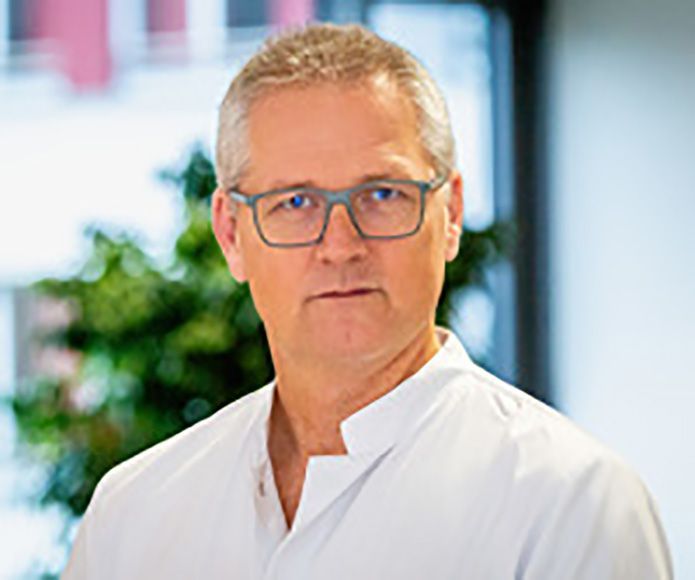
When it comes to reconstructive trauma surgery, vivid images quickly come to mind. One thinks of patients with severe injuries, of accidents in everyday life, on the road, or at work. After all, trauma surgery can mean all sorts of things.
But how do you actually determine whether something can be reconstructed? How does this process work, and when does something actually need to be replaced? And when we talk about “replacement”—what exactly do we mean by that? How does this initial assessment work when a patient is standing in front of you?
“In practice, we encounter two main groups of patients. The first group consists of people who come to us immediately after an accident. For them, the goal is to treat the resulting injuries—such as broken bones or soft-tissue injuries—in a way that minimizes long-term complications. The second group consists of patients whose accident occurred some time ago and who have since developed complications: a bone has failed to heal, healed improperly, shortened, or fused in a malposition. In such cases, further surgery is needed to restore function to the affected limb.
We focus on three fundamental goals: The joints should have good mobility, arms or legs must be able to bear the necessary load, and the entire system should function as pain-free as possible. It is precisely these aspects that we strive to restore in follow-up surgeries—as best we can. Many patients specifically seek out specialized centers for such complex procedures. And this is precisely where one of our department’s core competencies lies.
We use specialized surgical techniques that allow us to lengthen or shorten bones, re-cut structures that have healed improperly, and reassemble them in a way that restores the static function of a leg or arm. Often, the soft tissues must also be treated: tendons that are too short are lengthened, and damaged tendons are reconstructed or replaced. All of these measures are part of what constitutes reconstructive trauma surgery—with the goal of restoring the highest possible level of function and quality of life to the patient,” explains PD Dr. Lissberg at the beginning of our conversation, adding:
“If a patient comes to us after an accident and, for example, a pre-existing endoprosthesis has been damaged, that naturally also falls within the scope of reconstructive trauma surgery. The best way to understand this is to simply add ‘orthopedics’ to the term ‘trauma surgery’—reconstructive trauma surgery and orthopedics overlap. In practice, it’s nearly impossible to draw a clear line between where one ends and the other begins.
Many issues overlap anyway: For example, there are also congenital deformities like bowlegs that are corrected if they cause damage to the knee. In children, growth can even be guided so that the leg straightens on its own without having to cut the bone.”
The decision as to whether an injured structure should be reconstructed, replaced, or treated using a combination of approaches is never based on a single finding, but rather on the interplay of anatomy, tissue quality, functional requirements, and the patient’s long-term goals.
At its core, the goal is to assess which option most reliably restores the original biomechanics while also enabling a stable, resilient healing process.
“When a patient comes to us with an acute injury, it all starts with the question of whether they are stable and will survive the accident. For critically injured or polytraumatized patients, life-saving measures take priority. As a supraregional trauma center, we have the necessary structures, protocols, and equipment to manage such situations.
In addition, there is a large group of patients who have ‘only’ a single injury—a broken lower leg, an injured ankle, or similar conditions. In between lie every conceivable degree of severity. As soon as acute stabilization is ensured, precise diagnostics begin. Computed tomography (CT) is indispensable in this process today. For nearly every ankle fracture, a CT scan is routinely performed prior to surgery.
Whether a 3D reconstruction is also created depends on the specific case. It is particularly helpful for fractures of the acetabulum or the tibial tuberosity. These procedures have now become the absolute standard. Magnetic resonance imaging (MRI) plays an important role when it comes to assessing ligaments that are not clearly visible on a CT scan. These options are also available to us at any time.
In specific cases, angiography is also used, for example, when blood vessels have been injured. This not only allows blood vessels to be visualized but also enables interventional treatment if necessary—similar to neurosurgery, where aneurysms are closed from the inside using radiological procedures. “Such measures can be an important preparatory step for certain surgeries and are also part of the spectrum of reconstructive trauma care,” says PD Dr. Lissberg.
Modern reconstructive trauma surgery today thrives on a level of precision and individualization that was barely imaginable just a few years ago. Many of the procedures that are now standard or are rapidly becoming established share a common goal: to restore the original anatomy as accurately as possible while simultaneously supporting biological healing. This results in outcomes that are functionally more stable, can bear weight more quickly, and demonstrate greater long-term durability.
In complex reconstructions, interdisciplinary collaboration often determines whether a procedure is merely technically successful or whether it truly functions effectively in the long term. Such cases almost always transcend the boundaries of a single specialty because bones, soft tissues, infections, biomechanics, and functional rehabilitation are all interrelated. This is precisely why cooperation between plastic surgery, infectious diseases, physical therapy, and other disciplines becomes a central component of the treatment plan.
PD Dr. Lissberg comments on this: “Plastic and reconstructive surgeons are particularly indispensable when it comes to soft tissues. Although plastic surgery also encompasses hand surgery and aesthetic surgery, the reconstructive aspect is particularly crucial for trauma surgery reconstruction. We have a dedicated department for this purpose, which also operates the center for severe burn injuries. Together with these specialists, we can treat complex soft-tissue defects that can result from severe accidents.
In this process, tissue—skin, muscle, or even bone—is harvested from another part of the body in a way that causes as little damage as possible to the donor site. Under a microscope, this tissue is then reattached to the injured site, including the necessary blood vessels. Such free, vascularized tissue grafts make it possible to functionally and stably reconstruct even large defects. It is crucial that bone reconstruction and soft tissue reconstruction are precisely coordinated.
This is best achieved when everything is handled by a single team and takes place under one roof. “The fact that we are a certified center means that many patients are specifically referred to us—not because we build a big shell around little substance, but because we possess strong substantive expertise and have created the appropriate structure for it.”
Soft tissue damage, infections, and previous surgeries often alter the initial conditions for reconstruction so fundamentally that they influence the choice of strategy more than the defect itself. They determine how much biological healing potential remains, which structures can be reliably strengthened to withstand stress, and how high the risk of complications remains. This is precisely why these factors become the focus of decision-making very early on in reconstructive trauma surgery.
For patients, severe injuries often mean a long road back to everyday life. When various surgical specialties were involved in the initial care, a finely coordinated process begins in the hospital. At the heart of this process is always the question of how healing, stability, and mobility can be restored step by step.
“When a patient arrives at our hospital after a severe injury and has already received care from various surgical specialties, a clearly structured process begins for them here. A major operation is always followed by inpatient treatment.
These procedures are so extensive that outpatient care is not an option. In this initial phase, the goal is to ensure the healing of the skin, soft tissues, and bones and to stabilize the patient to the point where they can once again function independently in their home environment. Once this stage is reached, a decision is made on a case-by-case basis regarding the most appropriate form of rehabilitation.
Inpatient rehabilitation is often necessary—an advantage, since we have our own orthopedic rehabilitation facility on-site at Reha am Berger See. From there, the transition to outpatient rehabilitation can take place, depending on what is medically appropriate and logistically feasible. The timing of the start of rehabilitation depends heavily on the type of injury. In cases of complex soft-tissue or bone injuries, it is often better to wait six to eight weeks until the structures have healed sufficiently. Muscle rebuilding can then be carried out much more effectively. If, on the other hand, the primary goal is to restore joint mobility, starting rehabilitation immediately after surgery is often the better choice. Planning is always individualized: What are the deficits, which functions need to be restored, and what measures are necessary to achieve this? A customized rehabilitation plan is developed based on this assessment.
It is important that the patient has a single point of contact throughout the entire process—even when different specialties, such as vascular surgery or plastic surgery, are involved. This continuity simplifies organization and provides reassurance. Contact remains in place after rehabilitation is completed. Many patients come from far away, so we work closely with their primary care physicians and utilize modern telemedicine and image transmission technologies.
“If questions arise, decisions need to be made, or problems occur, patients can come back to us at any time. So care does not end with rehabilitation but continues as needed,” explains PD Dr. Lissberg, adding:
“In my daily work, the particular challenge lies in continually reassessing—despite all efforts to establish standardized decision-making processes and established procedures—how these standards can be applied to a patient’s individual situation. The deeper you delve into the field of revision surgery, the more you have to adapt existing concepts and tailor them to the specific circumstances of each individual case.
That is exactly what makes this field so exciting for me. It requires a broad overview of the wide variety of procedures and techniques in order to select the most appropriate approach for each patient. At the same time, no two days are alike, even though—in our pursuit of standardization—we try to identify the commonalities among all these different cases and learn from the experiences of past years and decades. Every patient brings their own story and their own problems, and yet parallels can always be drawn from this diversity that help us make better decisions.
If one were to claim that every case is completely new, there would be no need for experience—but that’s simply not the case. Even though every case is different, we can draw on a body of accumulated knowledge and apply it strategically to find the best possible solution for each individual patient.”
Certification as a trauma center follows a clearly defined, three-tiered system comprising local, regional, and supraregional centers, with the supraregional centers representing the highest level of care. All requirements are set forth in the so-called White Paper on Trauma Surgery.
The White Paper on Trauma Surgery
The White Paper is the central set of guidelines for the care of seriously injured patients in Germany. It defines the personnel, structural, and organizational requirements that hospitals must meet to be certified as a trauma center. These include requirements for shock rooms, operating room capacities, medical specialties, procedures, and quality controls. For reconstructive surgery, the White Paper establishes the structural framework to ensure that complex reconstructive procedures can be performed safely and to the highest standards.
“The so-called ‘White Paper’ describes in detail the personnel, structural, operational, and organizational requirements that must be met: from the size of the emergency room to the number of patients that can be treated simultaneously, to the necessary medical specialties and technical resources. The German Society for Trauma Surgery oversees and organizes this entire process. Recertification takes place every three years.
Comprehensive data must be recorded for every severely injured patient—in the German Polytrauma Registry, the world’s largest of its kind. Approximately 170 parameters are documented per patient, including process times such as the interval from admission to the first chest X-ray or to the completion of diagnostics. This data is evaluated externally and compared with the national average, creating a transparent benchmark. An essential component of quality assurance is the annual Crew Resource Management training for the entire trauma room team.
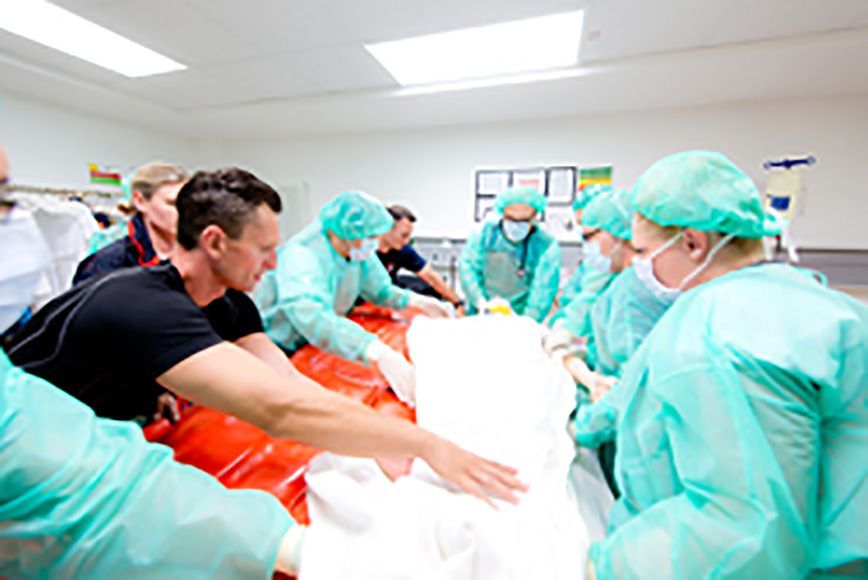
This concept originated in aviation: Pilots use simulators to practice handling stressful situations such as engine failures. Following the same principle, complex emergency scenarios are simulated in the trauma room, with doctors, nurses, radiology staff, and other participants working together. The procedures are recorded, then analyzed and discussed as a team to continuously improve communication, organization, and stress management.
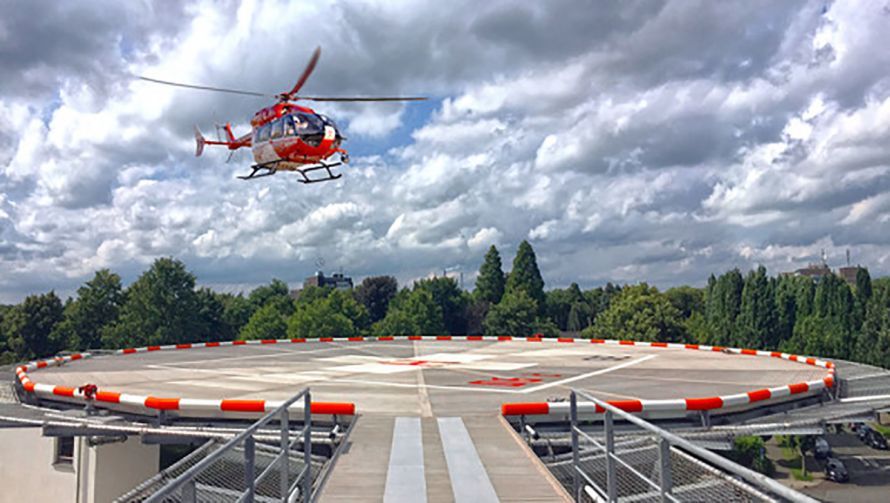
As a supraregional trauma center, the hospital also has special infrastructure, including a rooftop helipad—a rarity in the Ruhr region. “This significantly facilitates the care of critically injured patients in this densely populated area and increases the safety and speed of the entire emergency response chain,” explains PD Dr. Lissberg, illustrating the process during an emergency situation:
“When a patient is brought into the trauma room after a car accident, the scene often appears to outsiders as a chaotic jumble. In reality, everything follows a clear structure. The team works in fixed pairs, each with precisely defined tasks. At the center is the so-called trauma leader, identified by a colored vest. He doesn’t get directly involved himself, but stands slightly apart, observing the entire situation, keeping track of all findings, and managing the procedures. He is the one who consolidates the information, makes decisions, and directs the next steps.
Communication within the team is a crucial factor here. There are set rules that are practiced, such as the “10 for 10.” If anyone notices that the process is getting out of hand, anyone—from the chief physician to the nursing student—can give this signal. The entire team then pauses for ten seconds to reassess the situation and clearly define the next steps. This brief pause serves as a reset and prevents chaos or uncertainty from jeopardizing patient care. All relevant information is relayed to the trauma leader.
Vital signs such as blood pressure, heart rate, and oxygen saturation are monitored directly on the screen. Lab results and other findings appear digitally on their screen. They see everything in real time and pass the information on specifically to those who need it for their work. This keeps the process structured, coordinated, and safe despite the many people involved—even in situations that appear chaotic on the surface.”
Serious accidents entail not only medical risks but also an enormous emotional strain on everyone involved. The central question is always how to stabilize the patient’s condition and guide them safely through the most critical hours. At the same time, this work places demands on the entire team—professionally, organizationally, and personally.
PD Dr. Lissberg explains this in more detail: “The greatest risks for a seriously injured patient lie, first and foremost, in the immediate danger of death. In serious accidents—for example, when someone is trapped on the highway so tightly that firefighters have to cut them out of the vehicle for half an hour—it’s generally assumed that a significant amount of energy was transferred and that the patient could be seriously injured. Such patients are always taken to the trauma room to assess this precisely. Sometimes it turns out that, despite the dramatic nature of the accident, surprisingly little harm has been done—modern vehicles provide very good protection for their occupants today.
These days, seriously injured patients are more often pedestrians, cyclists, or e-scooter riders than car drivers. The types of injuries that predominate depend heavily on the region: for example, in Siegen it’s mostly motorcyclists, while in Murnau it’s mountaineers or skiers. However, patients are only admitted to the trauma room if their injuries are actually of a certain severity. At that point, the primary focus is on immediately stopping blood loss, ensuring the organs’ oxygen supply, and protecting the brain from damage. Many complications can arise during this phase. For the team, this means thinking in very small steps: The next milestone is to get the patient into the operating room in a stable condition, get them out of the operating room again, and transfer them safely to the intensive care unit. In such situations, every hour without complications is a good hour.
This work also takes its toll on the team. Despite all the medical options available, there are cases where the injuries are so severe that even the highest level of expertise isn’t enough. That’s emotionally draining. Today, there’s a very conscious focus on the mental and emotional well-being of staff members. There are a variety of counseling and support services available. The most important thing, however, remains open communication with one another. After such missions, the team debriefs, discussing how things went, what went well, and what was difficult.
No one should have to carry such experiences around alone. Once a month, a trauma circle is held, where specific cases—both successful and distressing—are analyzed together. They break down the sequence of events, check whether all measures were appropriate, and determine if there is room for improvement. Often, it becomes clear that everything possible was done. This reflection relieves pressure, provides clarity, and is now an essential part of quality assurance and team well-being.”
Reconstructive trauma surgery is not a clearly defined specialty, but rather the result of a long, multifaceted training path. Those who work in this field combine expertise in orthopedics and trauma surgery with numerous specialized continuing education courses. It is precisely this combination that makes the specialty challenging—and often difficult for outsiders to understand.
“The term ‘reconstructive trauma surgery’ is not recognized as a separate official title in the training program, but rather results from a combination of qualifications and specializations. The foundation is the six-year residency in orthopedics and trauma surgery. Afterward, the training splits into two tracks: specialized trauma surgery and specialized orthopedics. Both tracks last an additional two years each, though one year of the basic training can be credited toward this.
There is no separate additional designation or formal certification for reconstructive work itself. Instead, there is a wide range of courses and continuing education programs, particularly for emergency and trauma care. Some of these are mandatory, many are voluntary—but there is no official designation that one could hang on the door. This is precisely what often makes it difficult for patients and referring physicians to assess where expertise in reconstructive surgery actually lies. Anyone can use the term, but what lies behind the door only becomes apparent in the actual work. An official designation or certification for this field would be difficult to implement, as it would require verifiable structures and clear criteria.
This works well for trauma centers: there, staff numbers, duty schedules, technical equipment, and care procedures can be precisely defined and monitored. For reconstructive trauma surgery, it’s more complex. Some hospitals—such as this one—have structures that suggest a high level of expertise in this field: a supraregional trauma center, a unit for patients with severe burn injuries, hyperbaric oxygen therapy, neurosurgery, and a large pediatric clinic. These are strong indicators of a broad spectrum of trauma surgery services.
“A quick look online, however, shows just how differently the term ‘reconstructive trauma surgery’ is used—and how little it actually reveals about a facility’s true expertise,” emphasizes PD Dr. Lissberg at the conclusion of our conversation.
Thank you very much for the detailed insight into reconstructive trauma surgery, Dr. Lissberg!
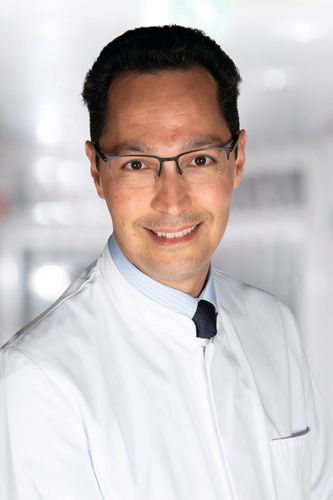
- Chief of Orthopedics and Trauma Surgery, Knappschaft Clinics Gelsenkirchen-Buer
- Board-certified specialist in surgery, orthopedics, and trauma surgery; additional certification in specialized trauma surgery
- Specialist in revision arthroplasty, correction of deformities, and chronic bone and soft tissue infections
- Extensive expertise in the management of complex injuries and the consequences of accidents
- Director of a supraregional trauma center
- Many years of clinical experience, comprehensive training authorization, and academic teaching experience
- Combination of modern surgical techniques, scientific collaboration, and individualized patient care
Share this article
Expert Interviews
Read next
- Expert interview
Expert interview with Professor Dr Elmar Herbst, PhD
Oct 15, 2026
Patient-centred and personalised knee surgery
Read more - Expert interview
Cardiogeriatrics: Significance and benefits in the context of hospital reform
Sep 21, 2026
Cardiogeriatrics: Significance and benefits in the context of hospital reform
Read more - Expert interview
Expert Interview with Professor Dr. Amadeus Hornemann, MPH
Sep 18, 2026
Prof. Amadeus Hornemann on Precision Medicine in Gynecology: Modern Surgery, New Techniques, Better Quality of Life
Read more